Birmingham City Council has been warned its regeneration ‘performance’ is now the ‘biggest challenge’ facing the local authority.
Government-appointed commissioners have this month given an update on the council’s financial recovery and said positive progress had been made, pointing to a balanced budget set this year.
But they added that the council has a number of live regeneration schemes established under previous management, many of which pose “major risks”.
READ MORE: Inside the legacy of ‘bankrupt Birmingham’ as city’s new leaders hope for ‘vibe shift’
They warned that these risks need to be addressed before progress can be made.
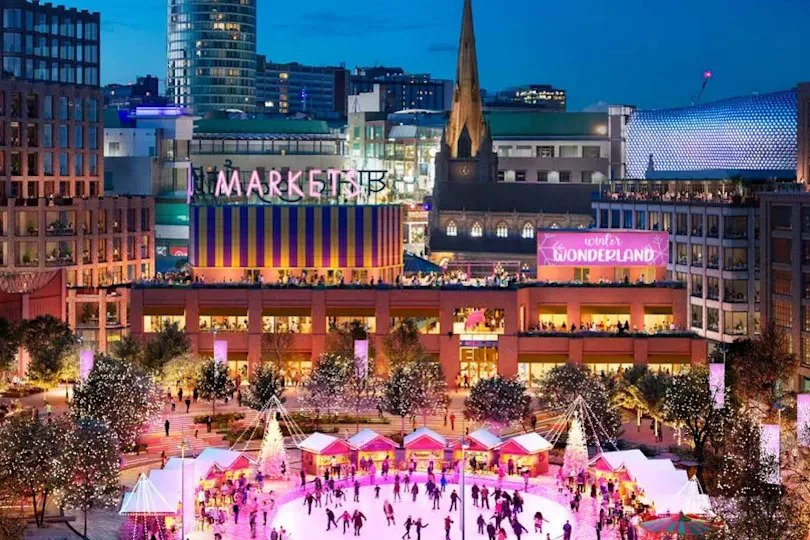
The two largest in this category are the Smithfield and Paradise developments – two massive city centre schemes with ambitions of transforming the heart of Brum.
External auditors Grant Thornton recently raised similar concerns over Birmingham’s landmark Paradise project, which has seen the transformation of Chamberlain Square and the creation of buildings such as the Octagon.
In an annual report for the year ending March 2025, they wrote that the first two phases for the Paradise project had increased £66m to £139.1m.
“The project is now reporting a working capital liability of £60m, of which the council’s share, that will need to be repaid, is £30m,” it continued.

Aerial view of the Paradise estate in Birmingham -Credit:Handout
On the Smithfield project, an enormous scheme set to transform the former wholesale market site, the external auditors said costs had soared by £594m – from £1,905m at the outline business case stage to £2,499m.
They said this was in part due to factors that could have been identified at an earlier stage, such as an unforeseen need to relocate a combined sewer overflow tank (£15m).
There was also a need to create an energy centre with heat pumps for the first phase of the development (£15m).
In the recent update to councillors, the commissioners said they “recognise that the council’s regeneration agenda and performance is now the biggest challenge – and risk faced by the council”.
“From the outset of the intervention, we raised a range of significant issues with the council’s approach to regeneration – and these were echoed in reports from the external auditor,” Tony McArdle, lead commissioner at Birmingham City Council wrote.
READ MORE: Major Birmingham bus project aiming to improve reliability ‘hit by delays’
“There have been major historic failings on large schemes that stem from having insufficient capacity and capability in commercial skills, poor business cases, and a culture of in-house delivery when better options were available.
“These failings have had a major impact on the council’s financial standing, as well as in slowing the pace of development.”
The commissioners added the council’s two major housing schemes, Druids Heath and Ladywood, also require “considerable attention”.
Paradise ‘has helped drive city’s economic growth’
In their update, the commissioners recognised that the council is working with West Midlands Mayor Richard Parker to establish a Mayoral Development Corporation.
Mayor Parker said earlier this year that this MDC initiative will combine a range of powers, including land acquisition, planning, business tax incentives and infrastructure funding.
He continued that this would allow it to cut through red tape, build investor confidence and accelerate investment, benefiting mammoth projects such as Smithfield.
“Commissioners’ focus will be on ensuring the council clearly defines the approach it will take to regeneration – including the role of the MDC,” the commissioners continued.
“And ensuring it has the right capacity and capability to ensure this approach can be delivered effectively”.

West Midlands Mayor Richard Parker at the Birmingham Wheels Park site
They also want to see an improvement of joint working on regeneration
schemes across the whole council and with partners, and ensure there is “effective management” of risk.
In their own report, external auditors acknowledged that the council had taken action in response to concerns over regeneration projects.
“It has already strengthened its corporate capacity in this area, overseen by a major projects board,” they said.
“As part of these improvements, it has established consistent risk management arrangements and has commissioned various lessons learned reviews, including the consideration of Paradise Circus, as it potentially moves to phase three of the development.”
The council previously said wider economic conditions had affected the market but continued that the Paradise development is a “hugely successful regeneration scheme that has helped drive economic growth for Birmingham“.
It said that on full completion of all three phases, the development will deliver £1.2b investment into city, 12,000 jobs upon completion, eight brand-new high-quality buildings, hundreds of new homes and several other benefits.
“To date, five buildings have been completed, including 370 homes delivered at the Octagon Tower,” the council said previously. “The development has also supported the creation of 7,500 jobs by attracting major global occupiers such as Goldman Sachs, Deloitte, Ernst & Young, and Arup.
“Phases one and two are expected to deliver over £318 million pounds of business rates for the Enterprise Zone by 2046.
“This will help pay for the cost of delivering the development and, importantly, provide further funding for reinvestment in other projects across Birmingham.”
A spokesperson for real estate company Lendlease meanwhile described Smithfield as “one of the most significant city centre regeneration opportunities in the UK”.

CGI of the Smithfield development, with Manor Square in the centre. Taken from a document included within the planning application.
“We’re working closely with the city council and other stakeholders to develop proposals that will transform this important part of the city; creating thousands of new homes, jobs, public spaces and long-term economic benefits,” they said.
“Major infrastructure works at Smithfield are expected to commence later this year, with the delivery of temporary markets due to start early next year and the first housing block scheduled to begin later in 2027.”
The team behind the Paradise project declined to comment.