As the heat rises and wildfires surge across Europe from Suffolk to Scotland, Bordeaux to Baden, governments are begging people to be wary of any sparks from barbecues to tossed cigarettes, because of the risk of triggering devastating firestorms.
The growing global ecological crisis has a curious parallel with the global political and cultural one, and though world leaders are becoming more mindful of the kinds of sparks that cause physical fires, they have been curiously blind to those that can ignite social fires – especially where young people are concerned.
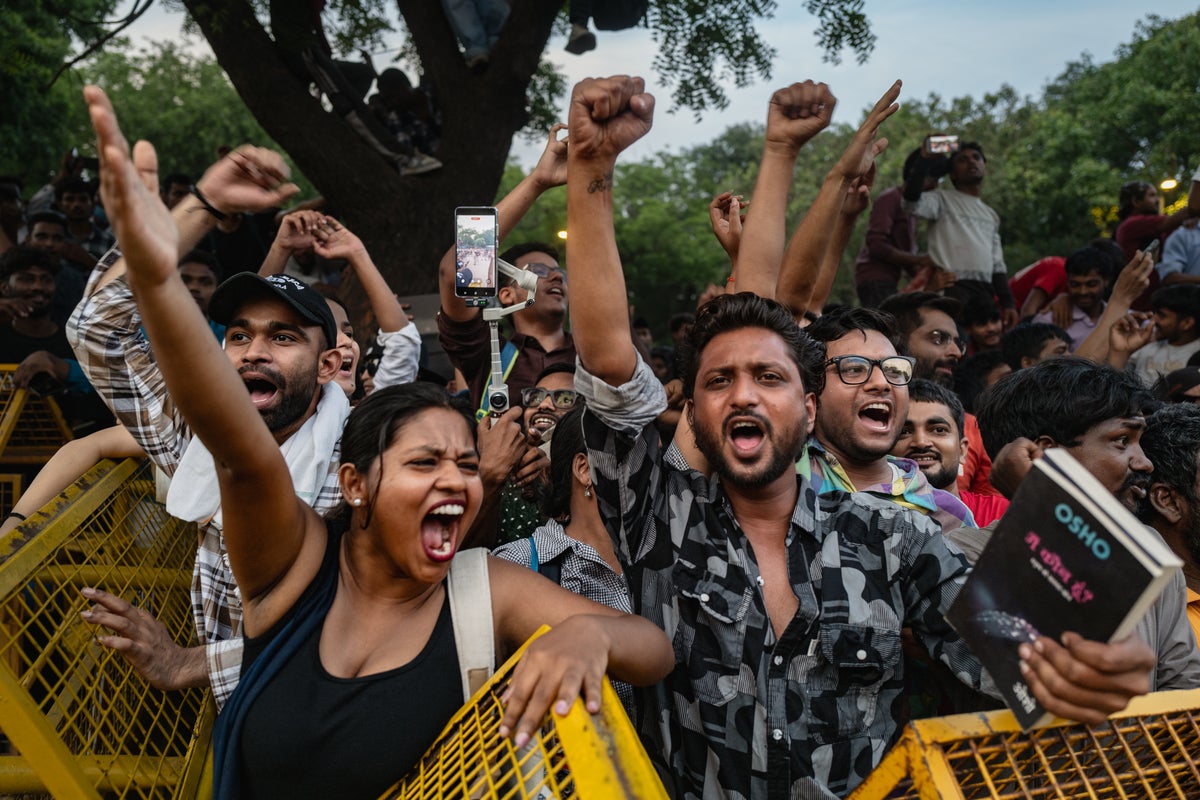
Case in point: India, a country that has been under the ironclad rule of the Modi government for over 12 years, has been recently rocked by Gen Z-led protests. Fed up and pushed to the brink, many of the same complaints from the UK’s youth – growing youth unemployment, severe income and social inequality, university education that is too expensive and no longer delivering – their “cockroach” street protests shook the government and brought down a minister.
 India’s ‘cockroach’ movement sparked supportive protests in London’s Trafalgar Square this week (Seiya Tanase/NurPhoto/Shutterstock)
Two major sparks seemed to ignite the protests. The first was in May when India’s main medical entrance examination) was cancelled due to a leaked paper. This meant over 2 million young people had to retake the gruelling and stressful exam, leading to an outbreak of suicides that were directly attributed to the cancellation and retake.
The second was the formation of what was initially a satirical party called the Cockroach Janta Party (CJP) that formed in “honour” of India’s chief justice Surya Kant, who likened the people protesting to “cockroaches” and parasites. Utilising the power of social media, and specifically Instagram, which has been far less censored than other platforms by the Modi government and fanned by the disdainful comments, waves of organised protests have broken out all over India. Too large in numbers, they were also too articulate and too united in rage to be able to write off as young “troublemakers” or indeed, cockroaches. This led to the resignation of the education minister, Dharmendra Pradhan, viewed as an extraordinary victory for the protesters, as in 12 years there has only been one resignation in the Modi government.
 Young people in the UK are increasingly frustrated by the lack of opportunities after graduation – amid an AI joblessness epidemic and a troubled economy (PA)
The protests in India, being dubbed as “Gen Z protests”, are absolutely becoming global flashpoints ignited by the sparks of rage young people are feeling across the world. If students can do it in a country with a repressive and draconian regime like India, they are asking what disgruntled young people could achieve elsewhere?
Thousands of young people have poured out in cities across the world in solidarity with Indian youth, in London at the Indian High Commission and public landmarks such as Union Square in New York and in cities across Europe.
Several protests were organised by student groups and Greta Thunberg showed up at the London one, telling huge crowds, “Indian students made us proud.” Rohan, 21, who was born in the UK and studies medicine at King’s College, attended a solidarity protest in London and sees huge parallels with the current angst being experienced by young people here and globally.
He explains excitedly, “You can feel something in the air, everywhere. Look, culturally kids in India are taught to have respect for their elders and important people, so you know it’s broken when people our age show up in those kinds of numbers and take genuine risks. It’s not like here where you might get a slap on the wrist. The police are brutal. There’s real bravery and it’s inspiring.
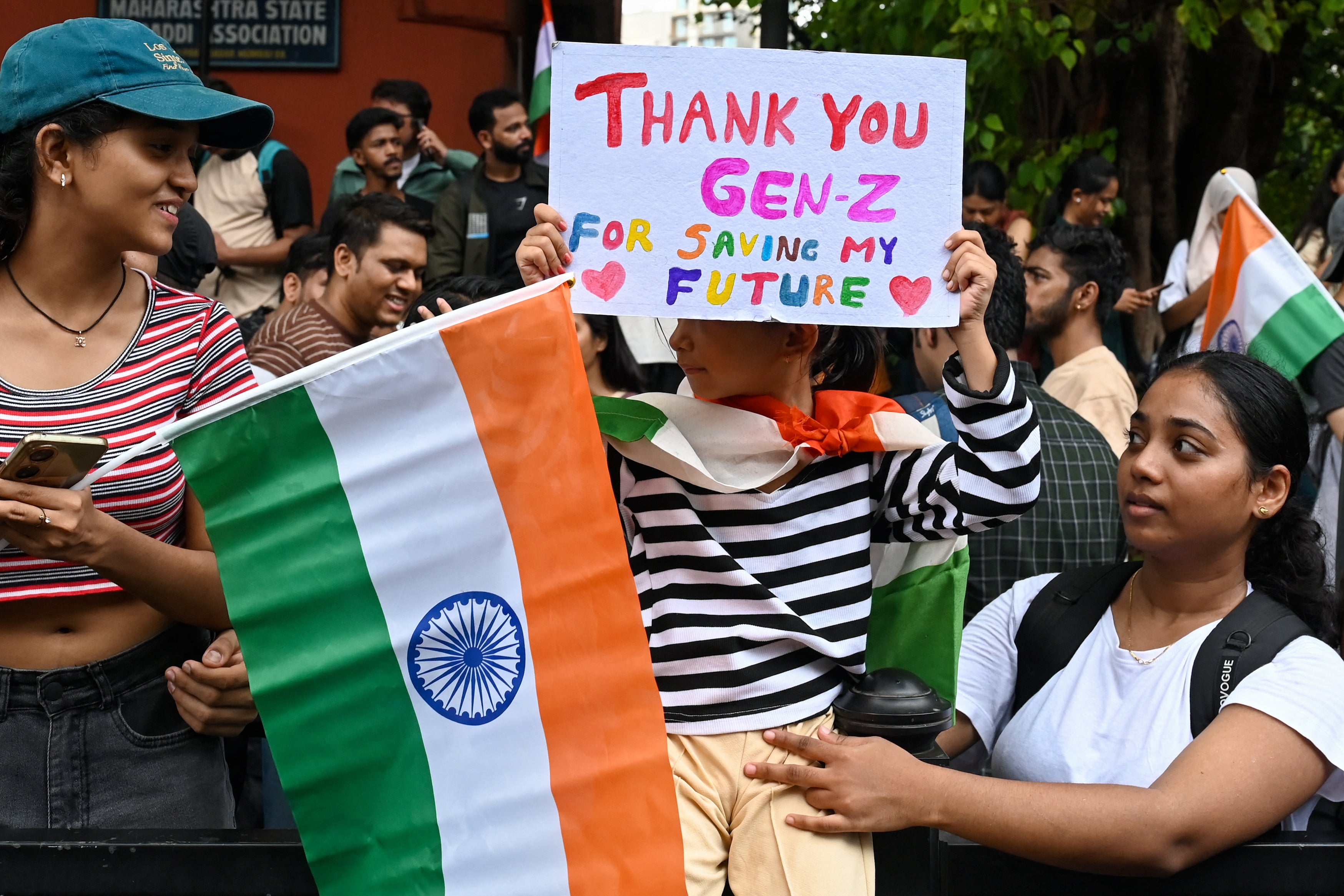 ‘Something is broken for our generation, and it’s happening all over the world’: India’s protests, pictured here, have the support of students in the UK (AFP/Getty)
“Something is growing here too and for the same reasons. The dreams we were promised – work hard, get good grades, go to a good university and get a good job – are being sh*t on by older people; everyone knows the association with cockroaches. You can’t take hope and dreams away and expect people not to get upset. Something is broken for our generation and it’s happening all over the world.”
Rohan is correct about a growing wave of Gen Z and Gen A anger spreading globally. In the UK, the antipathy against the traditional university system has reached unprecedented levels. And while Andy Burnham has announced plans to put technical education on a par with degrees for future generations, there are still hundreds of thousands of young people feeling they were essentially duped into taking degrees paid for by expensive loans with interest rates well above the Bank of England base rate. This “mis-selling” scandal has left them with over £50,000 in debt and rising, often with no discernible advantage.
Isabel, 23, eloquently described the frustration of being saddled with a debt and her degree “meaning almost nothing in an environment that’s now controlled by AI, nepotism and ferocious competition”. It is a sentiment shared by millions of graduates globally.
I think the students in India are heroes and it should be inspiring for everyone our age to not be afraid
Charlie, UK student who attended London protests in support of the ‘cockroach’’ movement
There have been huge and often highly effective Gen Z-led protests in Madagascar, Nepal, Togo and Kenya, and though they all have individual targets, the themes of them are remarkably similar: a youthful fury at repression, corruption and general neglect of the youngest generations, governments should be compelled to look after and invest in.
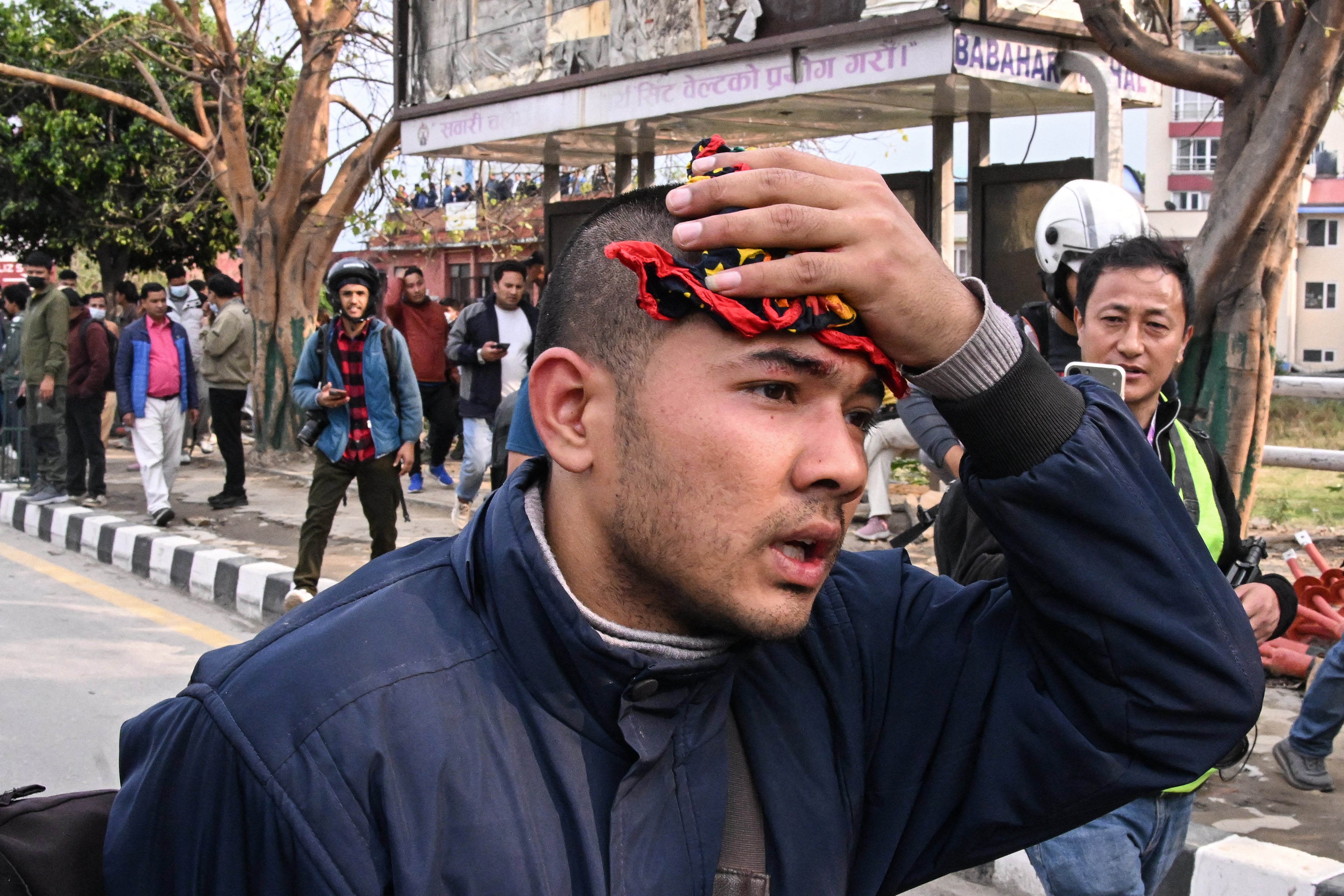 The protests in Nepal last year were largely driven by Gen Z and led to the resignation of its prime minister and many in the government (AFP/Getty)
This has attracted allies of every stripe. Charlie (20) is from the UK and attends Columbia University as an undergraduate, an institution with a real history of protest, a spirit that has been somewhat quashed in the last twelve months due to fears of retribution from the Trump government.
She attended the protest with her girlfriend Ila*, an Indian native who asked to have her name changed due to fears about losing her student visa, even though the protests aren’t critical of the Trump administration – an administration vocally supportive of Modi. “I think the students in India are heroes and it should be inspiring for everyone our age to not be afraid.
“Protests when there is enough solidarity and in big enough numbers work. It’s working in India. It worked in Minnesota. We shouldn’t be scared of the government. They should be scared of us! People our age need to get off complaining on social media and get into the street. It’s time. Ila* took a real risk going, because of what’s going on here and there. We all need to find our courage and get out there.”
Recently, the NUS in the UK has launched a campaign growing rapidly in support called “Don’t Freeze Our Future: Fix Our Loans” demanding the chancellor reverse the freeze on student repayment threshold, reform interest rates so balances do not grow faster than repayments and introduce clearer, fairer terms that don’t penalise lower and middle earners. Their campaign has growing support across generations, and while for now it is a petition and small local demonstrations, seeing what the ‘cockroach’ movement achieved in India and elsewhere, it doesn’t take too much imagination to see how that could inspire Gen Z and Gen here.
It’s worth remembering what started out as a joke by Boston University student Abhijeet Dipke – “what if all the cockroaches came together?” started a global movement, but only because the conditions were squalid enough for it to spread.
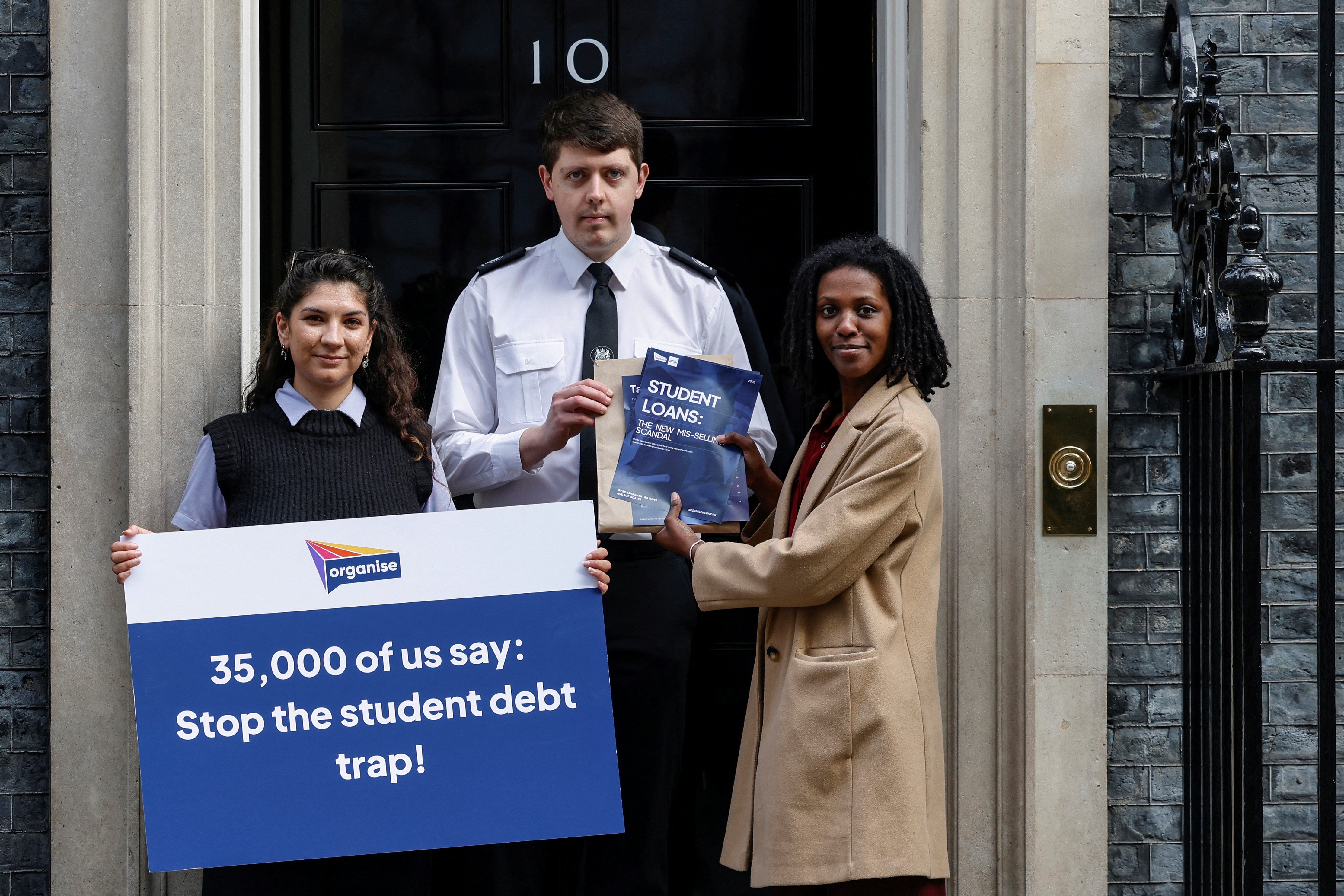 Members of the NUS call for student loan reform in March, amid widespread anger over the handling of repayments (AFP/Getty)
The economic, social and cultural squalor is still being experienced everywhere for young people who have grown up with few opportunities, few places to go, anger and rage everywhere you look and an overwhelming sense that the countries they’re living in might have their best eras in the rearview mirror. A report from the Resolution Foundation published last month found that young people are becoming the “stay-at-home generation”: almost two-thirds (63 per cent) of 20- to 24-year-olds now live with their parents, up from 51 per cent in 2011. Among 25- to 29-year-olds, almost one in four (24 per cent) still live at home.
Older people can be pleasantly nostalgic about a time when one income could buy a family home, or university was a free ride, or you could walk into a job just by showing up in a suit, but for young people it’s a slap in the face. It then adds insult to injury when they are constantly ridiculed by older, wealthy people who call them snowflakes, “woke” in the pejorative sense or, yes, cockroaches.
Of course, the other thing to remember about cockroaches is that, aside from their rather icky reputation, they are something of an evolutionary marvel; they have survived 320 million years, are remarkably nimble and possess an almost unparalleled ability to adapt and thrive in whatever conditions are thrown at them.
As fires rage, economies falter, ill-thought-out wars break out, and more leaders who looked powerful just a year ago start to fall, perhaps comparing young people to cockroaches might be a dangerous compliment and prediction. The last twenty years have been unrelentingly challenging and difficult for young people globally. It seems they too are learning to adapt – let’s see what comes next.