
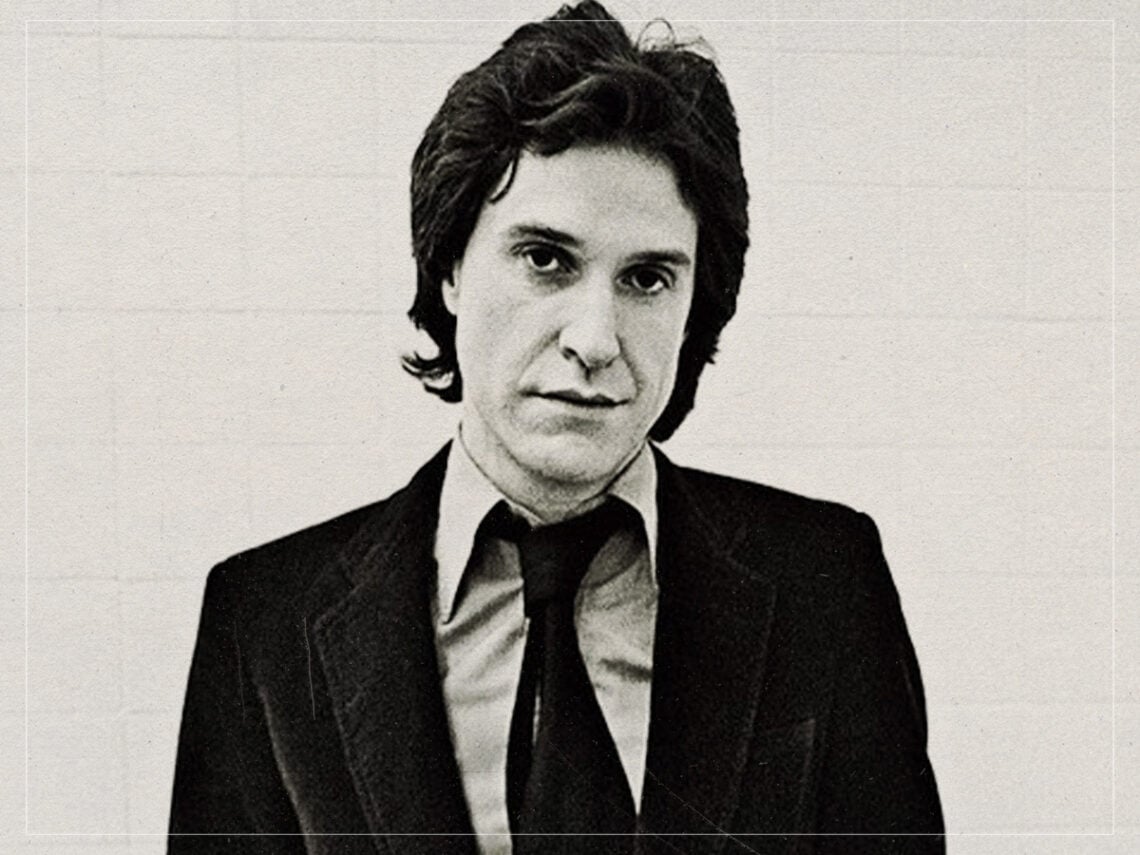
Credit: Far Out / Ray Davies
Thu 13 August 2026 18:44, UK
From the 1960s until the present day, Ray Davies has always been regarded as an icon of British pop music.
His timeless work as a member of The Kinks has served as an inspiration for future generations of songwriters from the UK. While their level of commercial acclaim tended to fluctuate at the time, the Kinks helped define an entire era of British music, and in essence, they laid the foundations for the Britpop movement while the likes of Damon Albarn and Jarvis Cocker were still in school.
However, at the same time that Davies and his band were making quintessentially representative music of their own tiny island nation, the US was experiencing a huge cultural shift through the civil rights movement, and the rise of Motown Records in Detroit that celebrated the music of Black soul artists with plenty to say about the state of the nation was arguably the most accurate portrayal of life in America at the same time.
While Motown was hardly a protest label, founder Berry Gordy famously insisted that he never wanted it to become a “mouthpiece for civil rights”, its music was, nevertheless, inseparable from the realities of black American life, tying into the wider changes of society along the way. As Smokey Robinson later put it, “There is no way that you could be a black person in the United States in the sixties and not be affected.”
Even when Motown’s songs weren’t explicitly political, the label’s very existence and mainstream dominance represented a form of black cultural and economic power, that asserted itself in its own empowering way. Ray Davies was honestly reflecting life in Britain, and Motown, in its fashion, was doing the same a few thousand miles away.
 Credit: Far Out / Library of Congress / Motown Records / Universal Music Group
From Marvin Gaye to Diana Ross, Motown’s star-studded roster produced some of the greatest pop music of the 1960s and ‘70s, and Davies, despite living in England, would have been acutely aware of its importance to the ever-shifting musical landscape.
Motown had a massive impact in the UK, gaining just as much chart success across the Atlantic as they did on home soil, and while there wasn’t a great deal of overlap between the sounds of the label and what the Kinks were doing, you can imagine that there would have been a decent amount of respect shown by Davies towards the artistry.
Back in 2023, Davies made an appearance on the BBC Radio 6 Music show, 6 Music Stories, where he spoke to Jools Holland about his career and some of the songs that have inspired him over the years. While making nods to the likes of Otis Redding and Dizzy Gillespie among his other selections, the Motown track that made the biggest impression on the songwriter was The Temptations’ ‘Ball of Confusion (That’s What the World Is Today)’.
Written at the start of the 1970s by Norman Whitfield and Barrett Strong, the track is a psychedelic soul song that touches on the turmoil that the US found itself in at the turn of the decade, with the looming threat of nuclear war and the conflict in Vietnam hanging over the heads of Americans. While Motown artists didn’t often use their platform to make reference to social issues in such an outright manner, ‘Ball of Confusion’ is direct and pointed, something Davies always adored.
As one of very few protest records that the label put out, it stands out among the rest of the catalogue. For groovy old Davies, however, that combination of Motown’s irresistible catchiness and unusually blunt social commentary proved impossible to resist. In some ways, ‘Ball of Confusion’ was the inverse of the same coin Davies’ own songwriting occupied.
Where The Kinks often filtered Britain’s social tensions through wry characters and understated humour but with a distorted sting in the tail, The Temptations’ song laid America’s turmoil bare, rattling through racism, war, poverty and political violence with barely a moment to breathe, yet it was sugar-coated melodically. Little wonder Davies says he loved it.
With an undeniably funky groove and heaps of passion, there are nods to Sly & the Family Stone and Jimi Hendrix that can be felt in the style of the song, and it certainly sticks out as one of the Temptations’ finest moments. While the Kinks were clearly taking a different approach to crafting their own psychedelic pop and rock music, the sheer power of this song was enough to grab the attention of Davies, who cited it as one of his favourite records of all time.
However, Bob Babbitt, who played bass on the track, had no idea that the song would have the political impact that it did until he heard it on the radio, because all he was ever asked to do was perform the rhythm track. “Putting it together was simple,” he explained. “We just did that one song in the three-hour session and we had enough time left over to eat some BLT sandwiches.“
Babbitt nonchalantly concluded, “We didn’t know it was going to be political, because the lyrics weren’t written when the rhythm track was recorded.”
