
Your support helps us to tell the story
From reproductive rights to climate change to Big Tech, The Independent is on the ground when the story is developing. Whether it’s investigating the financials of Elon Musk’s pro-Trump PAC or producing our latest documentary, ‘The A Word’, which shines a light on the American women fighting for reproductive rights, we know how important it is to parse out the facts from the messaging.
At such a critical moment in US history, we need reporters on the ground. Your donation allows us to keep sending journalists to speak to both sides of the story.
The Independent is trusted by Americans across the entire political spectrum. And unlike many other quality news outlets, we choose not to lock Americans out of our reporting and analysis with paywalls. We believe quality journalism should be available to everyone, paid for by those who can afford it.
Your support makes all the difference.Read more
Low water levels across England are having a detrimental impact on houseboat communities and boat owners as the country faces its driest summer on record.
Following a record dry July and very low levels of rain at the start of August, 27 million people are now under water-use restrictions, with 45 million people living in drought conditions, officials from the National Drought Group said.
England and Wales experienced the driest July in 190 years, with some areas receiving no rainfall whatsoever as a result of what the Met Office dubbed “truly remarkable” conditions.
Environment Agency has shared that low levels in England are “having impacts on houseboat communities on the lower Thames, boat trips on the River Stour and sometimes stopping navigation altogether”.
They added: “There are also reports of some fish and canoe passes being closed on the River Medway, as well as several reports of vandalism at locks, which is impacting navigation and increasing issues with water resources management.”
 Low water levels reveal the reservoir bed of Howden Reservoir in Bamford (Getty)
In particular, the River Nene in Cambridgeshire has been affected by its water being used by firefighters to battle the wildfire on the Holme Fen nature reserve. Levels in the river have dropped far enough to be classed as “notably low” by the Environment Agency.
A spokesperson said: “Due to extremely low water levels, we have issued a navigational closure notice to users of the River Nene between Dog in a Doublet Lock and Orton Lock near Peterborough.
“This action follows the very dry weather and the need for Cambridgeshire Fire Service to abstract water from the Nene, because of the on-going wildfire at Holme Fen Nature Reserve.
“Our officers continue to work with the Fire Service, Natural England and partners to bring this incident to a close.”
England has received just 4mm of rain so far in August, or 6 per cent of the long-term average for the month, the Environment Agency said on Friday. It follows the driest July on record for the country, when only 7mm of rain was measured, or 10 per cent of the average.
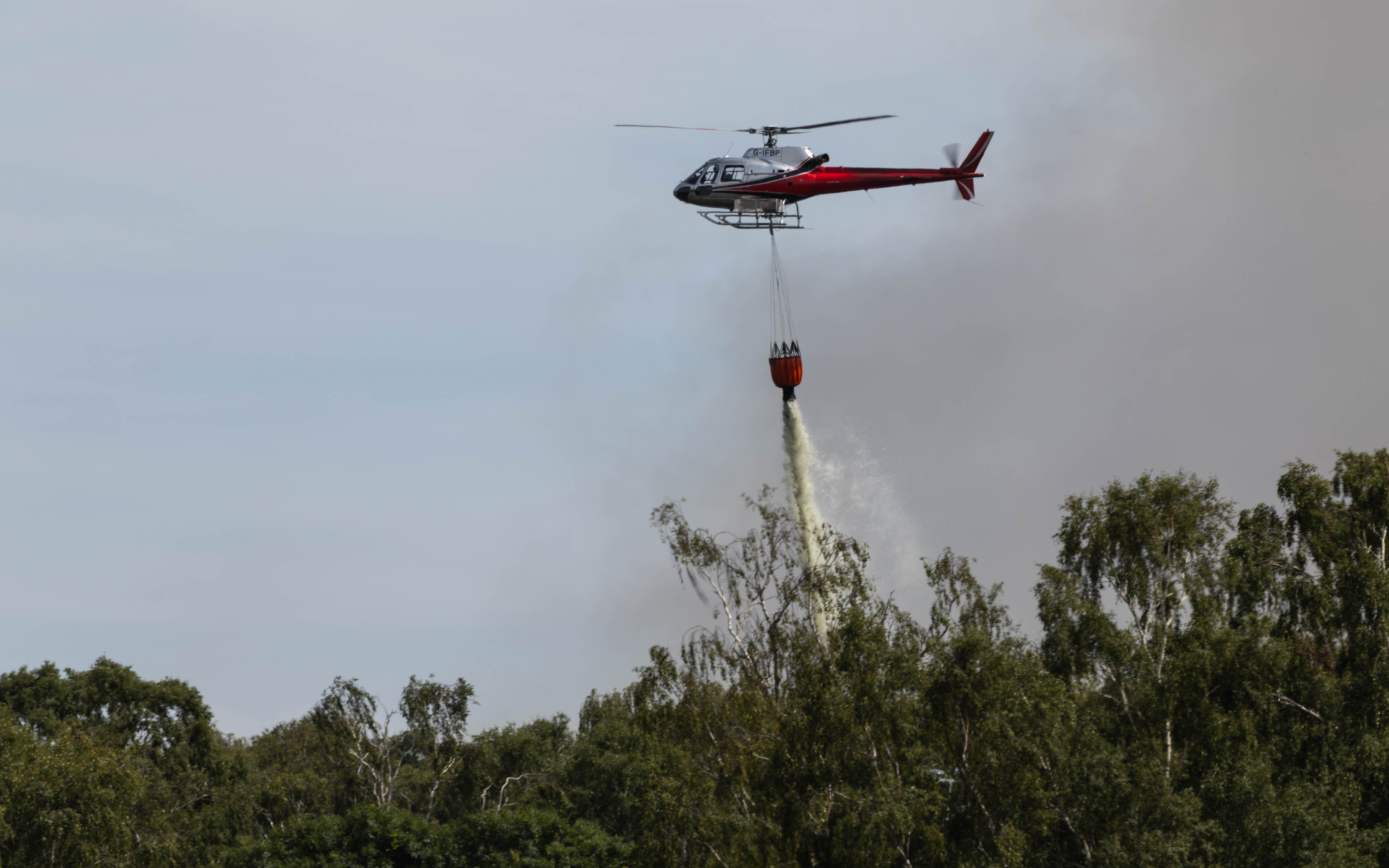 The River Nene in Cambridgeshire has been affected by its water being used to fight the wildfire on the Holme Fen nature reserve (Getty)
The ongoing dry weather means that reservoir storage for England now stands at 66 per cent, down from 69 per cent a week ago and nearly 14 percentage points below the long-term average for the time of year, the Environment Agency said.
Storage stood at 85 per cent at the end of June, but has fallen steadily in recent weeks.
Five reservoirs are currently classed as having “exceptionally low” levels: Clatworthy in Somerset (48 per cent full); Clywedog in Powys, which provides water for central and north-west England (56 per cent); the Dove group of reservoirs in Derbyshire (69 per cent); Hanningfield in Essex (56 per cent); and Wimbleball in Somerset (46 per cent).