
In the 2023 satirical movie American Fiction, the joke is that My Pafology, the “raw and real” manuscript by Thelonious “Monk” Ellison, only becomes valuable when white publishers believe it emerged from authentic Black suffering rather than academic satire. It’s funny because it’s true.
Back in the real world, the irony deepens when the same industry that the film shows rewarding Black writers for conforming to stereotypes now questions whether their work is even theirs to begin with.
This is playing out in the US in the case of Jerry Falade, a Nigerian PhD student at a university in Dallas, Texas – the latest in a spate of Black writers to see major book deals implode under suspicion of AI use. Last month, he saw his debut crime novel, Call Me, I’ll Hide the Body – which sparked a $2m bidding war – withdrawn from submission after allegations he used AI to write it. Falade, who denies the allegations, claims racism played a role in the decision to kill his book.
 Jeffrey Wright as Thelonious ‘Monk’ Ellison in ‘American Fiction’ (Amazon MGM)
Falade, who didn’t respond to an interview request from The Independent, wrote in a lengthy post on Instagram that he had spent five years studying for a BA in literature in Nigeria, followed by an MA in Germany, and a PhD, after which “someone somewhere decided I couldn’t have possibly written my book myself because an AI detection software told them so, and decided to ruin my life in the process.
“I know what it took to write this book,” he added. “I know the months I spent inside it. I know how much caffeine I took in the middle of the night just to stay up and write a chapter until it appears the way I pictured it in my head. But right now, the joy has been taken out of it.”
In an interview with the Wall Street Journal, Falade clarified that he used AI exclusively for research purposes and not to draft the book itself. “…to query details like what chemical someone might use to dissolve a human body or to check the more Americanised version of the word ‘wardrobe’,” it quoted him as saying.
In a statement sent to The Guardian, Falade said: “There seems to be a troubling assumption that when a Black writer produces work that attracts significant attention, the work could not possibly be their own. Meanwhile, there are popular white writers who have publicly mentioned using AI for their writing processes and they’re still doing fine.”
 Falade has denied the use of AI to write his book – admitting that he uses ChatGPT for research purposes (Instagram)
His own situation aside, Falade may have a point. A survey of 1,200 authors published last year by BookBub, a book discovery service, found 45 per cent were currently using generative AI to assist with their work. Of those, almost half used it frequently for outlining and plotting, and more than 25 per cent used it to help with the writing itself.
Anthony Horowitz – the bestselling novelist behind the Alex Rider series and Midsomer Murders told reporters he uses ChatGPT all the time for research and had “absolutely no shame about using it at all”, calling it an incredible resource. And Nobel laureate Olga Tokarczuk sparked controversy after revealing she uses AI to help her with character development in her novels. She later clarified it was solely for research and not for writing.
Another problem is that current AI detection technology is flawed. The chief data scientist of one marketing analytics firm discovered that an AI detector claimed that 97.75% of the preamble to the US Declaration of Independence was AI-generated. Inputting text from the Bible was flagged as 100 per cent AI-generated. Moby Dick? An 88.24 per cent probability that it was written by AI.
Ironically enough, the LLM Claude now embeds invisible, machine-readable watermarks into all AI-generated text – designed to survive copy-and-paste. Anthropic, Claude’s owner, said on its website: “As of August 2, the EU requires AI providers serving its market to mark AI-generated content. Other major model developers have signed the same Code of Practice and will be implementing their own watermarks.”
But what’s emerged from the Falade story is the question of whether Black writers are being subjected to greater levels of scrutiny in the first place. Many of Falade’s supporters, and Falade himself, have pointed out that three Black authors received major publishing deals this year, and all three later had deals cancelled or disrupted following suspicions about AI.
Earlier this year, Mia Ballard’s horror debut Shy Girl was cancelled by Hachette after she attributed AI-detected passages to an editor she’d hired. HM Wolfe’s viral hit Daggermouth weathered similar allegations from researchers who said substantial portions were machine-generated. And then there was Jamir Nazir, the Trinidadian writer whose Commonwealth Short Story Prize-winning entry The Serpent in the Grove sparked AI accusations and caused Granta to cut ties with the prize. In that case, The Commonwealth Foundation conducted a month-long review and officially cleared Nazir, but Granta stood by its decision.
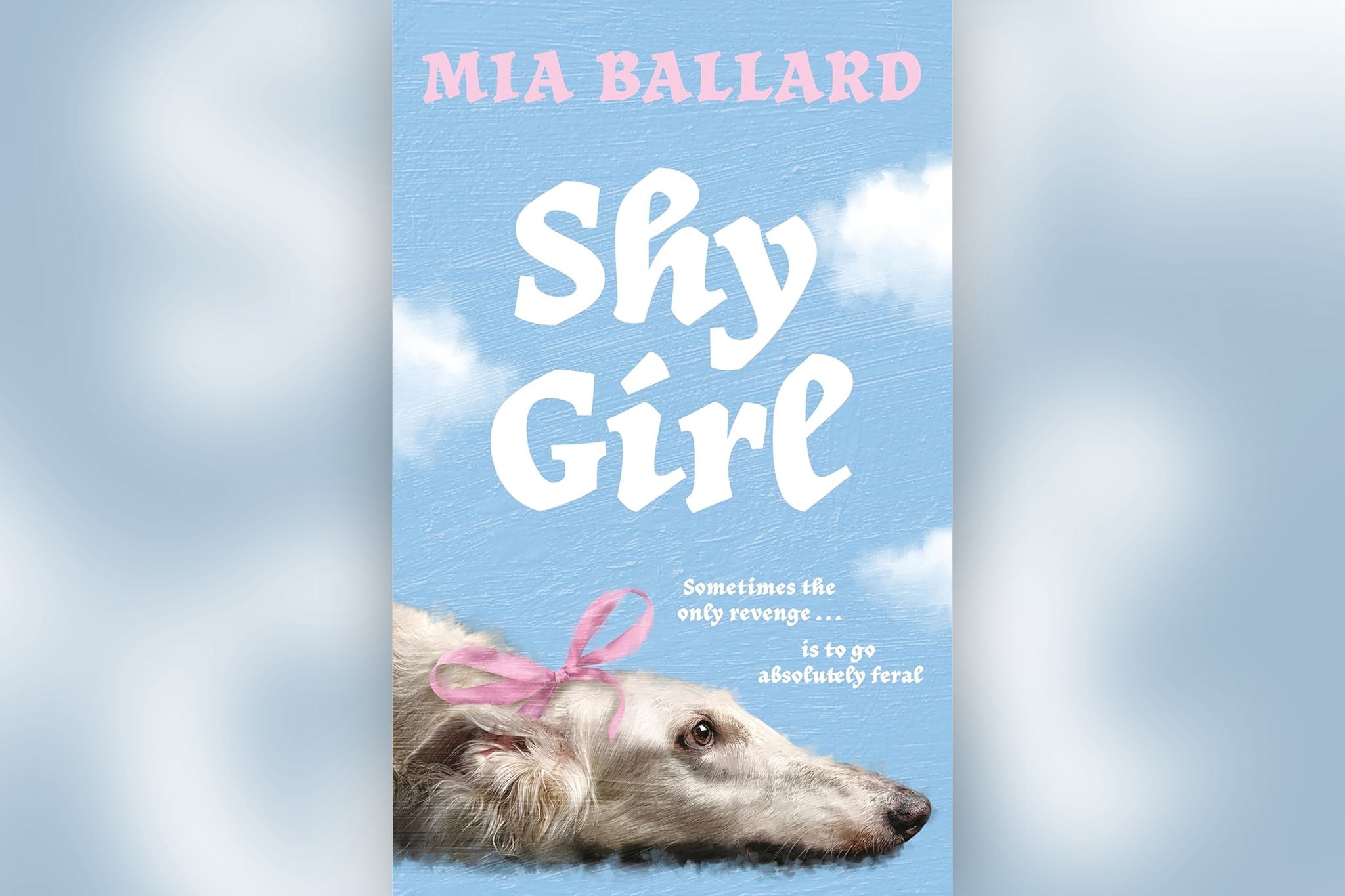 Mia Ballard’s ‘Shy Girl’ was subject to intense scrutiny after she attributed AI-detected passages to a hired editor (Hachette)
The furore over Falade that is now playing out on social media and in the publishing industry and has some aspects of the devastating situation that surrounded Jason Arday in the UK. The Cambridge academic was scrutinised by the press over plagiarism allegations before being found dead at a London address last week, igniting a debate over whether institutions promote Black talent for public relations value, exposing them to extraordinary scrutiny when questions arise over their appointment or their work. Aspects of the reporting on Arday honed in on claims over his memoir that has since been released.
On Falade, author Diana Rodriguez Wallach said on TikTok, “A young Black author with a seven-figure book deal just had their contract cancelled because of suspected AI use. … Feels like a witch hunt. … 14 different publishers thought this book was worth millions of dollars, and no one else suspected AI up until this point and the author denies it?”
Mic Wright is a British media commentator and the author of Breaking: How the Media Works, When it Doesn’t and Why it Matters. He says that past experience shows that Black authors are subjected to a level of scrutiny that is higher than white authors. “I think there are enough examples to show that. But in this case there’s just a lack of clarity around what happened. I don’t know what’s going on, and it’s worrying to me if we’re getting to a point now where simply saying ‘This might be AI’ is enough to derail things.”
Wright tells The Independent that it puts us in a situation “where in order to publish any book you have to submit yourself to being analysed by AI detection software. Or you’re going to have to submit all of your drafts. Maybe in future you will have to handwrite your [manuscript].”
There’s just a lack of clarity. I don’t know what’s going on, and it’s worrying to me if we’re getting to a point now where simply saying ‘This might be AI’ is enough to derail things
Mic Wright, author of ‘Breaking: How Medi Works, When it Doesn’t and Why it Matters’
He also wonders whether if there wasn’t such a huge amount of money and attention at the heart of the Falade story, it would even be a story. “If he had my advance, which was like £10k, nobody would give a damn.”
Leye Adenle, a Nigerian-British author of crime fiction based in London, thinks there’s a good deal of irony accusing Falade of using AI to write his novel when LLMs are themselves based on plagiarising the work of writers and journalists. Adenle, who has written six books (I actually edited his first, Easy Motion Tourist, which won the French literary award Prix Marianne) and has a new thriller out next month called Fall From Grace, published by Simon & Schuster, calls it “a global theft of intellectual property.”
As The Independent reported, earlier this spring, bestselling authors such as Kazuo Ishiguro and Jeanette Winterson were among roughly 10,000 writers who jointly released a book with blank pages to protest the use of their published works in training AI systems without permission.
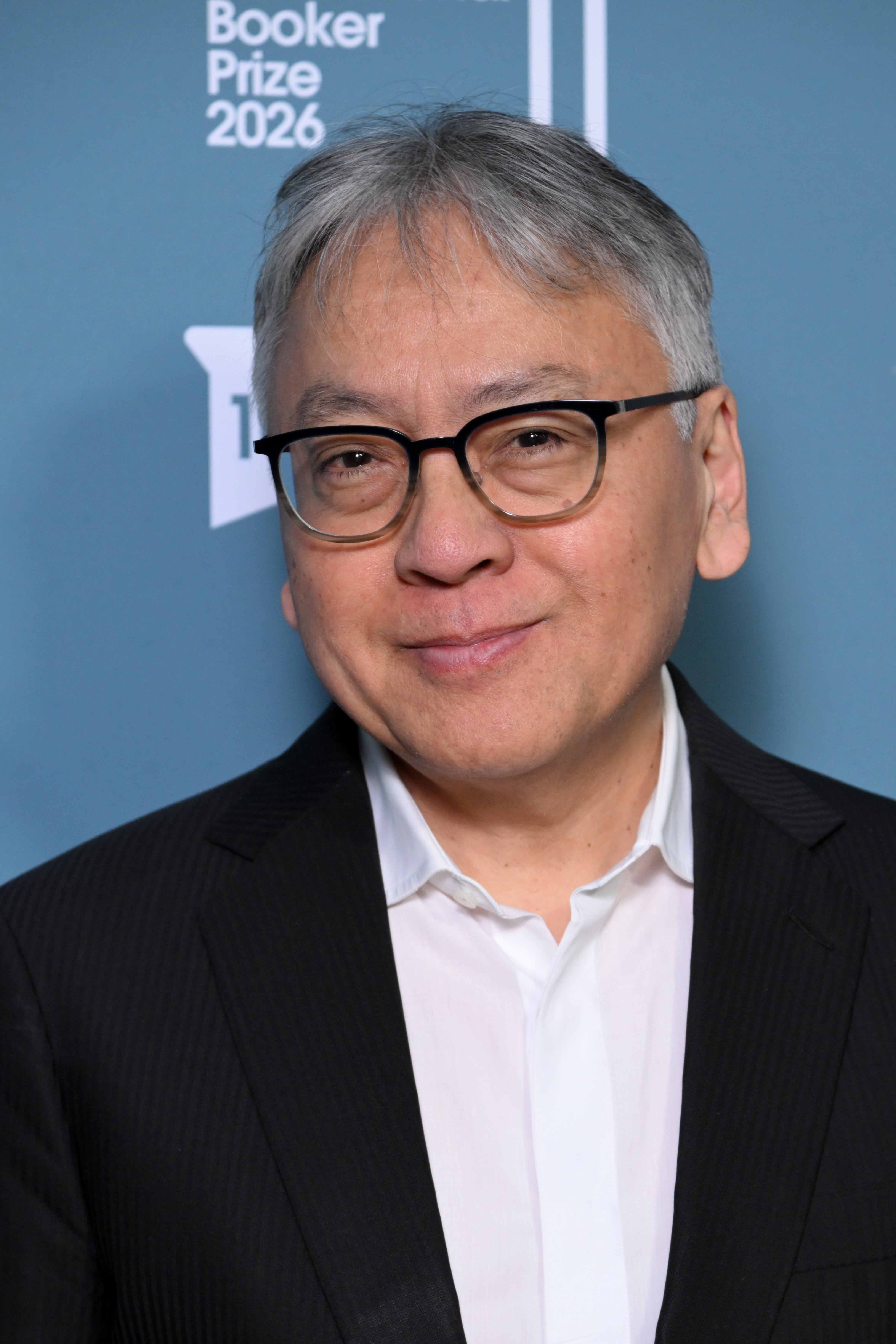 Kazuo Ishiguro was among the writers who published an empty book in protest over unauthorised use of their work (Getty)
Adenle tells The Independent he feels bad for new authors today who need to prove they wrote their work themselves. “I imagine if I was getting published now, if I was a debut writer, … someone might say, hold on, this is a debut novel? It’s so good. It must be AI.”
Adenle says the conspiracy theorist in him thinks one of two things is happening. The first is that the industry – be it publishing or education – is looking for someone to bring down – and as both industries have a race problem, that someone is Black.
In the same way that after Jason Arday’s death, it emerged in news reports and online that there were only around 270 Black university professors in the UK – around 1 per cent of the total – in the US, as Ebony magazine recently noted, Black authors make up just 6 per cent of those published annually, despite Black people accounting for more than 13 per cent of the population.
Talented Black academics and writers – those who actually claw their way to professorships or land those big book deals – never quite manage to shake the whispers that they were just “DEI” hires. And all these grand, public announcements about signing them in the first place? They generate buzz and get everyone clapping, but they don’t solve a more fundamental hiring problem.
“Let’s elevate them greatly … so that we can bring them down massively in front of the entire globe,” Adenle says. “That’s a conspiracy theory. That’s very far-fetched, because for that to happen, we must have some very racist billionaires funding the far right – people who believe in eugenics and white supremacy intentionally funding universities or people within academia or publishing to look for Black people that they can raise onto a pedestal so that they can crush them violently. That’s a conspiracy, right?
“I mean, I would like to think that we’re far from the days when people were trafficked, were kidnapped, put to work, holes drilled through their lips so they couldn’t eat what they cooked, where they were stripped of their names, their heritage, their skin used as leather, their hair used as cushions, being bred into slavery. It’s been a long time since then, hasn’t it? Surely the world is a very equitable place now, and people do not do terrible things.”
An alternative view conspiracy, he says, is this: “Very seldom do I hear on the news the colour of a person who’s committed a terrible crime when they are white.” But, he says, when they are Black or minority or Muslim, their race is the story.
 Jason Arday’s memoir ‘Great and Unfortunate Things’ has been released after his death (AFP/Getty)
The pattern is unmistakable: whether accused of plagiarism, of using AI – or even of a crime, Black people find their race becomes as much on trial as their actions. Dr Charlotte Proudman made this argument with devastating clarity in The Independent regarding Jason Arday – that when white academics face allegations, they are judged as individuals, but when Black academics stumble, their entire race is interrogated.
In each case, the scrutiny extends far beyond the alleged misconduct to encompass the fundamental question of whether someone like them could possibly have earned their stripes legitimately. Until institutions confront this reality, every so-called “diversity hire” will remain in a precarious existence, celebrated when convenient, scrutinised when vulnerable.
Jerry Falade, meanwhile, is keeping a low profile – for now. “I’ll talk when the time is right,” he wrote on Instagram. “Definitely innocent!!!”
An email to publishers from one of the agents representing his book acknowledged the manuscript “dazzled us and the top publishing professionals around the world” before concluding with a telling abdication: “This raises so many questions about authorship and what AI means for this industry, but those are questions for another day.”
Falade’s agent Marc Gerald told The Independent in an email he was “not interested in weighing in further on the story”.
As AI detection becomes standard in publishing, accusations that authors used LLMs to write portions of their manuscripts will inevitably increase. It seems essential, then, that these tools don’t become new instruments of racial gatekeeping, where suspicion falls disproportionately on Black writers.