
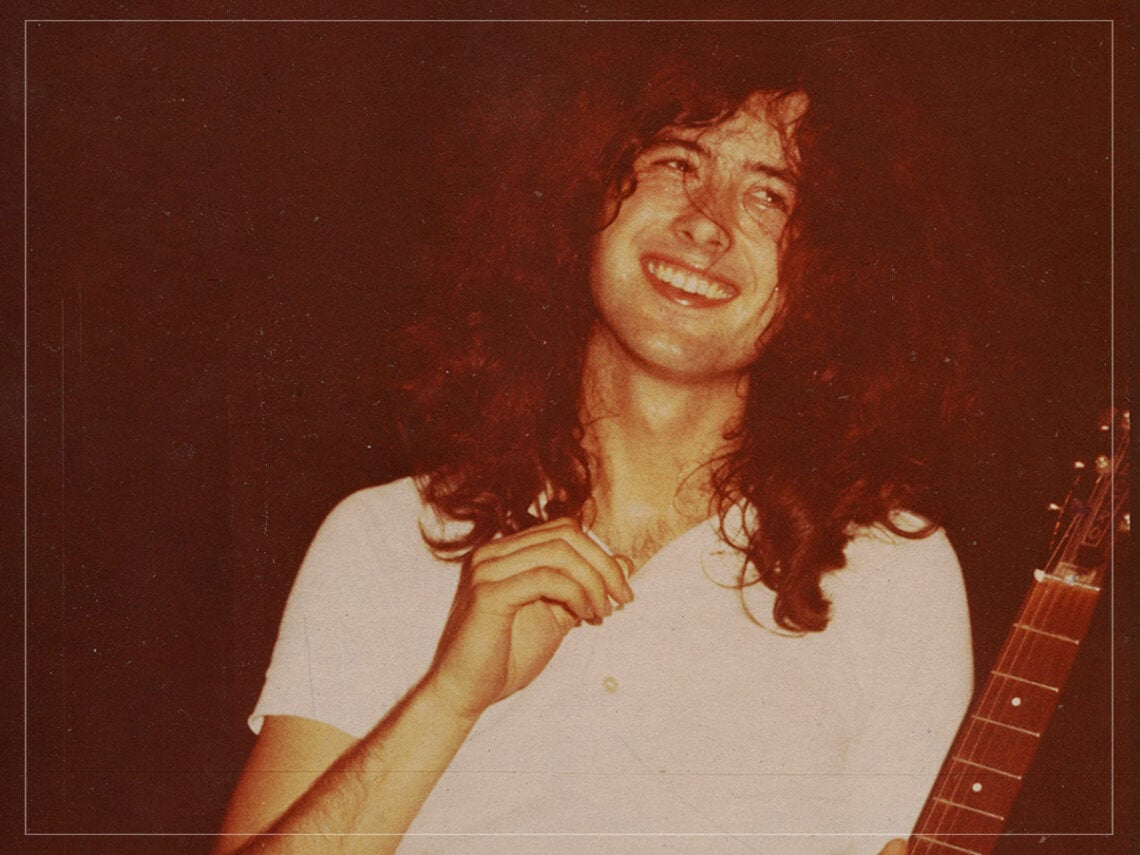
Credit: Far Out / 2025 Paradise Pictures Ltd
Mon 31 August 2026 17:00, UK
Classic rock is a term as broad as a tower crane driver’s backside. But you know it when you hear it.
From the angsty violence of the gritty distortion on ‘You Really Got Me’ to the scrappy pop hook of ‘(I Can’t Get No) Satisfaction’, there is an array of tracks that herald the genre that now keeps culture in print. But if you want to find the true foundation of the ‘sound’ of classic rock, then Jimmy Page has a rather specific suggestion.
It came in 1965, with Winston Churchill’s passing, spacewalks occurring miles above us, and Bob Dylan causing traditionalists to blow the fuses that they didn’t believe in at Newport. Amid this hotbed of epochal moments, Eric Clapton was still a young guitarist making his name with John Mayall & the Bluesbreakers.
But he would soon make more than a name for himself, weaving an iconic sound into a lowly anthem that still reverberates to this day. The song was ‘I’m Your Witchdoctor’, written by Mayall and produced by Page, who had already spent years operating behind the scenes as one of Britain’s most in-demand and well-paid session musicians.
While the track might now be far eclipsed by more established classics, for Page, the significance lay in ‘I’m Your Witchdoctor’s influential sound. Clapton had already begun moving beyond the relatively clean, restrained guitar tones that had dominated British pop as ’65 roared into view. But this was a different beast.
The Ripley rocker’s fascination with American blues had led him towards a more muscular pop approach, and he was keen to see what fresh technology was finally catching up with his ambition for a robust, riffing sound.
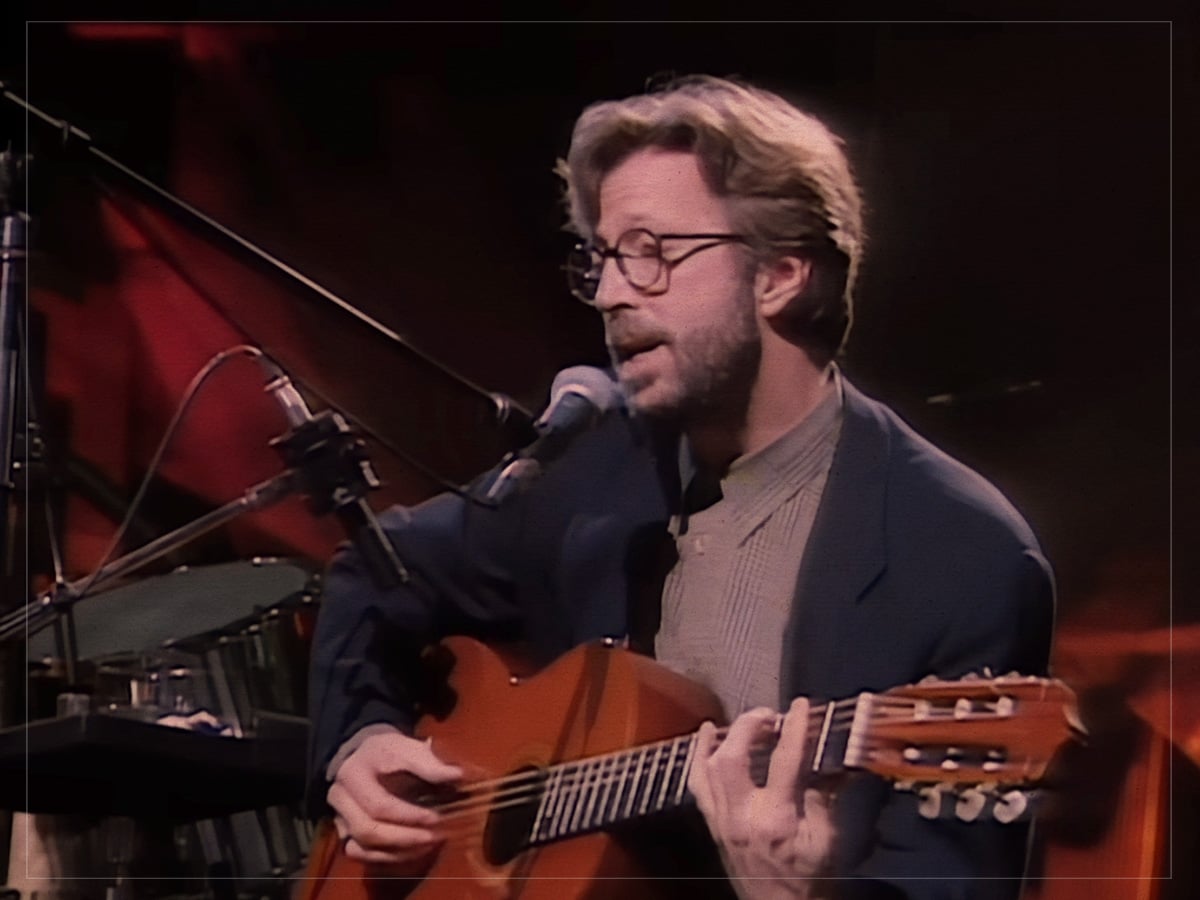 Credit: Far Out / YouTube Still
The Gibson guitar and Marshall amplifier were becoming the weapons of choice, and Clapton paired them like an alchemical admiral of rock on this ’65 strummer. “Eric was the first one to evolve the sound with the Gibson and Marshall amps; he should have total credit for that,” Page recalled. After all, the awed Page was even behind the mixing desk when that credit owed was being created.
“I remember when we did ‘I’m Your Witchdoctor’, he had all that sound down,” Page recalled. It was the moment that Clapton had cracked it. The unique combination of bold muscularity and silken skill – the Brazilian midfield general, if you will – we now identify as the sound of classic rock. As it happens, the engineer was so perturbed by the originality that he tried to kill the session.
“The engineer,” Page recalled in the Trouser Press, “suddenly turned off the machine and said, ‘This guitarist is unrecordable!’ I told him to just record it, and I’d take full responsibility,” the future Led Zeppelin man said, as a glinting-eyed producer, wise beyond his years.
In some ways, if Clapton defined the sound of classic rock, then this simple interaction defines its spirit (if it can be said to have a spirit beyond attempting to facilitate sex). The engineer was used to recording “orchestras and big bands” where everything was polished and deliberate, and the idea of Clapton purposefully sounding unruly was difficult for him to see any merit in.
However, Page was of the same generation as the band, and he saw the fuzzy feedback, humming tremolo, and natural saturation of a cranked amplifier as vital ingredients of a pivotal, new direction in music. “The guy just couldn’t believe that someone was getting that kind of sound from a guitar on purpose. Feedback, tremolo, he’d never heard anything like it,” Page recalled.
But this was the moment that the amplifier itself became part of music, and it has remained a central instrument in classic rock ever since. While there have been different set-ups of this style, the Gibson and Marshall configuration perfected on this overlooked ‘65 cut came to be inseparable from the era of British rock most closely synonymous with the broad, crane driver’s arse of the genre.
Privy to its power firsthand, Page would push the concept to its logical extreme with Led Zeppelin, while countless guitarists followed the path Clapton had helped illuminate. Suddenly, songs weren’t just about the notation of riffs, because sustain could stretch them into infinity, distortion could add awful texture, feedback could be controlled rather than feared, and sheer volume could become expressive enough to part the hairs on Andre Agassi’s head.
It is difficult now to appreciate just how strange that must have sounded in a stilted London studio back in ’65. To modern ears, the ingredients are foundational. To the engineer sitting in the studio that day, they were apparently an aberration. So, the actually rather average song might not be revered all that much today, thanks to what it lacks in melody and depth, but back then, its timbre was terribly revolutionary.
From the mixing booth, the occultist Page was proven right: Gibson into Marshall, turned up to 11, with all the trimmings that come with that allowed to roar freely, was the future of rock. And to the engineer, you have to ask, where are the polished big bands and Oxbridge orchestras now? In the shadow of something “unrecordable”?
Alas, had he said, ‘We’re wasting something revolutionary on an ordinary song’, then he might have had a point, to be fair to the dear old chap.
ADD AS A PREFERRED SOURCE ON GOOGLE  The Far Out Classic Rock Newsletter
All the latest Classic Rock content from the independent voice of culture.
Straight to your inbox.