
Sunshine without intense heat, museums without queues, crowd-free shopping and restaurants you can actually get a table at – you can’t beat an autumn city break in Europe.
It’s much easier to fit everything you want to see and do – known as weekend maxxing – into 48-hours when you’re not battling with a million other tourists who want to do the same. To help you book your next city break, here’s 7 of my favourite destinations – all accessible by train or plane with some great new hotels and experiences to try. Some, such as Amsterdam, Barcelona and Venice are city break classics. The others, including Budapest, Lille, Lisbon and Berlin, are often overlooked or underrated. Here’s what to do, see and buy in each with top tips on living in them like a local (even for just a few days).
1. Secret gardens and gondola rides in Venice

Damiano Baschiera/Unsplash
You can’t help but sing ‘O Sole Mio’ and reach for a Cornetto (or an Italian gelato) when you see gondolas in Venice. The city is impossibly romantic (and slightly clichéd), but don’t let that – or the tourists in St Mark’s Square – put you off. It’s a working city at heart and you’ll find locals who live here eating and drinking along quiet canals just moments away from the Grand one. Plus, everyone should ride a gondola at least once in their life. Book a private tour with a photographer through Get Your Guide (from £246 for four) and you’ll feel like a celebrity (and get great pictures for the gram) as you glide along peacefully – just don’t ask the gondolier to sing that iconic ice-cream jingle! Get Your Guide also offers ‘skip the line’ and after-hours tours of major sites like the Doge’s Palace and Bridge of Sighs.
LIVE LIKE A LOCAL: Ride the vaporetti (public water buses) for the best views of the Grand Canal (single tickets cost around £9 for 75 minutes), then find the nearest bàcaro. These casual bars serve cicchetti – bite-sized snacks such as seafood crostini – with small glasses of local wine. The best-quality Prosecco DOC is made in the nearby Veneto region and 2026’s coolest spritz, the Hugo, costs around £5. Find the best bàcari on Get Your Guide’s cicchetti and wine tour, from £75pp.
STAY AT: The five-star Ca’ di Dio, a boutique hotel with 66 stylish rooms (from around £350 a night) and suites in a restored former palace overlooking the lagoon – you can see the sun set behind the island of San Giorgio Maggiore from the ones at the front. Dating back to the 13th century, it was once a hostel for pilgrims and its original frescoes have been lovingly restored and combined with elegant modern touches. Staff are friendly and welcoming – ask concierge Ivan about exclusive tours; we did one that explored Venice’s secret courtyard gardens, hidden behind palazzo walls. Ca’ di Dio is in Castello, 10 minutes from St Mark’s and directly in front of the Arsenale Vaporetto stop near the 61st Venice Biennale (until 22 November). The hotel has its own dock for water taxis, too.
EAT & DRINK: Seafood from the lagoon stars in Venetian dishes such as sarde in saor (sardines marinated with onions, pine nuts and raisins). For fine dining, the six-course tasting menu at VeRo at Ca’ di Dio is the best in the city.
TAKE HOME: Hand-blown Murano glass from the Venier factory or delicate lace from neighbouring Burano.
2. Thermal spas and sunset cruises in Budapest
Széchenyi Thermal Bath
Divided into two sides (west, Buda, east, Pest) by the Danube, the Hungarian capital remains surprisingly crowd-free, especially in autumn. Budapest has one of Europe’s most lovely parliament buildings, baroque castles, a 19th-century church with an elevator and bohemian ‘ruin bars’ in crumbling courtyards, there’s plenty to do. On the quieter, Buda side, take the funicular to castle hill for panoramic views from Fisherman’s Bastion. Across the chain bridge in Pest, you’ll find shops, restaurants and moving Second World War memorials – don’t miss the 60 pairs of bronze shoes lining the riverbank by the Hungarian Parliament, representing Hungarian Jews shot here in 1944-1945. If you’re travelling with kids, do a walking tour with Budapest Flow to find tiny statues hidden across the city by Ukrainian-Hungarian guerilla artist Mihály Kolodko.
LIVE LIKE A LOCAL: Hundreds of naturally heated springs bubble up beneath the city and relaxing in one of its nine thermal baths has been part of the culture since Roman times. The largest is Széchenyi (daily entrance from around £32pp) in the City Park, where you’ll also find Budapest Zoo, Heroes’ Square and Vajdahunyad Castle. There are 18 pools at varying temperatures, including two stunning outdoor ones. There’s a ‘Sparty’ every Saturday night and a thermal beer spa inside with private tubs filled with hops and unlimited beer on tap.
STAY AT: The new Radisson Collection Hotel, Basilica Budapest, right next to St Stephen’s Basilica with rooms from £170 a night including breakfast. A short walk from Budapest Nyugati station and the Hungarian State Opera, its 71 elegant rooms are housed in a former school and there’s a fusion restaurant and bar, ISSEI, on the roof.
EAT & DRINK: Time Out Market Budapest in Corvin Palace on Blaha Lujza Square brings together the best of the city’s foodie scene. There are 11 kitchens to choose from – for traditional dishes, try Canteen by two Michelin-starred chef István Pesti. For goulash with Roma music, try family-run Kéhli Vendéglő in Óbuda.
TAKE HOME: A £2 packet of Hungarian paprika from a supermarket. Look for Szeged or Kalocsa on the label, as well as whether it’s édes (sweet and mild) or csípős (spicy).
3. Beer and browsing for books in Lille
LASSALLE MATHIEU
4. Pastéis and panoramic views in Lisbon
Alexander Spatari//Getty Images
Lisbon is one of those cities people rave about relentlessly. And with its honey-coloured light, tiled facades, iconic yellow trams and landmarks such as the Belém Tower, it’s easy to see why. Portugal’s capital feels effortlessly cool yet still wonderfully lived-in, with a thriving creative scene in districts such as Cais do Sodré. Browse independent boutiques along Rua da Boavista before settling in at Boavista Social Club for a glass of vinho verde for less than £6. As the sun dips, join locals for the views at Miradouro de Santa Catarina, where the Tagus River sparkles below. Portugal’s warm weather stretches well into autumn.
LIVE LIKE A LOCAL: Skip the tourist cafe chains around Praça do Comércio and head uphill to laidback Graça instead. Here, locals order a quick ‘bica’ – Portuguese espresso – and somehow make it last for an hour.
STAY AT: Andaz Lisbon, which opened in March, is set within a restored former bank in the heart of the city. Its 170 rooms (from £299 a night) feature locally sourced artwork, handcrafted ceramics and deep-red tiled bathrooms, while Byredo toiletries add a touch of luxury. As evening falls, head to the rooftop restaurant and bar Luzzi for cocktails with views of São Jorge Castle.
EAT & DRINK: For a memorable seafood dinner, book Barbela CPM, where chef Leandro Carreira transforms Portugal’s daily catch into something extraordinary. Don’t miss the dry-aged fish and the tuna tartare on a seaweed waffle. No visit to Lisbon is complete without a pastel de nata – the city’s most famous ones come from Pastéis de Belém, where the closely guarded recipe dates back to the 19th century. Skip the famously long takeaway queue and head through the side entrance instead for one hot from the oven, dusted generously with cinnamon and icing sugar. Worth every flaky crumb.
TAKE HOME: Before you leave, browse Lisbon’s independent shops for hand-painted azulejos (tiles) or artisan olive oil. Beautifully packaged sardines and a bottle of the traditional cherry liqueur, ginjinha, make excellent souvenirs, too, but it’s the rattling trams, unhurried coffee stops and pretty, cobbled streets that you’ll remember.
5. Cathedrals and croquetas in Barcelona
getty
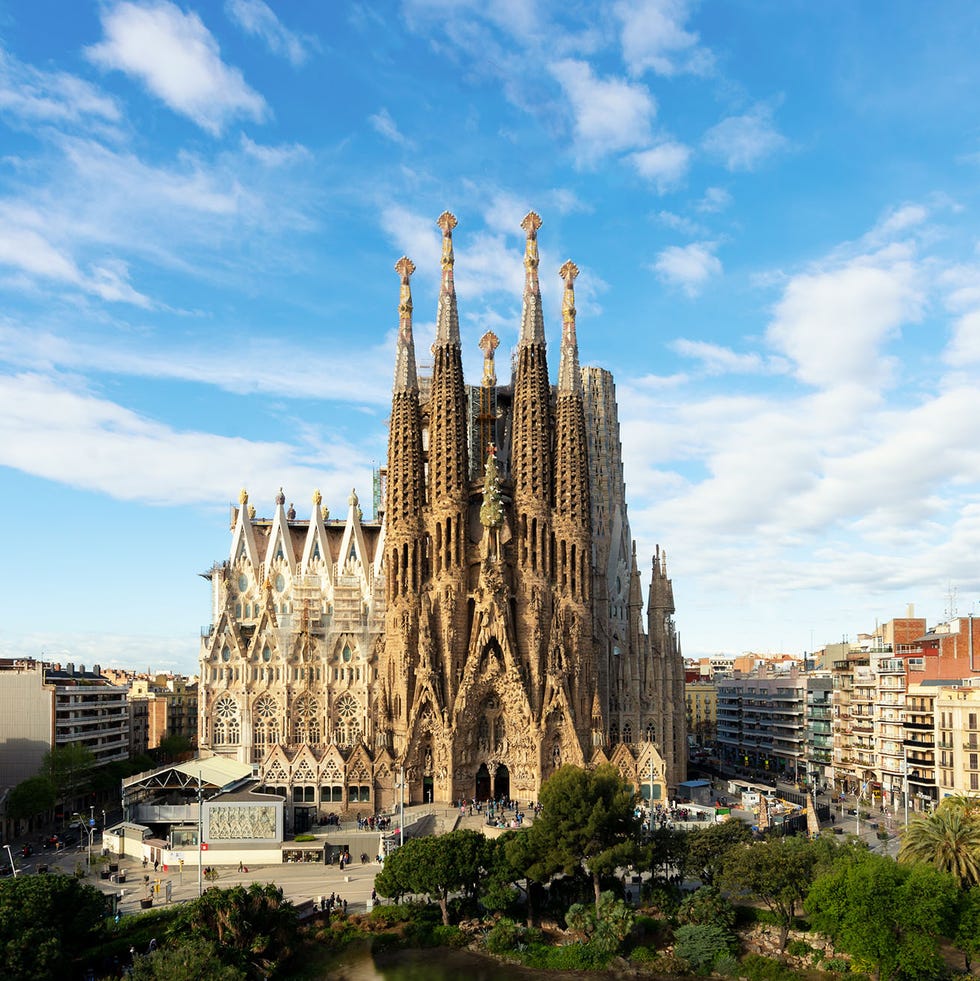
Catalonia’s sunny (even in October and November) capital is loved for its Mediterranean beaches, laidback vibe and modernist buildings – especially those by visionary architect Antoni Gaudí. This year marks 100 years since his death and has seen the completion after 144 years of his masterpiece, the Sagrada Familia, a UNESCO World Heritage Site. In June, Pope Leo XIV saw the final piece, a monumental 100-ton cross, placed on top of the Tower of Jesus Christ, completing the cathedral and making it the world’s tallest at 566ft. Its soaring Gothic facade and kaleidoscopic stained-glass windows, reflecting light into the vast interior, inspire otherworldly reverence. But with more than five million visitors a year, it’s also Barcelona’s busiest attraction, so skip the queues by booking a guided morning tour, from £68, through TUI Musement. Other Gaudí centenary celebrations are being held this year at Park Güell, Casa Batlló and La Pedrera.
LIVE LIKE A LOCAL: Wander through the Gothic Quarter’s maze of streets before stopping at La Boqueria Market for fried croquetas, seafood and pan con tomate at counter-side food stalls. Avoid the street performers on La Rambla and stroll the backstreets instead.
STAY AT: TUI offers great value two-night city breaks in Barcelona from £356pp, staying at H10 Madison, a stylish four-star hotel in the Gothic Quarter, within walking distance of the city’s major sights. The rooftop terrace and pool has views of the Sagrada Familia and TUI city breaks include return flights.
EAT & DRINK: Bar del Pla serves a spin on traditional tapas – try the meatballs in squid ink – in a restaurant decorated with empty bottles drunk and signed by previous guests. Barcelona’s oldest restaurant, Can Culleretes, serves a great-value set tapas menu, including classic delicacies such as jamón Ibérico and crema Catalana, for under £30.
TAKE HOME: A bit of Catalan history made by you at an espadrille workshop (around £85pp). This worker’s shoe goes back centuries and has become one of Spain’s most enduring fashion exports (beside Zara). Choose from more than 100 designs and learn how to thread and wear your own ribbons like the Catalan girls do.
6. Sausages and walking the wall in Berlin
getty
Mostly destroyed in the Second World War, Berlin was divided until 1989 when the Wall fell and it started to reinvent itself. Now unified, you only have to travel around the S- and U-Bahn trains at night to experience the true energy of a city where young and old are having the time of their life – thanks partly to the low cost of living; a pint of the local Berliner Pilsner costs as little as £2.50. Beyond the obvious sights, such as the Brandenburg Gate and UNESCO-listed Museum Island, check out some of the quirkier attractions in former East Berlin. The Fotografiska Museum is housed in a building that was used as a post-Wall art squat, while the Boros Collection shows modern art in a huge concrete brutalist building that was in turns a Second World War air-raid shelter, KGB HQ, fruit and veg store and nightclub. Expect an influx of literary tourists once Berlin Noir, an adaptation of Phillip Kerr’s brilliant Bernie Gunther crime trilogy, is released on Apple TV. Starring Jack Lowden, Maxine Peake and Colin Firth, it was partly filmed in hipster area Neukölln.
LIVE LIKE A LOCAL: Rent a bike by the hour and explore this extremely flat, safe city that’s full of parks, forests and lakes. If you want to see what remains of the Wall, head to the East Side Gallery in Friedrichshain-Kreuzberg, a 1.3km section that’s been preserved and painted by street artists to celebrate peace. The best way to see the city from above is to climb one of the 20 or so grass-covered Trümmerberge. These artificial hills were made from rubble painstakingly cleared by women after the war and there’s a statue that commemorates them in Hasenheide Park. But Berlin’s turbulent history is everywhere – in Teufelsberg, you’ll find the remains of a Cold War listening station; or cycle along the Spree and you’ll pass buildings built during all the different political eras, from Imperialist to Fascist to Communist to modern day. Most noticeable is the number of bullet holes scarring the older buildings, acting as poignant wounds of remembrance.
STAY AT: The iconic Hotel Adlon Kempinski Berlin (rooms from £360 a night) directly overlooks the Brandenburg Gate. One of the world’s most futuristic hotels when it opened in 1907, with hot and cold running water and its own electricity plant, its guest list includes Albert Einstein, Charlie Chaplin and Greta Garbo – who uttered her immortal words, ‘I want to be alone,’ while filming here. It’s still the German government’s unofficial guesthouse and has a Royal Suite named after the late Queen Elizabeth.
EAT & DRINK: German sausages – get a simple one in a roll at Konnopke’s Imbiss, the original currywurst stand at Eberswalder Straße station. For something sweeter, Winterfeldt Schokoladen is a beautiful chocolate emporium in an old-fashioned pharmacy in Schöneberg.
TAKE HOME: Anything from the Oldthing Antique Flea Market on the first weekend of every month at the Trabrennbahn Karlshorst racetrack. The 600 or so stalls sell everything from German vintage decor to retro kitchenware, postcards, magazines and rare vinyl.
7. Stroopwafels and cycling in Amsterdam
Alexander Spatari//Getty Images
There’s no wrong time of year to visit the Dutch capital, but in autumn, the crowds disperse and the picturesque tree-lined canals turn yellow and gold. Your mode of transport? Bicycle, of course. Excellent cycle lanes and minimal traffic make exploring the grid-like streets of Amsterdam relaxing even for amateur cyclists. This autumn’s big-ticket exhibitions include Matisse at the H’ART Museum and Kusama at the Stedelijk Museum. There’s also a burgeoning foodie scene, buzzy nightlife and great vintage shops.
LIVE LIKE A LOCAL: In the trendy Jordaan neighbourhood, you’ll discover hip pavement cafes, independent boutiques – visit Archive 1906 for vintage designer finds – and magpie’s paradise Noordermarkt, where jewellery, antiques and delicious organic food will lure you into the market square. Swing by the Amsterdam Cheese Museum for a wax-wrapped souvenir to take home.
STAY AT: Elevate your mini-break by going all-out on a canalside stay at the new Rosewood Amsterdam, (rooms from around £955 a night) which opened last year in the city’s former Palace of Justice. Seek post-sightseeing sanctuary at the Asaya Spa and ‘slow dine’ at Eeuwen restaurant before indulging in ‘Provo’ – a 1950s and 1960s Dutch counterculture that signifies a rebellious spirit – with cocktails at the hotel’s speakeasy, Advocatuur.
EAT & DRINK: Keep lunch light – the chicken Caesar salad with anchovy dressing at foodie hotspot Little Bonfire is delicious, as are the mid-century interiors in autumnal browns and burgundies. If you’re able to nab a reservation at one of its four tables, Europe’s smallest pancake house, Upstairs Pannenkoekenhuis, will charm you with a warm welcome and sweet aroma as you walk up the (very) steep 16th-century staircase. Go big for dinner and make like the locals who head to Fiaschetteria ‘Pistoia’ for simple but truly exceptional Tuscan pasta. The tagliatelle al tartufo, £24, is best washed down with a ‘fiasco’ of Italian red wine.
TAKE HOME: Traditional Dutch stroopwafels – thin, round biscuits made from two layers of sweet dough held together by syrup, best warmed over your coffee cup. Buy them in Amsterdam’s oldest bakery, Hans Egstorf, and take them home in a handmade Delft Blue painted jar.