Credit: Far Out / Raph_PH
Sat 12 September 2026 9:08, UK
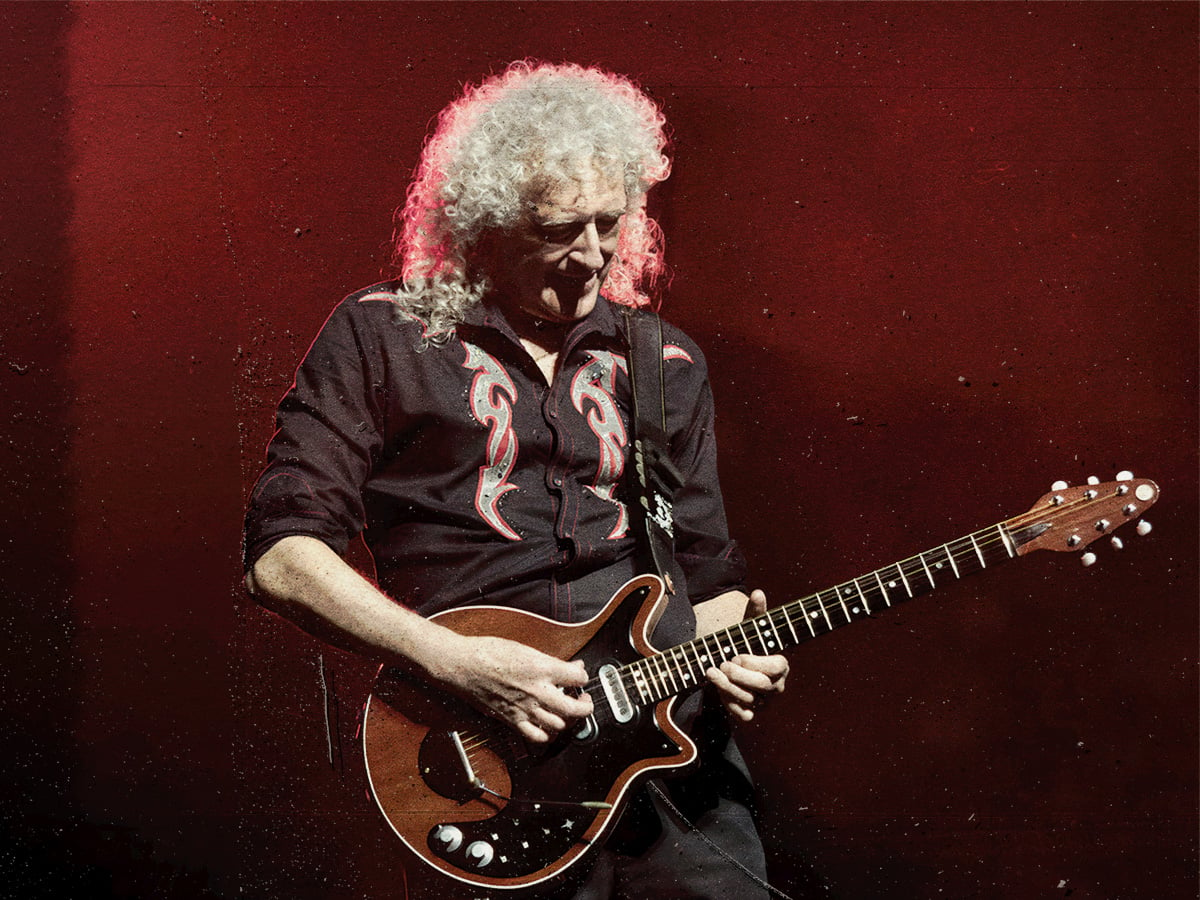
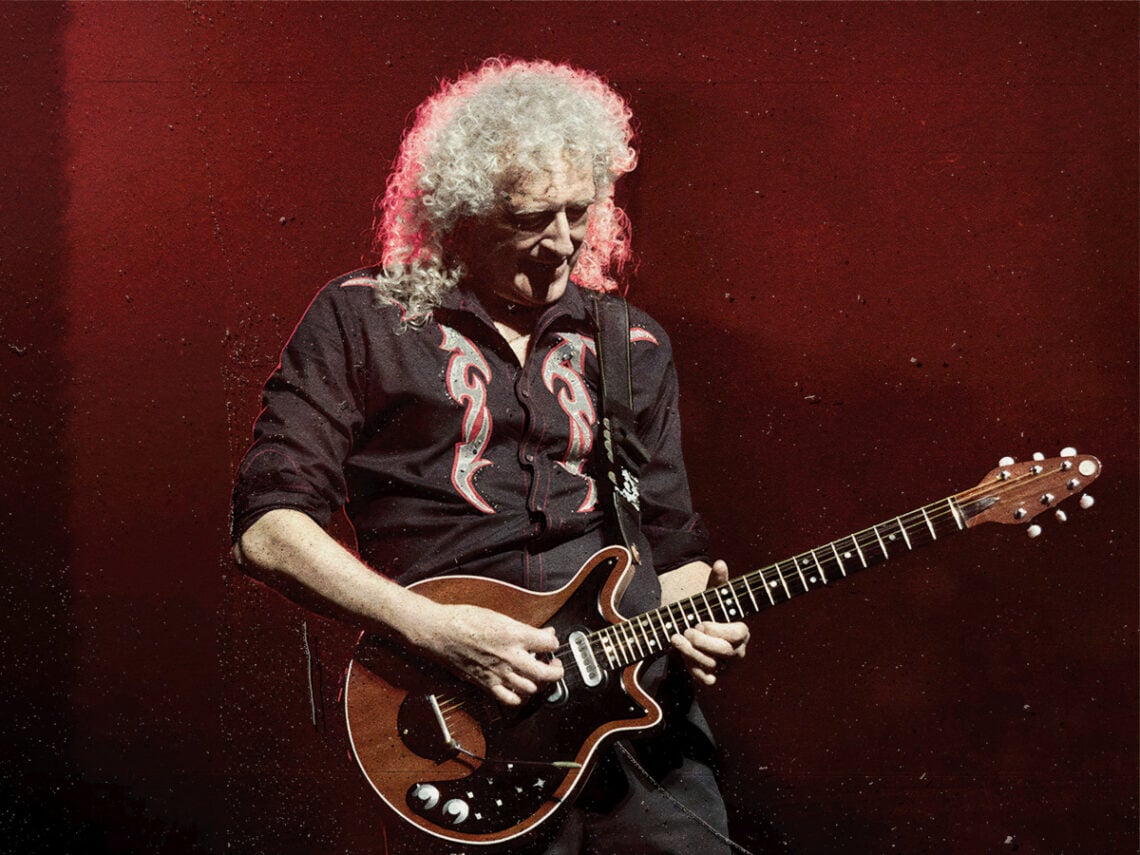
There are few more recognisable sights in music than Brian May’s hair, and when it comes to solos, the same can be said about the Queen guitarist’s epics on a six-string.
As the only guitarist in the band, May had to essentially do the job of two musicians, which should have made finding time for show-stealing solos impossible. Yet, he was undeterred and found a way to make it sound as if he were a one-man musical army, which gave Queen the edge above many of their peers.
It’s remarkable, in a sense, that there were only four members, which is largely due to May. Everything they made sounded so grandiose and lavish that it felt as though they needed a full orchestra to pull things off, but in fact, it was just a sheer bombastic delivery from their quartet of members working overtime that made their sound so extravagant and compelling.
Admittedly, Roger Taylor was keeping it all together on the drums, John Deacon was a phenom on the bass, and there are not enough superlatives to describe what Freddie Mercury added to the equation.
But, for now, let’s talk about May.
He remains an absolutely beast of a player who was equally informed by classic rock styles as classical music. May played with sheer brute force, and it was through this technique that he managed to establish himself as one of the most technically proficient guitarists in the world of rock music during the 1970s and ’80s.
Among his arsenal of tricks were a handful of revolutionary styles that helped him stand out from his peers, with his use of a sixpence in lieu of a plectrum being one way in which he added extra dynamism and clarity to his sound. May was also known for his use of harmonies in his licks, as well as tremolo picking and sweep picking: two techniques that tend to be reserved for the most dextrous players of the instrument.
There are countless moments in Queen’s catalogue where May asserted his excellence, with his soloing on tracks such as ‘Bohemian Rhapsody’ and ‘Brighton Rock’ to die for.
Further reading: From The Vault
However, neither of those is the solo that May considers to be his finest achievement, which is largely down to how he and the band had to work hard for his contributions to fit into the song.
The track in question is 1974’s ‘Killer Queen’, a timeless classic of Queen, but it had a difficult start to life. Notably, the band began working on the song without May, as he was recovering from an illness at the time, causing Mercury to propose scrapping it and reviving the idea when the guitarist was back to full fitness.
“They had already recorded some harmonies for it and some chorus vocals. I felt they were very harsh, and it didn’t quite fit the song,” May explained in an interview with Vulture. Once Mercury had told him that they would rework what had already been developed, the song suddenly became a monumental display of the band’s chemistry.
“The solo for ‘Killer Queen’ is a three-part thing,” he said, explaining how the composition works. May elaborated, “I don’t think anyone else had ever attempted something like that. There’s three parts not just paralleling each other in harmony, but, as a counterpoint, working off each other. There’s this little bell effect, which I stole from a traditional jazz group called the Temperance Seven. That’s something in my DNA.”
Expressing himself in a way that he compares to Glenn Miller arranging his brass band, May insists that ‘Killer Queen’ is one of the greatest achievements that the band ever committed to record, especially in a personal capacity.
“I think it’s a perfect example of my guitar playing,” he concluded. “It’s not wildly exciting and heavy and explosive, but it fits the song really nicely. I love that song as a work of art. Imagine a Baroque painting. Everything has its space and can be enjoyed in an uncluttered kind of way.”
May’s reasoning for singling ‘Killer Queen’ as his favourite solo says everything about his selfless nature that made Queen tick. He wasn’t vying, in a band that contained Freddie bloody Mercury, to be the star of the show, but to bring the best out of everyone around him. It is an effortlessly vibrant yet layered masterpiece, which allows every band member to demonstrate their brilliance while also coming together to sound even greater as a collective.
Killer, indeed.
