Alberta’s upcoming vote on whether the province should remain in Canada has evoked parallels with the United Kingdom’s split from the European Union, but the former U.K. prime minister who called the Brexit vote says the two have little in common.
“I wouldn’t compare what you’re discussing here with the Brexit referendum,” David Cameron, who resigned in 2016, told a Calgary crowd.
He made the remarks during a wide-ranging discussion with moderator Holly Ransom at the Energy Disruptors: Unite conference in the oilpatch capital.
“Brexit was about whether we wanted to stay in a trade association with an element of political union,” Cameron said. “Canada is not a trade association with an element of political union. Canada is an amazing country with an incredible history.”
Cameron resigned from his post after the U.K. voted to leave the EU. The U.K. has been a revolving door of leaders since his tenure, with more than half a dozen prime ministers over the past decade.
Despite their differences, Brexit and Alberta’s vote on pursuing separation share clear economic implications.
Related
Brexit reduced the U.K.’s GDP by up to eight per cent and lowered investment by as much as 18 per cent by 2025, according to estimates by researchers from Stanford University.
Early numbers suggest Alberta separation would also carve a multi-billion-dollar hole in the province’s economy.
Annual wages for a typical Alberta worker may drop by up to $12,000, with the province’s GDP potentially falling by over 16 per cent if the province separates, according to a University of Calgary School of Public Policy study.
An independent Alberta would also have to shoulder the costs of setting up an entirely new country, something the U.K. did not face with Brexit.
That bill could run anywhere from $50 billion to $170 billion in the first five years, according to the University of Calgary’s study, which was commissioned by the province.

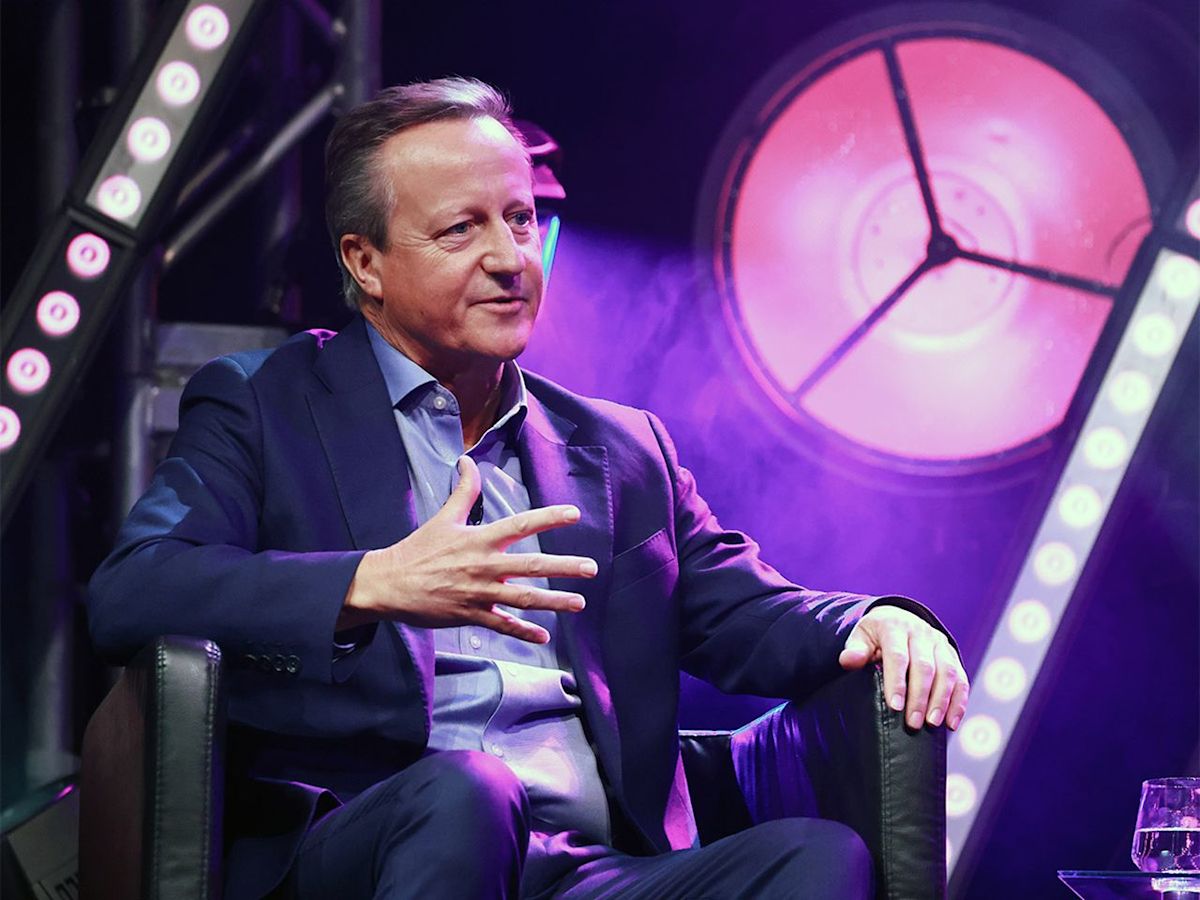
Former United Kingdom prime minister Lord David Cameron is interviewed by host Holly Ransom at the Energy Disrupters: UNITE 2026 at the BMO Centre in Calgary on Monday, Sept. 28, 2026.
In the decade following Brexit, Cameron has said publicly that he regretted the way the vote went, but not having a referendum in the first place.
Back at the conference in Calgary under the glow of colourful lights and a thin layer of fake smoke in the air that made even the most mundane suits look flashy, Cameron took a similar tone.
“The economy was strong. My authority was relatively strong. It was the right time to put the question,” Cameron said.
“But looking back, you can see that, well maybe — take more time — have another discussion,” he added.
Cameron stopped short of taking a position on Alberta’s Oct. 19 vote, which asks residents whether they wish to remain a province of Canada or have the government begin the legal process toward a binding vote on leaving.
“Obama came to Britain during the Brexit referendum and made, I thought, some perfectly sensible remarks,” he said. “Some people thought that this was foreign interference. I don’t want to do that.”
Still, Cameron made his position on Canada clear.
“To us in the U.K., Canada is not just any country,” he said. “Canada is one of our closest friends and partners. Our soldiers have fought together. Our scientists have invented things together. Our children study together.”
FP West: Energy Insider brings you behind the closed doors of the oilpatch, with exclusive insights from insiders every Wednesday morning. Sign up now.