

Want to bookmark your favourite articles and stories to read or reference later? Start your Independent Membership today.
Already a member?
Log in
Your support helps us to tell the story
From reproductive rights to climate change to Big Tech, The Independent is on the ground when the story is developing. Whether it’s investigating the financials of Elon Musk’s pro-Trump PAC or producing our latest documentary, ‘The A Word’, which shines a light on the American women fighting for reproductive rights, we know how important it is to parse out the facts from the messaging.
At such a critical moment in US history, we need reporters on the ground. Your donation allows us to keep sending journalists to speak to both sides of the story.
The Independent is trusted by Americans across the entire political spectrum. And unlike many other quality news outlets, we choose not to lock Americans out of our reporting and analysis with paywalls. We believe quality journalism should be available to everyone, paid for by those who can afford it.
Your support makes all the difference.Read more
A blind man has launched legal proceedings against the British Museum over the accessibility of its Bayeux Tapestry exhibition.
Dr Yusuf Ali Osman alleges that the museum is breaching equality laws by failing to provide audio-described tours of the exhibition for blind visitors.
The almost 1,000-year-old embroidery, which depicts the conquest of England by William I in 1066, went on display in September and will remain at the museum until July 2027.
Dr Osman earlier enquired whether live audio-described tours would be provided so that vision-impaired people could experience the tapestry.
According to his lawyers, the British Museum said that it would not be providing such tours because restrictions on the amount of light that the tapestry can be exposed to mean visitor numbers must be limited.
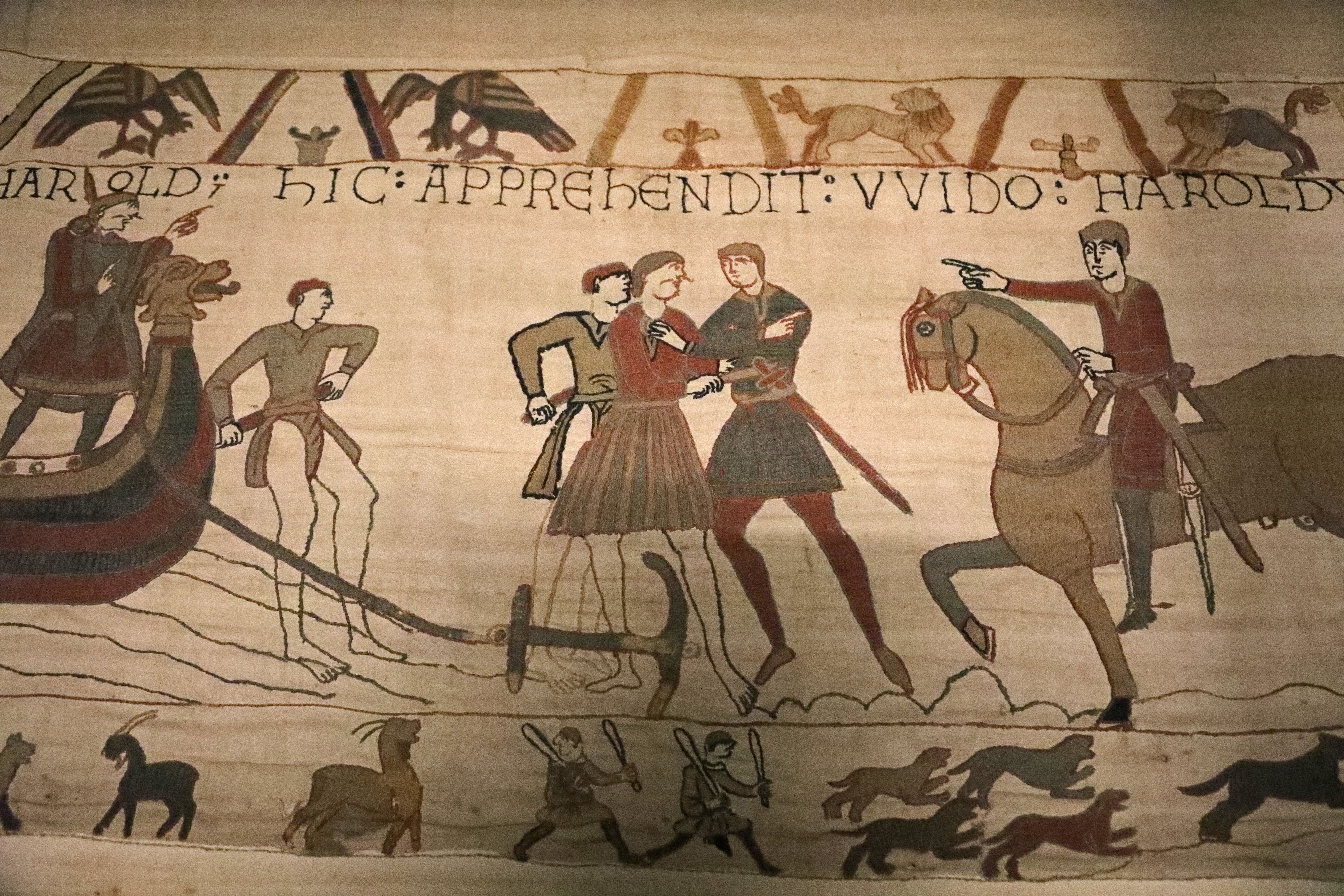 The Bayeux Tapestry is on display until July 2027 (Getty)
For that reason, the institution is prioritising self-guided visits, the museum reportedly said.
Dr Osman said that the museum’s stance is a breach of the Equality Act through discrimination compared to sighted visitors.
He is seeking damages and a court order requiring the museum to amend its policies.
“I want to be able to visit the Bayeux Tapestry and experience it for myself,” Dr Osman said in a statement.
“I understand that there are important restrictions around how the tapestry is displayed, but it is disappointing to find that blind visitors are not being offered an audio described way of experiencing it.”
 Ticket-holders view the Bayeux Tapestry from a raised platform (REUTERS)
A spokesperson for the British Museum said, however, that it was planning dedicated tours which would feature “an in-person audio-described tour”.
“We are also exploring including a separate audio-described tour as part of the exhibition’s app-based audio guide,” the spokesperson added.
Dr Osman’s lawyer, Kate Egerton from the firm Leigh Day, said: “The Equality Act places obligations on service providers to anticipate the needs of disabled people and take reasonable steps to avoid substantial disadvantage.
“Our client is asking for the same opportunity as sighted visitors to experience this exhibition.”
Ticket-holders are given 40 minutes to view the 70-metre tapestry, which is laid flat in a glass-fronted display case, from an elevated platform.
The experience has been hugely popular, with the initial batch of tickets to be released selling out quickly and generating nearly £2.5 million in a single day.
Viewers were recently banned from taking photos of the artwork, as they were causing delays and preventing others from gaining access to the tapestry, the museum said.