
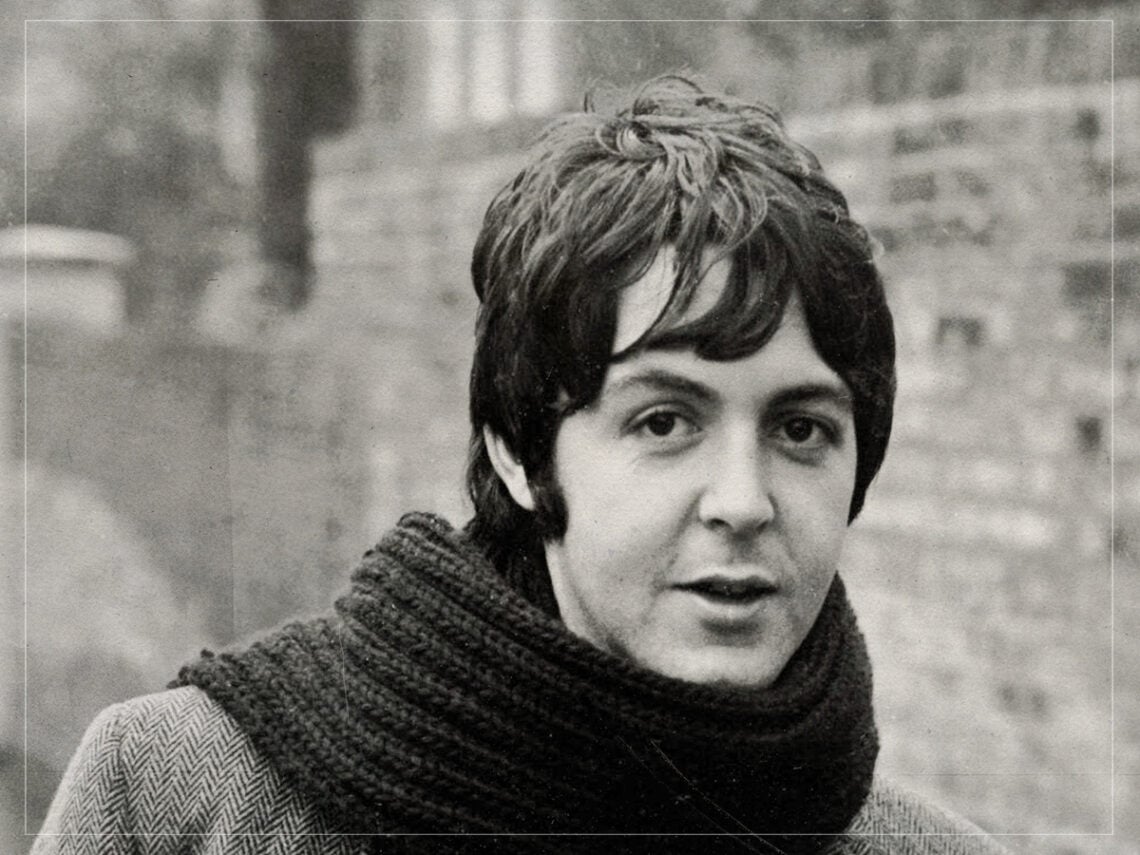
Credit: Far Out / Alamy
Sun 4 October 2026 20:15, UK
It’s fascinating to think that the world’s most beloved musicians of all time, The Beatles, couldn’t read music.
It speaks to the sort of creativity that many of us, not all, weren’t taught in our early years. This idea that songwriting could exist for someone unable to determine the meaning of a treble-clef on a musical staff. Of course, music reading will always represent the conventional model and even the pinnacle of music theory, but it’s not the only one.
If anyone is going to be a great advocate of that outside-the-box style of creativity, it is The Beatles, who managed to achieve a whole variety of compositional inventions without any traditional training.
In fact, McCartney admitted, “I don’t see music as dots on a page. It’s something in my head that goes on,” adding, “None of us did in the Beatles. We did some good stuff, though. But none of it was written down by us. It’s basically notation. That’s the bit I can’t do.”
There’s proof of this genius littered throughout their discography, of course, whether it is using a minor subdominant chord instead of a major one in ‘Blackbird’ or the supposed invention of chords, which, in George Harrison’s case, was claimed to be an E7th with an F on top. Either way, they got to the hallowed grounds of compositional genius through feel and experimentation, not revision.
By the time Abbey Road rolled around, their innovation was in full swing, and everything they had learned from the decade before was being put into practice on a truly stunning record. And on McCartney’s famous second side medley, there was a song that paid homage to their evolution from wannabe rock stars to experimental gods.
‘Golden Slumbers’ saw McCartney go back in time, to when he was a young and somewhat ignorant music student who was frustrated by his lack of music reading ability. But rather than allow that frustration to prevent him from discovering anything at all, he focused intently on the lyrics that came in 1969, which turned out to be the ones used in ‘Golden Slumbers’.
Further reading: From The Vault
“I was playing the piano in Liverpool in my dad’s house, and my stepsister Ruth’s piano book was up on the stand,” he said. “I was flicking through it and I came to ‘Golden Slumbers’. I can’t read music and I couldn’t remember the old tune, so I just started playing my own tune to it. I liked the words so I kept them, and it fitted with another bit of song I had.”
It almost came at the perfect time for the band, for it fittingly ended their career, which proved their lack of reading knowledge didn’t hold them back. Throughout Abbey Road, they proved what exactly was capable from their boundless attitude towards traditions and in ‘Golden Slumbers’, McCartney nodded to that journey.
Because in Abbey Road studios, playing ‘Golden Slumbers’, both McCartney and the remaining band would have been surrounded by an orchestra that, while laying down the string arrangements for the song, would have been completely at their behest. These four unlikely lads from Liverpool, who couldn’t read a note of music.
ADD AS A PREFERRED SOURCE ON GOOGLE  The Far Out Beatles Newsletter
All the latest stories about The Beatles from the independent voice of culture.
Straight to your inbox.