
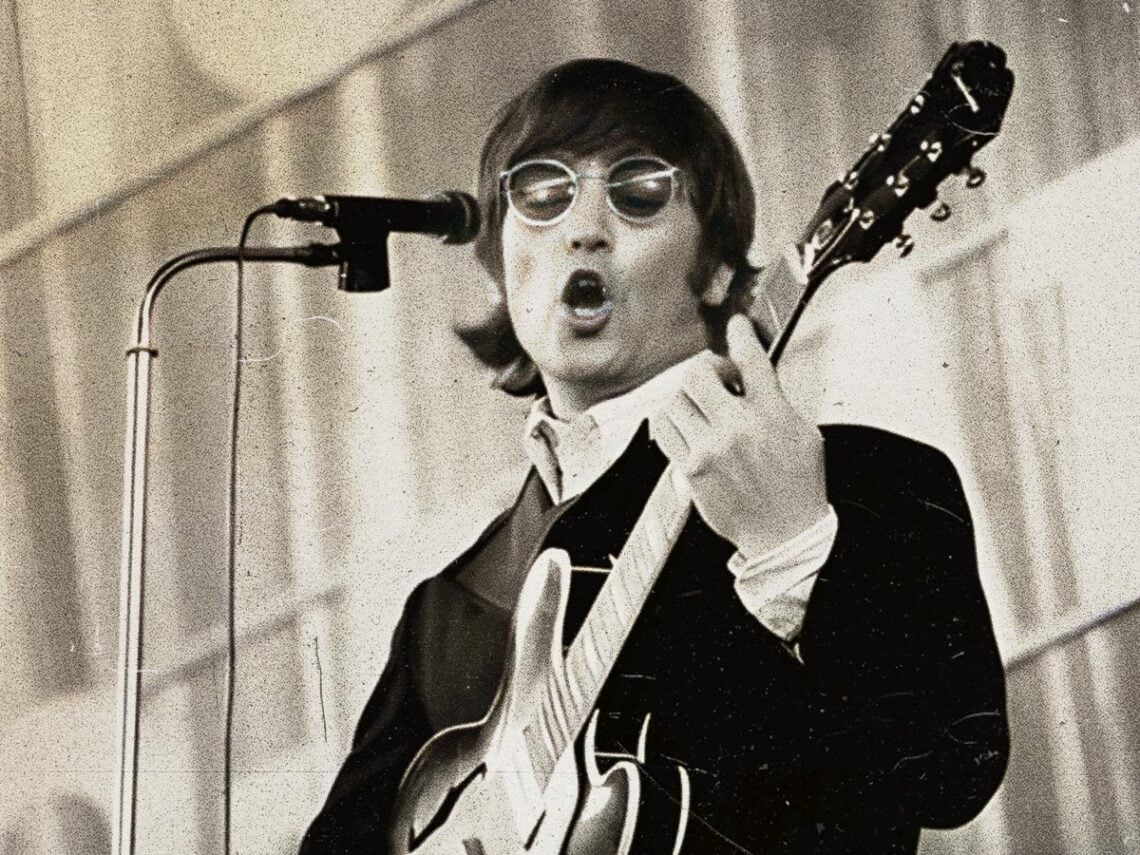
Credit: Bent Rej
October 19th, 2026 · 6:00pm BST
There have never been two sequential songs that show such a vast musical difference as the final two tracks on The Beatles‘ seminal album Revolver.
Let’s work in reverse and start on the closing song: ‘Tomorrow Never Knows’. Maybe The Beatles’ most groundbreaking song, for it marked the moment they were no longer a thrashing singles band focused on making chart hits and instead became experimentalists, who wanted to use every inch of freedom the studio could afford them.
Not only did it build on their fascination with Eastern sounds by building the entire song around a relentless and hypnotic single-chord drone, but it also blended it with wild studio techniques that the music world hadn’t yet seen. John Lennon’s vocals ran through a revolving Leslie speaker to create this swirling enchantment effect, while the guitar parts were reversed through a tape that eventually played backwards in the mix.
For those listening to Revolver for the first time, it was now abundantly clear that the band would never be the same moving forward – from now on, it was all about experimentalism.
But that message was made all the more jarring by the track put before it in the listing. ‘Got To Get You Into My Life’ was a colourful soul-infused pop song that showcased all of the charm of the old Beatles, where soaring choruses and vibrant brass stabs made them the darlings of the commercial world. It seemed so odd that it was placed in front of a track that emphatically introduced their next sonic chapter.
But ‘Got To Get You Into My Life’ wasn’t as plain as it may have seemed; it was just that ‘Tomorrow Never Knows’ skewed its perception. Because while warm and familiar, the penultimate track was similarly an exercise in exploration, with the band trying to introduce sounds from the then wildly popular Motown world.
“We were doing our Tamla Motown bit,” Lennon explained. “You see, we’re influenced by whatever’s going [on]. Even if we’re not influenced, we’re all going that way at a certain time.” McCartney backed up his old songwriting mate, confirming that while it seemed traditional, this was a debut of a new sound for the band.
“It was the first one we used brass on, I think. One of the first times we used soul trumpets.”
Paul McCartney
Further reading: From The Vault
But where it took a typically ‘66 Beatles turn was the true meaning of its lyrical content. It felt warm, safe and familiar for music fans, especially because it had McCartney crooning for a lustful subject in the vocals. But the innovation of the future was hidden in the subtext, because while it sounded like the song could have been about a love interest, that wasn’t, in fact, true.
The thing McCartney actually wanted to get into his life at that point was marijuana, stating, “I’d been a rather straight working-class lad, but when we started to get into pot it seemed to me to be quite uplifting.”
It was The Beatles adding a bit of psychedelia into a relatively accessible pop song, proving to fans that yes, wilder days soundtracked by ‘Tomorrow Never Knows’ were in fact coming.
ADD AS A PREFERRED SOURCE ON GOOGLE  The Far Out Beatles Newsletter
All the latest stories about The Beatles from the independent voice of culture.
Straight to your inbox.