“It completely sucked the joy out of it”: Ovana Fit founder Cara Robson is developing wearable period pain relief for women in sport.
How much of Cara Robson’s own experience of period pain and sport went into designing Ovana Fit? “Everything,” she says.
Cara grew up in sport, with being an athlete forming both a massive part of her childhood and a source of enjoyment throughout her life. But when she got her first period at the age of twelve, the activity that was so central to her became something she struggled to enjoy.
“At that time I was in football, and it completely sucked the joy out of the sport for me”, she says. “I really struggled with period pain every three weeks, and I was too embarrassed to explain to my coaches why I was playing badly.”
For Cara, there was no real solution available, leaving her relying on medication like paracetamol to manage the pain or risk her performance significantly dropping.
She eventually dropped out of football, largely due to the impact of period pain, but remained active throughout her teenage years. Cara’s frustration persisted and she began to question how, in a world with such technological advancement, “we have gone this far without giving women athletes and active women some sort of solution”.
The answer was to take matters into her own hands, and develop one herself.
“I always knew I was going to design products. It’s what I’ve always wanted to do,” Cara says. “When I was 15, I made a promise to myself that once I’d done my degree and I had the skills to actually design a product like this, I was going to do it.”
That promise became Ovana Fit, a sports-tech startup that aims to tackle the impact of period pain on active women and girls. “Our mission as a company is to eliminate period pain as a barrier to sport and being active,” Cara says.
Ovana Fit is developing a discreet, wearable form of period pain relief, designed for the demands of sport. The product is still in the design and testing stage, with an initial launch expected at some point in 2027. The full launch, incorporating the complete technology and medical certification, is anticipated the following year.
The design and development of the product involved consultation with more than 130 athletes, ranging from student competitors to British and Olympic athletes, in order to understand their experiences and establish how the product could best meet their needs. A focus group of 30 athletes then tested prototypes, with their feedback helping to shape the final design.
“They really had a massive impact on the final product. Every prototype was tested with them,” Cara says. “It’s so important to test a product like this with the users, considering it’s such a user-centric product.”
Glasgow has also played an important part in the development of Ovana Fit, both through its universities and the wider community. Glasgow School of Art supported the product’s design, while the University of Glasgow contributed to the electronics and engineering. Through initiatives such as the University’s Student Enterprise programme and the Converge competition, Cara has been able to develop the business within Scotland’s growing start-up scene.
She says that support has come from beyond the universities, highlighting the “incredible” backing she has received from the wider Glasgow community including local sports teams.
“People are so willing to get involved,” she says. “People really do make Glasgow.”
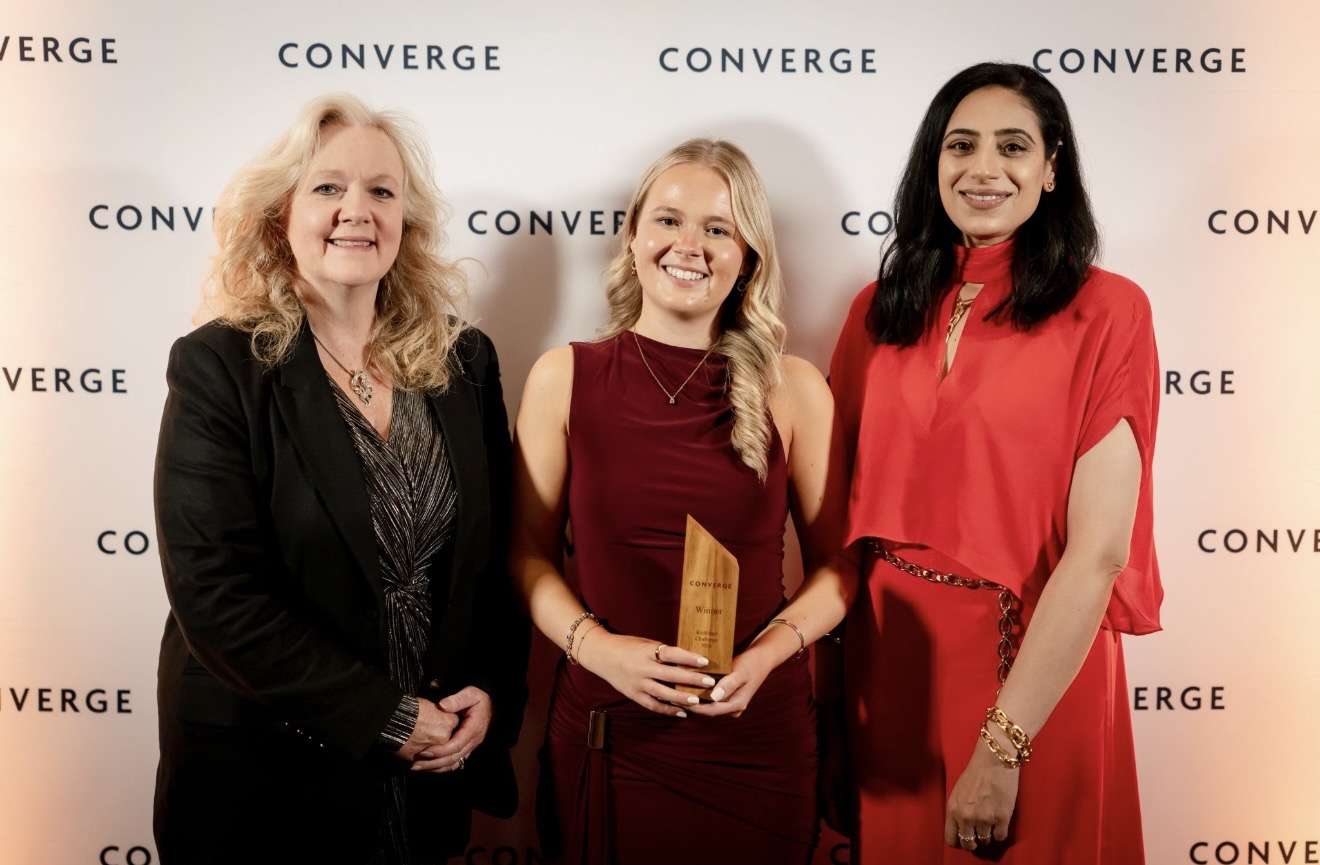
In October, Ovana Fit won the KickStart category at the 2026 Converge innovation awards, taking home a £10,000 cash prize. The award recognises innovative early-stage business ideas, based on factors including the novelty of the product, clarity of planning and market demand.
“I really didn’t think we were going to win,” Cara tells me. “The support that [Converge] gives is huge, and that is almost more beneficial, actually, than the monetary award. It’s a fantastic programme.”
For Cara, however, the goal goes beyond Ovana Fit as a product. “I want to influence a change in the conversation,” she says. “[Period pain] is still very much taboo and isn’t spoken about a lot. People get embarrassed to speak about it, when it has a huge impact on your ability to train and perform as an athlete.”
Cara believes that changing how period pain is approached requires action from both the sporting world and wider society, saying that “the way that it is now is not good enough.”
The menstrual cycle significantly impacts engagement with sport and fitness. According to Nuffield Health, 84% of teenage girls report their interest in sport and fitness diminishes after starting their period, while almost one in four say they feel embarrassed to take part in physical activity during their menstrual cycle.
While period pain can affect women and girls participation in sport, Cara recognises that it is not the only area Ovana Fit could impact. “It was for athletes… but what we’ve realised is that the market is so much bigger than that.”
Ovana Fit has plans to expand into everyday period relief, and is exploring potential integration into military wear, the navy, and even space suits for astronauts.
For Cara, the reality of founding and developing Ovana Fit is the fulfilment of a lifelong passion.
“I get about four hours of sleep a day, I’m so excited,” she says. “I really just feel so happy and everyday I’m excited to get up to go to work because it’s my dream.”
“I’m getting to be an entrepreneur, I’m getting to help women, and I’m getting to work in sports tech. It’s my three favourite things to do.”