

Credit: Far Out / MGM /
Embassy Pictures / United Artists)
November 17th, 2026 · 7:45pm GMT
Hollywood began to shift in the late 1960s. As society changed, so did the arts, and cinema reflected those shifts in real time, no matter the genre or style.
An array of films emerged around this time that made for a stark contrast to the movies that defined Old Hollywood. No longer were films bound to old codes of tradition, where everything seemed confined to a studio and a strict moral order was upheld.
The way actors performed changed, as did the way filmmakers approached their material, which was becoming considerably more taboo. The Graduate is a great example.
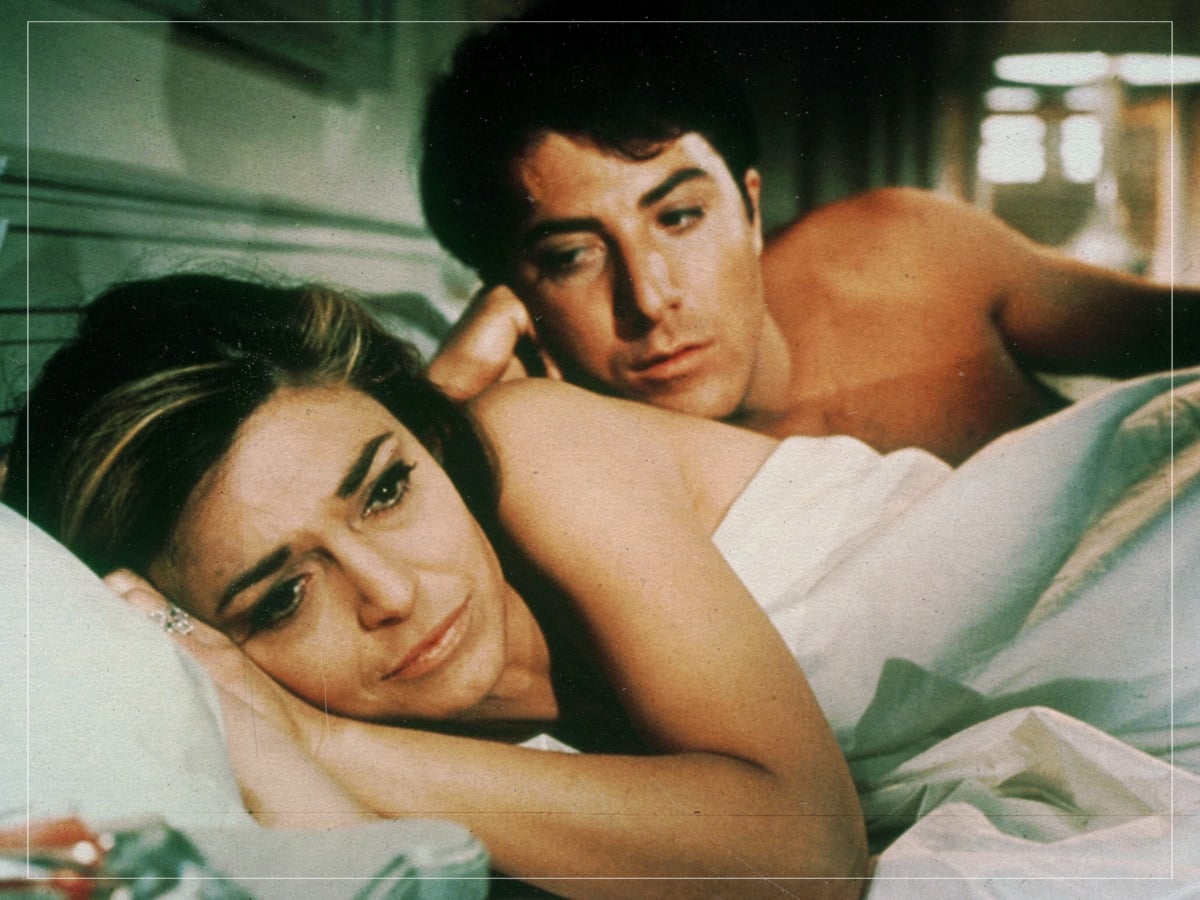
Directed by Mike Nichols, the film sees Dustin Hoffman play recent college graduate Benjamin Braddock, who hasn’t got a clue what to do with his life. He finds himself floating – quite literally, as he often lazes in his parents’ pool – aimless and without purpose. Then he becomes entangled in an affair that no one – not even he – could predict.
The older Mrs Robinson, a friend of his parents, begins to seduce him, but soon his parents convince him to take Elaine, Mrs Robinson’s daughter, on a date, unaware of the affair. What ensues is a perfect mix of comedy and pathos, as Ben flails through an affair with an older woman and a romance with her daughter, both out of his depth and thrilled by it.
Proving that stories with a subversive edge could become incredibly popular, The Graduate captured the complexity of youth and the paralysis felt by many young people in the ‘60s, to a T, a time of rapid change and consumerism. What’s more, it ended on a note that didn’t simply tie everything into a neat bow; you can see the ends of the ribbon beginning to fray.
 Credit: Far Out / Embassy Pictures / United ArtistsWho does the leg on The Graduate poster belong to?
The film has many iconic assets, from the line “Mrs Robinson, you’re trying to seduce me. Aren’t you?” to the use of songs like ‘The Sound of Silence’ and ‘Mrs Robinson’ by Simon and Garfunkel. And then there’s the poster.
Who can forget the image of an outstretched leg putting on a pair of stockings as Hoffman stands in the background watching? It’s one of the most recognisable film posters of all time, perhaps aided by the fact that it appears on the record sleeve for the soundtrack, which sold over two million copies upon its release.
But it’s not actually Anne Bancroft’s leg on the poster, despite the fact that she played Mrs Robinson. The actor was unavailable for the shoot, so another actor was brought in instead. According to actor Linda Gray, appearing on Anderson Cooper’s talk show, “I think she was absent that day. I got paid $25. For one leg, that was good.”
Just as it’s actually a young Demi Moore on the cover of I Spit on Your Grave and Christina Hendricks’s hand on the poster for American Beauty (leaning on another woman’s torso, no less), Hollywood often tricks us when it comes to little details like this.
More often than not, it’s purely logistical, which is how Gray wound up with her leg plastered on billboards, album covers, and DVDs. Interestingly, though, the Dallas actor would star in a West End production of The Graduate in 2001, playing Mrs Robinson. Not bad for a $25 leg.
