

Want to bookmark your favourite articles and stories to read or reference later? Start your Independent Membership today.
Already a member?
Log in
After mounting dozens of “voter fraud” prosecutions in the weeks before midterm elections, Donald Trump’s Department of Justice has quietly dissolved legal battles that potentially threatened thousands of eligible ballots, court records show.
On Thursday, the Justice Department moved to effectively dismiss its lawsuit challenging election results in Alaska, where government attorneys accused Democrats of conspiring to recruit a candidate with a similar name to the incumbent Republican.
On Tuesday, the Justice Department dropped its lawsuit demanding California purge alleged noncitizens from its voter rolls after facing uphill legal battles in federal court. And on Wednesday, the Justice Department also threw in the towel in a legal battle over the government’s attempts to perform door-to-door interrogations to root out suspected fraudulent voters.
Nearly 200 noncitizens were accused of voter fraud-related crimes in the weeks before midterm election day, charges announced in high-profile press conferences and amplified across the administration’s social media platforms. Officials had promised hundreds more were coming.
But those dockets have largely gone cold, and prosecutors have brought only one new fraud-related case since November 3, according to a review from The Washington Post.
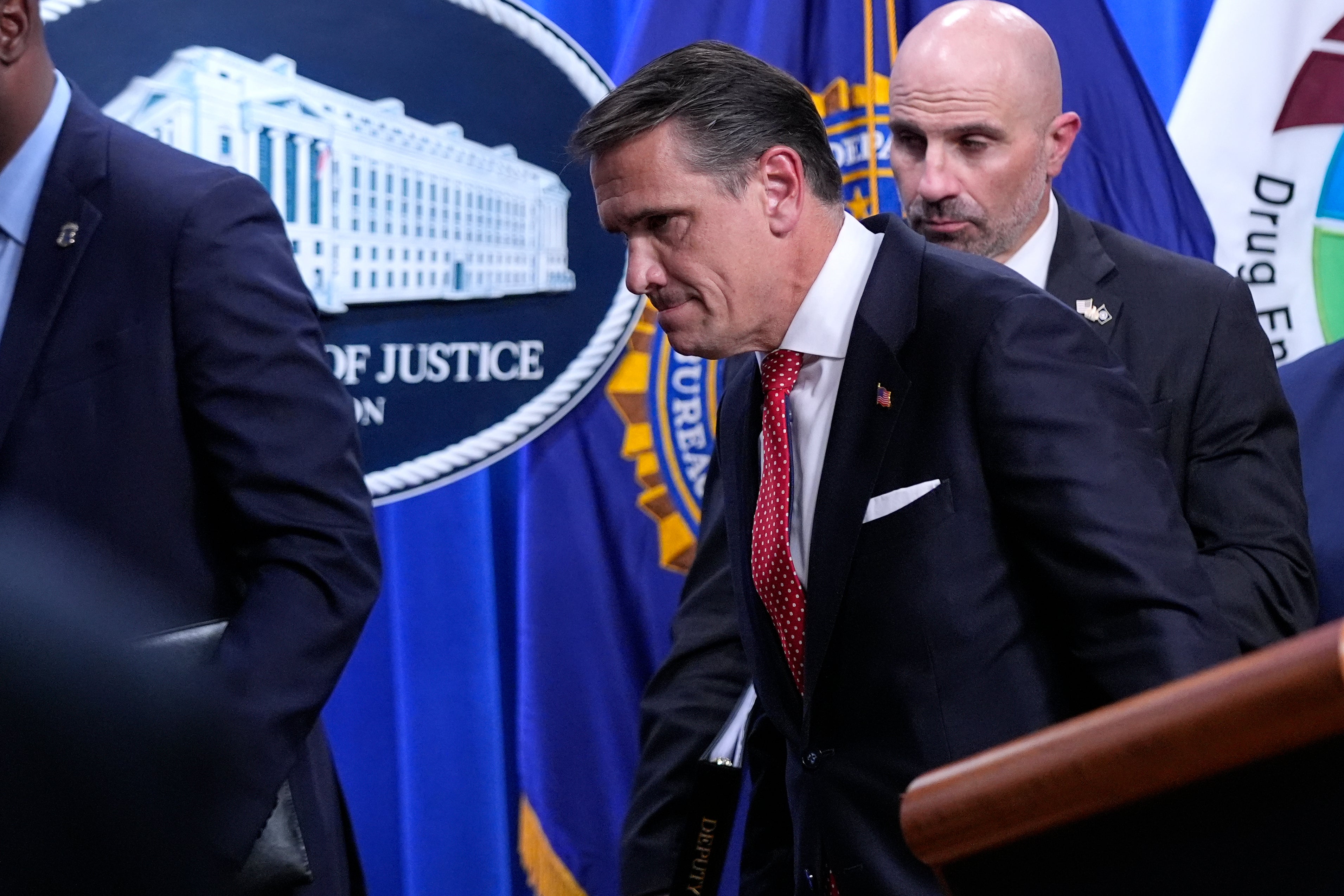 The Department of Justice, steered by Attorney General Todd Blanche, has pulled out of several high-profile legal battles seeking to challenge results in 2026 midterm elections and appears to have slowed the pace of fraud-related prosecutions (AP)
The administration’s retreat follows sweeping Republican losses in midterm elections that will tilt the balance of power in Congress to Democratic control in January, a seismic rebuke to the Trump administration that will likely derail his final two years in office.
The withdrawal also follows the government’s routine losses in federal courtrooms over the administration’s attempts to seize unredacted voter rolls and threaten thousands of ballots cast in California and Washington state.
Asked whether the Justice Department discovered any new evidence of widespread fraud in the aftermath of midterms, Attorney General Todd Blanche told reporters last week that the agency was still engaged in a legal battle over results in the Alaska Senate race.
But the Justice Department on Thursday asked a federal appeals court to hold the case as moot and open the door for dismissing it altogether.
Government attorneys had tried to convince federal judges to block the certification of that election if Republican incumbent Dan S. Sullivan lost. A federal judge tossed the case November 1, and Democrat Mary Peltola was declared the winner in the race on Tuesday.
“There are hundreds of ongoing criminal investigations into fraud associated with voting and elections, and those aren’t stopping because November came and went,” Blanche told reporters last week. “We will continue to investigate election integrity cases criminally and civilly and that wasn’t expected to start or stop no matter what the results of the election were.”
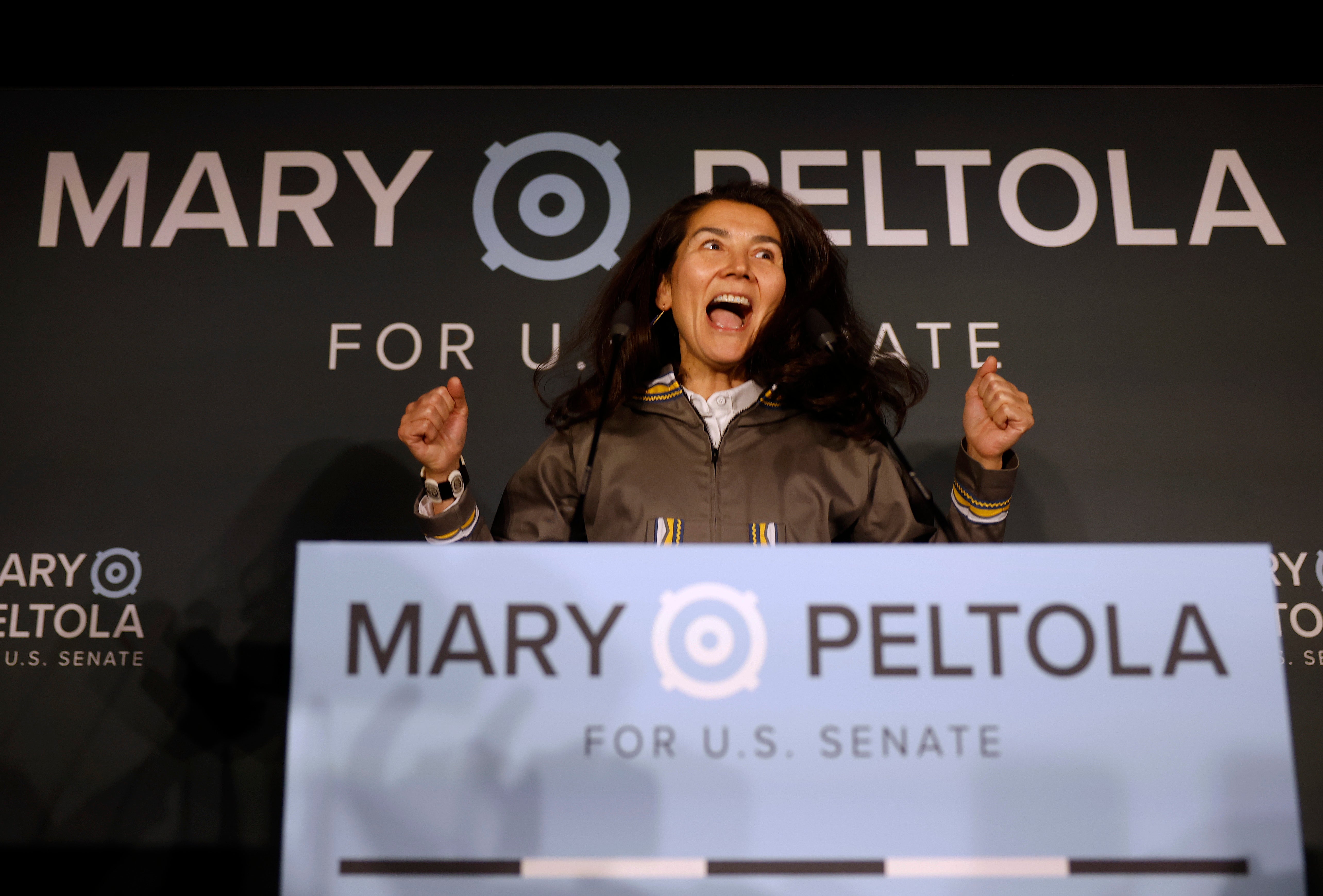 Democrat Mary Peltola was declared the winner in Alaska’s Senate race after DOJ officials accused Democrats of conspiring to dilute votes for Republican Senator Dan S. Sullivan by recruiting a similarly named challenger. Government attorneys moved to dismiss the lawsuit November 19 (Getty)
The Justice Department has not formally ended its challenge in Washington, but a federal judge Thursday blocked the government from pressuring Washington election officials to set aside ballots cast by voters who are accused of being noncitizens.
That 14-day restraining order expired this week, nearly two weeks after Election Day and after the state certified its results, making any future attempt from the Trump administration to interfere in this year’s election outcome virtually impossible.
In California, the administration’s demands that the state set aside ballots sent to more than 20,000 alleged noncitizens was blocked in court after state officials warned that the Justice Department’s list was riddled with errors and could end up disenfranchising thousands of eligible voters.
That legal battle stalled at the Supreme Court, which refused to take up the case one day before Election Day.
In a two-sentence court filing on Tuesday, the Justice Department said it is dropping its appeal.
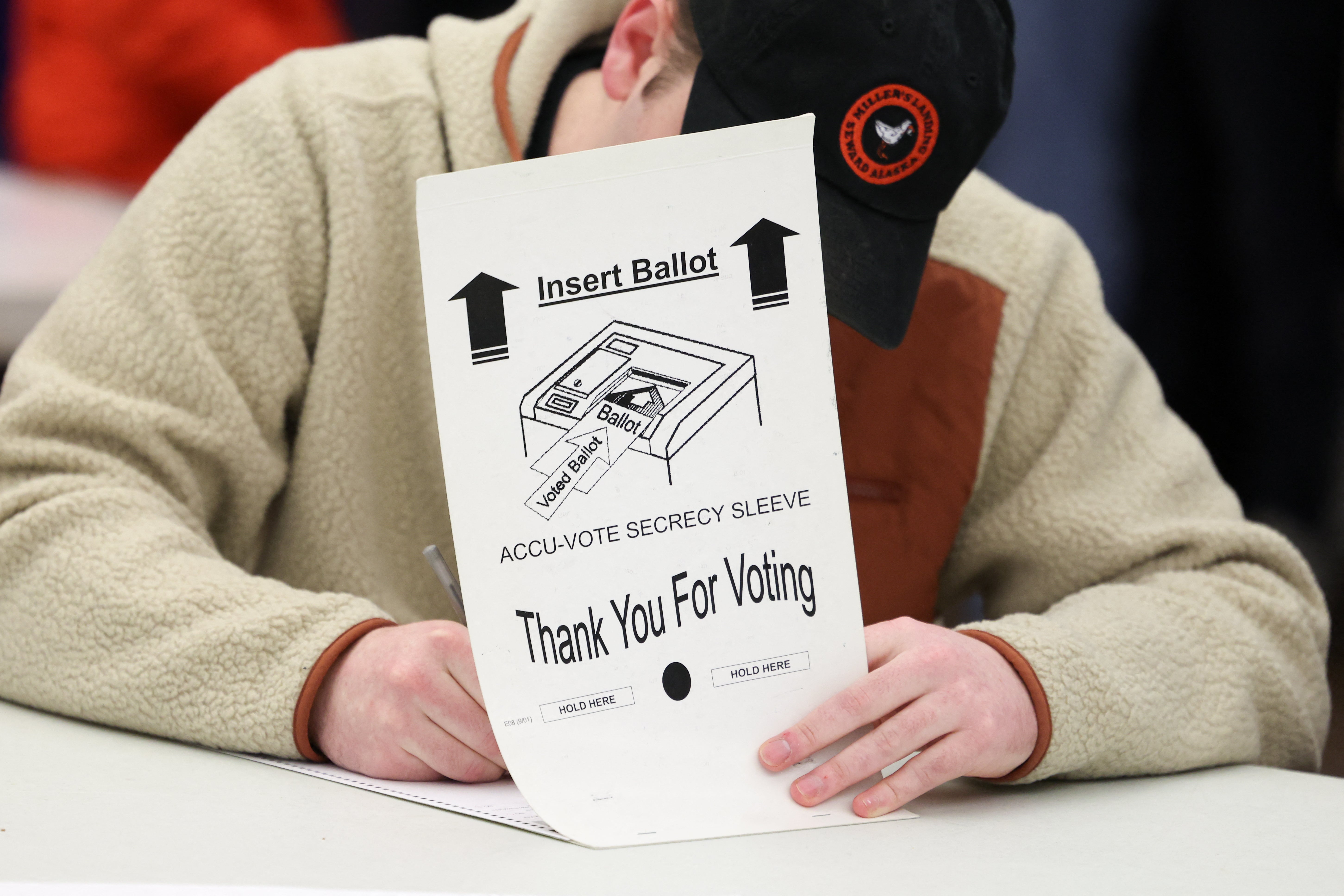 The Justice Department has also ended its defense of an ‘Unlawful Voter Initiative’ with Homeland Security to investigate alleged noncitizen voters (AFP/Getty)
The next day, the Justice Department also indicated it is ending its defense of an “Unlawful Voter Initiative” that sought to gather large amounts of data to generate a list of suspected fraudulent voters.
In August, the Department of Homeland Security rolled out a program that paved the way for a “surge” of door-to-door investigations and arrests based on potentially faulty data without enough time for state officials or voters to correct any registration errors, according to court filings.
A federal judge earlier this year warned that even under the “best conditions,” there is a “high likelihood of error in review because there is no federal database containing citizenship status of U.S. residents.”
In October, a federal appeals court agreed.
“In an operation ostensibly focused on past voter fraud, the government could have aggressively pursued its campaign against non-citizen voting well before these elections commenced,” appeals court judges wrote.
A brief appeals court notice Tuesday noted that the government is ending its appeal.
“This was one more desperate attempt by the Trump administration to interfere in the midterm elections, and the courts have again said no,” Benjamin R. Farley, supervisory counsel for Democracy Defense at the National Immigration Law Center, which was leading the legal fight, said in a statement last month.
Those losses also followed more than two dozen failed attempts from the Justice Department to seize state voter data, which a federal judge in Pennsylvania condemned as a “fishing expedition” that appeared designed “for potential weaponization in future elections.”
The latest retreat also follows the departure of now-former Civil Rights Division chief Harmeet Dhillon, who steered the Justice Department’s election investigations. She resigned from the role two days after Election Day.
The Justice Department has charged nearly 300 people in voter fraud-related cases since returning to the White House, including 197 people in 26 states within the last 11 weeks, an agency spokesperson told The Independent.
That pace has appeared to slow down, raising questions about the agency’s abilities in the aftermath as the administration hemorrhages prosecutors, though the Justice Department disputes that characterization.
“The Department’s focus on noncitizen voting did not begin or end with Election Day,” Justice Department spokeswoman Kiersten Pels told The Independent.
“In the weeks before the election, we prioritized bringing these cases to deter illegal voting and to make clear that voting by noncitizens carries serious criminal consequences,” she added. “The increase in charges and announcements you describe reflects that effort. It doesn’t indicate a change in priorities.”
The investigations are ongoing, she said.
“There are hundreds of ongoing criminal investigations into fraud associated with voting and elections, and they did not stop when the election ended,” Pels added.