06/06/2025June 6, 2025Germany faces extended recession if US trade war worsens, Bundesbank warns
Germany could face two more years of recession if a trade war with the United States escalates, the central bank of Germany said Friday.
If US President Donald Trump’s tariffs were to be implemented in full from July, and the European Union were to hit back with similar measures, then German output would decline 0.5% this year and 0.2% in 2026, the Bundesbank predicted on Friday.
This would be down to a “marked decline in exports and significant uncertainty weighing on investment,” the bank, which shares responsibility with the European Central Bank for the euro, said.
There would be a return to growth in 2027, with a rebound of 1%, the bank forecast.
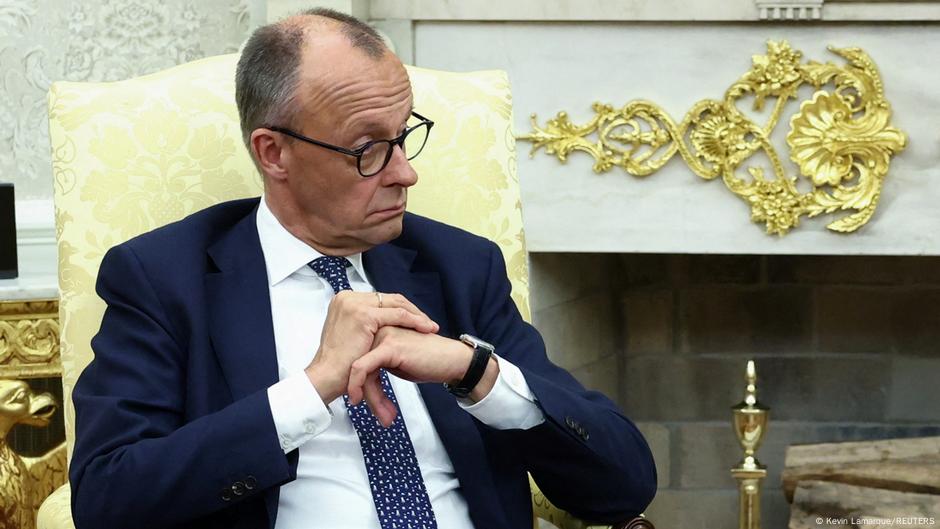
On Thursday, in an interview with Fox News in the United States, German Chancellor Friedrich Merz said he was keen to “find ways” to bring the tariffs “down” and that it is mutually beneficial for both the US and Germany to see them reduced.
“These tariffs are, in our view, something which is threatening our economy. Our conviction is that free trade, open markets, is the best thing for the mutual wealth of our countries, and for our continents, so this is an issue which has to be negotiated between the American government and the European Commission. We are a part of Europe so we are in that discussion.”
At the beginning of April, Trump threatened to hit the EU with a 20% tariff over its hefty surplus in goods traded with the US.
Trump subsequently postponed imposing the higher rate until July as the two sides sought to find some common ground.
More recently the US president threatened the EU with a 50% tariff rate as talks stalled.
The bloc still faces a “baseline” 10% levy on all its exports to the United States, as well as higher tariffs on specific sectors.
Toward the end of April, the German government cut its economic growth forecast to zero citing the impact of Trump’s trade policies.
The Bundesbank — jointly with the ECB — issues euro notes. It acts as a clearing house and bank supervisor, managing currency reserves in Germany. Unlike the US Federal Reserve, it is not officially responsible for maintaining the stability of the financial system and is not a lender of last resort.