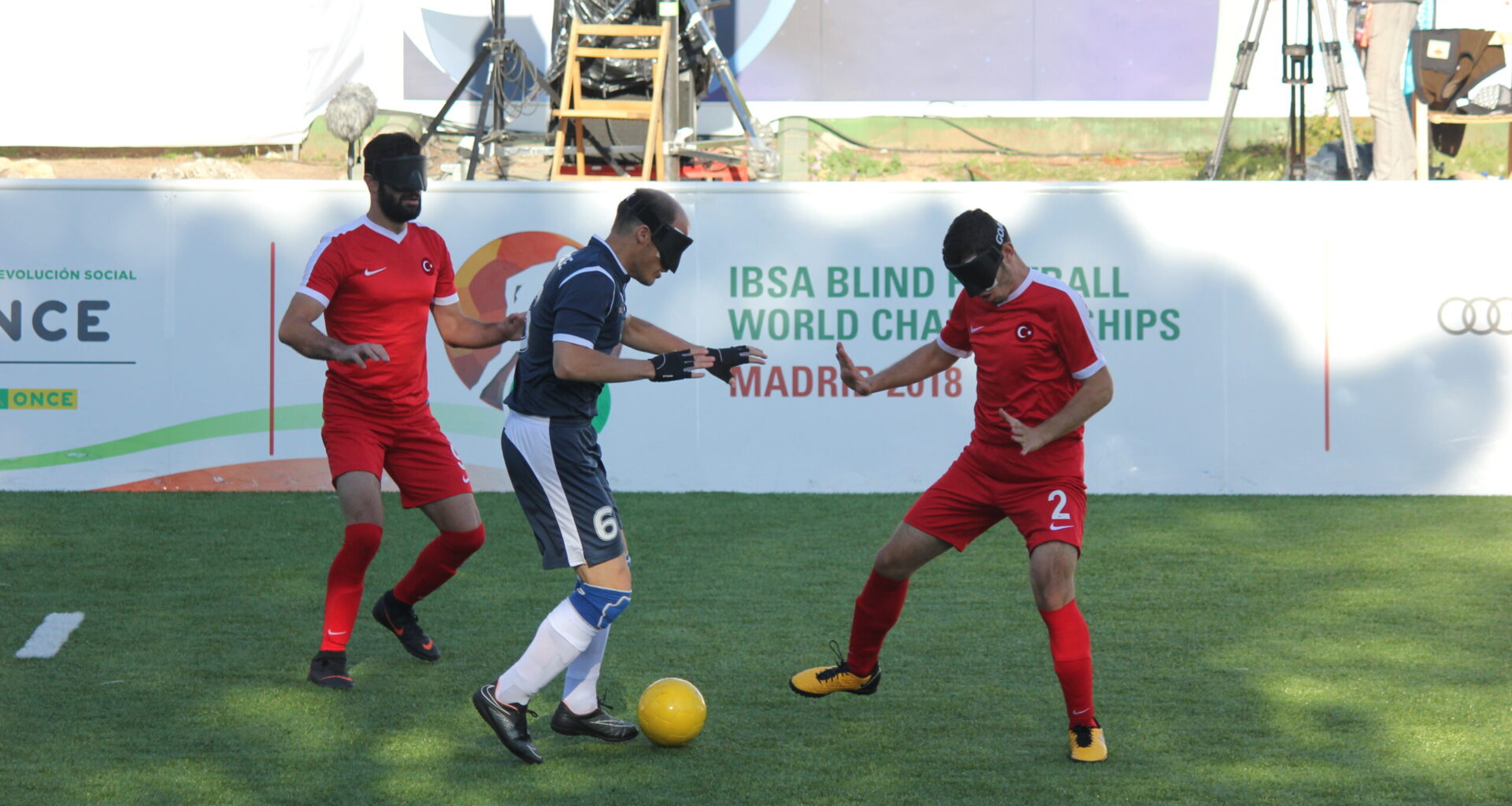
For most people, physical activity is a constant feature of everyday life. But for those with disabilities, opportunities are more limited.
Focussing specifically on visual impairment, blind and partially sighted people are twice as likely to be inactive compared to the general population, according to data from Sport England.
Among the 171,926 adults aged 16 and over who took part in Sport England’s annual Active Lives survey – conducted between November 2023 and 2024 and weighted to reflect the national population – 50.8% of those with visual impairments were found to be inactive, meaning they engaged in fewer than 30 minutes of physical activity per week.
This stands in stark contrast to the NHS-recommended minimum of 150 minutes per week for adults. The fact that more than half of blind and partially sighted people fall so far below this target is not only concerning, it also raises two critical questions: why? And what can be done?
The first is somewhat easier to answer:
The See Sport Differently report, published by the Royal National Institute of Blind People (RNIB) and British Blind Sport, highlights that although many visually impaired individuals want to be more active, they face a number of significant barriers. These include accessibility, cost, transport, confidence, and a general lack of awareness.
Efe Shimwell, who plays Blind football for England and West Bromwich Albion, told the Sports Gazette:
“It’s is a very underreported sport. I came across it by complete coincidence, and I was so lucky I did.
“There will have been a lot of people in my situation who never even knew it existed.”
 Efe Shimwell representing West Bromwich Albion in the National Blind Football League
Since stumbling across a Tottenham Hotspur Community session, while his Spurs-supporting family were trying to book match tickets, Shimwell has gone on to win the FA Disability Cup with West Brom Blind FC, and represent England Men’s Blind Football team around the world.
We spoke to him during the penultimate round of the National Blind Football League, which features four teams completing on a monthly basis at the Royal National College for the Blind in Hereford.
But, as he noted, many others aren’t so lucky. Which brings us to the second question:
What can be done?
Off the back of the See Sport Differently report, RNIB and British Blind Sport launched a three-year Sport England funded programme aimed at increasing participation and improving the sporting experience for blind and partially sighted people.
When asked about his hopes for the future of Blind football, Shimwell said:
“As much media attention as possible, and more opportunities for people to play locally, because it can be a very difficult sport to play logistically.
“You have to come all the way here to Hereford, or to London, Birmingham, or Liverpool. There aren’t many other centres, really.”
Understanding the unique challenges faced by people with sight loss is imperative.
For example, Fulham Reach Boat Club, a sport for good charity based on the Hammersmith waterfront, recently ran a 10-week Row the Rhythm course designed to make rowing accessible to adults with visual impairments. The 10 available places were filled quickly, with some participants traveling from as far as Ipswich, highlighting the unmet demand for disability sport opportunities.
Fulham Reach’s accessible facilities, located entirely on one ground floor close to Hammersmith Tube Station, combined with funding from Love Rowing, and dedicated volunteer coaches, showcase how practical support and investment can overcome common barriers.
COVID-19
While there is still a long way to go, it is important to recognise and learn from the progress already made.
When Sport England launched its first Active Lives survey (covering November 2015 to November 2016), just 33.3% of visually impaired adults were classed as active (meeting the recommended 150 minutes of physical activity per week). According to the latest data, collected between November 2023 and November 2024, that figure has risen to 37.7%.
Evidently, the Covid-19 pandemic had a devastating impact. Many disability-specific programmes faced funding cuts during this period, which significantly disrupted participation.
As the graph shows, the proportion of physically active visually impaired adults peaked in 2018/19, before dropping sharply between November 2019 and November 2021, during the height of the pandemic. While participation has seemingly begun to recover, it has yet to return to pre-pandemic levels.
Impact
Sport, of course, has a significant impact on physical health – strengthening muscles, managing weight, improving cardiovascular health, and helping to prevent chronic disease. But its importance extends far beyond the physical.
As Shimwell said: “Blind football is brilliant; I would encourage every young blind person to try it – physical health, firstly, but also just confidence, whether that be socially or in ability.
“Getting around the country to get to events – it really is a masterclass in building skills that you need to be a blind adult.”
Data from the Active Lives survey also highlights the social challenges faced by those with sight loss.
While 7% of the whole population in England report feeling lonely often or always, this figure rises to 21.9% among people with visual impairments. In contrast, only 16% of blind or partially sighted people say they are never lonely, compared to 23.7% of the wider population.
Sport remains a tried and tested antidote to loneliness, with research suggesting that exercise may be more effective than antidepressants.
“Blind football is probably the ultimate team sport. There’s so much communication – you need to know what people’s voices sound like, how they move, all these things. It really is an exercise in relationship-building with your teammates,” Shimwell added.
“It’s really helped me. The people involved with it have been a constant source of support and advice. Having that network of blind people to go to, to further my knowledge of how to live independently, how to exercise, how to do things in education – It really is a very holistic sport. It’s something that helps across the board, both with mental and physical health.”
Sport offers far more than just exercise – it provides freedom, discipline, and a sense of community. It’s time everyone had the opportunity to reap those rewards and lead happier, healthier lives.