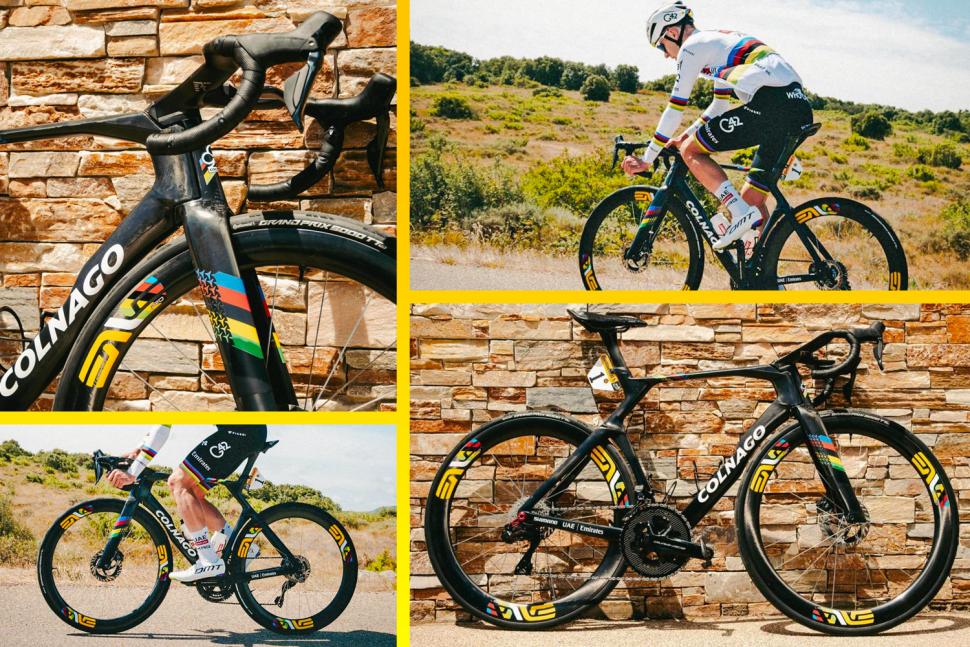
Tadej Pogacar may not look like he needs a helping hand as he arrives for stage 16 of the Tour de France in Montpellier over four minutes up on his closest rival, Jonas Vingegaard; however, his team and bike sponsor are leaving no stone unturned in the Slovenian’s quest to secure a fourth yellow jersey, unveiling another special edition bike customised to deal with the varied terrain, including the small matter of a summit finish on Mont Ventoux.
Pogacar won Friday’s Tour de France mountain time trial on a stripped-back Colnago Y1Rs (embedded in the Insta-tastic post above) and he’s racing today’s stage, which includes a summit finish on the legendary Mont Ventoux, on a similar bike, although with more typical road-stage features described as “a full road race configuration” by Colnago.
Whereas Pogacar rode the earlier stages of the 2025 Tour de France on a white Y1Rs in a finish that reflects his status as world champion, the model he’s riding today – like the one he used for the mountain time trial – has a raw carbon aesthetic with what Colnago calls “a paper-thin clearcoat” finish.
Unlike the minimalist time trial build used the other day, this version features bottle cages, handlebar tape, and 28mm tyres. Whereas Pogacar used a 140mm front brake rotor during Stage 13’s time trial to shave off a few grams, he’s using a standard 160mm rotor now.
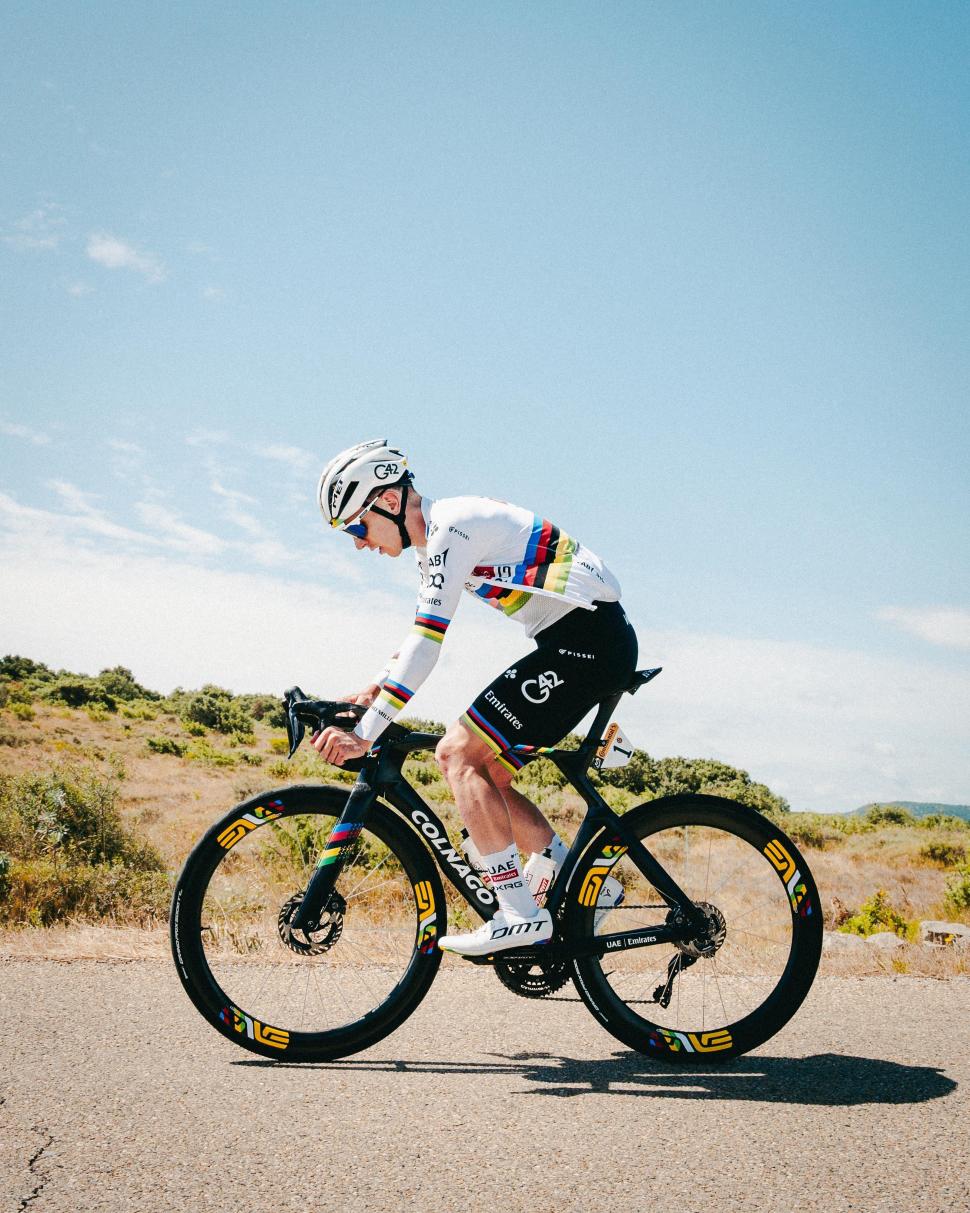 2025 Tour de France Colnago Y1Rs Black Version Tadej Pogacar riding (credit: Colnago)
Pogacar uses a Shimano Dura-Ace Di2 R9200 groupset with 165mm cranks and additional sprinter buttons on the drops. He swaps the same Dura-Ace power meter from frame to frame to ensure consistent data.
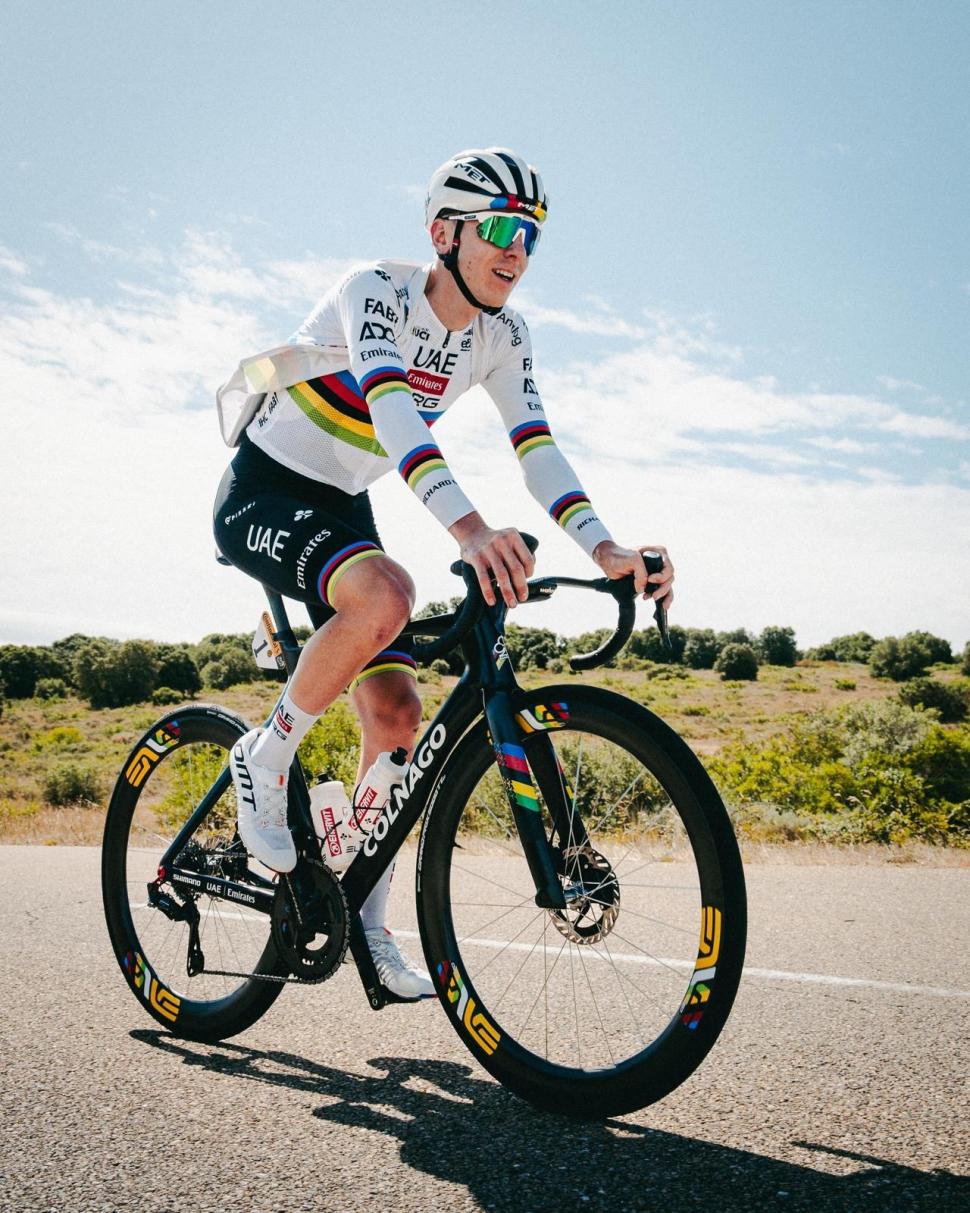 2025 Tour de France Colnago Y1Rs Black Version Tadej Pogacar riding portrait (credit: Colnago)
The 55/38T chainrings aren’t from Shimano, though, they’re from Italian brand Carbon-Ti.
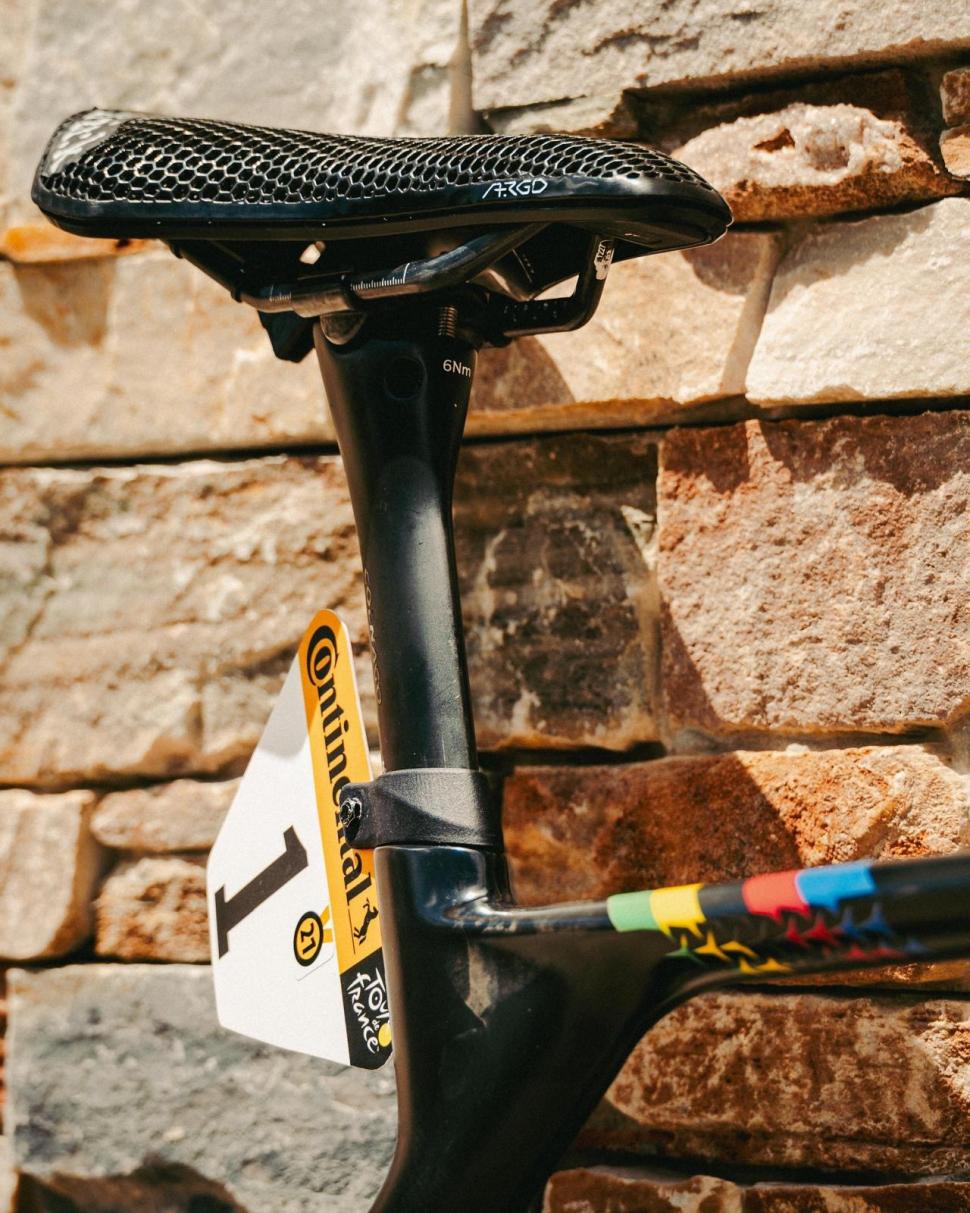 2025 Tour de France Colnago Y1Rs Black Version Tadej Pogacar saddle – 1 (credit: Colnago)
The wheels are Enve 4.5 PRO fitted with Continental GP5000 TT 28mm tyres, and the saddle is a Fizik Argo R1 Adaptive with 3D-printed variable density. It’s a custom fit to take account of Pogacar’s aggressive riding position.
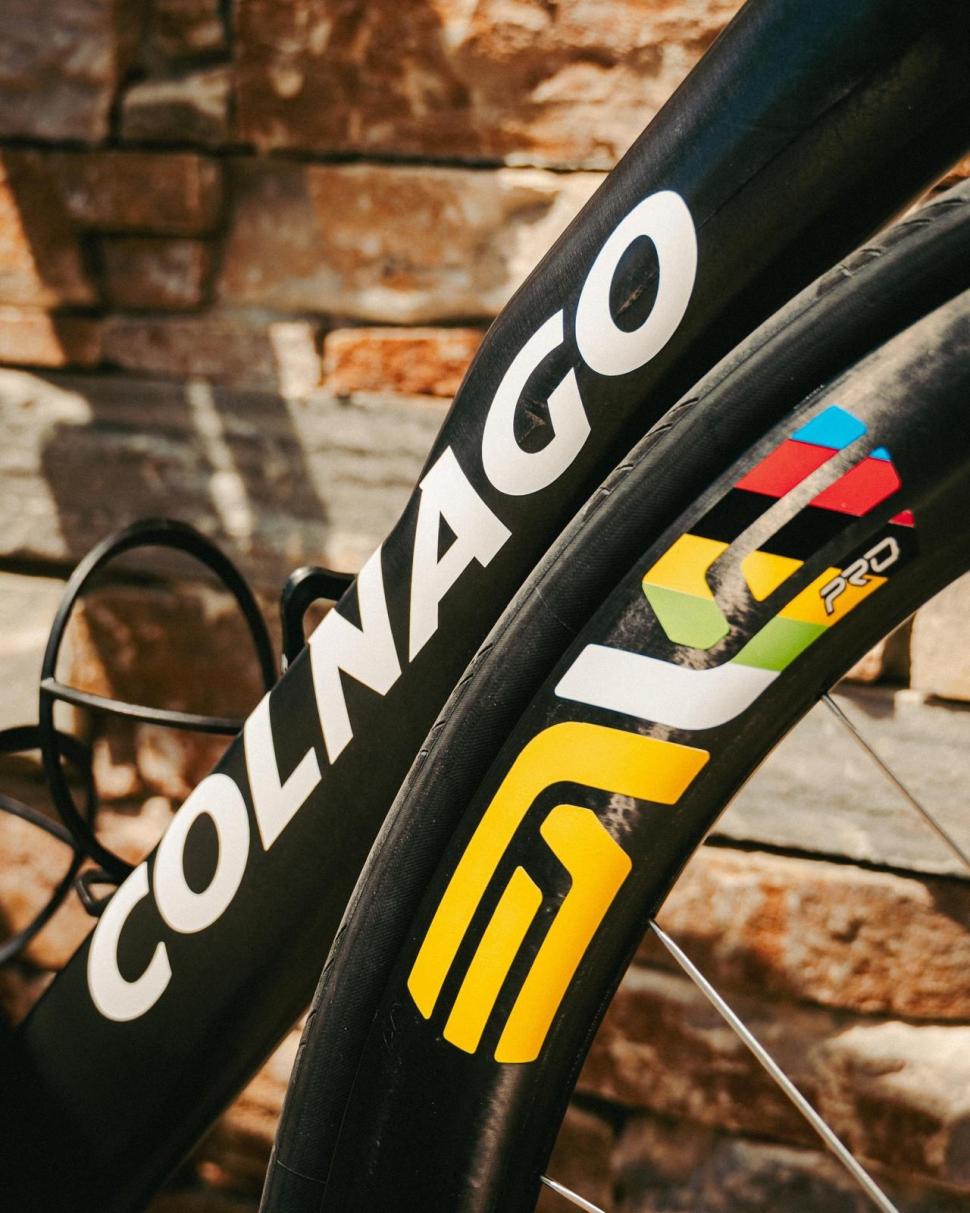 2025 Tour de France Colnago Y1Rs Black Version Tadej Pogacar wheel – 1 (credit: Colnago)
He has Elite Leggero Carbon bottle cages on there, chosen for their ultralight construction, and titanium bolts have been used wherever possible to save a little more weight.
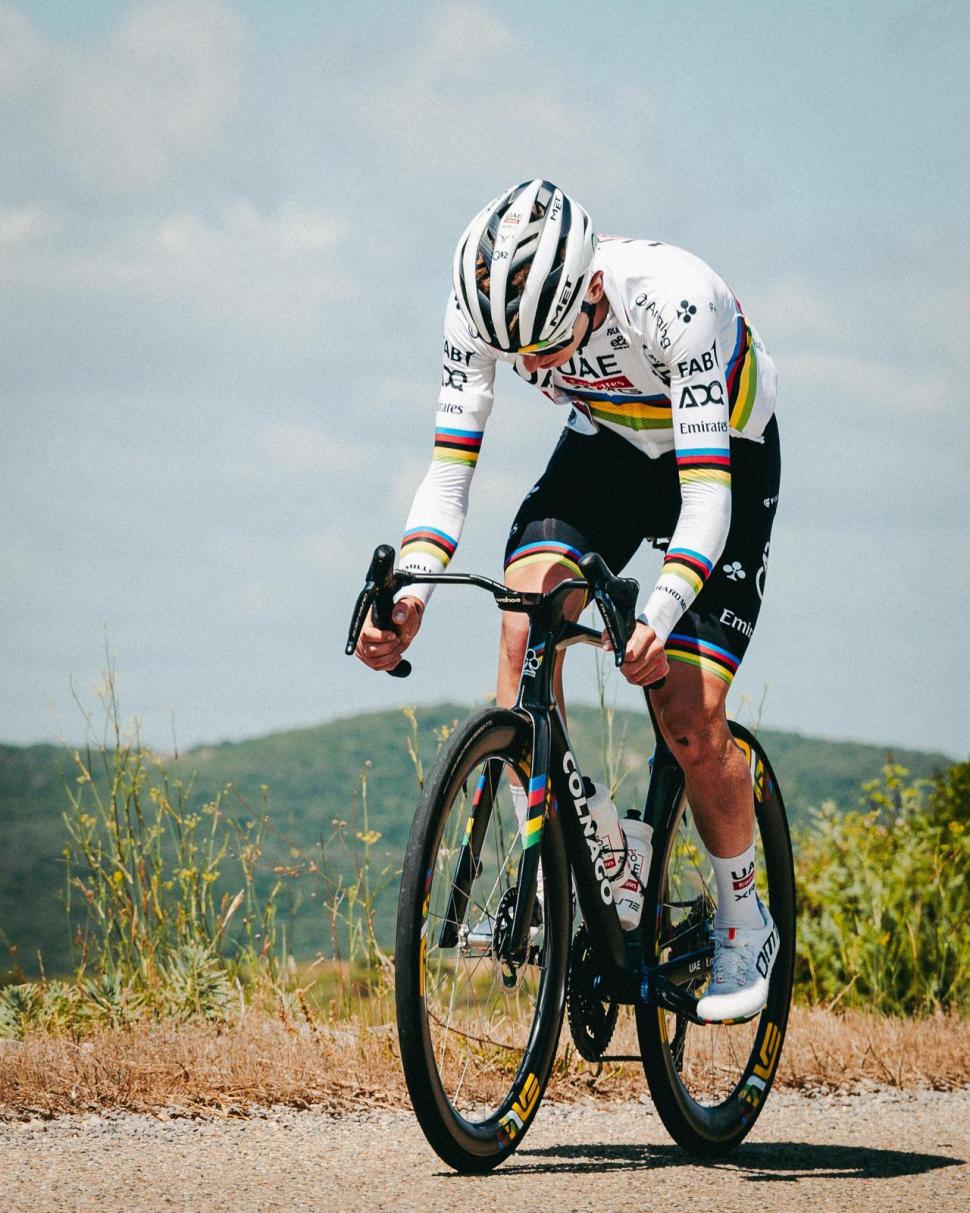 Colnago Y1RS Black edition for Tour de France Ventoux stage 2025 33 (credit: Colnago)
Colnago has also shed some more light on why its sponsored riders, Pogacar especially, appear to be favouring the Y1RS aero bike in this year’s Tour, even on stages with multiple categorised climbs and summit finishes.
> Why the aero road bike is making a comeback
Colnago and UAE Team Emirates say the advantages of an aero bike are more important than saving a little weight, which is why we’re yet to see Pog on the Colnago V5Rs all-round race bike that is also at his disposal.
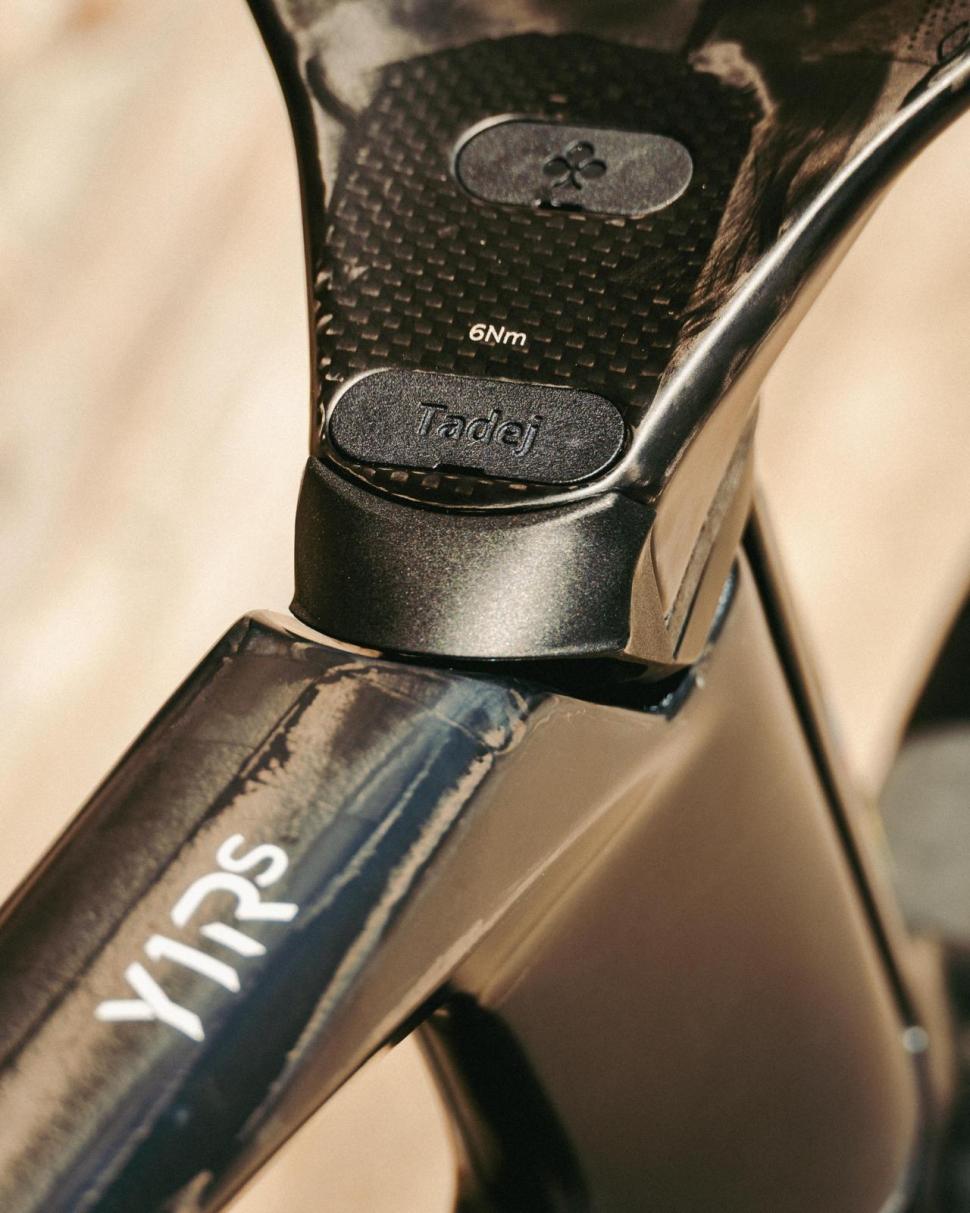 2025 Tour de France Colnago Y1Rs Black Version Tadej Pogacar top tube cockpit – 1 (credit: Colnago)
“If a rider is expected to work at the front for most of the stage and isn’t meant to stay with the leader on the final climb, then the obvious choice is the aero bike. Even if the stage finishes atop Mont Ventoux, the extra 500g of the Y1rs doesn’t make a meaningful difference if the rider’s primary goal is just to finish within the time cut,” says Davide Fumagalli, Colnago’s head of product.
Pogacar is team leader, so that’s not exactly relevant to him.
“In stages where a key moment calls for better aero efficiency, like a flat section after an attack or a climb with an average gradient of less than 8%, the team will favour the Y1rs, even if the rest of the stage suits the V5rs better,” continues Fumagalli.
“The team has done its calculations, and the tipping point is around that 8% gradient. Not many climbs are significantly steeper than that on average. Take the uphill time trial: although it was a climbing stage, the average speed was relatively high. In that context, the aero bike, especially as it was set up relatively light, proved worth the extra weight.
“Another consideration is how much energy can be saved with the aero bike versus the V5rs in the lead-up to the climbs. Over longer stages, this can make a meaningful difference in overall freshness at the decisive moments.”
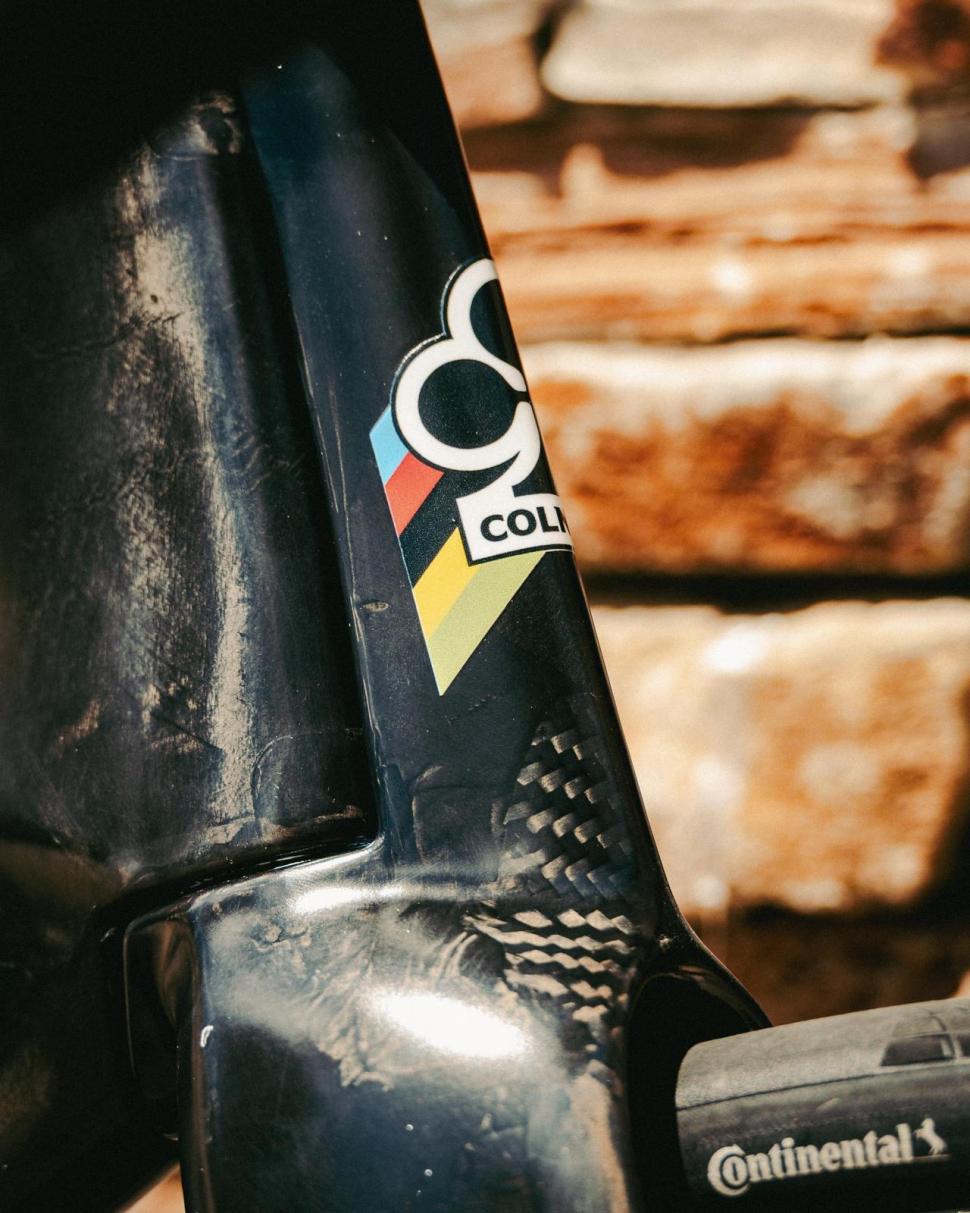 2025 Tour de France Colnago Y1Rs Black Version Tadej Pogacar fork – 1 (credit: Colnago)
In terms of weight, a Colnago Y1Rs in a typical UAE Team Emirates race build is 7.2–7.5 kg. The Y1Rs that Pogacar used for the stage 13 mountain time trial was 6.9 kg. This version will be heavier than that, but not by much.
The team can’t go lower than the UCI’s minimum weight limit of 6.8kg for a Colnago V5Rs build, so there’s no point swapping to a very slightly lighter bike and taking a hit in terms of aero efficiency.
> Is ‘one bike to rule them all’ dead?
“Wind-tunnel testing reveals that the Y1Rs, utilising new 8:1 tube-depth rules, saves approximately 20–25 watts at 50km/h, which exceeds the approximately 150–200g weight difference between the Y1Rs and the V5Rs,” says Colnago.
“Pre-stage modelling shows that aero bikes retain decisive seconds even on gradients of up to 10%. Pogacar attacked Stage 4’s 15 % ramp on the Y1Rs.”
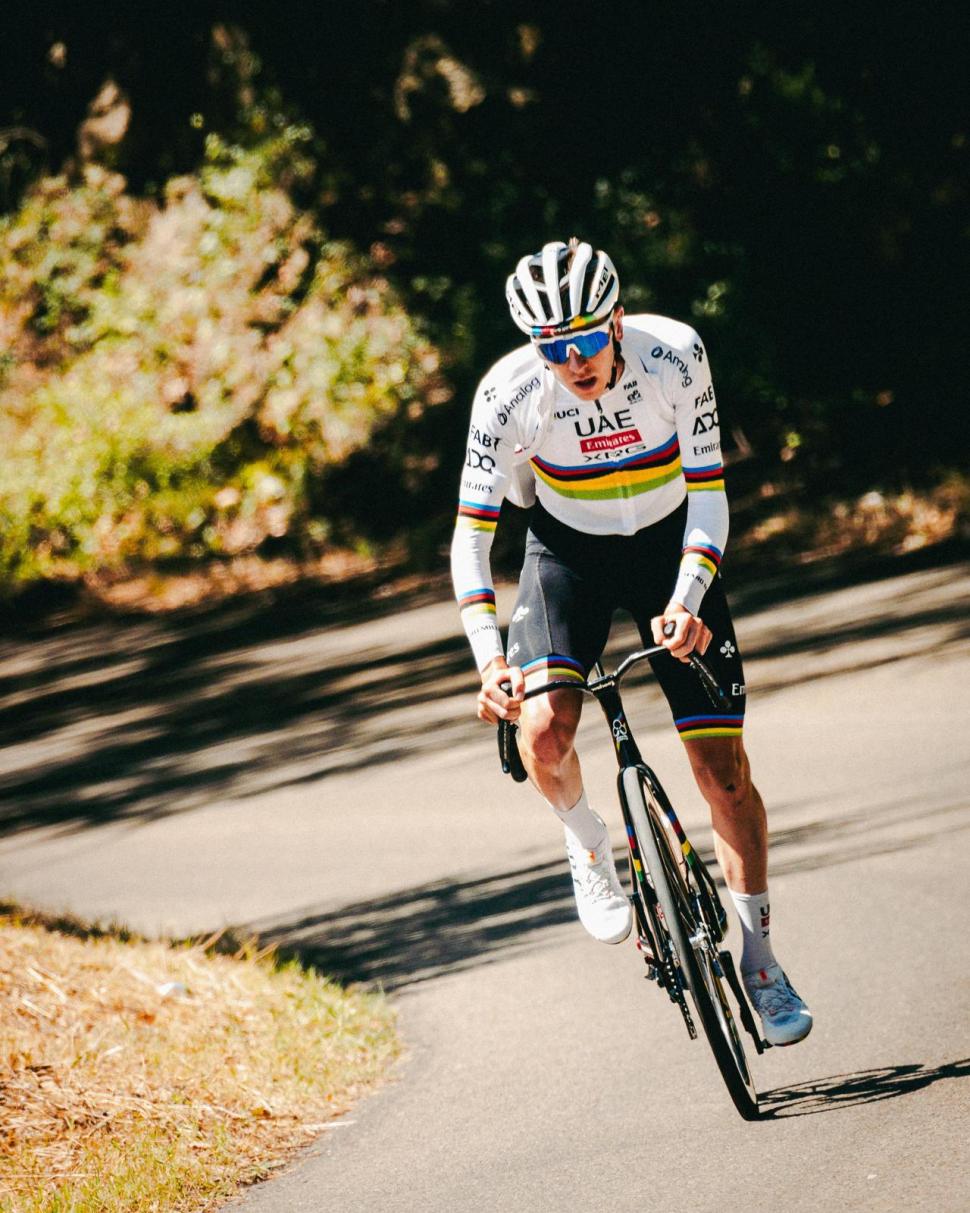 Colnago Y1RS Black edition for Tour de France Ventoux stage 2025 26 (credit: Colnago)
Will we see Pogacar on the V5Rs in the remaining stages of the Tour de France, then?
“On very long, steep, weight‑critical summit finishes, particularly at high altitude, the team will likely deploy the V5Rs,” says Colnago.