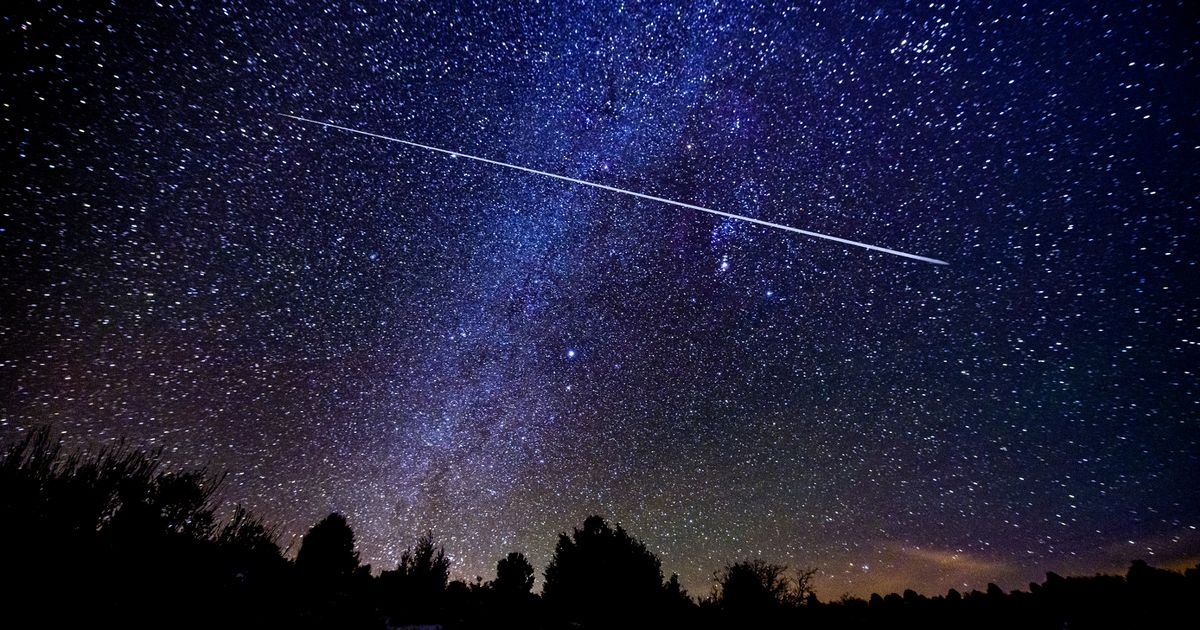
Stargazers could witness up to 20 bright and fast shooting stars an hour during the stellar annual display
09:35, 21 Apr 2025Updated 09:36, 21 Apr 2025
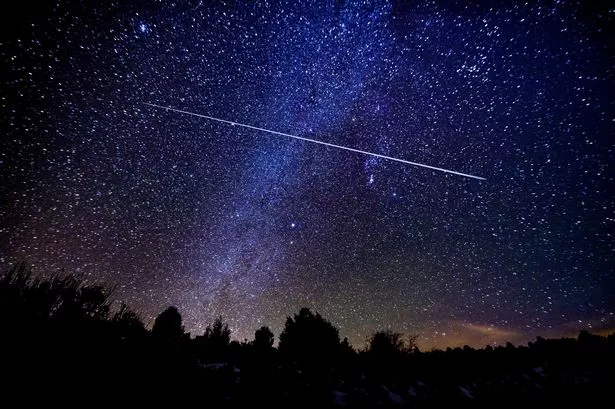 A dazzling night sky display is about to light up UK skies with shooting stars(Image: Getty Images)
The peak of the Lyrid meteor shower is set to light up UK skies this week.
The world’s oldest known meteor shower has been active since April 16, reaching its height on Monday night (April 21).
After vibrant Northern Lights displays and a “once-in-a-generation” planetary alignment, the meteor shower is one of many spectacular night sky events to grace UK skies in 2025.
Following the ‘Blood Moon’ partial lunar eclipse and stunning partial solar eclipse in March, the month of April has a tough act to follow – but the Lyrids could bring a spectacular show of nearly 20 shooting stars an hour to the night sky
The spectacular display happens every year when the Earth passes through debris left by a comet on its journey around the Sun.
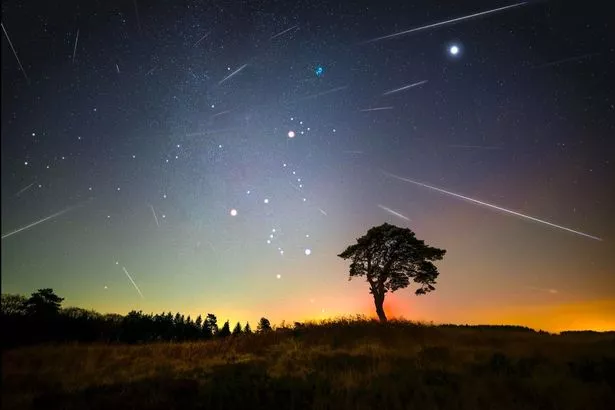 Up to 20 shooting stars an hour could be spotted during the peak of the Lyrid meteor shower(Image: Josh Dury Photo-Media/PA)
Whenever the Earth moves through the trail of Comet C/1861 G1, a number of these pieces of debris fall into the atmosphere and burn up to create ‘shooting stars’ – a glowing, short-lived streak of light.
“We only see the comet every 400 years or so, but the debris is spread out over the entire orbit so we see it every April when the Earth intercepts this orbit,” explains Albert Zijlstra, Professor of Astrophysics at The University of Manchester.
“Parts of the orbit have denser debris than others. If we pass though such a dense patch, we can have a meteor storm,” Prof Zijlstra tells the Manchester Evening News.
The Lyrids are a “moderate” swarm, according to Prof Zijlstra, where stargazers could see one meteor every five minutes on average, or one every minute on a good night.
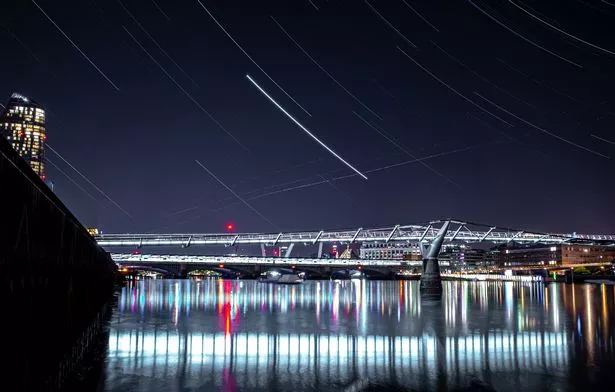 The Lyrid meteor shower can bring bright ‘fireballs’ to the night sky(Image: Getty Images)
However, the annual shower is known for its rare “surges” of up to 100 fireballs an hour. Prof Zijlstra says witnessing one of these spectacular storms is “a matter of luck” as they last an hour or less, and are only visible from a small area – and occur roughly every 60 years!
Best time to see the Lyrids in 2025 display
The best time to see the Lyrids is in the early morning of the peak day, starting after midnight and becoming more intense before dawn. This year, the meteor shower is set to peak on April 22, making Monday night and into the early hours of Tuesday morning the best time to spot the stunning display.
Stargazers could see meteors stream across the sky parallel to one another, appearing to travel sideways across the night sky from Earth. The meteors can be seen appearing to radiate from around the star Vega in the constellation of Lyra the Lyre, hence the name “Lyrids”. This is in the eastern sky and can be found between the Summer Triangle and the constellation Hercules.
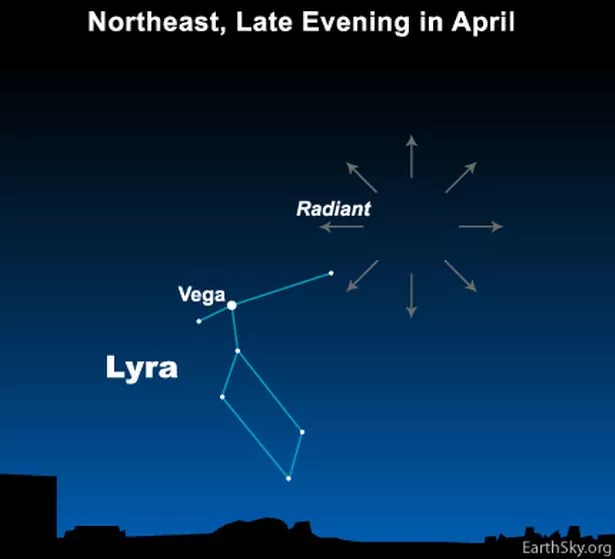 The Lyrids originate from the constellation Lyra(Image: EarthSky)
As with any night sky event, meteor showers are best viewed in a dark sky location away from high buildings and street lights.
“If you want to have a go, be outside at around 2 to 4am, find a dark spot, take some 10-15 minutes for your eyes to get dark adjusted and look up,” says Prof Zijlstra. “If you need your phone, cover it in red cellophane so it keeps your night vision intact.”
Although Prof Zijlstra says we are not expecting a major “surge”, he says the lack of interference from the Moon should make for good viewing of the Lyrids peak in 2025.
Will skies be clear for the 2025 Lyrids peak?
According to Met Office cloud cover maps, clear skies are forecast for large parts of the UK at 3am on April 22 – when the Lyrids are set to peak. Patchy cloud is expected over northern parts of England, Scotland and Northern Ireland.
 Met Office cloud cover maps during the peak of the Lyrid meteor shower on Tuesday morning (April 22)(Image: The Met Office)
The Met Office forecast for tonight (April 21) states: “Rain will clear eastwards this evening, then it will be dry overnight with lengthy clear spells. A few fog patches developing, with temperatures falling close to freezing in the countryside.”