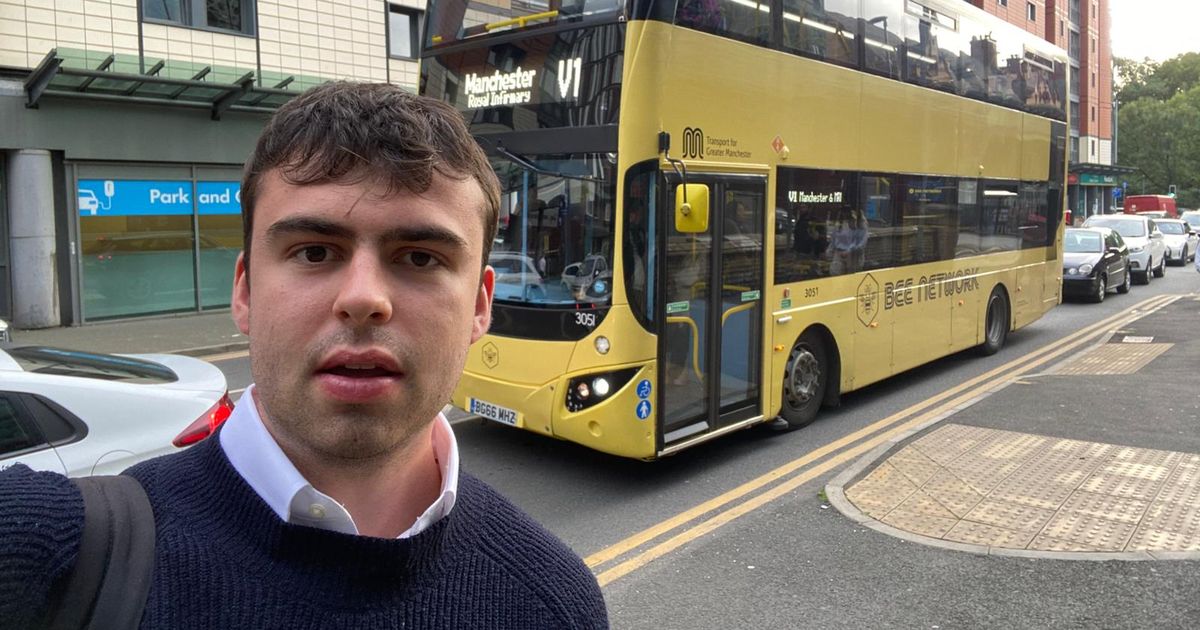
As bus strikes hit Manchester, Ben Winship explored what a Manchester without buses would look like in the areas that rely on them the most Reporter Ben Winship
It felt like I was the only person walking around Worsley Road at 7.30am. It’s day one of the Bee Network bus strike (September 19) and everyone in this part of Manchester seems to travel by road.
Queues of cars are stacking up and the noise of the nearby M60 is difficult to get out of your ears. It’s a 40-minute walk to the nearest train stations in Walkden or Patricroft, so maybe it shouldn’t be a huge surprise that lots of people here seem to drive.
This is one of the places in Manchester where, if you don’t have access to a car, the bus becomes a vital mode of transport. But just how important is the bus to areas of Manchester like Worsley?
Never miss a story with the MEN’s daily Catch Up newsletter – get it in your inbox by signing up here
This question is raised as more than 2,000 members of the Unite union walk out until Monday (September 22) over a pay dispute, with around two thirds of bus services are expected to be cancelled.
To understand what a bus-free Manchester could look like, I took on a challenge – to attempt to get from Worsley to the Manchester Royal Infirmary (MRI) in Chorlton without using a bus.
Leg 1 – Worsley to Patricroft train station
Passing the site of Ryan Giggs’ recently-shut restaurant, the George’s Dining Room and Bar, I noticed the 20 bus service cruise past me, soon followed by the 33. I already felt a bit daft on this bus-free quest through the city and temptation like this didn’t help my spirits either.
Around one third of bus services were scheduled to run during the strikes, and I wondered how many people knew this. So I made a detour to a busy Liverpool Road bus stop and spoke with passengers waiting to board.
The first person I spoke to had no clue which bus to get on or whether he would get into work on time – he hadn’t checked online.
Another passenger described herself ‘lucky’ that her bus service was operating, and made sure to check online just in case. She also said: “The situation in general is chaos.”
As she hopped onto her 67 service, another Bee Network bus with ‘private’ written on the destination sign flew past.
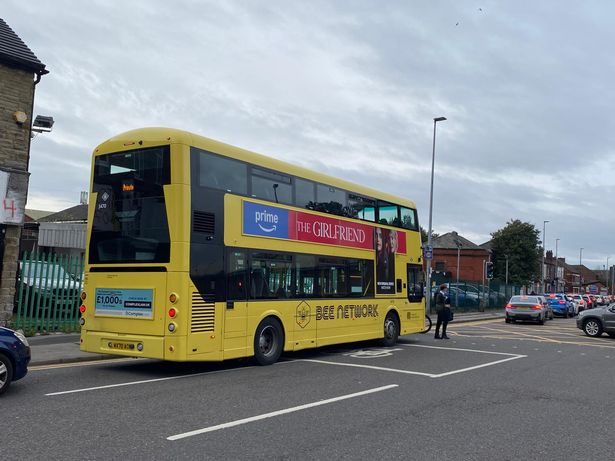 A bus on Liverpool Road with a ‘private’ message on its direction display
I hopped onto a nippy Lime scooter to get me the rest of the way to Patricroft train station. It didn’t feel like the most grown-up way to travel, but with the wind in my hair I felt like I was really moving.
I arrived at Patricroft train station after 35 minutes with £7.12 less to my name. Having stopped a few times to speak to people, Lime’s £0.17/min riding fee soon added up.
My total journey cost was already above the £5 fee for a 1-day Bee AnyBus adult ticket, which offers unlimited daily bus travel for £5.
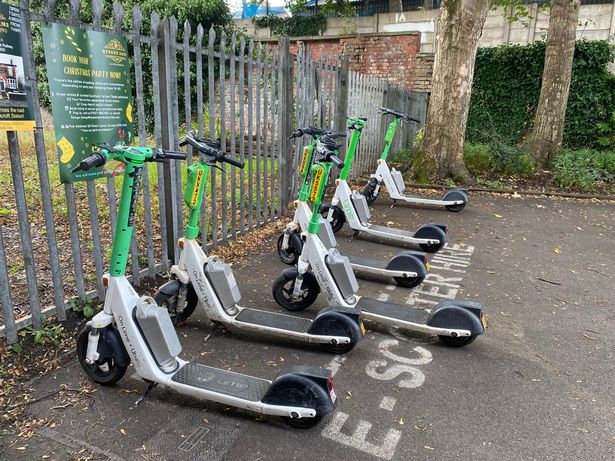 Like bikes outside Patricroft train stationLeg 2 – Patricroft train station to Oxford Road train station
I missed the 8.44am train to Oxford Road train station – so a 40-minute wait it was. While the train is the quickest way to get around, it doesn’t always offer round-the-clock flexibility.
I killed some of this time by speaking to a bus driver employed by Diamond bus operators.
While First, Metroline and Stagecoach bus operators were on strike, this driver had been on shift since 6am and described a ‘busy morning’ after lots more people from other services got on his 20 service.
If his bus was busy today, it wasn’t full of customers from Eccles and Patricroft. Passengers waiting at bus stops on this section of Liverpool Road were few and far between.
After a fiddly walk and scoot, I was blitzing through Eccles, Deansgate and into Oxford Road on the train. A £4 railcard-free ticket brought the running cost to £11.12.
Leg 3 – Oxford Road to Manchester Royal Infirmary
The 9.44am train was pretty full for a post-rush-hour service, which made me wonder how many people were also avoiding the buses.
A train conductor on the platform recalled a fairly standard morning as he held up his dispatch baton. And black cab driver Arjan Singh, 51, revealed a similar story as he leant on his vehicle.
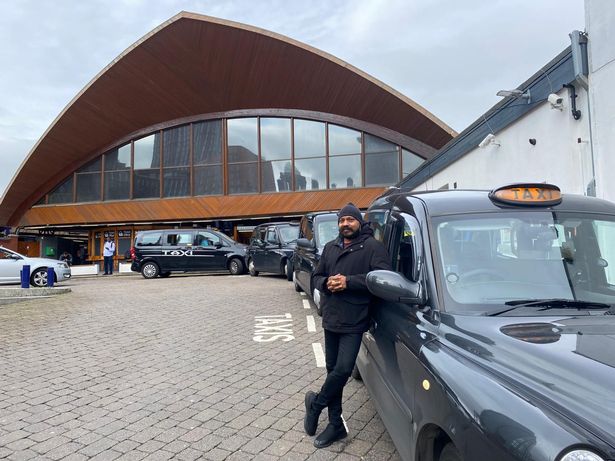 Arjan Singh, 51, had a quiet morning despite the disruption
He said: “We’ve had a really quiet morning. I’ve been waiting here outside Oxford Road station for 45 minutes waiting for a customer, and nothing.
“But I did have someone hail me down on Oxford Road earlier – which never happens.”
Arjan may not have been summoned for many emergency rides, and perhaps this reflected a significant amount of people choosing to work from home.
But Uber driver Nasser Khan, 42, spoke of a busy morning as he stopped for a moment to tuck into a Caffé Nero pastry.
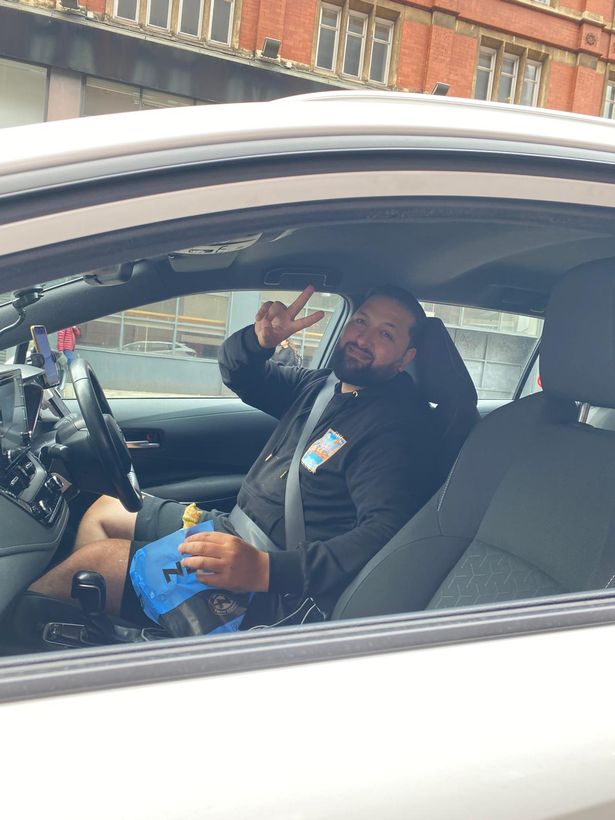 Uber driver Nasser Khan, 41, has been busy getting people across the city during the bus strikes
He said: “I’ve been driving children who have had their school buses cancelled around Newton Heath, Failsworth and Moston.
“And I also had one elderly passenger who owned a travel pass for the bus, but because of the strikes they had to pay for an Uber instead.”
After a not-so-tech-savvy handful of minutes downloading an app and unlocking a Starling Bank bicycle, I cycled up the last stretch towards the Manchester Royal Infirmary.
By 11.10am, I’d reached my destination. If I’d taken the bus from Worsley at 7.40am, I would have been here at 8.40am – comfortably early for a 9am appointment.
But after my bus-less trek into the city, I find myself more than two hours late for my fictional engagement. I spent my journey running out of time, running low on cash, and for some parts, just running.
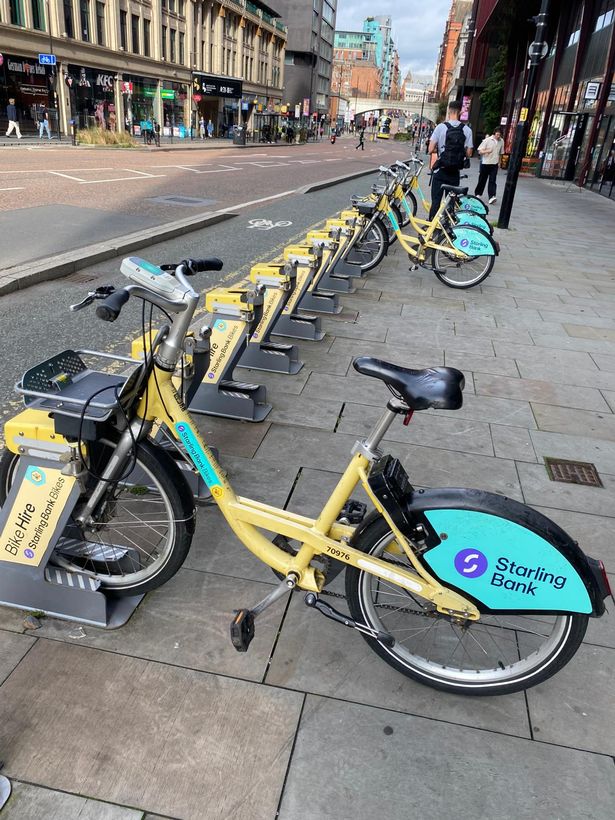 My chariot ahead of the final leg of my journeyFinal thoughts
It took me three-and-a-half hours and 9,000 steps to complete the journey, but let me be clear – it could be done a lot easier. I took the scenic route at times, missed my first train, and stopped along the way to speak to people affected by the strike.
And with this last leg of the journey costing £1, my final tally came to around £12.12 – more than double the cost of an unlimited day pass for the bus. A taxi would have been far quicker, but more expensive still at around £15.
Join the Manchester Evening News WhatsApp group HERE
The objective of this challenge was not to do it as quickly or cheaply or possible, but rather to try and understand how awkward it can be to get around some areas of Manchester without a bus.
And when a simple bus journey is broken up into a combination of walking, scooting, training and cycling, you begin to realise how important a bus route is for people in communities like Worsley that rely on it.
So, can you travel from Worsley to Chorlton without using a bus? Yes, you can. Would I recommend it? Probably not.