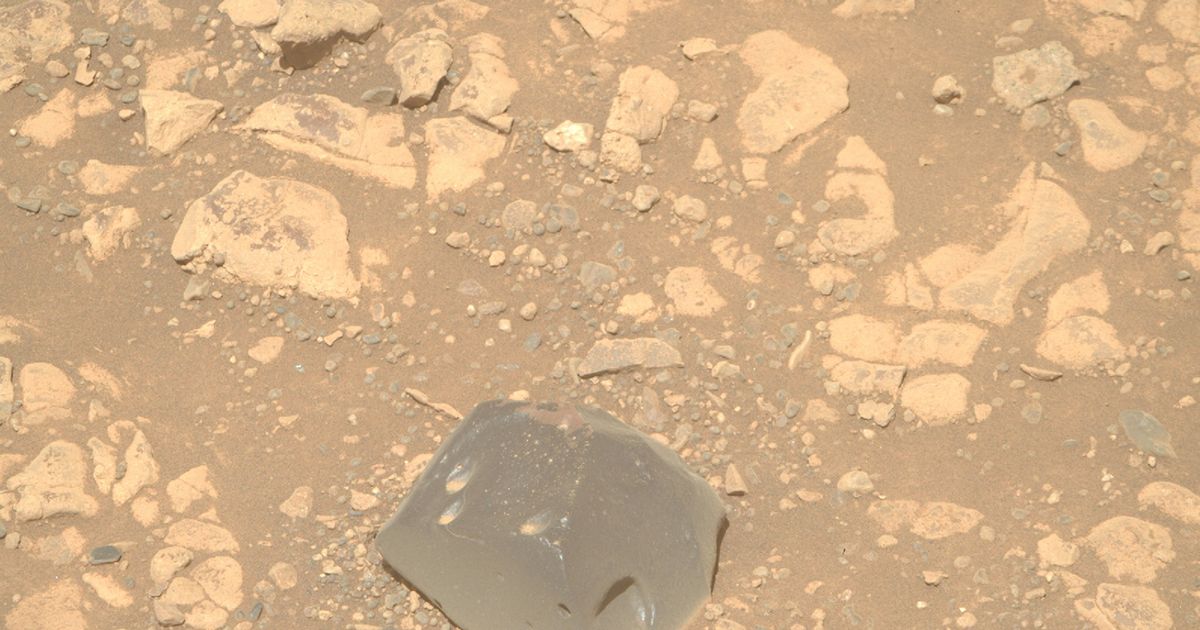
NASA’s Perseverance Mars rover has stumbled across yet another unusual rock on the Red Planet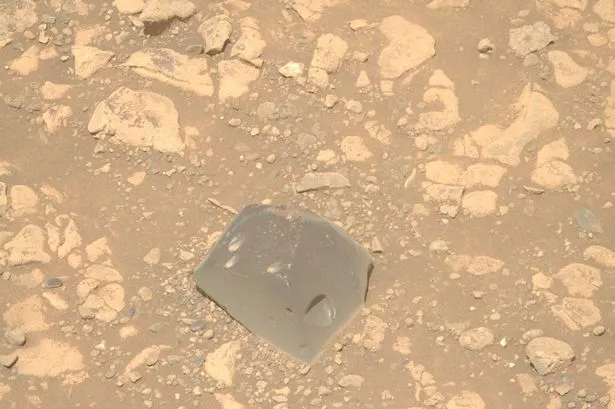 NASA’s Mars Perseverance rover captured images of the bizarre ‘Skull Hill'(Image: NASA/JPL-Caltech/ASU/WNS)
A NASA rover uncovered a rock on Mars that has baffled scientists, as they say it originated from elsewhere.
The Perseverance rover is currently searching the Martian surface for signs of ancient life. Earlier this month (April 11), the rover paused at a boundary between light and dark rock outcrops where it spotted a peculiar-looking rock which scientists have nicknamed “Skull Hill”.
The bizarre rock features an eye socket-like shape and its dark colour stood out against the surrounding light-toned rock.
NASA said in a blog post: “The rover has encountered a variety of neat rocks that may have originated from elsewhere and transported to their current location, also known as float.
“This float rock uniquely contrasts the surrounding light-toned outcrop with its dark tone and angular surface, and it features a few pits in the rock. If you look closely, you might even spot spherules within the surrounding regolith!
“We’ve found a few of these dark-toned floats in the Port Anson region, and the team is working to better understand where these rocks came from and how they got here.”
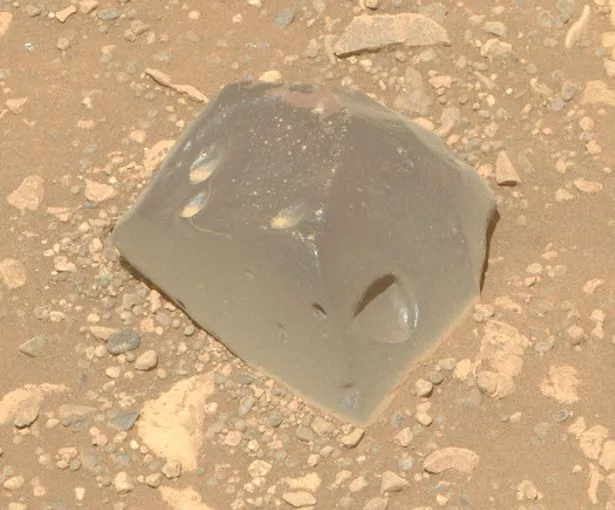 The unusual rock features an eye socket-like shape(Image: NASA/JPL-Caltech/ASU/SWNS)
The NASA rover was exploring an area called “Witch Hazel Hill” on the Jezero crater rim when it made the discovery. The finding is what is known as a “float rock,” meaning it was not found in its original location.
The team is therefore working hard to understand where on Mars the rock formed. Theories include it smashing onto the Red Planet’s surface as a meteorite, or being carried from elsewhere on Mars.
Skull Hill’s dark colour is reminiscent of a type of space rock – an iron-nickel meteorite – found in Gale crater by its Curiosity rover. However, analysis of its chemical composition suggests the rock is “inconsistent with a meteorite origin,” NASA says.
Alternatively, the space agency says it could be igneous rock eroded from a nearby outcrop or ejected from an impact crater.
 An artist impression of NASA’s Perseverance rover on Mars(Image: PA)
It is not the first time NASA’s Perseverance rover has stumbled across a strange “float rock”. Just last month, scientists were “astonished” by the discovery of a unique rock on the Martian surface.
The rock, dubbed “St Paul’s Bay”, had a tough, bubbly texture with spheres ranging from pale brown at the edges to a grey hue in the middle.
In February, Perseverance also collected a rock sample from Mars that has textures “unlike anything we’ve ever seen before,” according to NASA. Named “Silver Mountain”, the rock could offer new insights into the planet’s environmental conditions.
Future research into how these rocks came to be could have major implications for our understanding of the Red Planet – and could even offer clues as to whether Mars ever hosted life.