Edinburgh could see temperatures of minus 30 in the future according to a new report into global warming.
It comes as fears rise over north-western Europe being plunged into a potential new ice age.
The world has reached its first climate tipping point as global warming causes widespread diebacks of warm-water coral reefs, scientists have warned.
Rising temperatures are pushing several of Earth’s systems dangerously close to thresholds beyond which their demise accelerates and the global impacts become increasingly irreversible, according to a landmark report released on Monday.
The paper, led by Professor Tim Lenton from the University of Exeter and co-authored by more than 160 scientists in 23 countries, found that warm-water coral reefs – on which nearly a billion people and a quarter of all marine life depend – are already passing their thermal tipping point.
Join Edinburgh Live’s Whatsapp Community here and get the latest news sent straight to your messages.
The scientists put this threshold at 1.2C warming above pre-industrial levels but the world has now hit 1.4C, meaning the impacts of passing the tipping point are under way.
In the last two years, more than 80 per cent of the world’s reefs have been affected by the worst bleaching event on record, with corals losing their colours and turning white because of stress largely caused by high ocean temperatures.
This means unless the planet cools, these marine ecosystems will be lost across the world, the scientists warned, before adding that small refuges may survive and must be protected.
The scientists also found that the Amazon rainforest could now be at risk of passing its tipping point before the world hits 2C warming after facing two years of intense drought, driven by the warming El Nino weather phenomenon, climate change and deforestation.
And recent modelling suggests the Atlantic Meridional Overturning Circulation (AMOC) – a system of ocean currents that transports heat from the tropics to the North Atlantic – faces collapse sooner than experts previously thought, and potentially this century, with the report warning that it could also reach its tipping point before 2C.
The AMOC’s collapse would plunge north-western Europe into a “little ice age,” the scientists said.
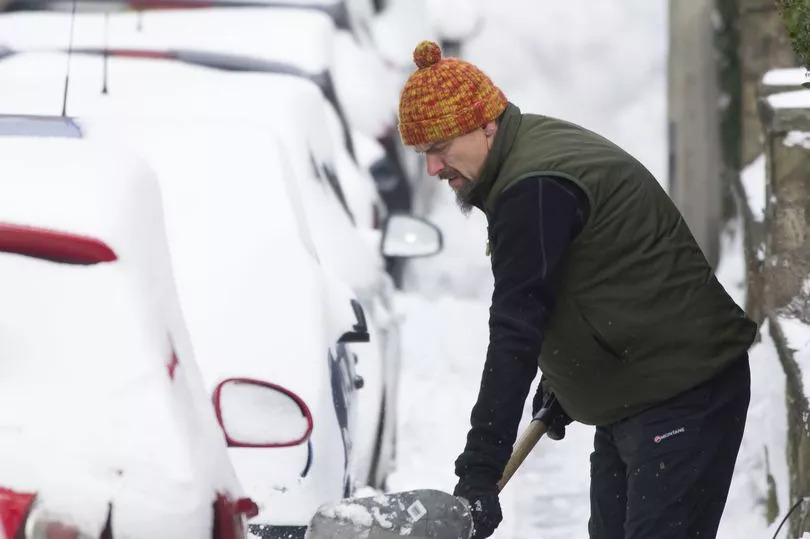
They described how winter sea ice would cover the North Sea, temperatures could dip to as low as minus 30C in Edinburgh and London would experience three frozen months a year, contrasting with extreme heatwaves in summer.
The world is also rapidly approaching further catastrophic tipping points for ice melt, Amazon rainforest dieback and vital ocean currents as it nears the key milestone of 1.5C warming above pre-industrial levels.
However, the scientists also said momentum is building in the progress towards “positive tipping points” as countries invest and roll out green technologies that help reduce planet-heating emissions in the atmosphere, such as renewable energy and electric vehicles.
Prof Lenton, from the Global Systems Institute at the University of Exeter, said: “In the two years since the first Global Tipping Points Report, there has been a radical global acceleration in some areas, including the uptake of solar power and electric vehicles.
“But we need to do more – and move faster – to seize positive tipping point opportunities.
“By doing so, we can drastically cut greenhouse gas emissions and tip the world away from catastrophic tipping points and towards a thriving, sustainable future.”
Sign up for Edinburgh Live newsletters for more headlines straight to your inbox
The report also warned that current policies and decision-making processes do not take tipping points into account and will not address the scale of the abrupt and irreversible impacts that come when they are breached.
Beyond action to cut emissions and remove carbon from the atmosphere, the experts said that the impacts caused by tipping processes must also be considered in risk assessments, adaptation policies, loss and damage mechanisms and human rights litigation.
The report comes as ministers meet on Monday in Brazil for discussions before the UN climate conference, Cop30, which is being held in the Amazonian city of Belem next month.