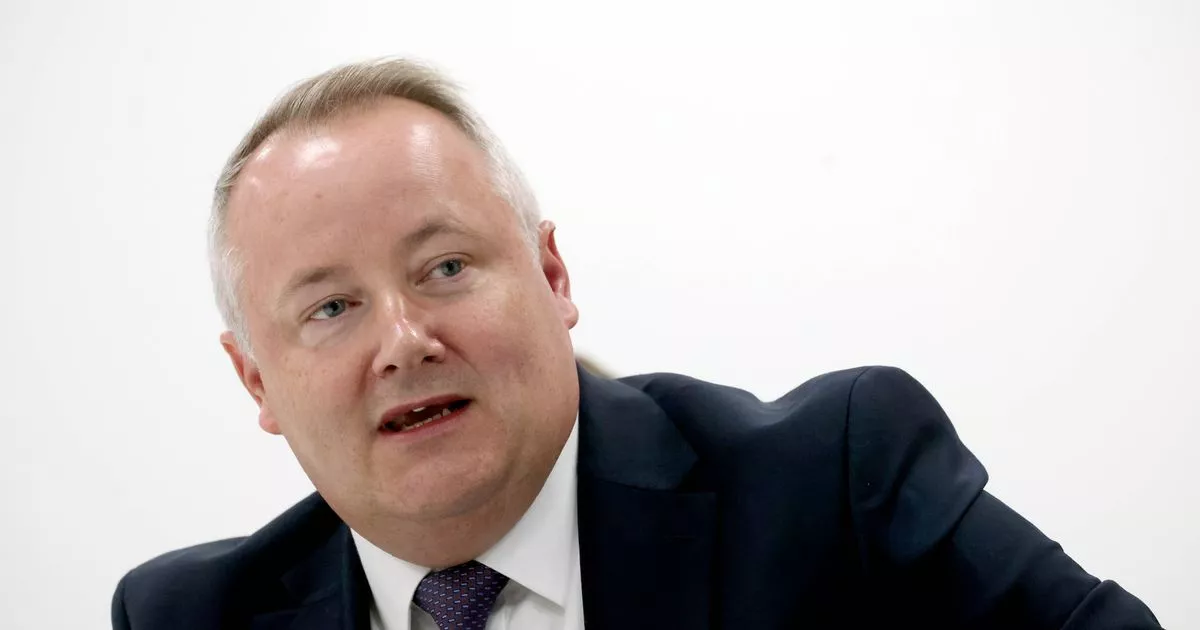
Darren Millar says he will meet the Welsh Government over the budget if they pledge to scrap the equivalent of stamp duty Welsh Conservative leader Darren Millar(Image: WalesOnline/Rob Browne)
The Welsh Conservatives say it would look at doing a budget deal with the Welsh Government if they agree to scrap the Welsh equivalent of stamp duty. The budget for 2026-27 begins today (October 14) with a draft version being published.
As Labour doesn’t have more than half the votes in the Senedd it needs the help of opposition politicians and the Conservatives have laid out the conditions of any support from them. The pair have never worked together on budget deals previously.
Last year, the Conservatives and Plaid Cymru refused to back the budget and it passed thanks to the support of Lib Dem Jane Dodds. However, the death of Hefin David means a by-election is taking place in Caerphilly on October 23.
If Labour do not win – and Plaid Cymru and Reform UK are both strong challengers to what has historically been a heartland seat – then it makes it even harder for them to pass a budget. If the budget does not pass, then it triggers a potentially serious chain of events, which some have warned will lead to huge issues, including mass job losses in the public sector.
Darren Millar, who leads the Senedd’s Conservative group has written to First Minister Eluned Morgan saying “it may be possible” to do a deal if the Welsh Government considers “some of our key Welsh Conservative priorities, such as the scrapping of Welsh Stamp Duty (Land Transaction Tax) for all primary residential properties”.
In the letter, he says: “You have repeatedly and publicly acknowledged that the parliamentary arithmetic in the Senedd poses a challenge to the passing of the Welsh Government’s budget in the Senedd, and have warned of potential consequences in the event that a budget is not agreed.
“The Welsh Conservatives are a responsible opposition. While we disagree fundamentally with the Welsh Labour Government on many issues, and on many of your spending priorities, we also accept that it would be irresponsible not to offer to engage with you on this issue.”
“Should the government be prepared to consider some of our key Welsh Conservative priorities, such as the scrapping of Welsh Stamp Duty (Land Transaction Tax) or all primary residential properties, then I will be prepared to meet with you to explore whether a budget agreement may be possible.”
What happens if a budget can’t pass?
Mark Drakeford, Wales’ finance minister will give a first look at the draft budget for 2026-27 on October 14, with more detail following on November 3.
Labour will have to begin negotiations with other politicians, both opposition parties but also potentially any independent MS. To secure, depending on the Caerphilly by-election result, at least one vote from someone who isn’t a Labour MS.
There is also the small matter of the UK Government’s budget in November.
The Senedd is due to vote on the budget on January 27. If the budget does not pass by the start of the financial year in April the government is only allowed to spend 75% of last year’s budget.
That would require big cuts, with Eluned Morgan warning of “mass redundancies”. The Senedd’s presiding officer has said it will also impact the Senedd’s non-political staff and put expansion plans at risl.
The spending limit rises to 95% if a budget still has not been passed by the end of July.
Conservative leader Kemi Badenoch announced at her recent party conference abolishing stamp duty was an election pledge for the UK party.
Mr Millar said: “I have written in good faith to the First Minister to offer an opportunity to discuss next year’s Welsh Government budget.
“While the Welsh Conservatives fundamentally disagree with the Welsh Labour government on many things, we are a responsible opposition that will always strive to put the people of Wales first.
“Our ambition to scrap stamp duty in Wales as part of our plan to fix Wales, will help people get onto the housing ladder, improve mobility in the housing market, and boost the economy. It will be central to any discussions which may now take place.”