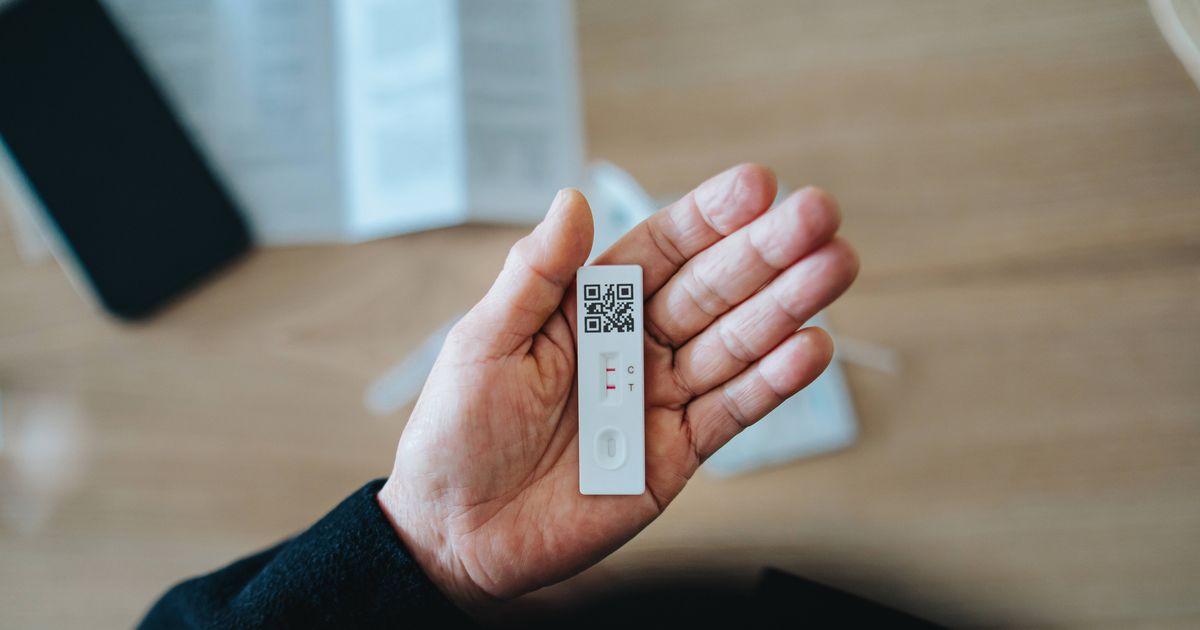
The NHS has warned that cases of both Covid-19 and flu have been rising in recent weeks – but without a test it’s difficult to distinguishFiona Callingham Lifestyle writer and Helena Vesty NHS, social care and patients reporter
22:23, 18 Oct 2025
 The only way to know for sure if you have Covid is to take a test(Image: Getty)
A crucial symptom could show that an illness is Covid-19 rather than flu, the NHS has indicated.
The NHS has warned that cases of both viruses have been climbing in recent weeks.
Latest figures from the UK Health Security Agency (UKHSA) revealed that flu positivity rose from 1.9 per cent to 3.3 per cent.
Meanwhile, Covid-19 positivity in hospital settings climbed from 11.7 per cent in the previous week to 12.9 per cent.
Telling whether an illness is Covid or flu without conducting a is hard as many of the symptoms overlap, reports the Mirror.
Join the Manchester Evening News WhatsApp group HERE
The NHS website says that Covid symptoms are “very similar to symptoms of other illnesses, such as colds and flu”.
Both conditions can trigger a high temperature, aching body, headaches, and nausea amongst other signs.
However, “shortness of breath” is listed by the NHS as a sign of Covid rather than flu.
This is more commonly found in the case of illnesses such as Covid or respiratory syncytial virus (RSV).
However, if a person doesn’t recover from flu and it develops into something more serious they may start to experience breathing difficulties. This can occur if the patient has pneumonia, for example.
The Centres for Disease Control and Prevention (CDC) says that adults who experience “difficulty breathing or shortness of breath” should obtain medical care “right away”. This was listed among a number of “emergency warning signs of flu complications”.
Covid symptoms
According to the NHS, Covid-19 symptoms can include:
- A high temperature or shivering (chills) – a high temperature means you feel hot to touch on your chest or back (you do not need to measure your temperature)
- A new, continuous cough – this means coughing a lot for more than an hour, or three or more coughing episodes in 24 hours
- A loss or change to your sense of smell or taste
- Shortness of breath
- Feeling tired or exhausted
- An aching body
- A headache
- A sore throat
- A blocked or runny nose
- Loss of appetite
- Diarrhoea
- Feeling sick or being sick
The NHS states: “Most people feel better within a few weeks, but it can take longer to recover. For some people, it can be a more serious illness and their symptoms can last longer.”
Flu symptoms
The NHS website explains that flu symptoms develop “very quickly” and can include:
- A sudden high temperature
- An aching body
- Feeling tired or exhausted
- A dry cough
- A sore throat
- A headache
- Difficulty sleeping
- Loss of appetite
- Diarrhoea or tummy pain
- Feeling sick and being sick
“The symptoms are similar for children, but they can also get pain in their ear and appear less active,” it states. It adds: “Flu will often get better on its own, but it can make some people seriously ill.
“It’s important to get the flu vaccine if you’re advised to.”
Vaccines
Speaking about vaccines, Dr Jamie Lopez Bernal, Consultant Epidemiologist at UKHSA, said: “It’s really encouraging to see people already taking up the flu vaccine offer, especially as we’re starting to see cases increasing in our surveillance data.
“Over the past few weeks, we have seen flu and Covid-19 cases starting to increase.
“The latest data also shows a rise in people being hospitalised with Covid-19, so it’s more important than ever that vulnerable groups are protected.
“As we head into the winter months when we are likely to see cases continue to rise, it’s vital that eligible individuals take up the offer now to ensure they are protected.
“We know that vaccination is the best defence against respiratory illnesses such as flu and Covid-19 and this is a simple step you can take to help look after yourself and your family this winter.”
You can secure an appointment through the NHS App, your local GP practice, online at nhs.uk/bookflu or nhs.uk/bookcovid, or by ringing 119.
Additionally, you can locate your closest drop-in service or utilise the NHS walk-in finder.