Prince Andrew could still be forced out of Royal Lodge as pressure mounts on him to give up the 30-room mansion that he has not paid rent on for 22 years.
The disgraced royal has lived at the lavish property in Windsor’s Great Park with his ex-wife Sarah Ferguson since buying a 75-year lease on it in August 2003.
Andrew has been residing rent-free at Royal Lodge, paying just ‘one peppercorn (if demanded) per annum’ according to the extraordinary terms of his lease.
The Prince has faced calls to vacate the property in recent years since revelations of his relationship with paedophile financier Jeffrey Epstein were first reported.
Amid the clamour to evict Andrew, he has so far stayed put – and property experts have said it would be ‘impossible’ to get rid of him because he has a ‘cast iron lease’.
This is despite King Charles III last year severing his younger brother’s annual personal allowance, which was believed to have been in the region of £1million a year.
The financial cut-off will have caused a headache for Andrew who is responsible for maintenance of the property and its annual running costs of around £250,000.
Under the lease, the Prince had to pay £1million upfront and then spend £7.5millon on urgent renovations – although it is thought the eventual bill was nearly £10million.

Andrew and Sarah at Westminster Cathedral last month before the Duchess of Kent’s funeral
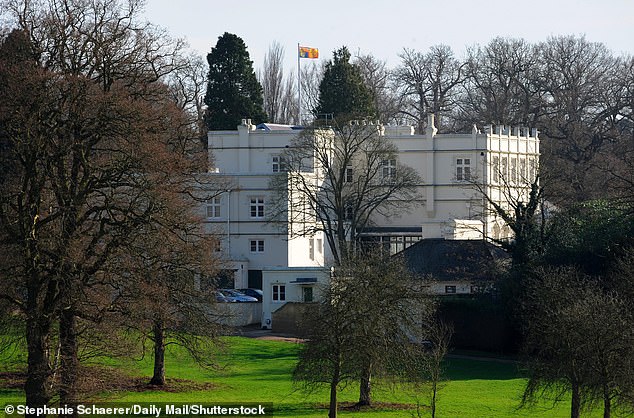
Prince Andrew has lived at the lavish 30-bedroom property Royal Lodge in Windsor since 2003
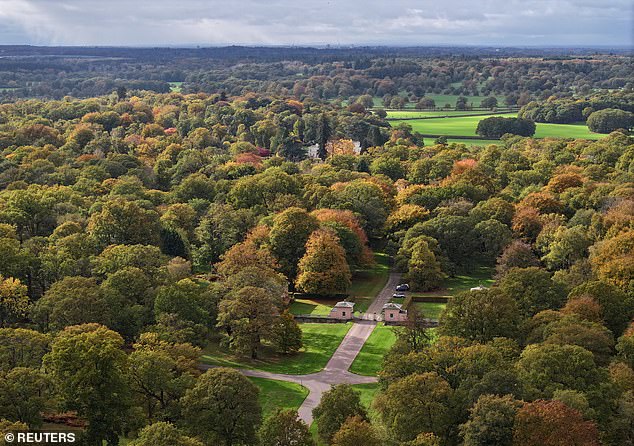
The entrance gate to Royal Lodge and the property itself can be seen in Windsor’s Great Park
By doing this, Andrew avoided a ‘nominal’ annual rent on the property of £260,000 – and his family will have the mansion until 2078 unless he breaks the lease terms.
An £8.5million initial outlay would be equivalent to £113,000 per year, if Andrew or his family remained in the property for 75 years, less than half the supposed current market rate.
The lease says Andrew must rectify any upkeep issues, and can be kicked out if he failed to carry out that maintenance after being given an opportunity to do so.
The Prince could also be made to leave for using the property for ‘any illegal or immoral purpose’, although there is currently no suggestion that this has ever happened.
The agreement also contains a clause that states the Crown Estate would have to pay Andrew around £558,000 if he gave up the lease voluntarily before 2028.
But ultimately there is no break clause in the contract, which means the King – who has repeatedly tried to convince his brother to move out – cannot summarily throw him out.
However, Andrew must repaint the exterior once every five years with at least two coats in exactly the same colour – and paint the inside every seven years, reported the Telegraph.
Photographs published by the Daily Mail last November showed Royal Lodge had fallen into disrepair – with crumbling paintwork, cracks, and black mould appearing on the outside walls.
The building must also be insured against storms, earthquakes, explosions, terrorist attacks, riots, civil commotion and labour disturbances – all of which will be hugely expensive for such a large property.

Cracks and mould were photographed on the outside walls of the property in November 2024

Crumbling paintwork, cracks, and black mould on the exterior of Royal Lodge last November
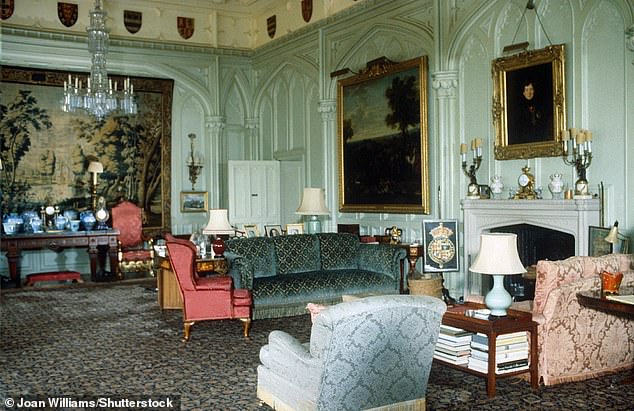
A photograph from 1981 of the Queen Mother’s drawing room at Royal Lodge in Windsor
Separately, The Sun reported that it had seen documents suggesting Andrew has only been required to pay his water bills ‘from time to time’.
This would have meant he has avoided paying thousands of pounds, according to the newspaper – when other UK households have seen their water bills soar.
Royal Lodge has a council tax band of ‘H’ in the Old Windsor area of Windsor and Maidenhead, meaning an annual bill of £3,685.40.
Details of the lease were revealed as senior Tory Robert Jenrick declared it was ‘about time Prince Andrew took himself off to live in private’ as ‘the public are sick of him’.
It comes after a posthumous memoir by Virginia Giuffre alleged three sexual encounters with the prince – who gave up his titles last week over his relationship with Epstein, and his links to an alleged Chinese spy. Andrew has always denied the accusations.
Parliamentary committees could now look into the Crown Estate’s handling of the grandiose home set in 98 pristine acres of Windsor Great Park.
Dame Meg Hillier, chairman of the Treasury Committee, said: ‘Where money flows, particularly where taxpayers’ money is involved or taxpayers’ interests are involved, Parliament has a responsibility to have a light shine upon that, and we need to have answers.’
At one point yesterday, Whitehall sources believed the spending watchdog, the National Audit Office, could launch a probe because it was in ‘the public interest’ to examine whether Royal Lodge was ‘value for money’ to taxpayers.
But one source admitted they had concluded Andrew’s lease on the property was watertight, adding: ‘There are no plans to look into this now. That might change at some point in future. There is a lot of political pressure.’
Mr Jenrick, the Tory justice spokesman, told Radio 4: ‘It’s about time Prince Andrew took himself off to live in private and make his own way in life. I don’t see why the taxpayer, frankly, should continue to foot the bill at all. The public are sick of him.’
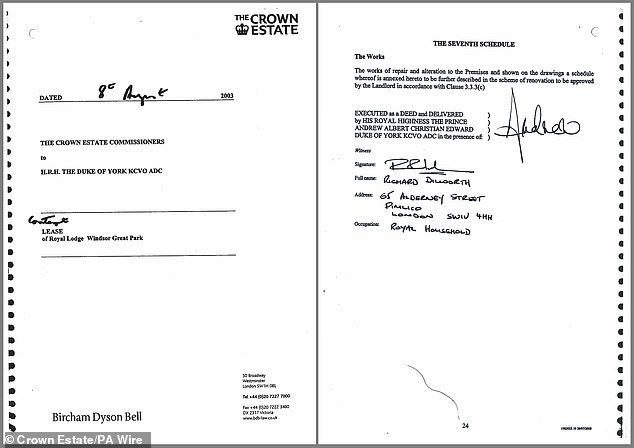
The first and last pages of Andrew’s lease for Royal Lodge, released by the Crown Estate
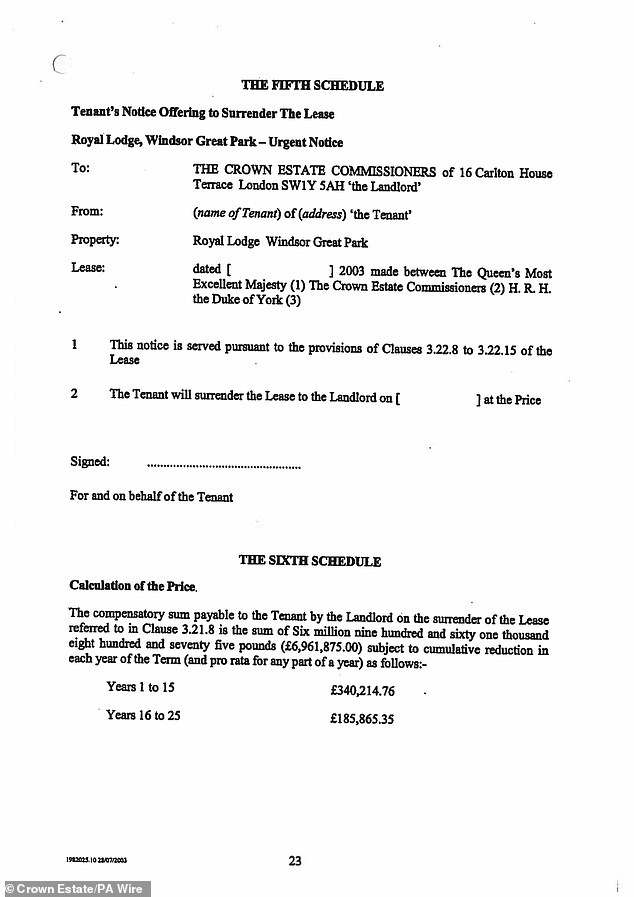
A document shows the compensation payable to Prince Andrew on surrender of the lease
Trying to get Andrew, 65, and his ex-wife Sarah Ferguson, 66, kicked out of the property would be impossible, according to top property lawyer Mike Hansom of BLB Solicitors.
Estate agent Henry Sherwood agreed they would be unlikely to get him to leave against his will – unless lawyers were able to dig up an obscure ancient law giving senior royals the power to oust him.
Mr Sherwood suggested: ‘The yearly rent could be as much as £1.2million per annum if it was on the open market.’ This works out to £17million over the years.
The Public Accounts Committee said its own programme of inquiries was ‘full up until the new year’, but it would ‘decide in due course’ whether to probe the Crown Estate’s accounts and annual reports.
At the weekend, it emerged that Andrew had asked his police protection officer to investigate claims his accuser Ms Giuffre had a criminal record, which has prompted Scotland Yard to launch a probe.
And in her memoir, published yesterday, Ms Guiffre claimed that Andrew’s team tried to hire ‘internet trolls to hassle’ her in an attempt to avoid being served court papers. Andrew has always denied all the allegations against him.