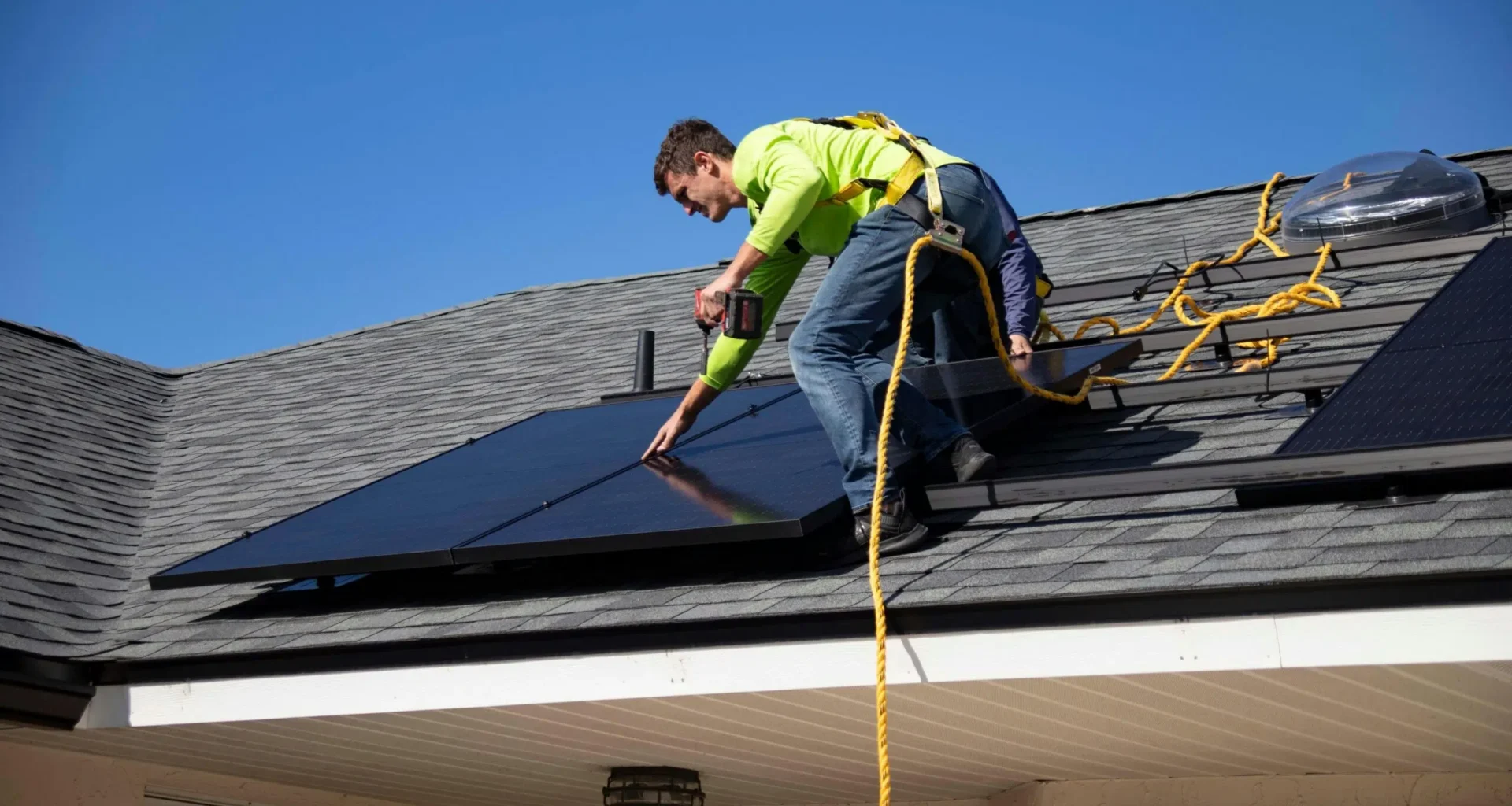
The new report from Schneider Electric warns that the European Union could increase its installed solar capacity tenfold if it fully exploits the rooftops of homes, industries, and public buildings. This potential, estimated at more than a thousand gigawatts, would allow savings of up to 250 billion euros per year and drastically reduce dependence on fossil fuels, improving the energy future.
Currently, the bloc imports about 60% of its energy, which implies an annual expenditure of 380 billion euros. However, only 21% of its energy consumption comes from electrical sources, while the rest depends on gas, coal, and oil. This lag contrasts with countries like China, which already exceeds 26% electrification and is moving towards a more competitive and sustainable model.
The report identifies a key challenge: solving the “energy trilemma” in Europe, that is, achieving clean, affordable, and secure energy. According to Schneider, the solution involves accelerating electrification and turning European rooftops into decentralized solar power plants, capable of generating clean energy where it is consumed.
The study also highlights that European households pay triple for energy compared to China, with an average cost of 0.27 euros per kilowatt-hour. The transition to renewable electricity would allow balancing that gap, reducing emissions, and strengthening the continent’s industrial competitiveness.
 Europe bets on an energy future with solar roofs.
Solar energy: the key to a more independent continent
The report highlights that solar rooftops represent a unique opportunity to reduce external dependence and ensure energy security. With appropriate policies, the massive installation of photovoltaic panels could cover the electrical demand of millions of homes and businesses, also generating local jobs and direct environmental benefits.
The calculated technical potential exceeds a thousand gigawatts, while the current capacity barely reaches 140. This means that Europe only uses one-tenth of the available resource, despite having the technology and financing necessary to expand it.
The model of energy self-consumption, combined with storage systems and digital control, would allow users to save between 15% and 80% on their bills. In turn, these systems would relieve the electrical grid and improve resilience against geopolitical crises or supply interruptions.
The European Union also faces a political challenge: closing the price gap between electricity and natural gas. The report proposes gradually eliminating subsidies for fossil fuels and reforming energy taxation to favor clean technologies.
 Europe bets on the energy future with the placement of solar panels on roofs.
The environmental benefits of a solar Europe
The push for solar energy not only has an economic impact but also profound ecological implications. Each kilowatt generated on a rooftop avoids the emission of greenhouse gases and contributes to the bloc’s climate goals, which aim to reduce emissions by 49% to 55% by 2030.
The use of rooftops also minimizes the need to occupy new land or affect natural ecosystems, making distributed solar energy an environmentally responsible alternative. At the same time, it reduces air pollution and the risks associated with the extraction and transportation of fossil fuels.
Urban solar systems also help to regulate local temperatures, reducing the “heat island” effect in cities and improving the energy efficiency of buildings. Globally, each solar megawatt installed brings Europe closer to its goal of climate neutrality, strengthening its leadership in the green transition.
Finally, the deployment of solar energy would allow the European Union to move towards stronger energy independence, freeing itself from international tensions that affect the price and availability of energy. Betting on the sun is not just a technological issue, but an ecological and geopolitical strategy to ensure the continent’s future.