A war is never confined to a single stage. Developments in Ukraine echoes in the Arctic, just as dynamics in the High North have the capacity to reshape Europe’s security.
After Operation Spiderweb – a Ukrainian strike on Russian nuclear bombers – the Kremlin was forced to come to terms with a reality it had long denied: Russia is not untouchable.
The exposed vulnerability led Vladimir Putin to emphasize the sanctity of Russian sovereignty, one of the pillars of its national strategy and foundation of its power. Within days, Moscow had reminded the world of its nuclear triad – land, sea and air launched weapons – the guarantor of Russia’s survival. So why does the Arctic matter in this context?
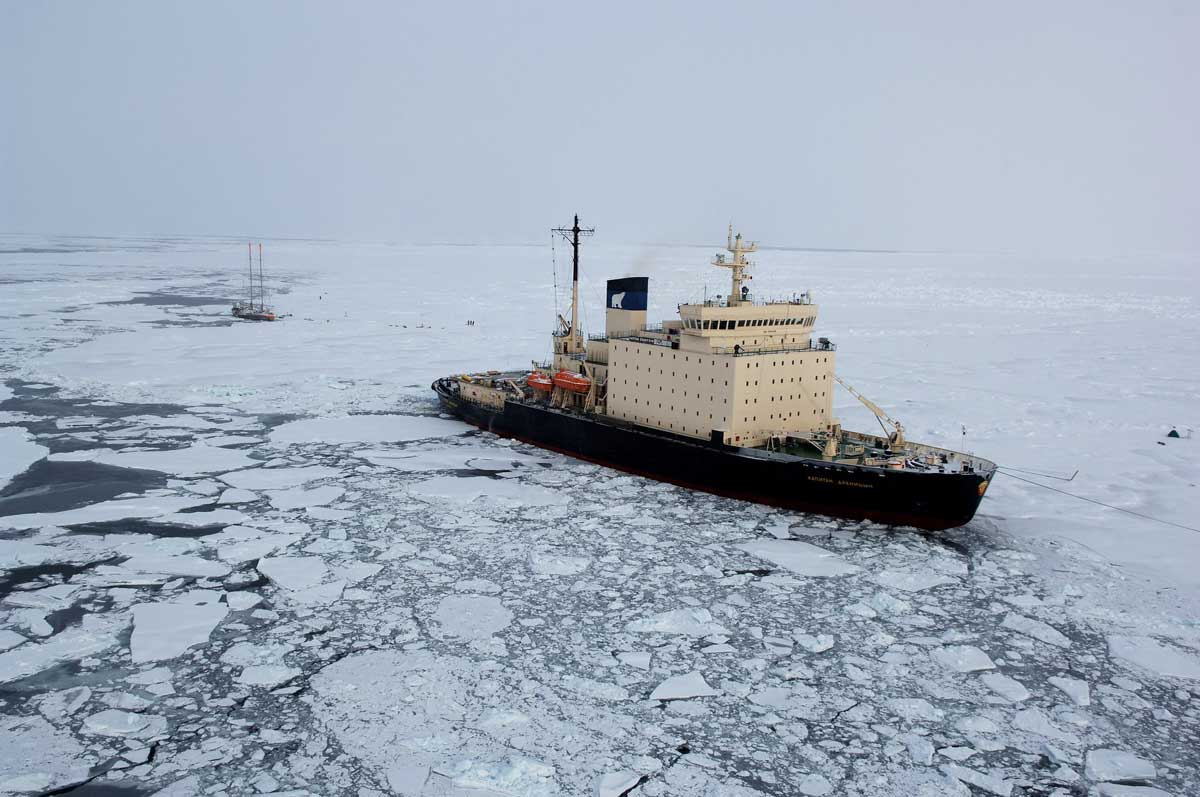
Russia controls more than 50% of the region’s territory, turning it into a military bastion and an economic opportunity. NATO’s expansion into the High North, combined with the melting ice, has fundamentally affected the regional balance of power and has made Russia’s northern flank more exposed. This translates into the reinforcement of its military posture, reactivating over 50 former soviet military sites since 2014, including crucial locations for defense and surveillance. The re-establishment of the Soviet bastion concept – a defensive shield protecting the northern fleet nuclear submarines, equipped with missiles capable of targeting European and North American countries. Additionally, the Kremlin has moved assets that were once concentrated in the Kola Peninsula to Kaliningrad, increasing the importance of this military fleet.
The economic constraints imposed on Russia have helped shape its Arctic strategy. Western sanctions have crippled Moscow’s ability to access the technology needed to extract its vast Arctic hydrocarbon reserves and to participate in global markets. This has pushed Russia towards a strategy of investing in dual-use infrastructure, assets serving both military and commercial purposes. This includes everything, from roads and railways, to the development of the Northern Sea Route – a crucial artery for trading. While these investments provide a short-term economic lifeline, they also serve Moscow’s national security agenda, making the Arctic a domain assessed entirely through a security lens.
The Arctic Exceptionalism – the idea that the region is isolated from global conflict – no longer holds, it is now a central arena for geopolitical competition. The Kremlin’s recent
actions in the High North and in Europe, present a complex and destabilizing set of challenges.
For Europe, these developments display three distinct and destabilizing scenarios. First, the escalating military risk is undeniable. This revival highlights a dangerous shift of Russian military activities from the Norwegian Sea to the Barents Sea, positioning this area as a potential primary stage for any direct confrontation with NATO.
While a direct conflict between NATO and Russia remains a possible but unlikely scenario, the potential for pre-emptive action in the Arctic cannot be dismissed. Moscow has already used the pretext of “active defense” and pre-emptive doctrine to justify its invasion of Ukraine. This same logic could play out in the Arctic: strike first, secure deterrence forces, and control escalation through threats of nuclear strikes.
Second, China has gotten itself into the Arctic talk as a “near-Arctic state” and includes the region as part of its so-called Polar Silk Road. For Russia, Chinese financing is vital. For China, access to the Arctic provides shortened trade routes and future energy security. This alignment enhances Russia’s resistance to Western sanctions and provides China leverage to call for a seat at the Arctic governance’s table – one the EU has been trying to obtain. This risks taking the European nations to the periphery and challenging the very ideals that have maintained long-standing Arctic stability.
Finally, there’s an existential concern of a potential “grand bargain” between the Kremlin and Washington, leaving Europe once again on the sidelines. The historical inconsistency of American Arctic policy, which is often representative of a president’s agenda, creates a window of opportunity for Moscow. With its vast reserves of rare earth minerals – critical for tech, defence, and sustainable industries – Russia could offer highly sought after resources to the U.S. administration, particularly one with a “business-first” attitude. The deal would not only slow down the Sino-Russian alignment that the Pentagon fears, but also reshape Arctic governance away from international cooperation towards exclusive, bilateral agreements. For Europe, this would be a deeply destabilizing outcome, marginalizing its smaller Arctic states and undermining the European Union’s efforts to secure a seat at the table.
The recent drone incursions in Europe and GPS jamming by Russia are symptoms of a larger, evolving geopolitical reality. As the lines between deterrence and provocation blur, and as the
Arctic transforms into a new strategic frontline, a fundamental question hangs in the air: where does NATO define its boundaries if its main contributor strikes a deal with the Kremlin? Europe can no longer afford to view the Arctic as a distant concern. It’s time for a cohesive, proactive strategy that addresses this new security landscape before the future of the High North is decided without Europe’s role in it.