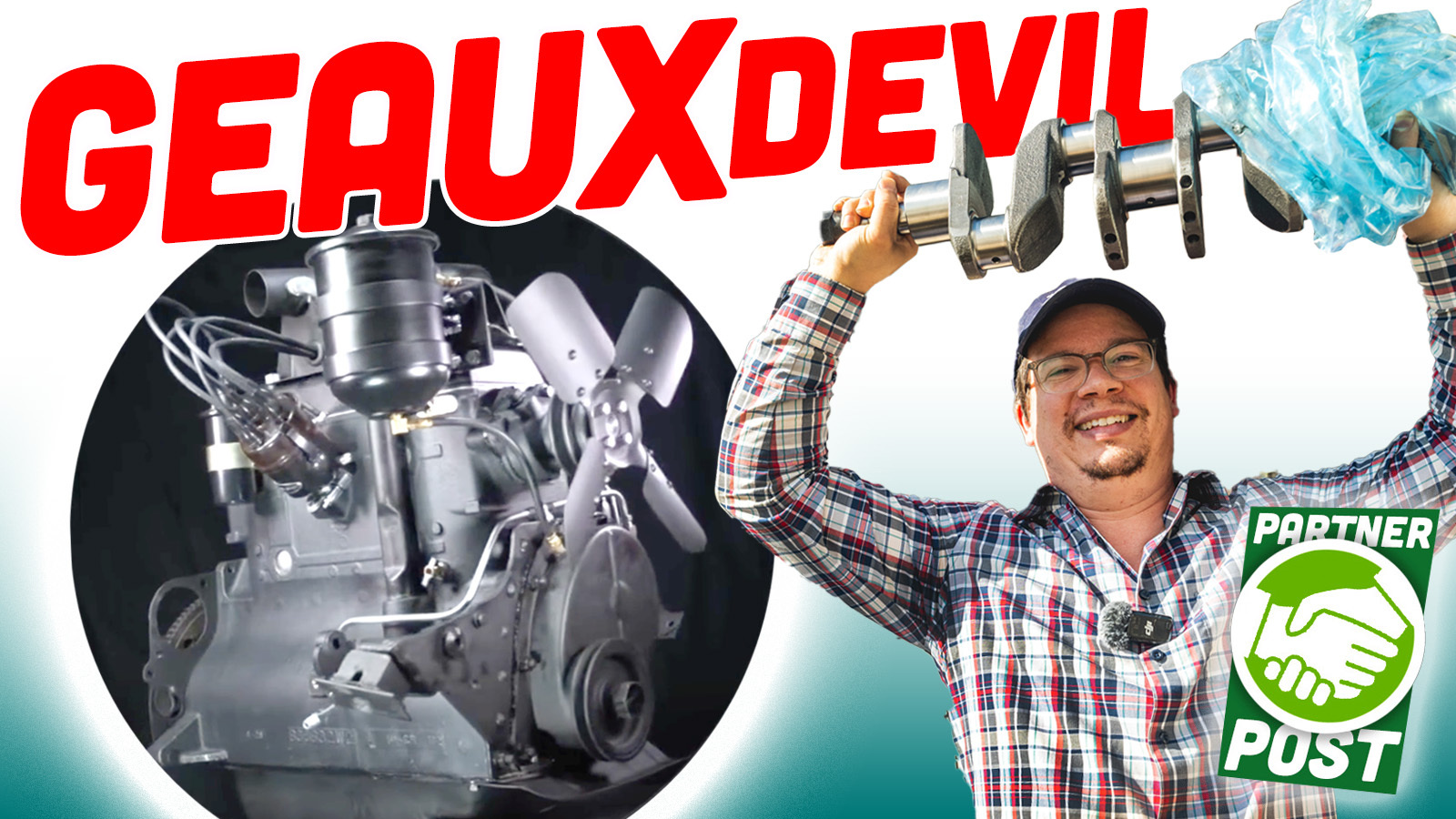
A car enthusiast’s dream is for the world to reproduce their favorite automobiles. That way, instead of having to rely on a depleting stock of ancient, worn-out parts, you’ve got a never-ending supply of new (and often improved!) components. There is really only a handful of cars on earth that, decades after official production, are still being made, and the World War II Jeep is one of them. While the bodies and frames are manufactured in the Philippines — a country that turned leftover WWII allied Jeeps into a significant part of their cultural identity by creating “Jeepneys” — the brand new engines are actually built in France (also a country with a rich WWII Jeep heritage). Here, have a look at my shiny new motor.
When I first started down the road of trying to build a World War II Jeep from scratch using parts from eBay, I wasn’t really aware of just how many reproduction components were available. While it’s well known that Willys bodies can be purchased brand new (the bodies rust out frequently, so folks have been buying new tubs for many decades), I wasn’t sure exactly what the frame and engine situation was. I’d seen reproduction frame sections, and I’d heard rumors of a reproduction Willys L-head “Go-Devil” engine, but I wasn’t sure they were still out there.


Well, it turns out they are. I already showed you my new frame from the same Philippines factory that made my new body; now let’s have a look at my shiny new motor.
The engine and all of its components arrived in a bunch of boxes fastened to a pallet.

Not keen on trying to lift the 500 pound unit, Video Manager Griffin and I unstrapped each individual box and, one by one, threw them in the bed of my new Jeep Comanche work-truck.
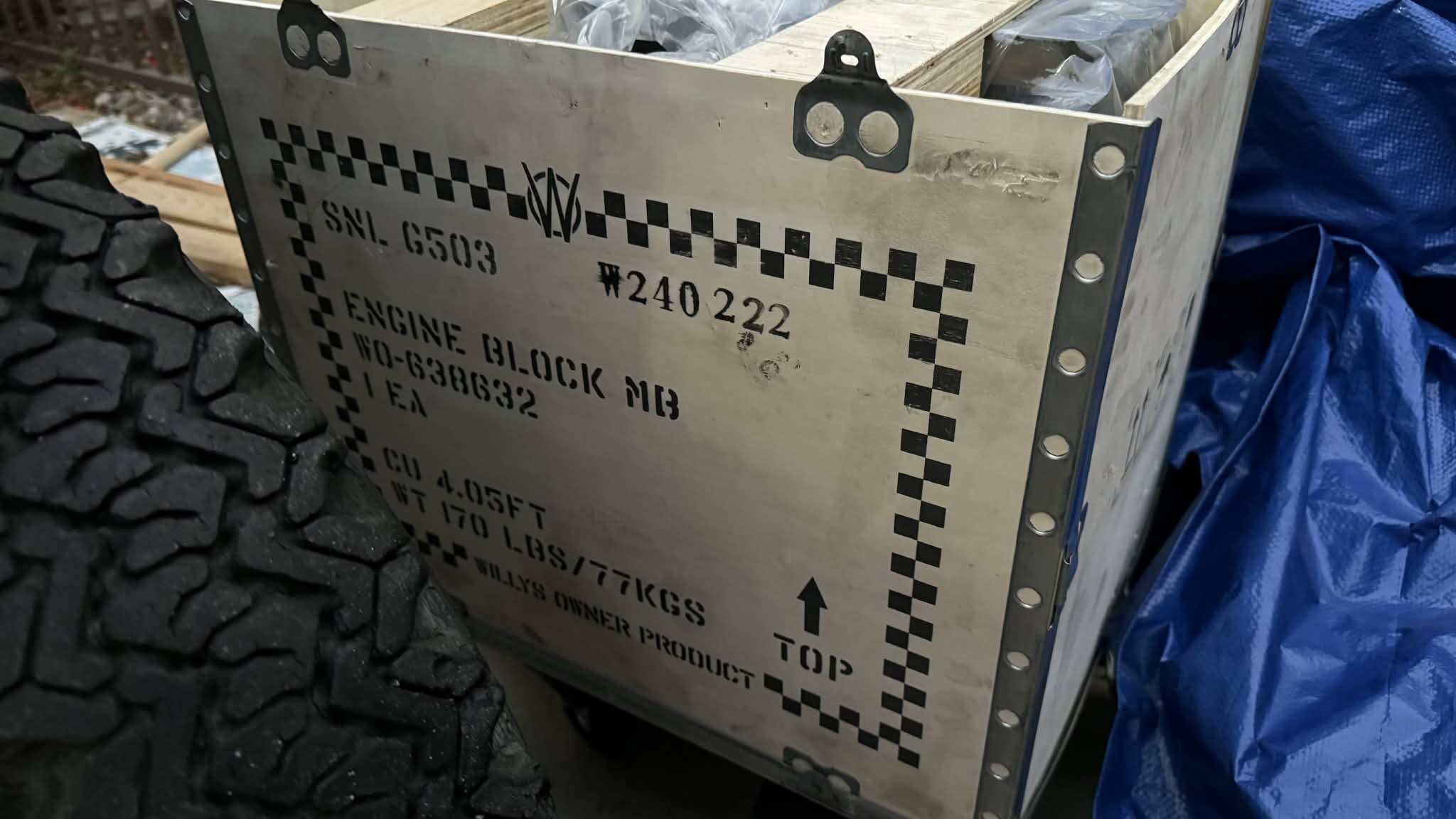
Upon arrival at my house, we spent an hour searching for all the keys to the cars in my driveway, and then moving those cars; only then could we back my Jeep Comanche up to my workplace so we could take out the boxes and see what was inside. And, well, it was glorious. Look at this incredible new engine block — which came in a wood crate just like you’d expect from a “crate motor” — flown all the way from France:
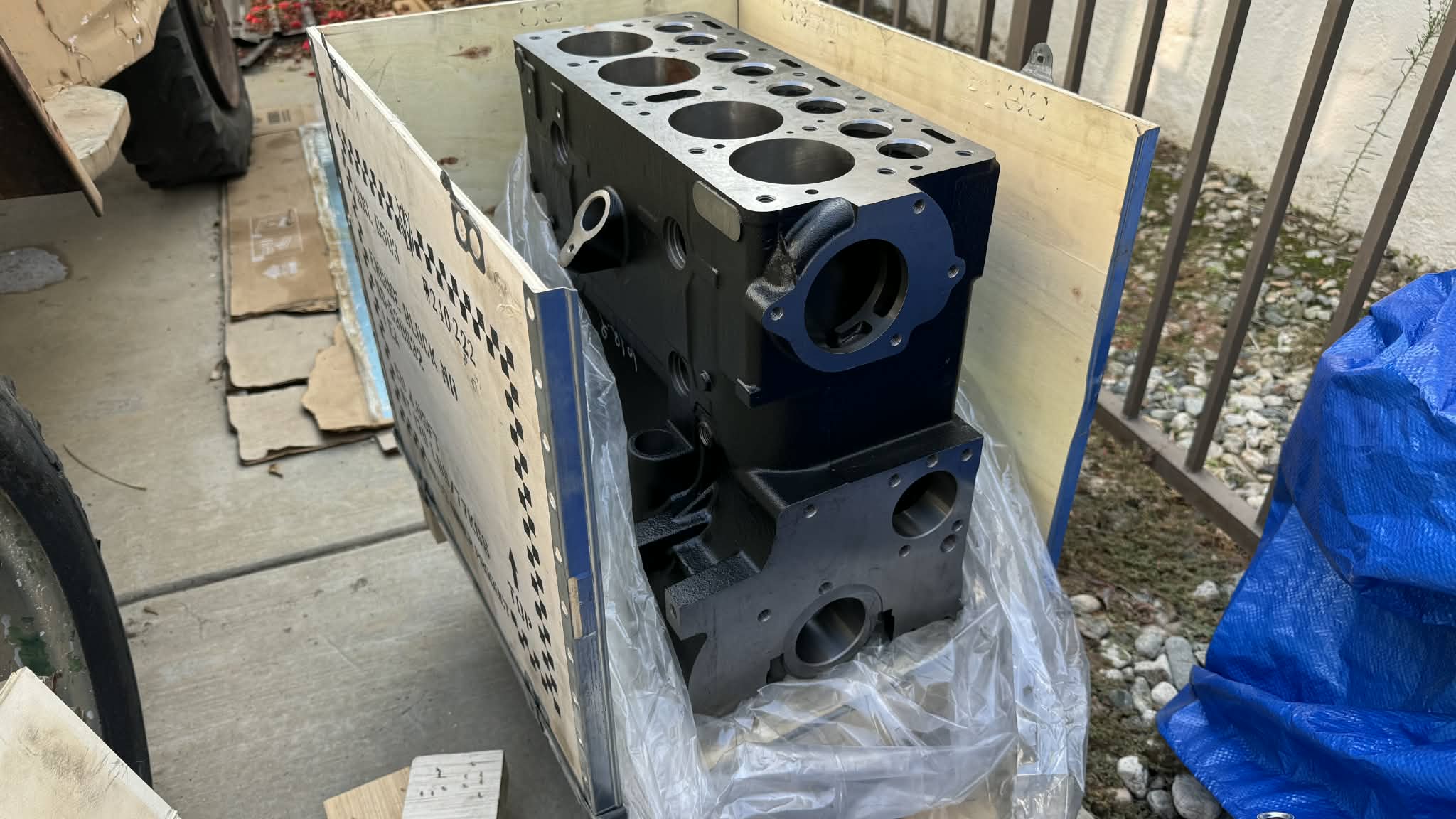
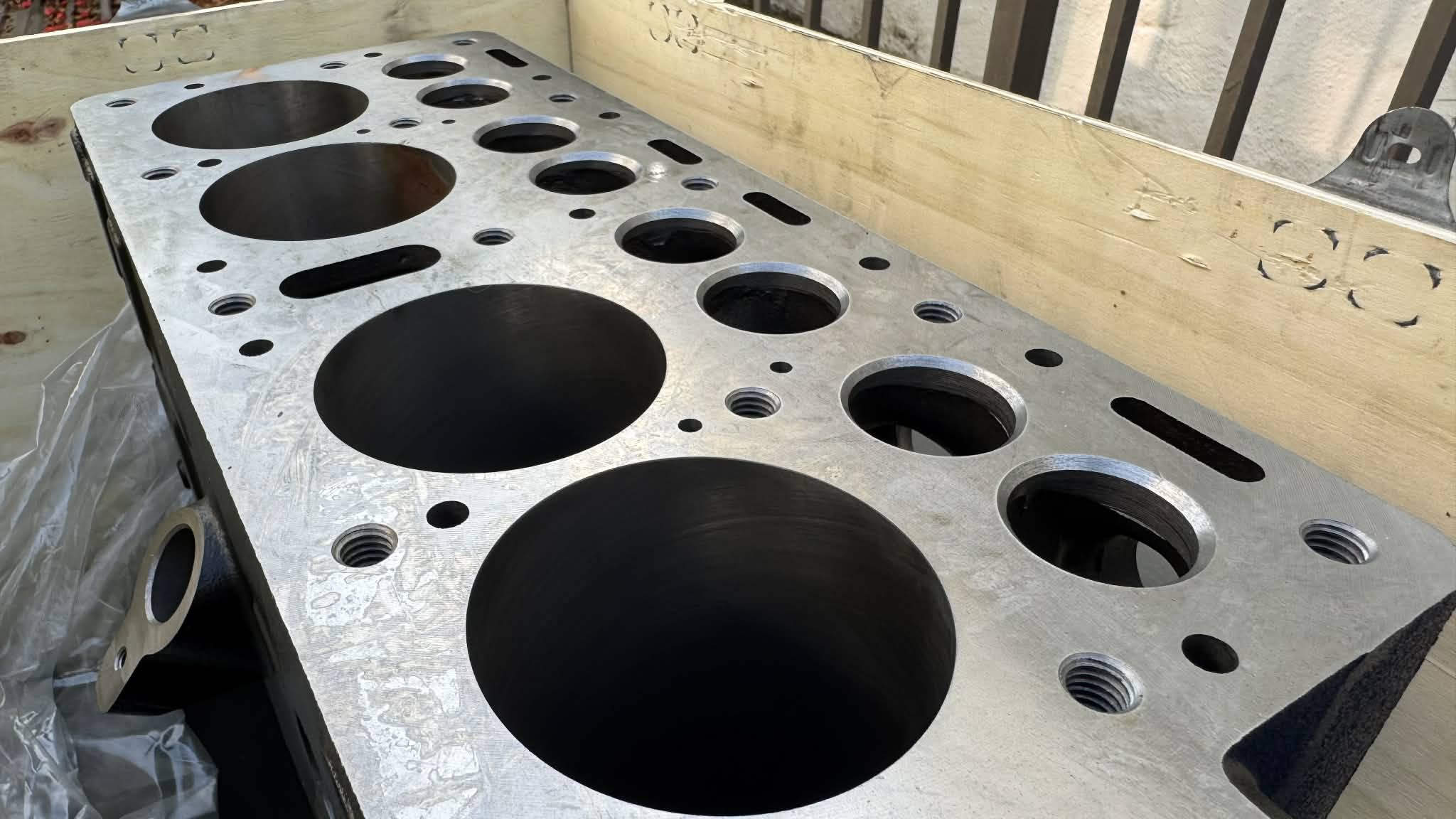
Here’s a close look at the deck:
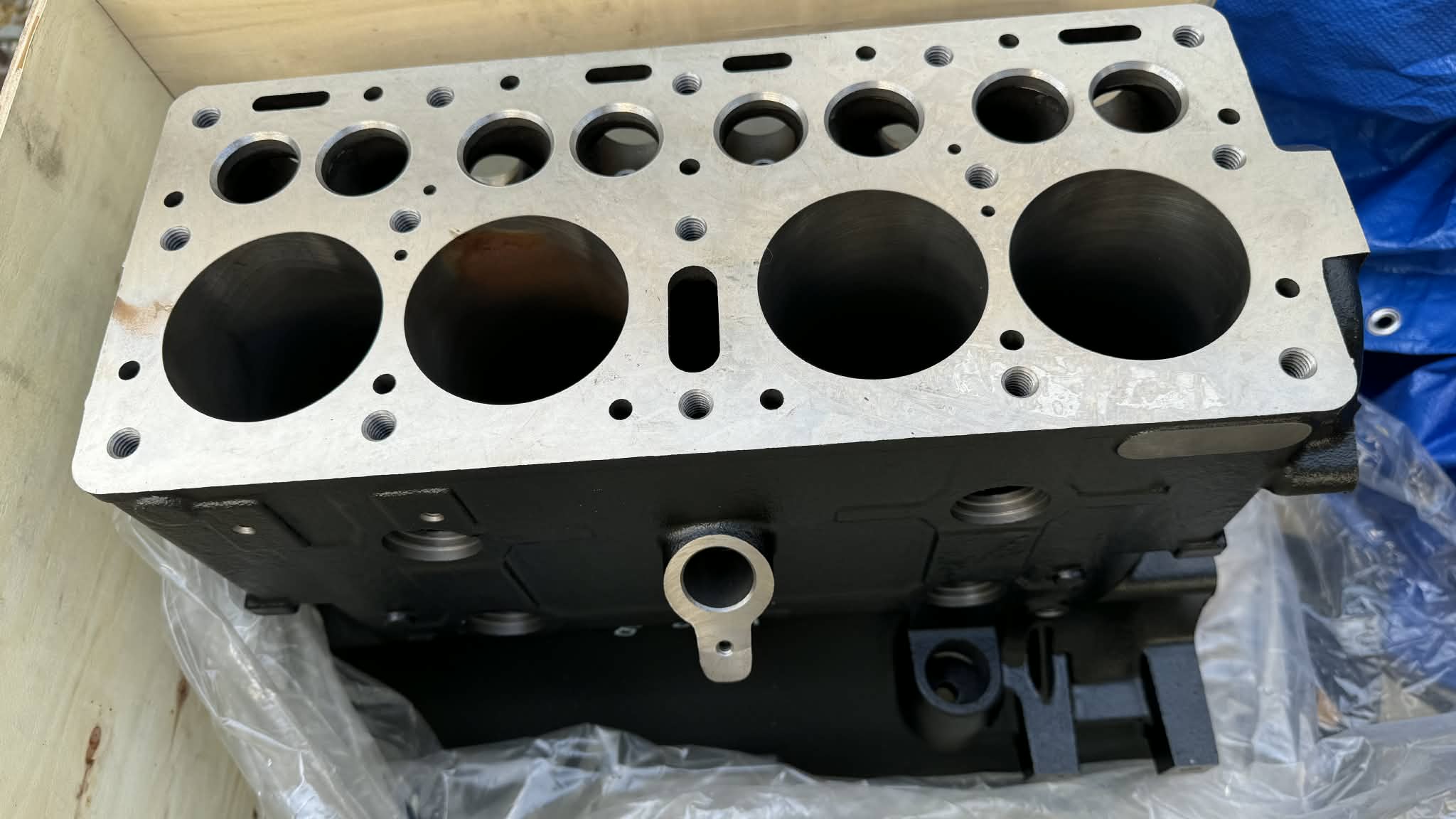
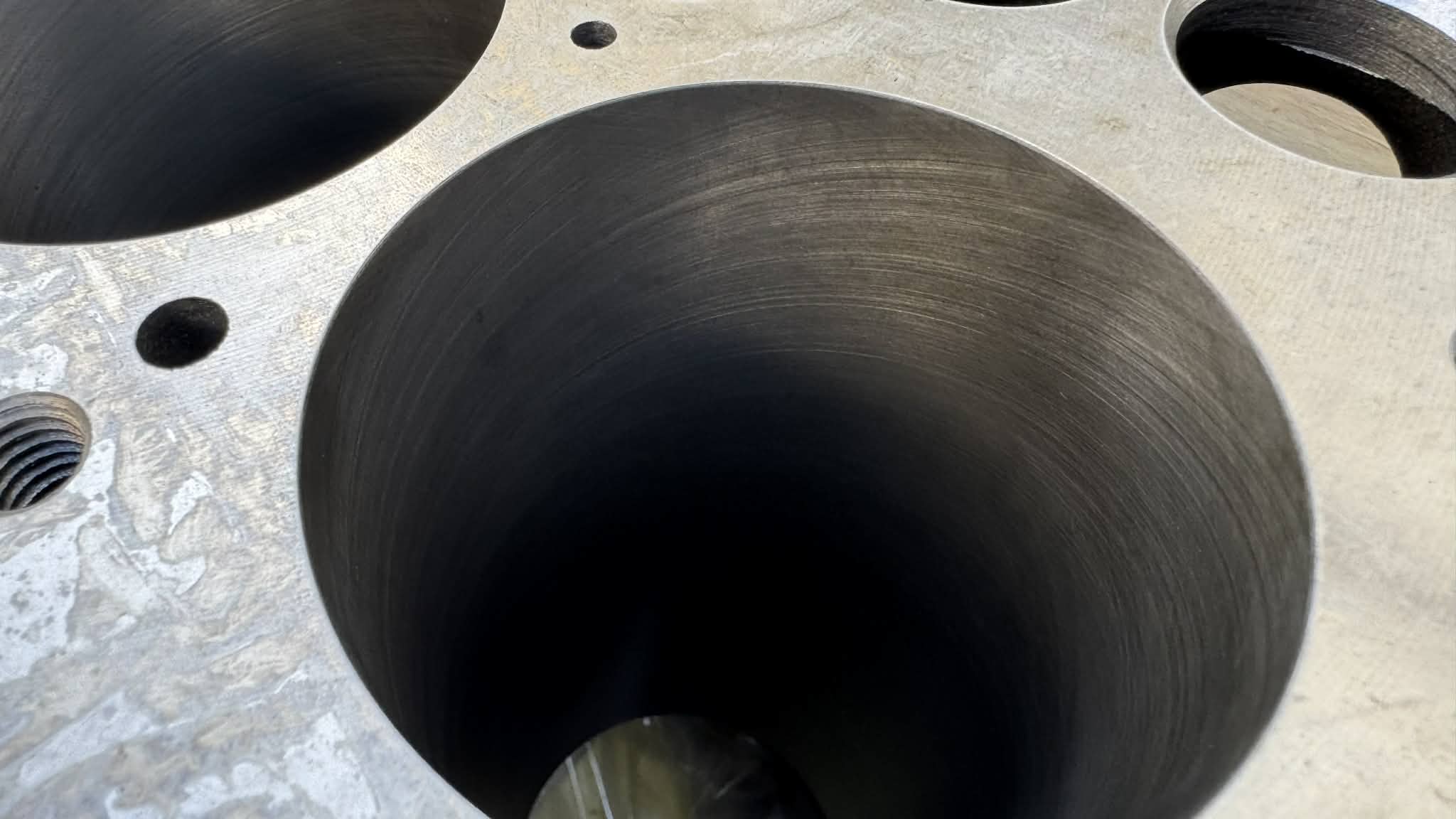
Here’s one of the cylinders:
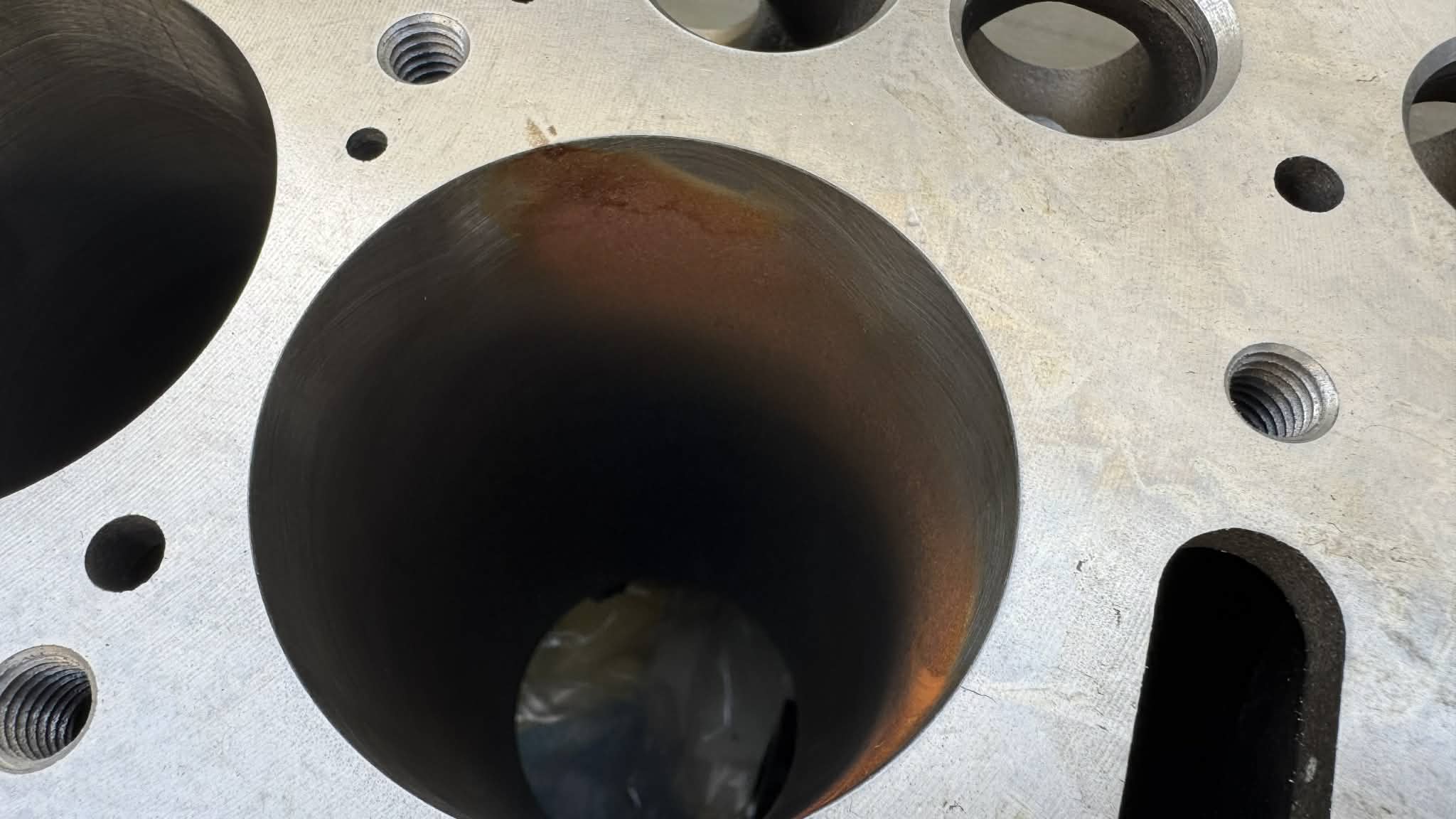
Though the engine has been lubricated to keep off rust, one of the cylinders has a bit of surface oxidation, so I need to take care of that ASAP with some Crocus Cloth:
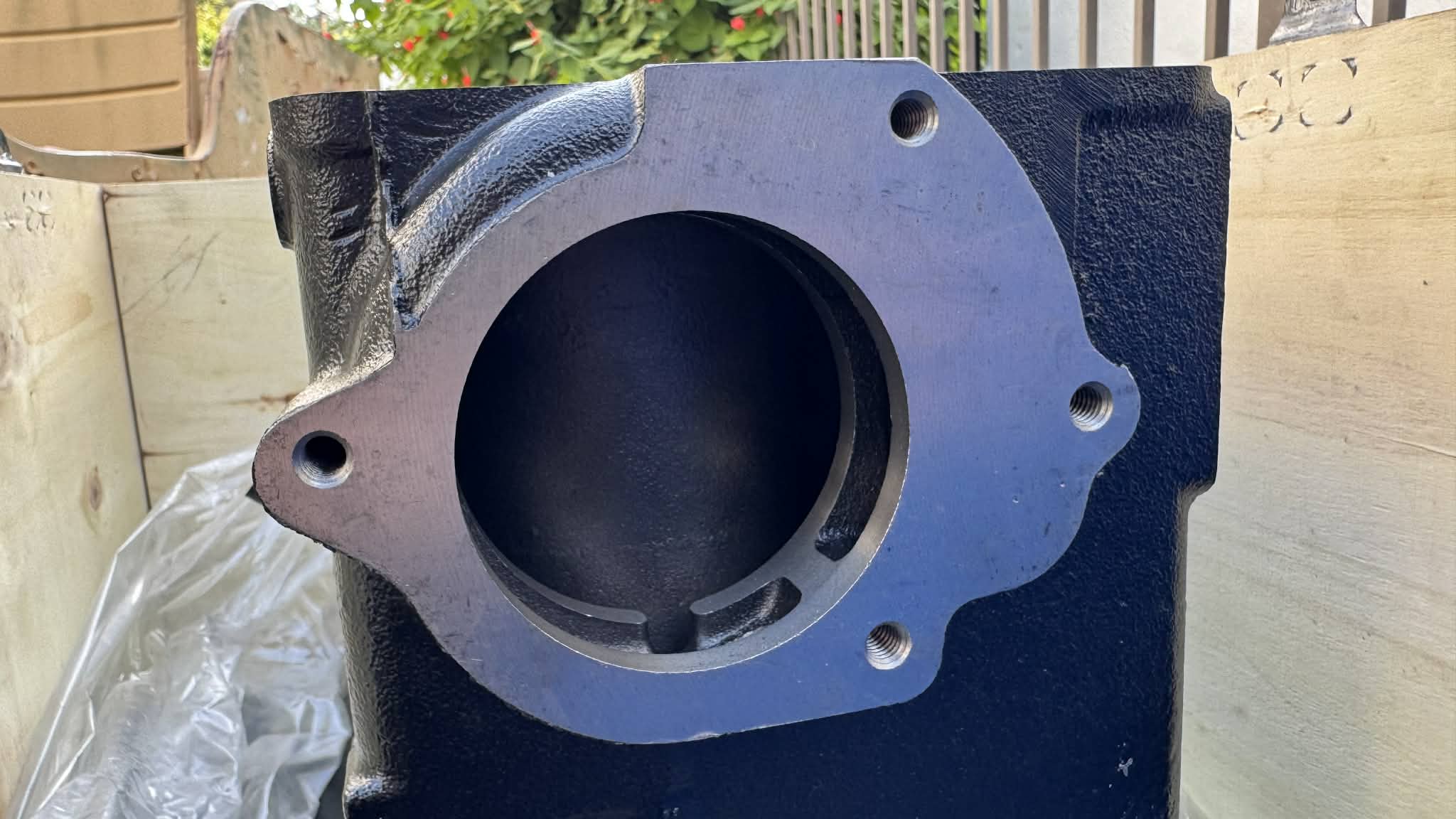
Here’s the water pump mounting point:
And here are a few looks at some cooling jackets:
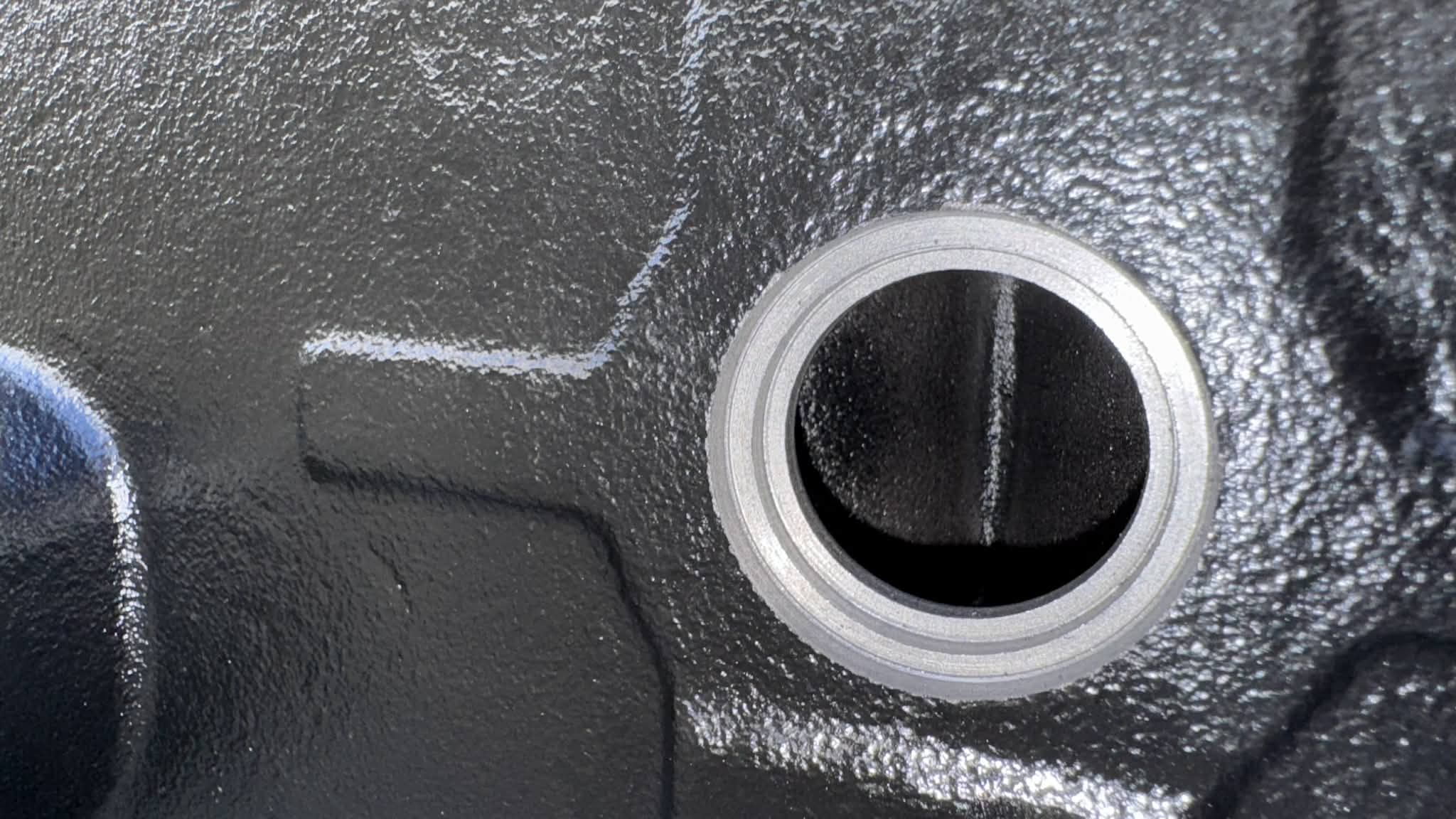
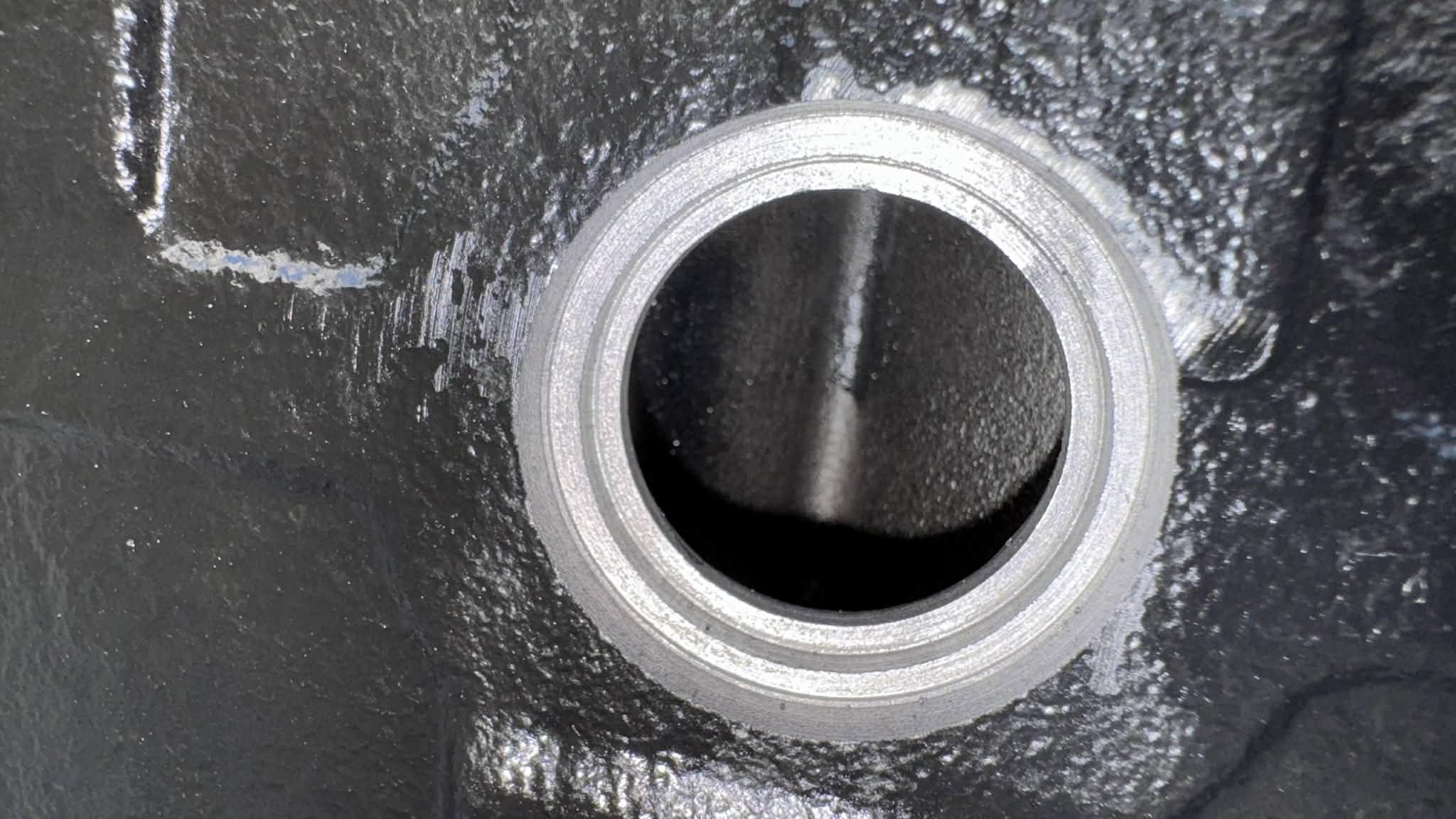
The engine came with new pistons and rings:
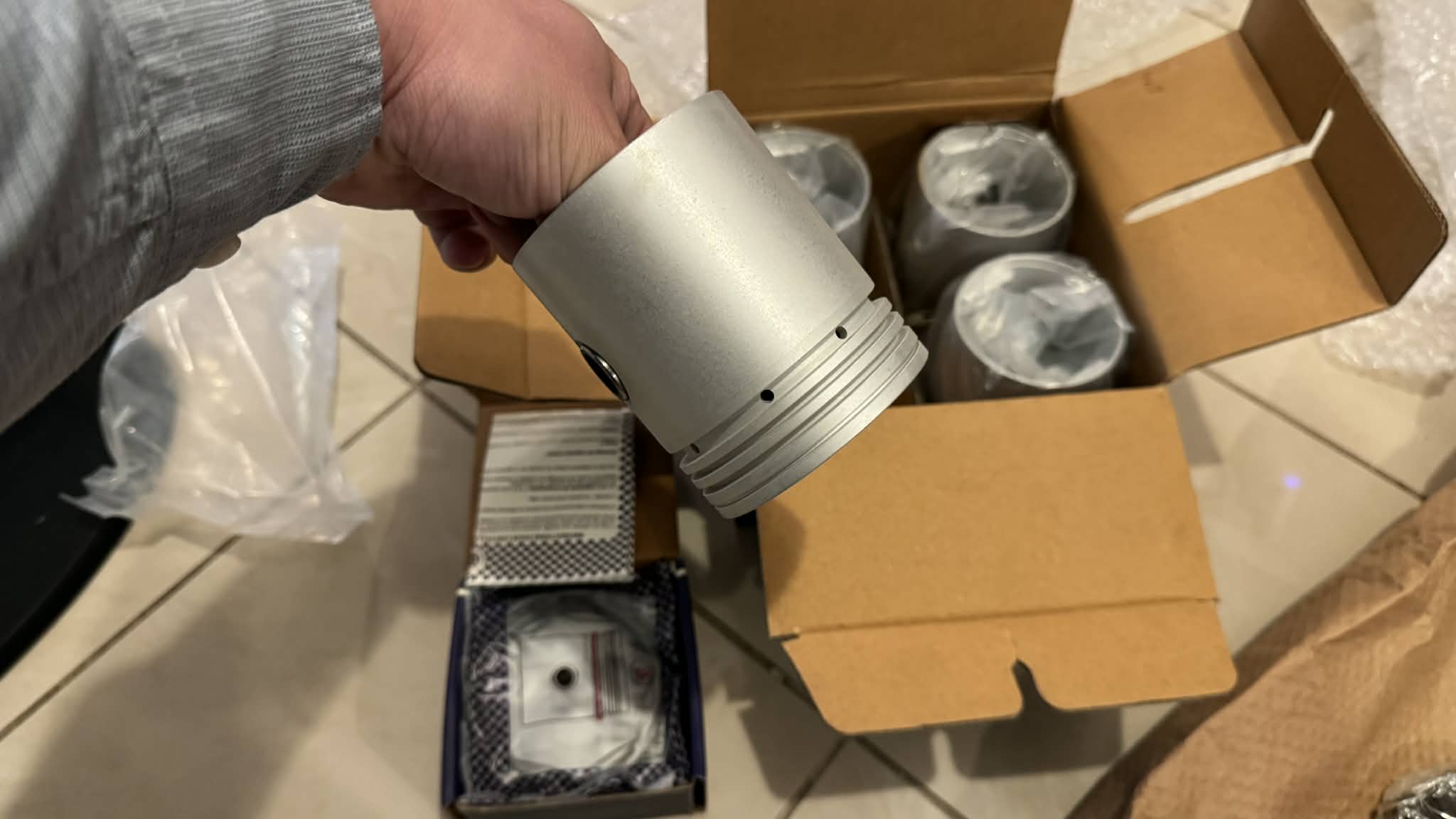
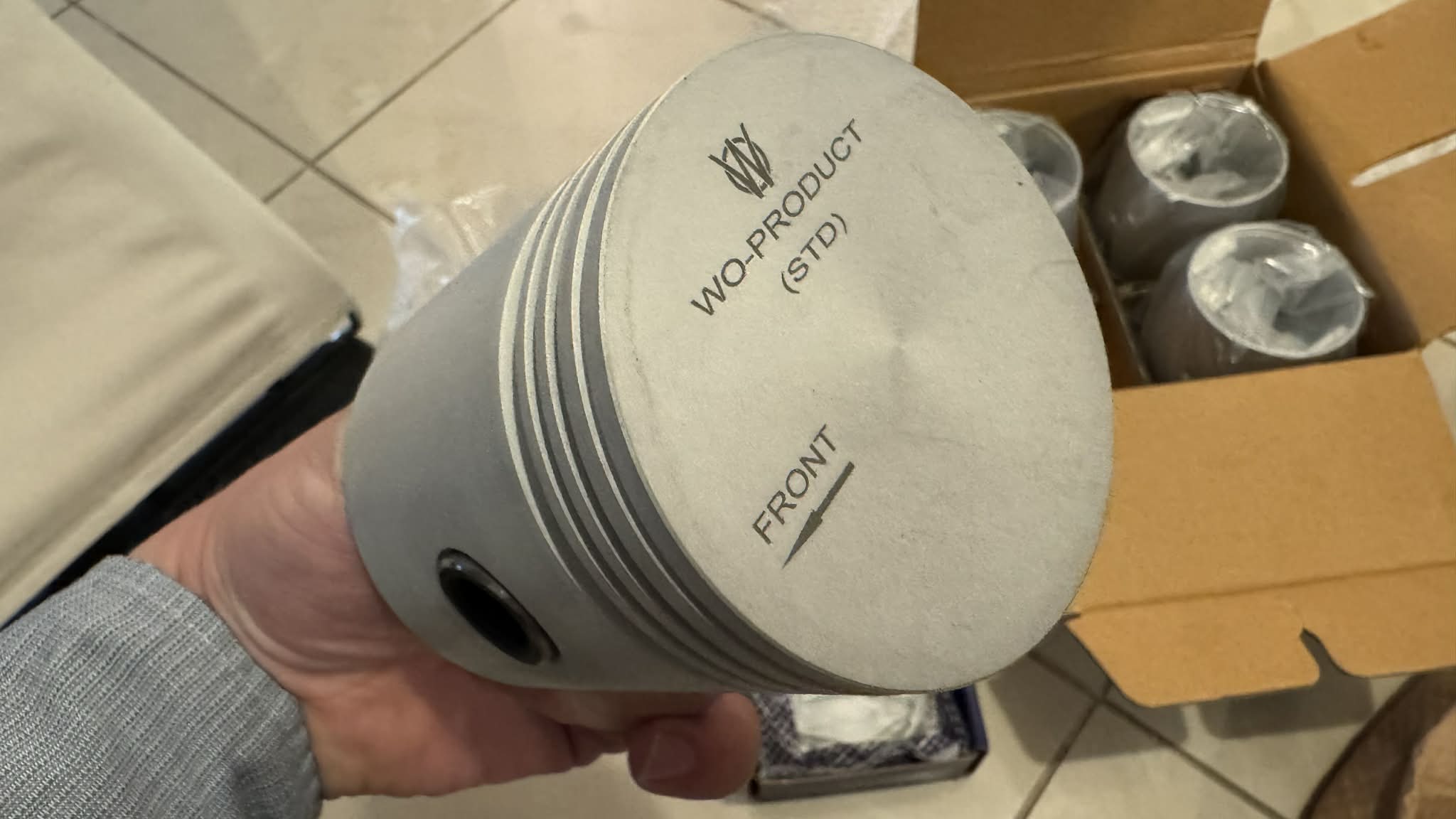
In addition, I bought a new cylinder head:
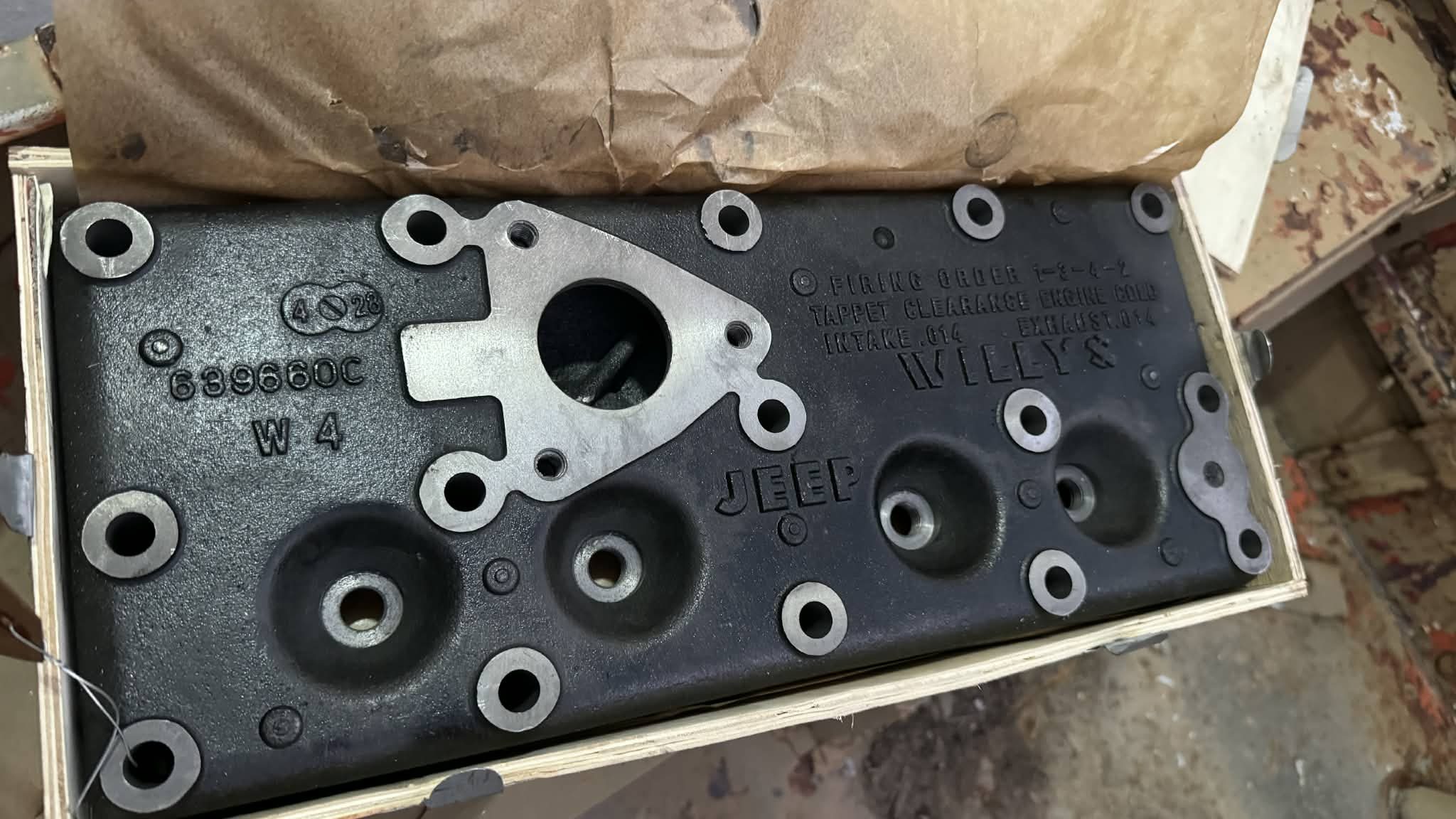
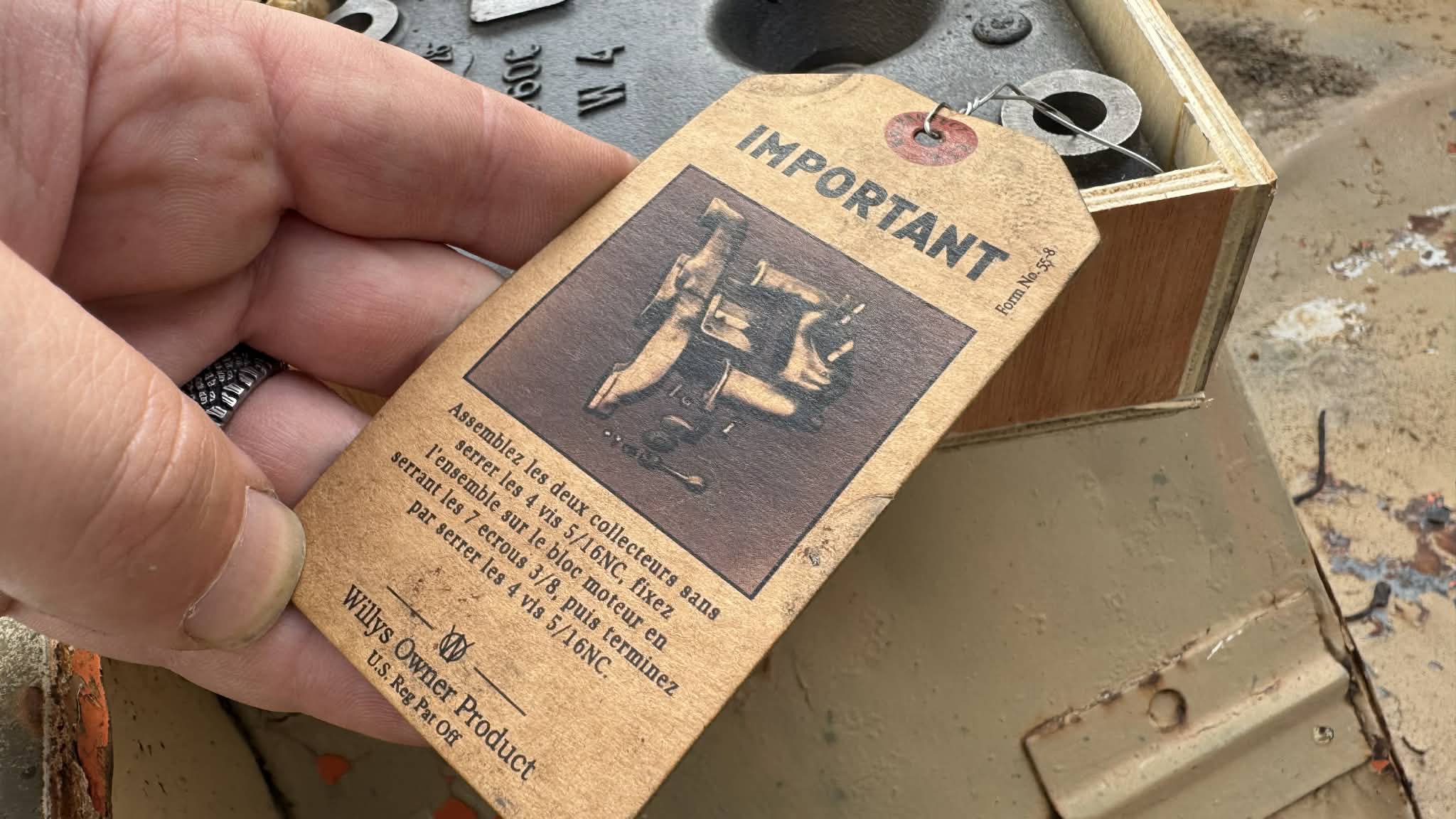
I bought a new intake manifold:
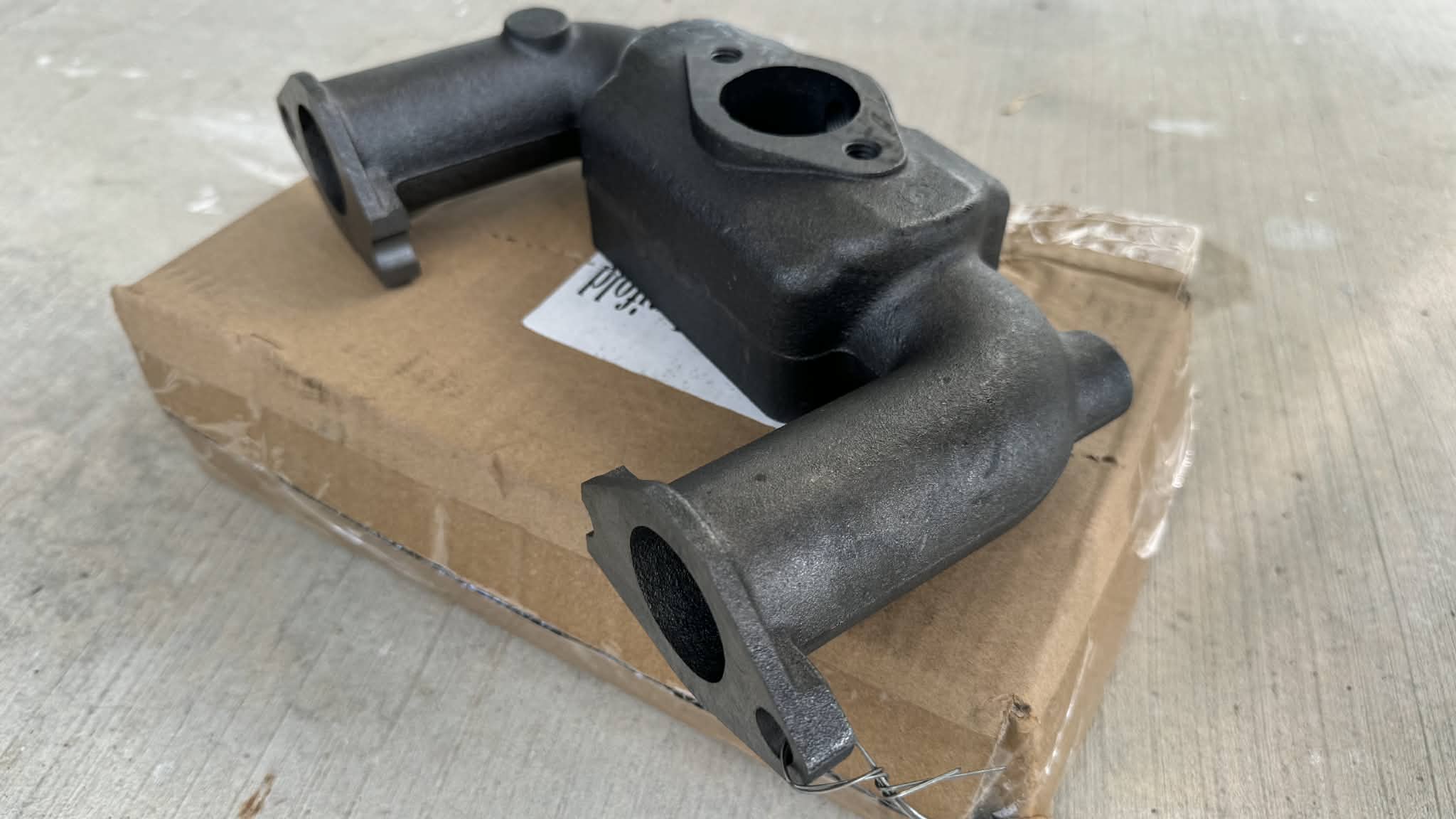
I bought a new exhaust manifold:
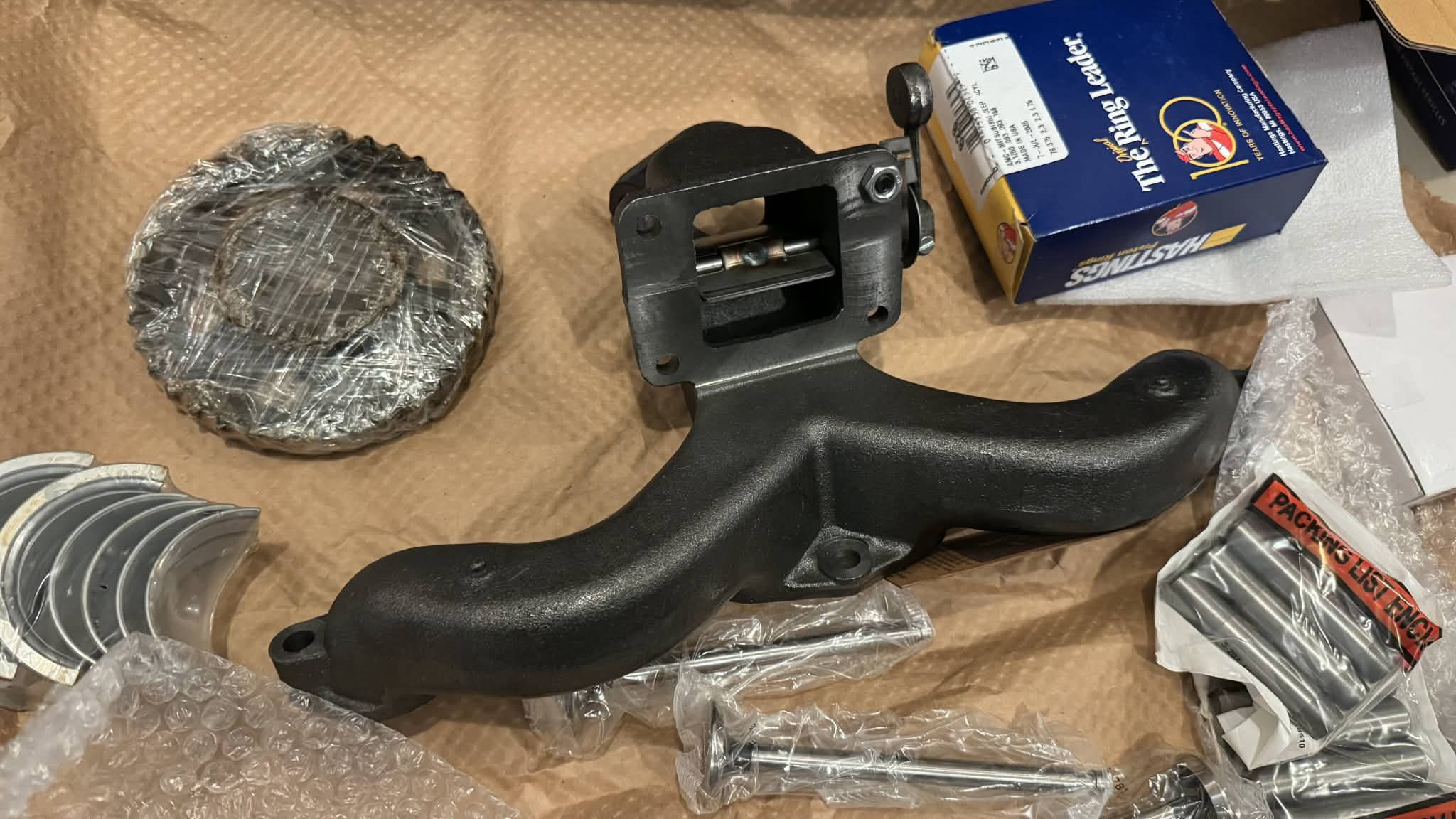
I snagged a new crankshaft:
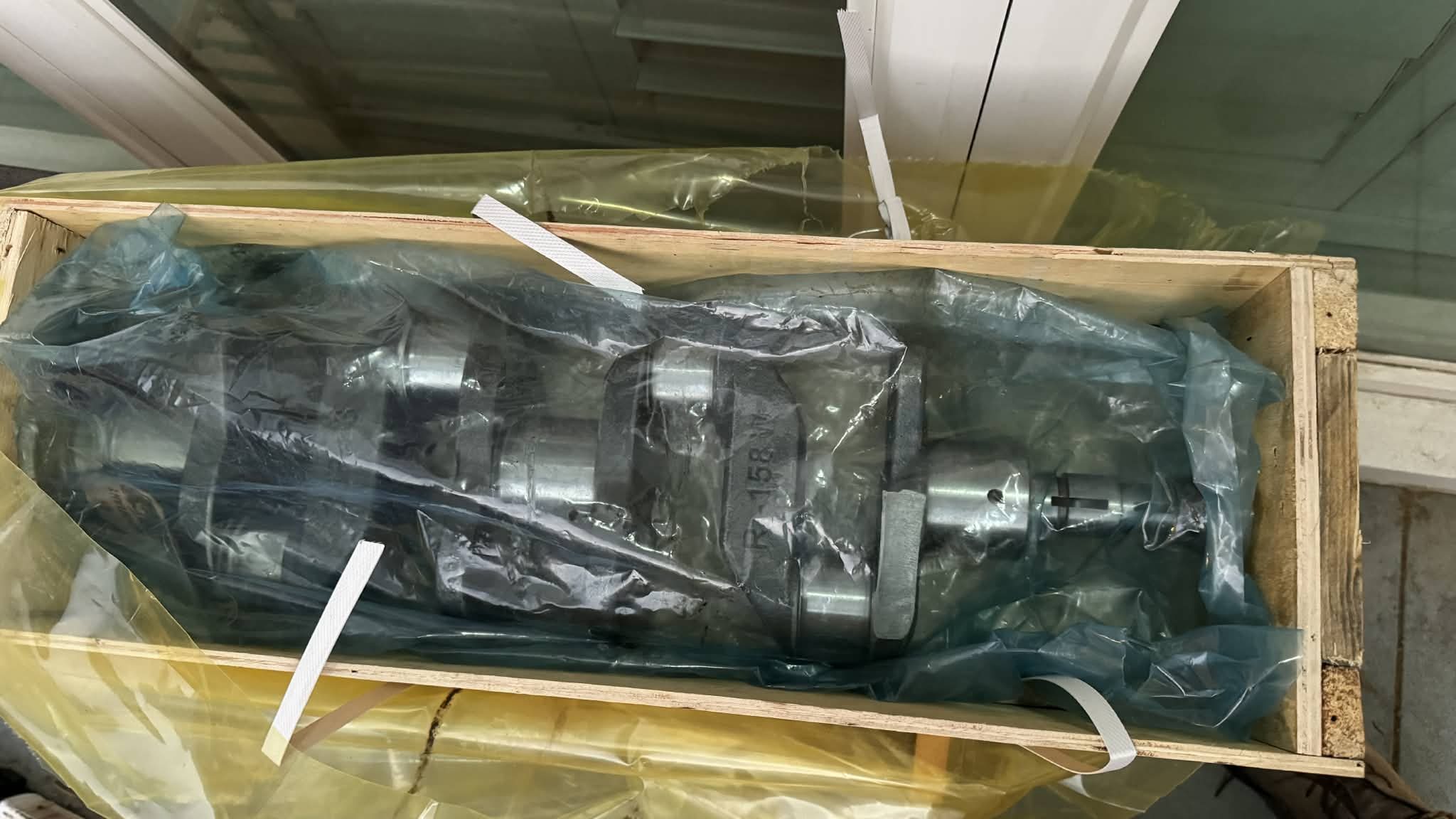
Here I am holding that crankshaft over my head for the photo at the top of the article:

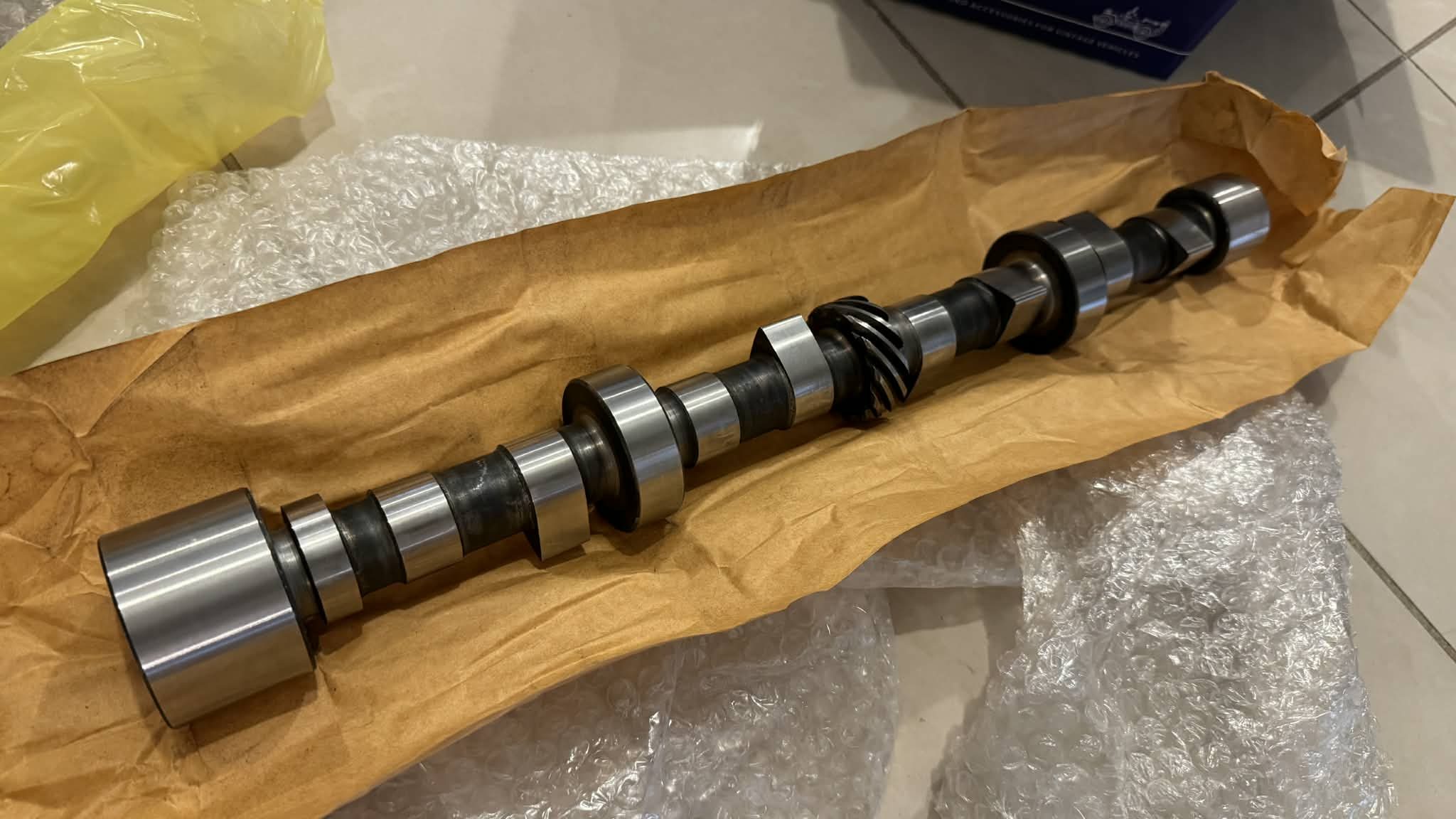
And I purchased a new camshaft:
I also got a bunch of other smaller parts like timing sprockets and gaskets and bearings (plus I accidentally got an extra set of pistons and valve guides, since they came with Kaiser Willys’ kit):
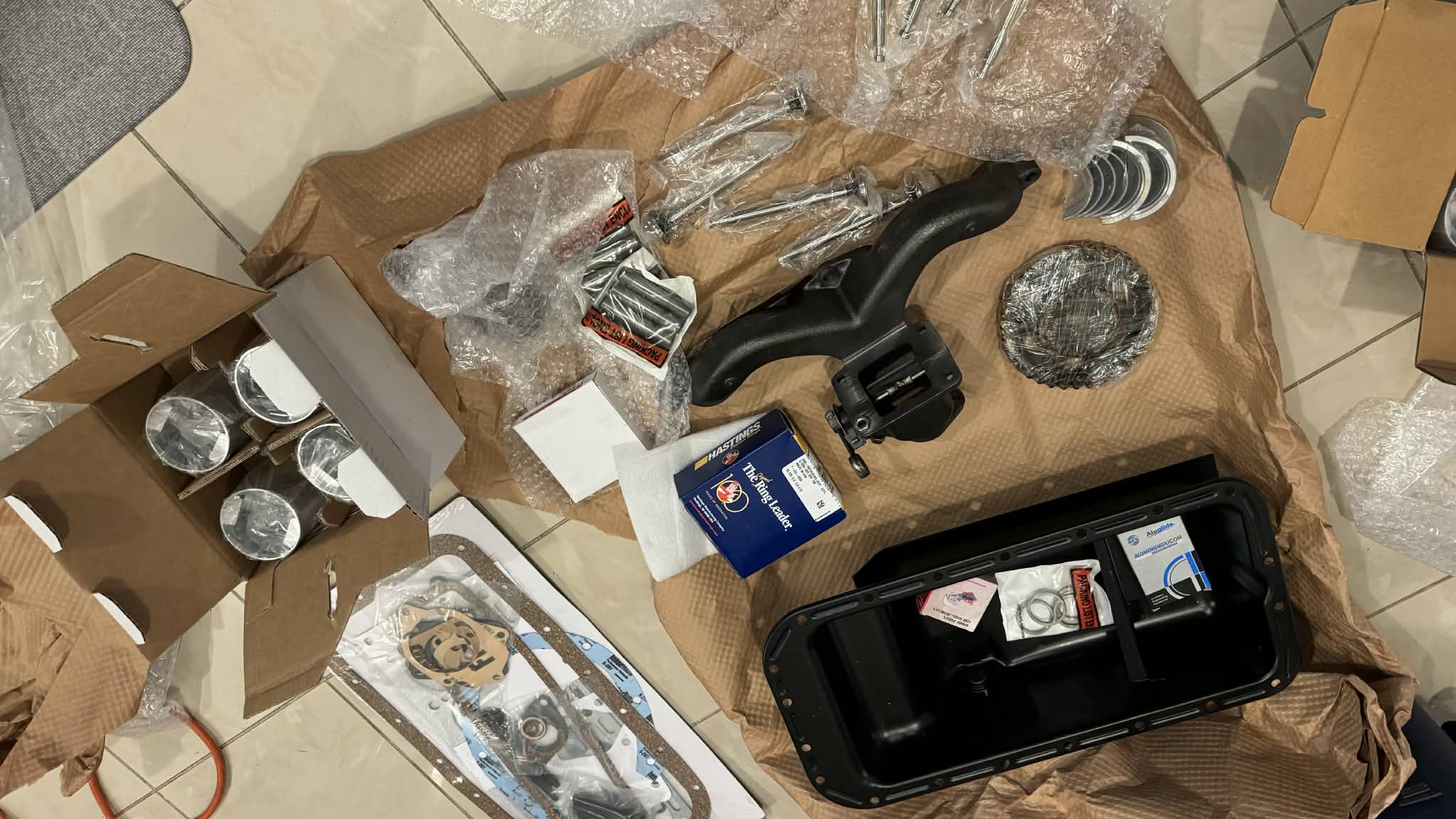
All of the main engine parts — the block, the pistons, the head, the crankshaft, the manifolds (not the camshaft) — come from the same company in France.
It Comes From A French Company Made Up Of Jeep Enthusiasts
 Screenshot: Willys Owner Product
The brand new engine block is based on the original 1940-ish drawings from Willys-Overland. A French company called “Willys Owner Product,” made up of Jeep enthusiasts, actually manufactures loads of brand new Willys Jeep parts. The company’s website (shown above) is a bit bare, having only a “contact us” section and also this little statement about the company:
Willys Owner Product (WOP) manufactures quality parts true to World War II originals.
We manufacture, wholesale and retail and are expanding our range over time.
We are committed to reproducing parts that comply with their technical and aesthetic characteristics.
The WOP brand is new, created by enthusiasts based in the South of France,
and is sold by several distributors in France and Europe.
 Image: Jeep Sud Est
But a big Jeep supplier called Jeep Sud Est (translates to Jeep South East, presumably because it’s based near Avignon in southeastern France — see above) gives us a few details about the block on its website:
New WILLYS MB US WW2 version molds made using original plans and three years of studies and tests (2019-2022).
Willys Go-Devil engine block for Jeep Willys, Ford, Hotchkiss.
- Casting 100% conforming to the Willys MB model (Casting die number: W2)
- Each block is engraved with its unique serial number, on a lower location; visible but discreet.
- Delivered individually in a wooden crate, lubricated for long-term storage.
- Sold with 6 sand removal tablets, oil pipe plugs, rear bearing discharge oil tube.
- The 8 valve guides are mounted.
- Comes in black.
- Comes with 4 STD pistons + 4 pins
This Willys block is unique, because we made it “universal”! It can be composed with the elements of a chain distribution as well as a distribution by pinions (3/8 flange caps and 1/8 npt jet provided)
Jeep Sud Est’s site also features this video of the engine being assembled:
Some of the description (especially the bit about “sand removable tablets”) seems like a bit of a translation error, but that’s fine, since I actually bought the new engine from the eBay store of an American supplier, Kaiser Willys. Here you can see the listing:

And here’s Kaiser’s description of the new block from France:
These are bench tested and ready to be rebuilt as your new 4-134 L engine.
Can be used as either a gear driven engine or chain driven engine.
All machined surfaces are milled to original design specifications.
It is made with a formula of current cast iron reinforced with the same coefficients of expansion as the originals.
Included with the kit:
-Set of 4 standard pistons with pin
-Set of standard piston rings, 1
-Crankshaft rear bearing drain pipe
-Oil galley plugs
-Set of 5 main bearing dowels
-Set of 5 freeze expansion plug
-Camshaft expansion plug
-Set of 8 valve guides installed– Cylinder Bore: 3.1255 +/- .0005
– Valve Guide Bore Diameter (In & Ex): .374 +/- .0005
– Valve Seat Surface Width: .09375 to .125 +/- .0005
– Tappet Bore Diameter: .626 +/- .0005
– Oil Galley Taps/Plugs: NPT 1/8 & NPT 3/8
– Oil Galley Taps – TaperedEach block has an individual serial number. These were constructed using original plans and over three years of studies and tests on (2019-2023).
They are each coated with a rust inhibitor and shipped in a wooden crate.
Why Does France Build World War II Jeep Parts?
 Screenshot: Classic & Sports Car Centre
The cool thing about World War II Jeeps is that, as a symbol of freedom, they’re beloved all across the globe. I once took my grandpa for a ride around the Tegernsee in Germany thanks to a bunch of German and Austrian WWII Jeep enthusiasts; the Jeepney-loving nation of the Philippines actually builds its own WWII Jeep bodies and frames; and France — well, you could argue that France loves WWII Jeeps just as much as anyone.
The history of the World War II Jeep in France is deep and rich. Obviously, France became familiar with the Willys MB and Ford GPW when the U.S. brought the vehicles to the European theater, but what’s fascinating is that — after the French military adopted WWII Jeeps and kept purchasing replacement parts from Toledo — the country actually began building its own World War II Jeeps. Built well after the war, this French Jeep wasn’t called a Willys or a Ford, it was called a Hotchkiss. As M201.com — a website dedicated to the WWII Jeep-based Hotchkiss M201 — describes, it all started out with a weapons company founded by an American named Benjamin Hotchkiss:
Benjamin Berkeley Hotchkiss was born in Watertown, Connecticut in 1826. He became a skilled designer in the family’s engineering business with a passion for weapons but having failed to interest the US Government in his designs he moved to France where he set up the Hotchkiss Company in 1867…Hotchkiss died in 1885 but the company continued with his personal passion..
Per M201, by the 1930s, the French company Hotchkiss was in the business of building military vehicles — ambulances, tankers, and various cars. It even built a 1939 Hotchkiss R15R Command & Reconnaissance 4×4. During the war, a Hotchkiss employee began interfacing with Toledo’s Willys-Overland:
Henry Ainsworth, M.D. of Hotchkiss, escaped to London at the beginning of the war where his knowledge of military vehicle manufacture was put to good use involving liaison with Willys-Overland. After the war he returned to France to re-establish Hotchkiss as a motor manufacturer. He was also interested in manufacturing jeeps and in June 1952 SOFIA (la Société Financière Industrie et Automobile – a Hotchkiss subsidiary) gained a licence from Willys in the U.S.A. to manufacture both spares and jeeps as Willys Overland France (WOF). The jeeps would have been based on the Willys CJ2A/3A design but final agreement with Willys (owned by the Kaiser Corporation) took until 1954 and the jeep became based on the later CJ-3B.
Even though Ainsworth wanted to build 4x4s a decade after WWII Jeep production had ended, he did not decide to build 4x4s based on the latest, greatest design, which would have been the M38A1 — the more powerful “high hood” Jeep upon which the CJ-5 would be built. No, Ainsworth decided to stick with the original WWII Jeep design, which had been out of production since 1945:
By the end of 1955 the French army decided to stick with the simple and proven MB design rather than continue to consider more advanced jeeps from other manufacturers. These included Delahaye who had now been taken over by Hotchkiss to form Hotchkiss-Delahaye. In 1956 Hotchkiss merged with Brandt to create Hotchkiss-Brandt and it was from the Brandt factory (complete with test track) in Stains on the Northern outskirts of Paris that the majority of the 27,628 Hotchkiss M201 jeeps based on the original MB design were produced for the French Government between 1957 and 1966.
And so that’s what you see in the photo above. It looks exactly like a 1941 WWII Jeep, and yet what you see there is actually a 1962 model!
These Hotchkiss Jeeps are actually known to be extremely well built, with many Willys MB and Ford GPW owners using their parts as high-quality replacements to keep their 80 year-old machines on the road.
That’s all to say: I’m quite hopeful that my French Jeep engine parts will be high quality. We’ll find out when I put it all together.
Speaking of, I have to go. I have lots of work to do!
[Ed note: David mentioned the idea of building a brand new WWII Jeep to the team at eBay, and they loved the idea so much they said, “How can we help?” Their financial support and David’s Jeep-obsession are the fuel behind this crazy build. – MH]