The centres have long been problematic positions for England. In his latest attempts to uncover a top-class pairing, Steve Borthwick has shifted Tommy Freeman from the wing and is considering moving Ben Earl from the back row.
Perhaps the finest English centre of the moment, though, was throwing himself into the thick of the action against Australia on Saturday afternoon, just not for Borthwick’s side against the Wallabies at Twickenham.
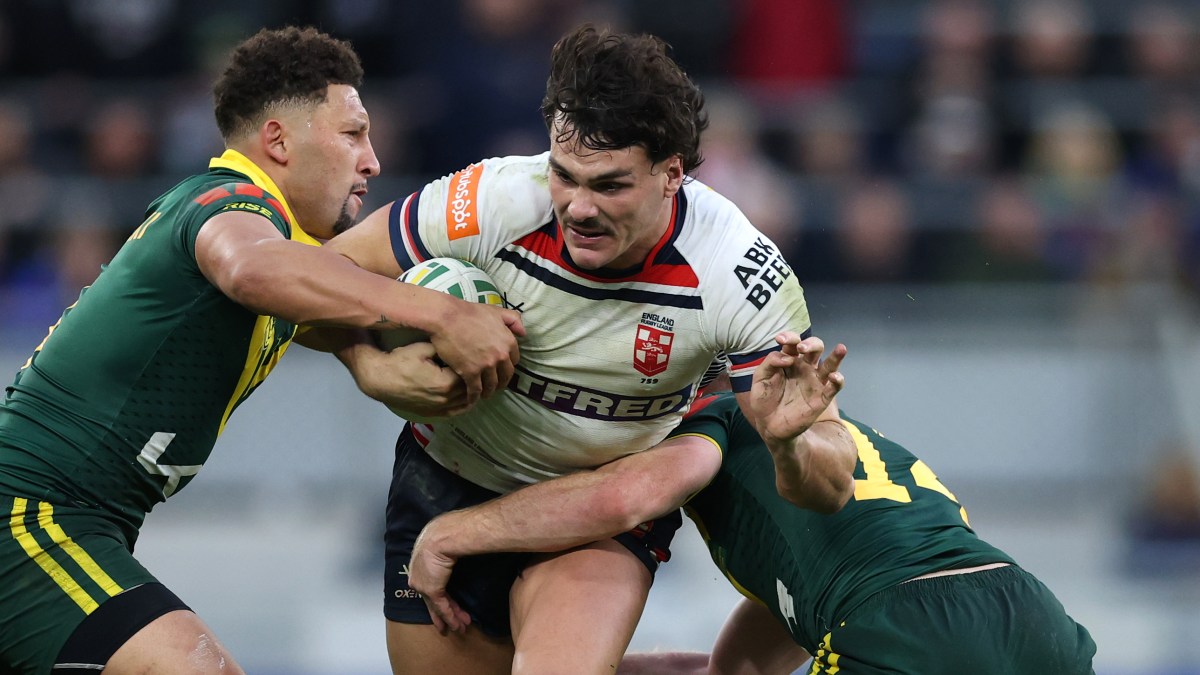
At the Hill-Dickinson Stadium in Liverpool, where England’s rugby league team were slipping to a series-clinching defeat against the all-conquering Kangaroos, Herbie Farnworth was again showing glimpses of why he is widely rated as one of the leading centres in the world in the 13-man code. Such accolades are not easily earned, but Farnworth, 25, has proved himself in his sport’s toughest school, the National Rugby League in Australia.

Freeman, usually a wing, was played by Borthwick at 13 against the Wallabies on Saturday
GETTY IMAGES
Having moved from his Lancashire home aged 17, he made his NRL debut for Brisbane Broncos in 2019, shortly before turning 20. He has since established himself as one of the best players in his position in the competition, chosen as one of two centres in the Dally M team of the year in both 2023 and 2024. A third consecutive selection was expected until his 2025 season was disrupted by a hamstring injury, from which he recovered in time to take his place as one of England’s key players in the first Ashes series for 22 years.
The second Test against the Kangaroos did not feature a host of attacking opportunities, as England were kept tryless in a 14-4 defeat. But Farnworth is never less than robust in defence and, with ball in hand, he is blessed with the skills that England’s rugby union team have long been looking for in an inside centre, a combination of physicality and skill.
He has the ability to carry straight and hard in heavy traffic, the footwork to escape when space opens up, and considerable upper-body strength that underpins a dextrous offloading game. On Saturday, a nicely weighted dink off his right foot that almost created a tryscoring opportunity for Dom Young, a reminder that he was a footballer in Manchester United’s youth teams while growing up near Burnley.

Dingwall, who started at inside centre at Twickenham, is smaller in stature than Farnworth
GETTY IMAGES
In terms of his build, Farnworth is a more imposing presence than the players picked most recently by Borthwick at No12. At 6ft 3in and 16st 10lb, he is more than a stone heavier than Fraser Dingwall, Seb Atkinson or Henry Slade. His physique more closely resembles that of Earl, the back-row forward Borthwick is keen to develop as a utility player capable of filling in at centre.
None of which is a plea for Borthwick to launch a cross-code raid and attempt to make Farnworth the latest cross-code recruit. He has recently signed a contract extension that keeps him with Dolphins, the NRL expansion team based north of Brisbane, for two more seasons, taking him past the next rugby union World Cup in Australia in 2027. Asked what he thought of speculation of him switching codes, Farnworth said: “Nothing really. I’m really happy at the Dolphins and I’ve still got a long, long time here.”
But watching Farnworth in action does serve as an inescapable reminder that athletes with such a combination of power and skill have been produced more reliably in rugby league than in English rugby union. Over the years in the professional era, that troublesome inside centre position has been filled by a number of cross-code converts: Barrie-Jon Mather, Henry Paul, Andy Farrell, Shontayne Hape, Kyle Eastmond, Joel Tomkins, Sam Burgess and Ben Te’o.
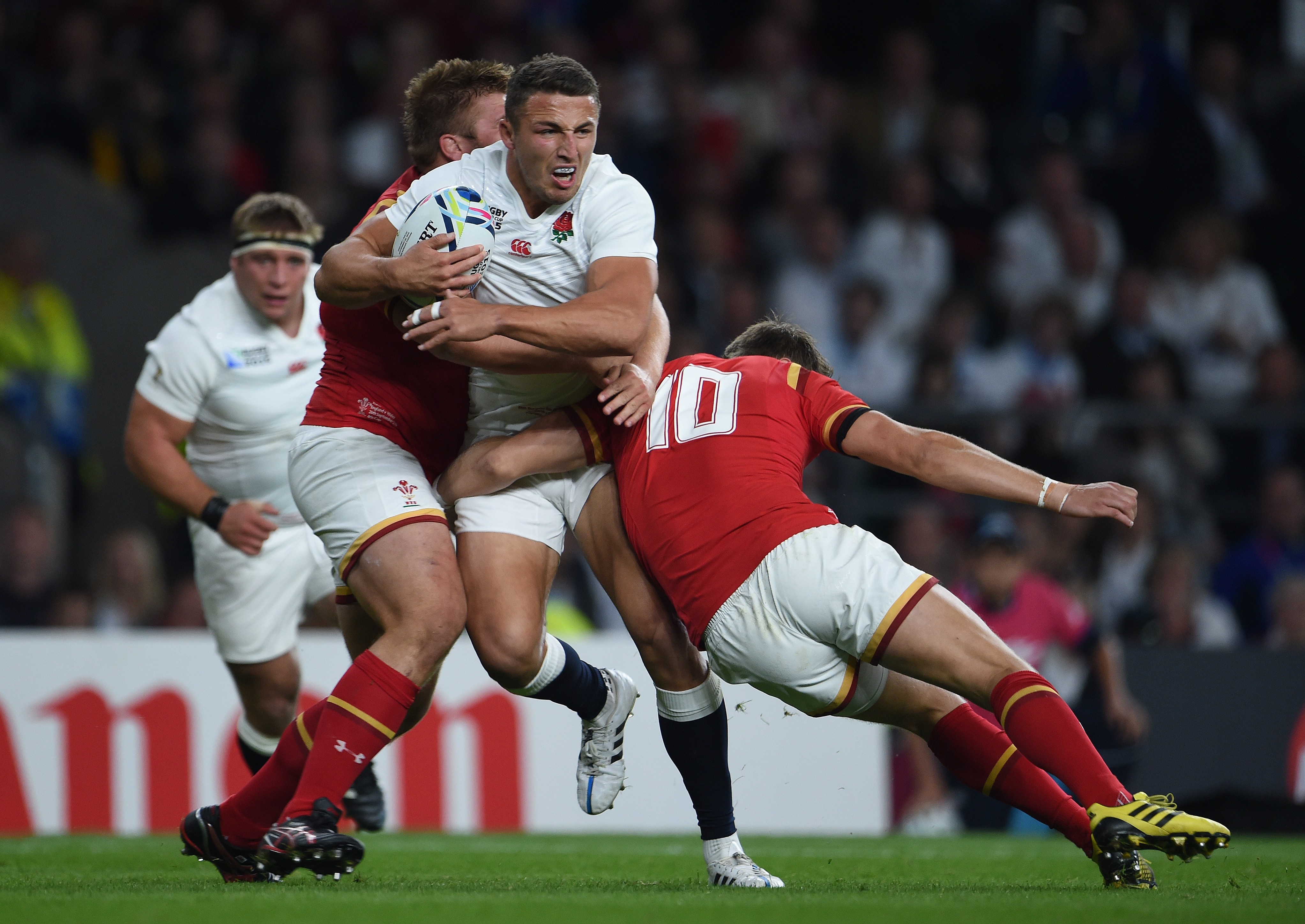
Burgess is one of the biggest names to have crossed codes
CORBIS
Those names enjoyed varying degrees of success, but English rugby union is still bearing the scars of the ill-fated attempt to turn Burgess into England’s version of Sonny Bill Williams for the 2015 World Cup. The Burgess episode as a whole was not well handled, though, hampered by a disagreement between England and his club, Bath, over whether he would be better employed as a centre or blind-side flanker. With less than a year to find his feet in his new code, this confusion made it particularly difficult to bring Burgess up to speed before the home World Cup. Since Burgess’s abrupt return to rugby league shortly afterwards, Te’o has been the only cross-code convert to play for England.
But the failure of the Burgess experiment should not mean that English rugby union ignores the potential of players such as Farnworth. Joseph-Aukuso Suaalii did not enjoy his finest afternoon for the Wallabies at Twickenham on Saturday, but he made a substantial impact upon crossing codes a year ago. Mark Nawaqanitawase is playing on the wing for the Kangaroos in the Ashes, but will return to rugby union for the 2027 World Cup.

Farnworth has committed to the Dolphins until after the 2027 World Cup
GETTY
Like Suaalii, Farnworth has a background playing in rugby union in his younger days, at Ermysted’s Grammar School in Skipton, mostly as a full back. Although he was a talented footballer too, his preference was always for rugby league, where he excelled for Wigan St Patrick’s before his uncle, Brian Foley, a rugby league scout, was instrumental in him moving to Brisbane. “There has been interest from rugby [union] clubs,” Foley said. “But since he has been in Australia, they accept he’s in the NRL and that’s what he’s doing.”
The Ashes series defeat has underlined how much England’s rugby league team need to hang on to talents of Farnworth’s calibre. Borthwick, in the meantime, is looking to the new generation of multi-skilled back-row players as part of his quest to solve the problems in midfield, with the likes of Earl, Henry Pollock and Guy Pepper all viewed as potential hybrid options. “The skillset and the requirements are very much aligned,” Earl said. “There are a few boys that could do it and I think it’s going to be a strength of our team going forward.”
Until England uncover an inside centre who can match Farnworth’s range of abilities, perhaps converting forwards into part-time backs is now viewed as more straightforward than attempting to convert players from the rival code.