Amid atrocities in Darfur, the UK is pressing for an urgent Human Rights Council debate that could gain Sudan’s support as it seeks to focus scrutiny on the RSF and its sponsor, the UAE.
Since Monday, the United Kingdom has been quietly rallying support for a Human Rights Council special session to address alleged mass killings, rape and other atrocities in El Fasher, after the Rapid Support Forces (RSF) captured the long-besieged capital of North Darfur. The request requires backing from one-third of the council’s 47 members to go ahead.
Germany, part of the western group that typically pushes for action on Sudan at the Geneva-based body, has thrown its weight behind the initiative. The UK may also count on an unexpected supporter – Sudan’s government led by general Abdel Fattah al-Burhan – which is calling for scrutiny on its rival, the RSF.
The move also responds to civil society appeals, with rights groups urging the United Nations council to act swiftly, while cautioning that it should not be seen as a “free pass” for al-Burhan’s armed forces.
Mass killings add to spiralling catastrophe
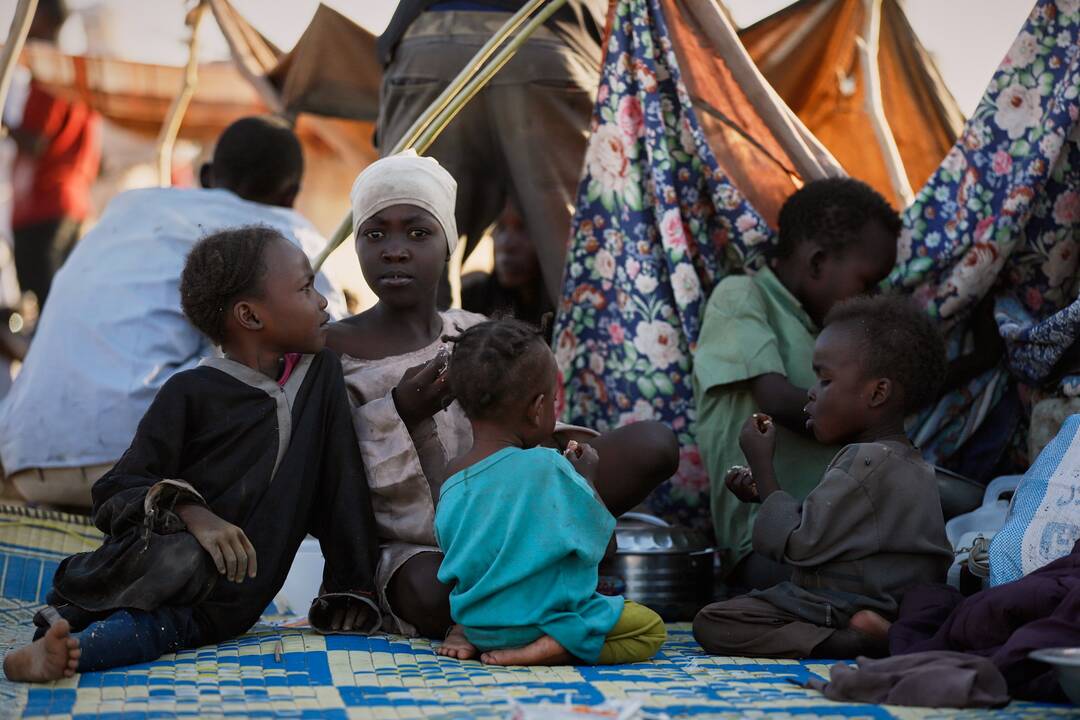
Over the last week, reports have mounted of RSF fighters executing scores of civilians – including pregnant women and hospital patients – and abducting others for ransom. Over 70,000 people have fled El Fasher and the surrounding areas on foot towards Tawila, 60 kilometres west, according to the UN Refugee Agency. The medical charity Médecins Sans Frontières, which has a medical facility there, has reported people arriving malnourished, dehydrated and with gunshot wounds. Thousands of others remained barricaded within the city, unable to escape, according to the UN.
RSF leader Hamdan “Hemedti” Dagolo acknowledged violations by his forces and claimed to have launched internal investigations. The breakaway militia, which has been battling its former ally, al-Burhan and his Sudanese Armed Forces since April 2023, has been accused by the United States of genocide, echoing atrocities in Darfur in 2004. Satellite analysts have compared the pace of killings in El Fasher to the first 24 hours of the Rwandan genocide.
The crisis adds to a spiralling humanitarian catastrophe. On Monday, the UN’s top hunger monitoring system declared famine in El Fasher and in the South Kordofan town of Kadugli, also besieged by the RSF, while 20 more areas in the Darfur region remain at risk. About 375,000 people are gripped by famine while 21 million people – almost half of the country’s population – face food insecurity. Meanwhile, only 28 per cent of a UN aid appeal of $4.16 billion has been filled.
Sudan pivots
Speaking at a press conference on Tuesday in Geneva, Sudan’s ambassador to the UN, Hassan Hamid, accused the militia of conducting a genocide in the culmination of events he said were “not unexpected”. He displayed a video of the massacre in the Al Saudi Hospital in El Fasher, which, according to the World Health Organization, left 460 people dead, as well as summary executions of people fleeing towards Tawila.
Asked about the UK-led push for a Human Rights Council session, Hamid said discussions were ongoing. He added that the response of his government, led by al-Burhan, and of other African nations would depend on the proposed outcome, hinting that they would support it if it solely focuses on violations in Darfur committed by the RSF and its allies – a move that could redirect scrutiny away from the SAF.
While Hamid said El Fasher warranted the council’s attention, up until now his government has rejected the UN body’s approach. The Sudanese mission contests the Fact-Finding Mission (FFM), arguing it unfairly equates the SAF with the RSF. Set up by the Council in 2023 to investigate all violations regardless of the perpetrator, the UN-backed group of experts have documented violations on all sides, they say, may amount to war crimes.
When asked by Geneva Solutions whether the Sudanese government would be open to cooperating with the expert group, Hamid said their opposition stood firm.
Civil society backs UN rights meeting
Earlier on Monday, 30 human rights NGOs – including Human Rights Watch, the International Service for Human Rights and the International Commission of Jurists – separately called on the Human Rights Council to hold a special session on El Fasher.
“We are witnessing atrocities of a massive scale, which shock the conscience of humankind, and what we know is probably a fraction of what is actually happening. All efforts must be directed at stopping RSF and their allies,” said Nicolas Agostini, Geneva director of the NGO DefendDefenders, which also signed the letter.
The joint letter asks for the UN-backed FFM to produce a “flash report” on atrocities in and around El Fasher and to share evidence with the International Criminal Court (ICC), which has been investigating crimes in Darfur.
On Monday, the ICC prosecutor’s office warned that the latest reports from the region – along with the past two years of crimes – “may constitute war crimes and crimes against humanity under the Rome Statute”.
The campaigners stressed, however, that more than one party is responsible for the devastation that has displaced over 15 million Sudanese in the past two years. “Atrocities by RSF and allied militias don’t give a free pass to the SAF. The SAF must bring their violations, some of which amount to war crimes, to an end,” Agostini said.
UAE under scrutiny
The harrowing accounts from El Fasher have also cast a spotlight on the United Arab Emirates, accused of supplying the RSF with weapons and resources. Abu Dhabi has denied the claims despite evidence presented repeatedly to the Security Council. Meanwhile, western nations have been criticised for remaining silent on the UAE’s role. The UK has in particular been under pressure after recent revelations of British-made military equipment found in Sudan – believed to have reached the RSF through the UAE – prompting domestic calls for an arms embargo on the gulf country.
Hamid described the situation in El Fasher as “a direct consequence of the inaction of the international community”, and blasted the Security Council for failing to enforce the arms embargo on Darfur, giving the “greenlight” to the UAE to continue to funnel weapons to the RSF.
Rights campaigners also called on the council to address the role of external actors fueling the fighting and directly named the Gulf country.
The UAE, alongside Egypt and Saudi Arabia, has been in Washington mediating indirect ceasefire talks, but they have so far led nowhere, according to the Sudan Tribune. Hamid confirmed that the Sudanese government was holding bilateral engagements with the US but sidestepped questions about a proposed plan for a truce.
Questions remain about whether Gulf states will stand in the way of efforts at the UN rights council to address violations in Sudan, as they have done in the past.