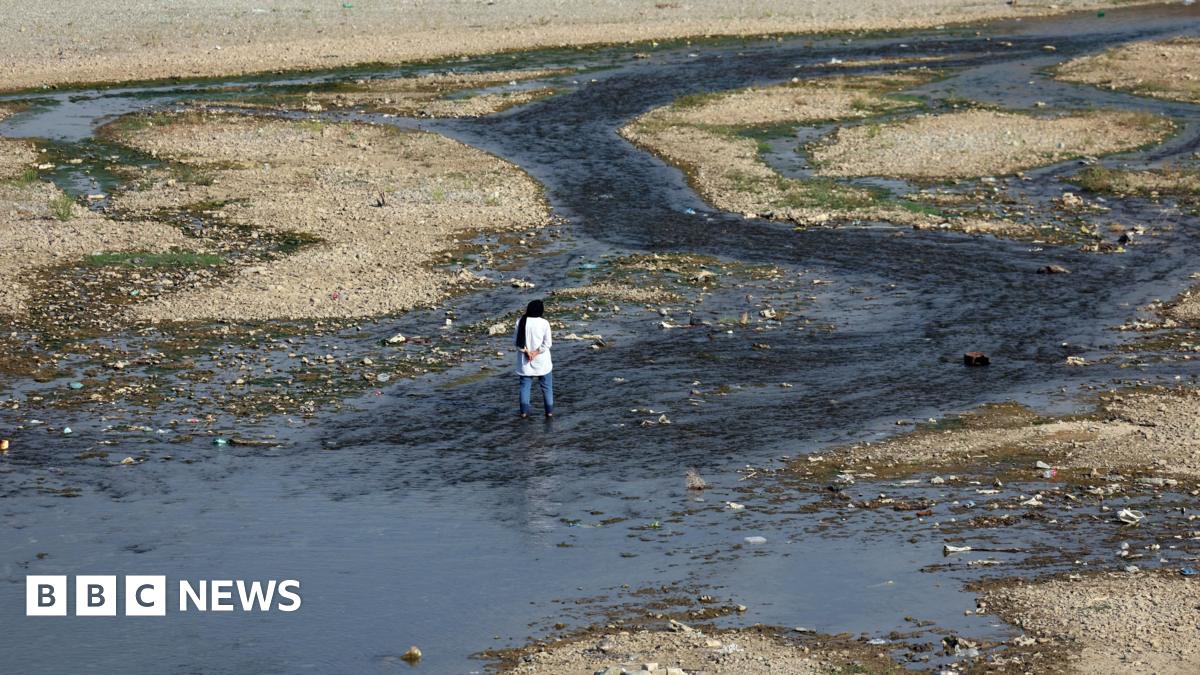
Iran’s energy minister Ali Abadi has said Tehran’s water crisis is not only due to a lack of rainfall. He blamed water leakage caused by the capital’s century-old water infrastructure and even pointed to the recent 12-day war with Israel.
During that conflict, Israel targeted the northern Tehran neighbourhood of Tajrish on 15 June. Afterwards videos showed heavy flooding in the area.
The day after the strike, the Israel Defence Forces said it had targeted Iranian military “command centres”.
But the crisis extends far beyond the capital.
The head of Iran’s National Centre for Climate and Drought Crisis Management, Ahmad Vazifeh, has warned that, apart from Tehran, dams in many other provinces — including West Azerbaijan, East Azerbaijan and Markazi — are also in a “worrying state”, with water levels in the single-digit percentages.
In Mashhad, Iran’s second-largest city, officials are sounding the alarm as well.
The Governor of Khorasan Razavi Province in north-east Iran, said the water reserves in Mashhad’s dams have dropped to “less than eight percent,” warning that the province faces a “mega-challenge of drought.”
CEO of Mashhad’s Water and Wastewater Company put the figure even lower.
“The storage level of the city’s main dam is below three percent,” Hossein Esmaeilian said.
“Only three percent of the combined capacity of Mashhad’s four water-supplying dams — Torogh, Kardeh, Doosti, and Ardak — remains. Apart from Doosti Dam, the other three are out of operation.”