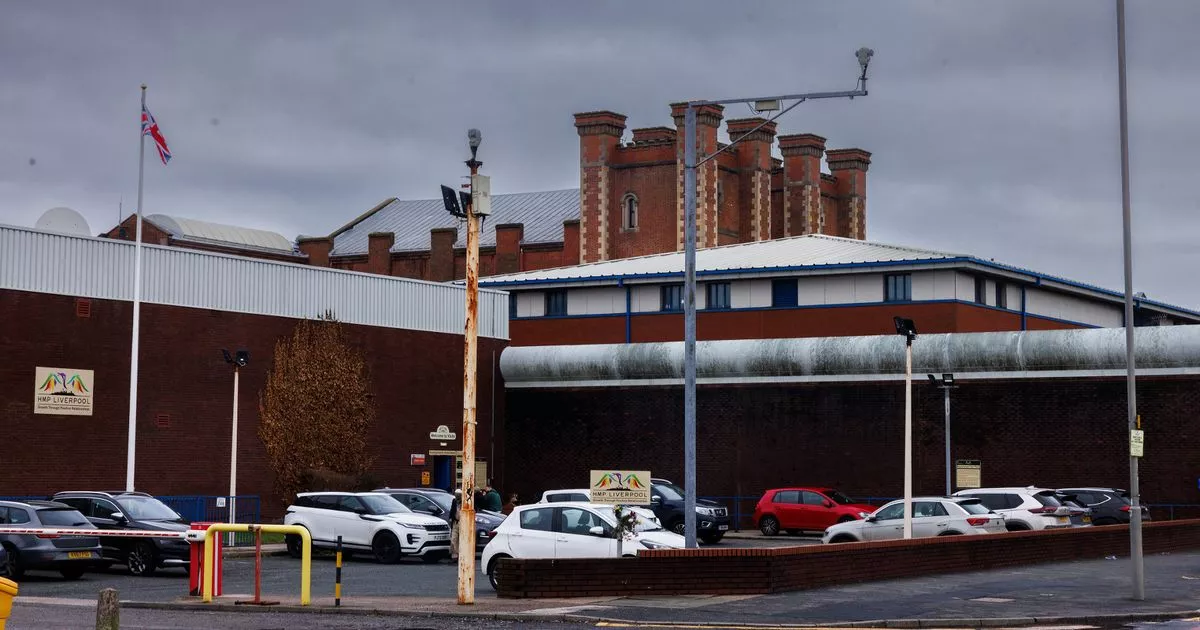
It follows an inspection by the HM Inspectorate of Prisons HMP Liverpool was visited by HM Inspectorate of Prisons in August.(Image: Liverpool Echo)
Prisoners at HMP Liverpool are “lying on their beds watching daytime TV and taking drugs to pass the time”, according to a new report. The prison has seen the highest rate of positive drug tests of any jail of its kind nationally, with 46% of drug tests at the coming back positive, with the supply described as a “significant threat to the prison”.
The Walton jail was visited by HM Inspectorate of Prisons in August, and was found to have the highest rate of positive drug tests for any reception prison in England and Wales. Inspectors found the prison had been “continuously targeted” by serious organised crime groups delivering drugs into the prison by drone.
In the report, published on Monday, November 10, the inspector wrote that, “without significant investment” in improving the security of windows and exercise yards, HMP Liverpool “will continue to be disrupted by unacceptable levels of criminality.” The illicit drug economy inside the jail “posed an ongoing threat to the “safety and stability of the prison”.
It was added in the report that: “The ingress of drugs and the change in population are likely to have been significant factors in the increases of violence recorded since the re-role of the jail.”
A survey conducted by the prisons inspectorate found almost half of prisoners said it was “easy” to get illicit drugs at HMP Liverpool. The inspector noted that there are “too many men at Liverpool lying on their beds watching daytime television and taking drugs to pass the time.”
Since the last inspection in 2022, HMP Liverpool has been recategorised as a “reception prison”, which is a facility where new inmates first go after being sent from court. Many of the .prisoners are also on remand or being processed at Liverpool after conviction.
This has led to an increased number of prisoners from organised crime groups, who are using “more sophisticated” methods to smuggle drugs and phones into the prison, according to the report.
The inspector also found that high levels of self-harm showed that there had “not been enough focus” on supporting the most vulnerable men in the prison population, many of whom were addicted to drugs or alcohol.
It was also found prisoners who had failed a drug test or who were found under the influence were dealt with using “rehabilitative” techniques focused on supporting recovery rather than relying solely on punishment.
This also applied to some prisoners charged with substance misuse offences.
The inspector noted that prison leaders had worked with locals to improve intelligence about drug parcels being thrown over the perimeter fence, with many drug parcels intercepted, but that the problem remained “overwhelming”.
In the report, the inspector said: “The recent appointment of a dedicated drug strategy lead had led to improvements in the delivery of substance misuse support services.
It was surprising that despite the obvious drug problem at Liverpool, the governor had to find the funds for this post within his existing budget.”
The inspector added: “Although we found some examples of innovative practice in place, other significant strategic factors had not been tackled effectively to reduce the demand for drugs.”
The Ministry of Justice was approached for comment.
Do you have experience of HMP Liverpool? Contact jonathan.blackburn@reachplc.com