The Bank Holiday is fast approaching but, this weekend, perhaps it’s time to ditch the DIY, cancel your plans for a country walk and spend time repairing your sex life instead.
If you’re in a long-term relationship, chances are sizzling sex has slipped down the list of your priorities.
In fact, it’s estimated that 15-20 per cent of long-term relationships are sexless or near-sexless, according to sex therapist Stephen Snyder MD, author of Love Worth Making.
He says: ‘All things being equal, most couples would prefer to have a sexual connection – even if only to reassure themselves that they’re normal.’
So what can be the effects of a long dry spell?
Dr Snyder says: ‘When people try to research the biological effects of sex vs no sex, they’re usually assuming good sex. But as a sex therapist, I hear mostly about bad sex – which I’ll define here as sex that for whatever reason isn’t making you feel good.
‘I see a fair number of sexless couples who used to have bad sex – and who tell me bad sex was worse than no sex at all.’
If sex is good when we have it, are there ways in which abstaining might affect our well-being?

Anna Maxted sat next to her husband Phil, talks about the benefits of breaking a dry spell and how to manage it
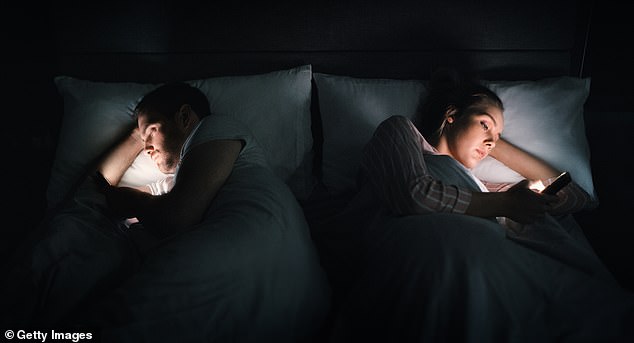
It’s normal for every couple to have dry spells. ‘I don’t feel like it’s a sign to despair,’ says Joanna Harrison
‘There are physical, psychological and relational impacts,’ says Dr Angela Wright, of Spiced Pear Health, an online sexology and menopause clinic.
‘Of course, not everyone wants or needs sex, but we know the benefits of being sexually active more than we know the negatives of not.’
While all couples go through fallow periods, says therapist Joanna Harrison, if sex has been off the agenda for a long time and that matters to you, it may be worth considering why – and how to remedy the situation.
Whether you’re looking to boost your memory, ease menopausal symptoms, sleep better or strengthen your pelvic floor, sex could be the answer…
Orgasms strengthen your pelvic floor
‘A post-pregnancy study found pelvic floor strength could be improved by orgasm,’ says Dr Wright. In a trial, a group of new mums were advised to do daily Kegel or pelvic floor strengthening exercises over a year. Another group were advised to have ‘sexual activity-induced orgasms’ (solo or partnered) as well as doing their Kegels.
The pelvic floor muscle strength of the group having orgasms was ‘significantly higher’.
Dr Wright says that Kegels alone were effective, ‘but if you added regular orgasms to that, your pelvic floor got even stronger’.
An orgasm helps by exercising these muscles.
‘It leads to pelvic floor contractions,’ she says. ‘And the stronger your pelvic floor muscles are, the better they contract during orgasm, and the better orgasm feels.’
So what happens to the pelvic floor if you stop having orgasms through sex? Is it advisable to go solo – particularly after 50, as ageing and the menopause can also lead to it weakening.
‘Any exercise that contracts the pelvic floor will help it to maintain its strength. Do that through Kegels and pelvic floor weights (Intimate Rose Kegel Balls for Women, £39.99, amazon.co.uk), but orgasm is another way to help.’
Is abstinence bad for your memory?
‘There have been some associations between frequency of sex and people’s performance on memory tasks, but the improvements observed are generally small,’ says Dr Faye Begeti, a neuroscientist and neurology doctor. ‘Factors such as age, education and socio-economic status have much more of an impact on cognitive function.’
It’s more likely that those who have more sex may be healthier, more active and less stressed than those abstaining. It’s that that’s improving their memory rather than the sex, she says.
‘Frequent sexual activity might reflect a supportive relationship, whereas we know social isolation is a major risk factor for dementia,’ she adds.
Could abstinence contribute to cognitive decline? ‘I haven’t observed this in my neurology practice,’ says Dr Begeti.
Sex can cut anxiety – but intimacy works 
A 2022 study showed that cortisol levels were lower in couples who had physical intimacy even if that wasn’t necessarily sex
It makes sense that satisfying sex has a positive effect on mood.
‘Having an orgasm creates a release of endorphins and opioids, and chemicals to make you feel chilled out,’ says Dr Wright. ‘You’re also likely getting a boost of oxytocin, so it’s very possible you’re going to feel less anxious.’
Dr Begeti, author of The Phone Fix, adds: ‘Over time, regular sexual activity may enhance emotional closeness and reduce anxiety, especially if it strengthens a healthy relationship.’
There are caveats though – if sex is a source of stress or distress, it will negatively affect well-being – and it’s hard to prove that having sex (or not) directly increases or reduces stress. That said, a 2022 study measured stress hormones in couples aged between 67 and 74. Dr Wright adds: ‘It showed that cortisol levels were lower in couples who had physical intimacy even if that wasn’t necessarily sex.’
Dr Wright stresses: ‘It isn’t sex on its own that has all those positive impacts. Sex is one way of feeling intimate, connected and relaxed. But you can have a really happy life if you can find that in other ways.’
Will intercourse add years to your life?
Sex makes you live longer! This claim has been made thanks to a 1997 study of 918 men aged 45 to 59 suggesting that those who had regular sex had a longer lifespan.
According to the research, says Dr Wright: ‘If you have a hundred orgasms annually, it’s correlated with seven years of additional lifespan. In men, frequency of sex that was the marker of doing well.’
Previous studies have shown that, in women, longevity is linked more to the quality and enjoyment of sex than the quantity.
‘It probably isn’t the sex that’s making you stay alive,’ says Dr Wright. ‘It’s probably a proxy marker of having a healthy body.’
The truth is, she says, there is zero direct evidence that celibacy shortens – or lengthens – your life. ‘We just haven’t done the research.’
Though as one wit joked: ‘Life without sex? It just seems longer.’
You’re up for it, but your body isn’t…
It isn’t proven that staying sexually active in later life reduces your risk of heart attacks, but health benefits can be inferred. One study suggested sex equates to mild or moderate physical activity, such as ‘climbing two flights of stairs or walking briskly.’
But we can still link sex and heart health – in that for men who’d love to get it on, but can’t rise to the occasion, this could be a red flag.
‘Losing your erections can be a sign of heart disease, cholesterol in your arteries and diabetes,’ says Dr Wright. ‘Around 50 per cent of men have erectile dysfunction by the age of 50 – they have some problems sustaining it or it won’t be very strong. Ten per cent never get an erection at all.’
When it comes to men who’ve suffered heart attacks, Dr Wright adds: ‘When asked if they’ve had erectile dysfunction, on average it starts two to five years before their first angina or heart attack.
‘Loss of morning erections can be the “canary in the coal mine” – the first marker.’
Does no sex worsen menopause signs?
Let’s be blunt: can a lack of sex hasten ‘vaginal atrophy’ post-menopause? Yes, as it can contribute to a faster decline in vaginal elasticity.

For post-menopausal women, whether you want to have sex or not, vaginal oestrogen is your friend, as it helps to keep the tissues healthy
As Dr Wright says: ‘If you get aroused on a regular basis, if you can accommodate the diameter of the penis or the toy, then the tissues are effectively getting stretched and massaged.’
Dr Wright adds: ‘There is some truth that if you get the blood flowing, and there’s movement and massage in the area, it helps the tissues stay in better condition.’
But, Dr Wright loathes the phrase ‘use it or lose it’ and stresses there’s zero benefit if sex is joyless or painful. ‘It sets up cycles of muscle tension, making it really difficult to experience pleasure because you’re anxious.’
For post-menopausal women, whether you want to have sex or not, vaginal oestrogen is your friend, as it helps to keep the tissues healthy.
Getting intimate can aid your sleep
Dr Begeti says: ‘Some people report it’s easier to fall asleep after sex which may be due to the release of hormones like prolactin, which promote relaxation.’
Though that sex had better be satisfying. Dr Neil Stanley, sleep researcher and co-author of A Sleep Divorce – How to Sleep Apart, Not Fall Apart, notes: ‘The data for an increase in prolactin and oxytocin, in women in particular, is after intercourse with orgasm. So it would seem to be orgasm rather than sex per se that is key here.’
Keep at it – for male prostate health 
Men who have 21 or more orgasms a month have a 31 per cent lower risk of prostate cancer according to Harvard study
Whether the sex is solo or partnered, men who have 21 or more orgasms a month have a 31 per cent lower risk of prostate cancer.
This was discovered by Harvard’s Health Professionals Follow-up Study, which tracked 50,000 men for more than 20 years.
They also found that men who ejaculated 21 times a month had a 20 per cent lower risk of prostate cancer compared with men who ejaculated four to seven times per month. Other studies found similar associations, says Dr Wright. ‘If you don’t ejaculate on a regular basis you have a greater chance of prostate cancer. It doesn’t have to be partnered sex. It can be solo sex.’
Immunity can be affected by sex
It’s hard to know if being sexually inactive makes you more or less likely to fall ill.
A 2004 study of 112 students found those who had frequent sex – once or twice a week – had more of the antibody immunoglobulin A (IgA) in their system than those who had no sex, infrequent sex (less than once a week) and very frequent sex (more than three times weekly) – which frankly leaves us none the wiser.
However, there is good news for romantics. The evidence is that a diverse gut microbiome is important for immune health.
Medical scientist and nutritionist Dr Federica Amati says: ‘Research has revealed that kissing for a long while results in sharing of microbes – so a good snog is great for your microbial diversity – but you want to share healthy microbes.’
So, how to protect against unhealthy ones? ‘Be discerning with who you kiss and keep your oral microbiome healthy by brushing regularly, flossing, seeing a hygienist, drinking unsweetened drinks and eating lots of fibre-rich fruit and veg,’ says Dr Amati.
Coping with a dry spell
It’s normal for every couple to have dry spells. ‘I don’t feel like it’s a sign to despair,’ says Joanna Harrison, couples therapist and author of Five Arguments All Couples (Need To) Have.
However, if sex hasn’t been on the agenda for a long time, it can be helpful to ask, ‘What is that reflecting?’ – especially if it’s a big change. And, sometimes, it’s you not them.
‘You might be feeling desperately insecure,’ says Harrison, ‘which goes with the terrain of midlife, perhaps feeling like your body has changed.’
Or it could be stress, or a health issue (always check with your doctor if there’s a dramatic change in your interest in sex).
But if one person always tends to initiate sex and the other doesn’t ever seem to be in the mood, confidence can wane for the initiator and lead to ‘stalemate’.
‘When people don’t have sex for a long time, they can go off on completely different narratives as to why that may be,’ says Harrison.
And because it’s hard to talk about, some may catastrophise about what’s going on which can weigh them down and affect self-esteem unless they find a way to reset with each other.
But, she says, there’s a difference between ‘no sex in the bedroom and no physical relationship.
‘Sex is so much more than the act itself – there’s so much connection a couple can have if they can step into a physical dialogue involving eye contact, touching, being playful and sensual.
‘This will affirm a couple’s identity as having an erotic component and not just as being friends.’
Meanwhile, if sex is vanishingly rare and one person cares more than the other, Harrison advises ‘it can be painful to acknowledge, and difficult to bring it up’.
Broaching the subject requires delicacy – avoid criticism, and instead focus on what you like or miss, advises Harrison. ‘You might say, ‘I really miss feeling physically close to you”.’