At the age of ten, Tadej Pogacar already looked like a very special cyclist. He’d followed his older brother, Tilen, into the sport and while football was his first love, the bike soon took over. Pogacar was small and skinny and he loved the climbs. The longer and harder an ascent the better, and he took his first win up Krvavec, a mountain near his home of Komenda, Slovenia, in 2009, against boys three years older than him.
“After my first year on the bike, I wanted to become a top cyclist,” he said in 2019.
By 18, it was clear that the young man was destined to become a professional rider and might even win the biggest races. He’d swapped his “beloved” pancakes with cottage cheese and bread dumplings for pasta, shunned birthday parties and nights out, and trained hard and enjoyed competing. It was then that his mother, Marjeta, asked Andrej Hauptman, the boy’s coach, for Pogacar to stop cycling. “We talked about it a lot,” she told L’Équipe in 2021. “I knew that if he went any further, they would want to dope him. That’s when it starts.”
“Mothers whose children ride bikes are afraid of two things: accidents and doping,” Hauptman, who was excluded from the 2000 Tour de France for surpassing the permitted 50 per cent red blood cell count, told the same newspaper. “It’s true there have been several cases in Slovenia. I had to personally commit to protect him from that.”
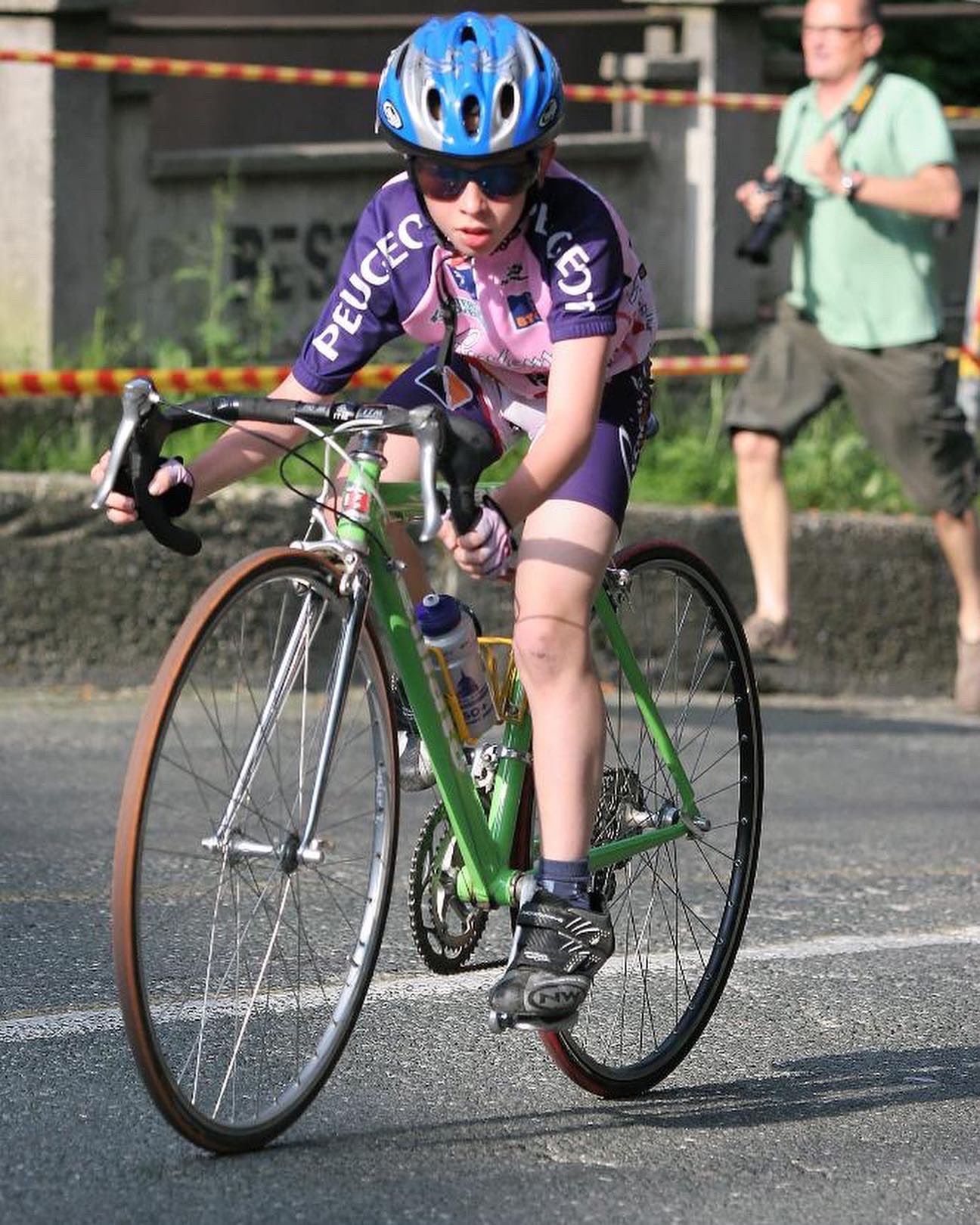
It was evident early on that Pogacar had what it takes to be a top professional cyclist
Pogacar did not stop cycling; instead he went on to become one of the greatest cyclists the sport has ever known and, at only 27 years old, there is still plenty to come.
But what do we know about Pogacar? While the Slovenian is always polite with the media and good at giving a funny or poignant soundbite, he keeps the circus at arm’s length. He wants to race his bike, and everyone who knows him will tell you he doesn’t care for fame and is a humble guy who enjoys his unicycles, food, rap music and his life with his partner, Urska. But this leaves a lot of blank space. Pogacar is in some ways aloof and unknowable despite being arguably the finest athlete on the planet.
However, a fascinating new biography by the British journalist Andy McGrath — Tadej Pogacar: Unstoppable, released on Thursday — draws on multiple sources to try to explain how the Slovenian became the best cyclist of his generation while shining a light on the trajectory of the winner for four Tours de France, ten monuments, two world championships, a Giro d’Italia and more.
There are three very clear strands. First, and perhaps sometimes overlooked, is how much Pogacar enjoys riding a bike. When his older brother dropped out of cycling, Pogacar continued; he’d found his thing. “I’ve kept the same mindset I had when I played with my brother when I was little,” Pogacar said. “I always try to win but, first and foremost, to have fun. I like to fight against my competitors but I accept defeat, it doesn’t make me sad. In truth, winning or losing doesn’t change anything for me.”

Pogacar’s “mitochondrial density” is said to be “magical” — and one of the physiological features that sets him apart
TIM DE WAELE/GETTY IMAGES
It is this mindset that makes him formidable. As Jaka Primozic, a Slovenian rider and friend of Pogacar, tells McGrath: “If you think one evening before the queen stage of the Tour de France that he’s nervous and not sleeping during the night? No, it’s not a problem for him because he just doesn’t think like that.”
Second is his physiology. Pogacar was one of ten young riders from his year group to be chosen for scientific testing, specifically the Conconi test for aerobic capacity and the Wingate test for anaerobic maximum, and he attended a facility three times a year for assessment. While the VO2 max numbers (which measure the maximum amount of oxygen an individual can utilise during intense exercise) of these tests weren’t shared, the Slovenian physiology expert Samo Rauter told McGrath: “We can easily say that Pogacar was good in both tests … the majority of [riders] are not.”
But it is “mitochondrial density” that is thought to set Pogacar apart. Mitochondria are the part of cells that produce adenosine triphosphate (ATP), the body’s preferred form of energy; a greater density in each cell means a higher capacity to produce easily accessible energy. According to McGrath, Pogacar’s level was “magical”. “Blood analysis showed he was ready to race or train hard again after a few days when others were still knackered,” McGrath writes. “Such capacities are part trainable, part genetic. He was a physiological rough diamond in need of polishing.”
He had two of the three things needed to be successful in this sport, which above all is a sport of performance and of suffering. So when he arrived in the World Tour peloton with UAE Team Emirates in 2019 it might not have been a huge surprise to those who knew him that he was on the podium in his first grand tour at La Vuelta.
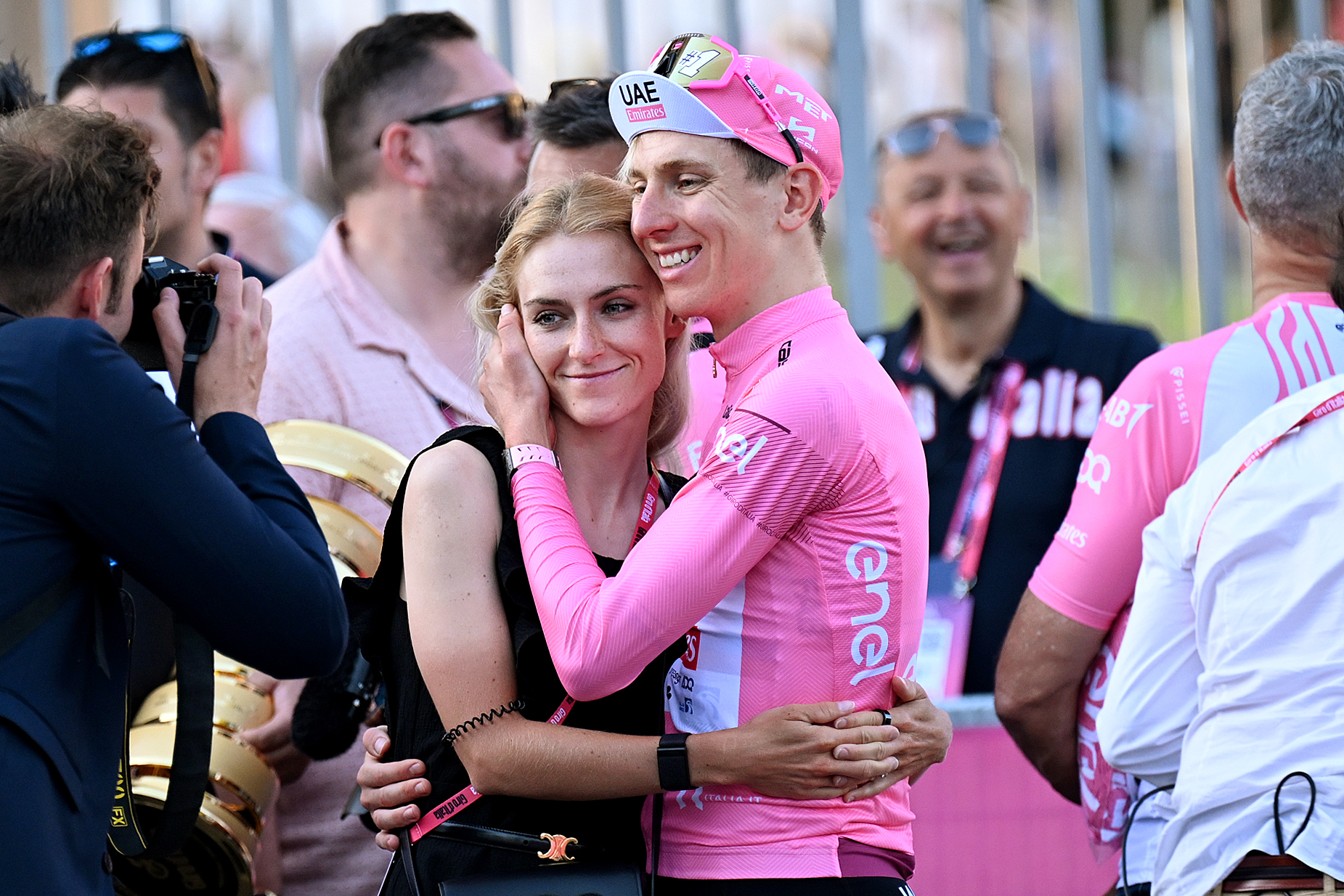
Pogacar, pictured with his partner Urska, is known to be a humble individual who doesn’t care for fame
TIM DE WAELE/GETTY IMAGES
But something else happened between his second Tour de France loss to Jonas Vingegaard in 2023 and the start of 2024. If Pogacar already had the physiology and mentality of a truly great cyclist, his full potential was finally unlocked over that winter. In 2023, Pogacar won ten World Tour-level races, fourth overall behind Primoz Roglic, Remco Evenepoel and Vingegaard, all of whom had 11 victories. In 2024, Pogacar won 23 and Roglic was second with eight.
As well as a schedule change that allowed for fewer but more targeted races, which Pogacar enjoyed, the change of UAE coach from Iñigo San Millán to Javier Sola was key to this transformation. Sola added more variety and interval work, and built on fatigue resistance and “a lot of VO2 max work”. As McGrath puts it: “While not a drastic change, it was like putting premium/super unleaded petrol in a sports car which was used to standard unleaded.”
Pogacar also incorporated functional strength work with low-cadence workouts. He switched from 170mm cranks to 165mm ones to make him marginally more efficient and allow him to get lower on the bike for aerodynamic gains. In 2023 his time-trial position was too aggressive, so they loosened it a little and strengthened his physique.
They played with every millimetre of his bike. He even had a different pair of socks made of breathable material to reduce lower-leg drag. He began heat training, riding on the indoor trainer in a sauna. He reduced the number of his favourite Snickers or Mars bars in his feed bag and got leaner: at the Tour in 2024 he was 64.5kg, 1.5kg lighter than previously.

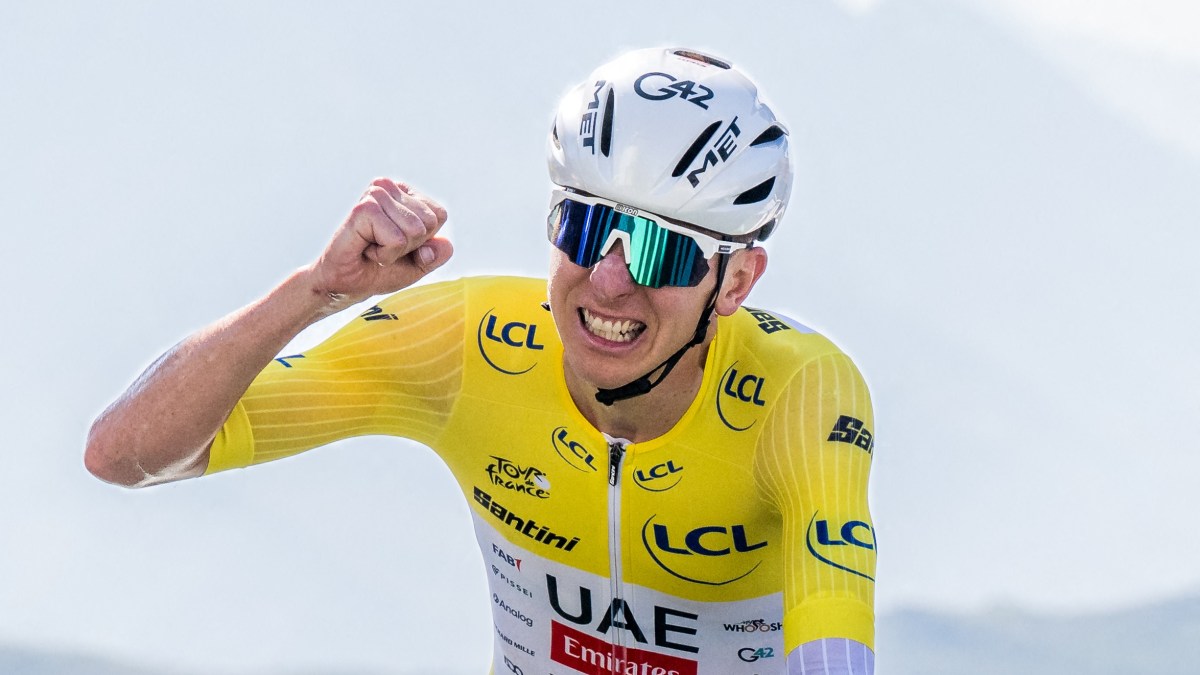
Pogacar’s win at the World Championships last year meant he became only the third cyclist to complete the triple crown — joining Eddy Merckx and Stephen Roche
FABRICE COFFRINI/AFP/GETTY IMAGES
The Slovenian also worked with Stijn Quanten, a functional neurologist. Pogacar was given a plan with various mental games and tests and, according to McGrath, he did them every day through the winter of 2023 and into 2024, “staying up to midnight sometimes”. “Everyone can see how effortlessly he rides and lives,” Quanten told Het Nieuwsblad. “But no matter how funny, jovial and instinctive he comes across, there’s always a plan behind it. He knows exactly what he’s doing.”
All of these changes added up to an improvement of 6 to 8 per cent on some metrics. In 2024 Pogacar completed the triple crown: the Giro d’Italia, Tour de France and World Championship. In 2025 he did the double-double, the Tour and worlds once again. He had become fully dominant on the road and in the mountains, a rough diamond polished.
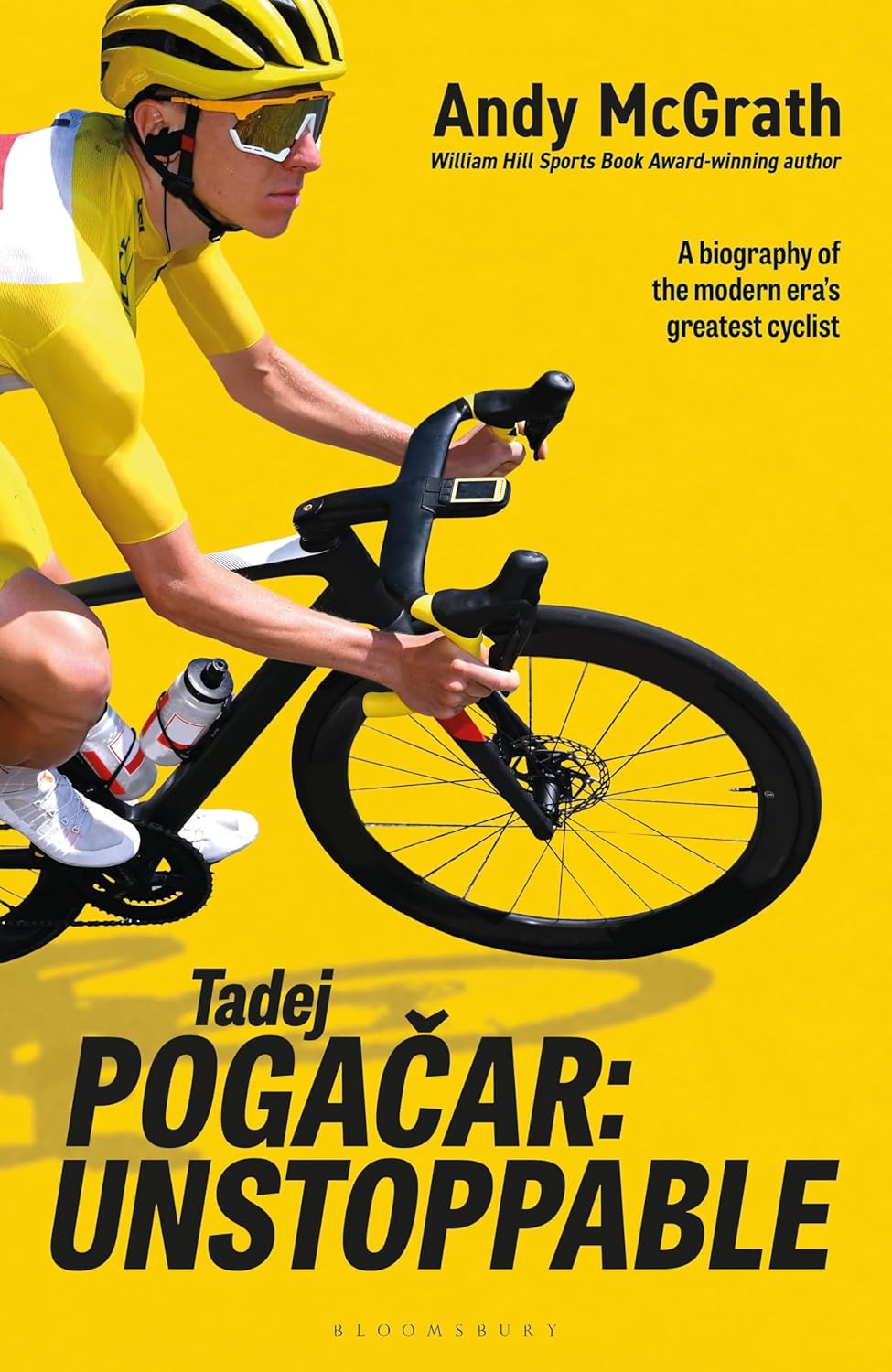
Tadej Pogacar: Unstoppable by Andy McGrath is out November 13 (£20, Bloomsbury)
BLOOMSBURY