Christian Smith: Winter is fast approaching in the Northern Hemisphere, and nobody is more aware of that than those fighting in Ukraine. As the war there enters effectively its fourth winter, those on both sides are weary and wondering what next. Meanwhile, Ukraine is not Russia’s only problem. The US has been playing a quiet diplomatic game on its southern border. That could mean it’s facing instability elsewhere, too. I’m Christian Smith, and today on this podcast from Geopolitical Futures, we take a look at the problems Russia is facing as it heads into winter. And we are joined by Geopolitical Futures chairman and founder, George Friedman. George, Hello. How are you?
George Friedman: Fine. How are you?
Christian Smith: I’m. I’m all right. I’m all right. The US Though, they’re playing an interesting diplomatic game at the moment. Last week, we saw Trump welcome the leaders of Kazakhstan, Tajikistan, Kyrgyzstan, Turkmenistan, and Uzbekistan in Washington. Why was he courting them?
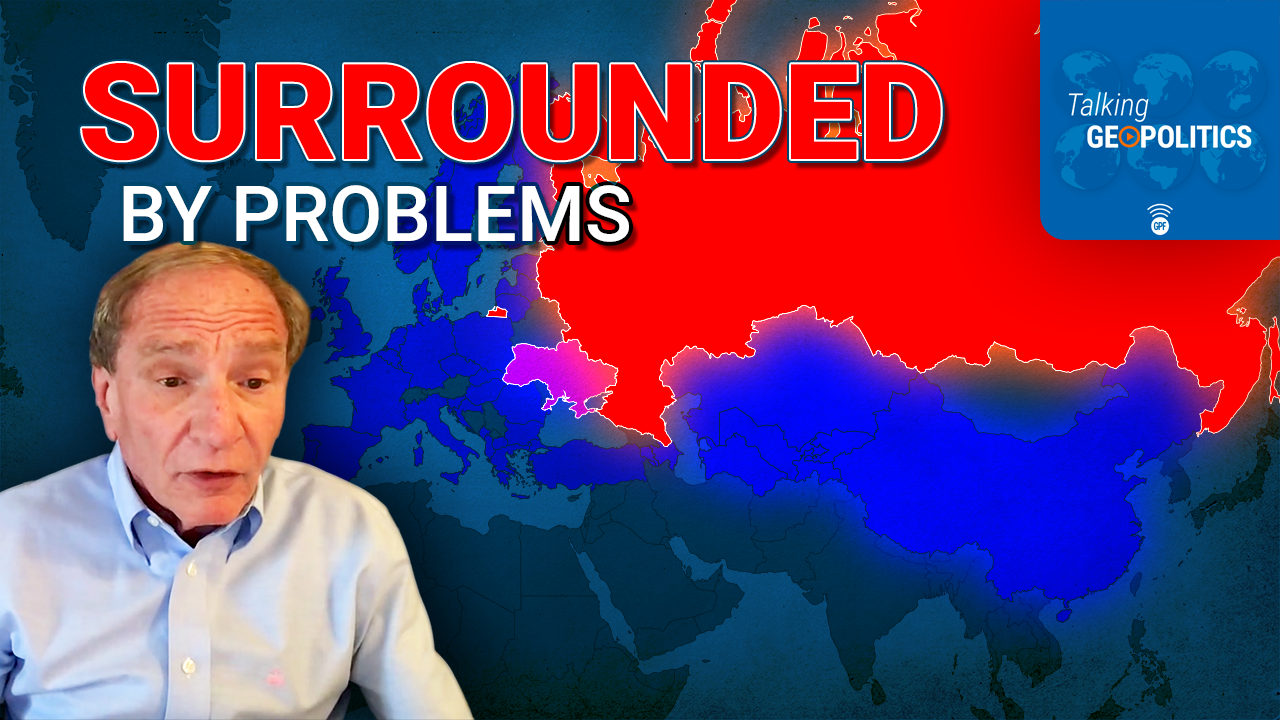
George Friedman: Well, Russia has a great advantage. It has a very large country that gives it a great disadvantage. It has very long borders. So we have seen him focusing on his western border, Putin focusing on the western border. At the same time, the US has developed a strategy of becoming dominant to a south, now moving on the east, creating a Western thing. The other thing that happens is northern attack. And when we take a look at what’s been happening, it is now Russia is on three sides, facing potential hostile powers, certainly neutral powers at least. And the situation is, in a sense, that the long borders of Russia that long protected it in this case, was turned against them. So while they’re focusing on one side, the western side in Ukraine, the southern and the eastern side has become somewhat less Russian, dramatically Russian, as it had been before the fall of communism and now entered into closer relationship with the United States.
Christian Smith: Well, I was going to say, in what way is that happening? How is the US Pulling those regions closer?
George Friedman: Well, essentially, they’re being pushed apart because given Russia’s focus on the west, it has reduced its focus on the south and the east in terms of economic relationships, to some extent, in terms of military and so on. So the focus on the western area has not yielded results that they wanted to have. The war still goes on at the same time. For example, south of the Caucasus, which lined the southern border of Russia, and parts that were part of Russia before became independent after the fall of communism, but remained somewhat in a Russian orbit. Countries like Azerbaijan, Armenia, in particular, they were hostile to each other initially. The United States has negotiated a settlement between two countries and created a single road that connects Azerbaijan to Armenia, its former enemy, and all the way to Turkey. Which is a massive improvement for these countries. And the road is called by these people. They’ve named it Rout Donald Trump. And so he gets his glory and the Russians get a strategic problem to the south. The same thing is sort of happening in the east. So the east, these countries, as you named, were part of the Soviet Union. After the collapse of communism, they removed themselves, but were still intimately involved with Russia. They continued to have involvement with Russia economically, but the figure of all five of the nation’s leaders sitting down in the White House with the President of the United States had to raise real hackles in Russia. It indicated two things. First, the American interest in that area, as well as southern, south of the mountains, but. But also that these powers are not worried about what Russia’s reaction will be. This is a vast shift in geopolitics. But in addition to this, the negotiations going on with China and China’s relationship to Russia is not nearly as close as people think, not nearly as unhostile as people think. So when you look at all the borders, except of course, the ones toward the North Pole, he no longer has just problems to the west in Ukraine with NATO. He has problems to the south with countries that are now in the American sphere of influence and getting closer. And now to the east, countries that were part of Russia, all of them coming to Washington, having a good time, and most important, not worried about the Russian response. That is psychologically telling.
Christian Smith: It is. I mean, for background, context, I suppose, these countries in Central Asia, the area, Kazakhstan, Tajikistan, those sorts of countries, those five, I mean, they always remained fairly close, very close really, to Russia in many respects, following the collapse of communism. I mean, what. What beyond moving into the US Sphere of influence? I mean. Well, what would that mean for Russia and for the US what would the result of this change in persuasion mean?
George Friedman: Well, we have to remember there is interaction between these countries. Kazakhstan, which for a while had a tension with Russia. The Russians have introduced various economic benefits, reintroduce them, but Russia cannot give them what the United States can in terms of economics. And what you’re really seeing is the creation of not a necessarily hostile set of alliances, but unpredictable alliances. So as American, it’s very much as if Russia developed a fine relationship with Canada and a superb one with Mexico, building roads there and everything else. And neither Canada nor Mexico was worried about the United States. Aside from the psychological effect, which I think is substantial, it takes advantage of the fundamental Russian problem, which is what makes them powerful and great is their size. What makes them vulnerable is the length of their border and that they must keep the nations on those borders hostile. So all of these nations that we’re talking about used to be part of Russia, part of the Soviet Union. They left and kind of wandered around in the wilderness for a while. And now the United States has a policy of doing many things that they need and drawing them closer. And this raises the question, not of hostility at this point, but at some point. So Russia has to, in the worst case scenario, always make sure its borders are secure. Given the uncertainty of China, the closeness of the Azerbaijanis, Armenians, and so on to the United States and Central Asia. Now, meeting the president of the United States, where I’m sure he made many good offers, it puts the Russians in a difficult geopolitical position. And given they’re tied up with Ukraine, they may not have the resources to shift around as they needed to to undermine the American presence. This happened in South Caucasus months ago, a long time ago. It was going on for several years, and the Russians did not have the capacity or the attention span to counter it. Now the same thing is beginning to emerge. Nothing is in place yet in the east. They never trusted China. China never trusted them. So all around their periphery, where they used to have a dominant position in control part of the country, suddenly it’s a very different show.
Christian Smith: I mean, the south caucuses are particularly interesting. They always have been. Listeners and viewers will no doubt know a lot of that history. I mean, but talk us through the sort of geography there. Why the south caucuses? Azerbaijan, Armenia, Georgia. Why it’s so important to Russia?
George Friedman: Well, to get it this way. These countries were part of Russia. They were part of the Soviet Union. The president of Azerbaijan, Aliyev, his father was headed the KGB for a while. These were Russian states. They may have told a somewhat different language, but this was pretty much like losing, let’s say, Washington state along the northern American border. And when you look at what the United States offered them, they were able to offer them tremendous access to the United States. Not having tariffs really heavily placed on them, they were able to offer engineering a road that fundamentally changed geography. Armenia and Azerbaijan had fought wars very recently over an area called Nagorno Karabakh, which separates them. This road links them together. And while there was hesitation on the part of the Armenians, they see the benefits of being associated with Azerbaijan, a very wealthy country based on oil. Okay, and that means that Armenia, which has tense relationships with Turkey, now has another option. At the same time, the Americans have the possibility, even the capability, to build forces south of the Caucasus. The other side of the Caucasus is still Russian, but this was the area like Chechnya and the area between them that also was hostile and they repressed rather brutally. So the South Caucasus, the Caucasus north of the mountains are part of Russia. But that’s a fundamental vulnerability. And there’s relationships between south and North Caucasus. And therefore there is another threat in an area that has a essential instability. Now, the United States in a dominant position, not necessarily military forces there in terms of diplomacy and economics and bringing them together. They have to look at what happens in the countries that revolted against them back in the day. Chechnya, such was one of these countries. And now they have to look at the east as well. So this mono maniacal view of Ukraine, that the Ukrainian issue is the central issue and no others the United States has handed them is a set of other issues to some extent even more vital. So where Russia was focusing on Europe and Ukraine and building a buffer zone, they to some extent have lost a buffer zone in the south and not yet, but is in the process of losing in the east. So think of three Ukraines coming around the Russians, which was going to make them thoughtful.
Christian Smith: Well, it’s interesting, isn’t it, because a few weeks ago on the podcast we were talking about the Caribbean and Venezuela and how Russia was in some ways trying to open a distraction for the US there or may potentially have been. That was a possible theory. So similar thing seems to be happening from the US perspective along the southern Russian border. Let me ask about that, because as you say, the Russians have been distracted looking at Ukraine. Why are they more worried about Ukraine than their southern border? Or was this a mistake? Is it just down to NATO? I mean, what’s the story there?
George Friedman: This war is going on for four years. They’re feeling at the time was they didn’t have any problems to the east, they didn’t have any problems to the south. They were free to focus on Ukraine. They never in their wildest dreams thought that four years later the war would still be going on. Okay, so when they attacked Ukraine, they expected a rapid evolution, reaching a collusion in months, if you will. Okay, but didn’t happen. So they didn’t expect to be in this position. But also for the last 80 years, the Russian focus has been on Europe. They feel a genuine threat from NATO. We might say, you can’t be serious. But they are, because, for example, they made a treaty with Hitler, a non aggression pact, which he broke. And they assumed that Russia would never dare attack Russia itself. It was so vast. They did and so it’s rational for any nation to think about the worst case scenario and not overestimate their position. What happened was the Russians overestimated their power in the south and east, thought that would not become a challenge, and also never thought that this war, which would teach Europeans a lesson of not thinking about war with Russia, actually thought of a very different lesson, of being more worried about Russia and creating greater threat. So the way it worked out was not at all as Putin expected. I doubt at the beginning of the war Trump had any interest in these areas. But when Putin refused to reach an agreement with him, as well as indicating that he would, but using that to delay the war, he’s now in a situation where that delay in the war has not brought him victory. And the United States has responded by, if you will, seducing or trying to seduce. The eastern countries are not yet seduced, the south is. And they just never anticipated the length of the war nor the extent to which the United States was prepared to do some very creative diplomacy, particularly under Trump.
Christian Smith: I mean, speaking of worst case scenarios, could we see U.S. military deployments in some of these countries, particularly in the south caucuses, if they get close enough to the U.S. i mean, they’re not far away. In other places like Qatar, the US.
George Friedman: Involved itself in a Russian war in the south caucuses with a country called Georgia in. And Georgia was not quite in this line. And it’s got a strange relationship with Russia. And the US did massively support the Georgians in a way, limited at least, and defeated the Russian attack. So the Russians made that attack to get the south caucuses under control. They managed to get some significant influence over Georgia. They’re not involved in this, but not in the other countries who became frightened by what he did. So what he did was take what. What Trump did was take advantage of the focus of the Russians to create potential problems elsewhere. He’s not yet created a problem for Russia, but has created a situation in the south, he might be able to generate that problem. And again, Aliyev’s father was a KGB man. This was an intimate part of Russia, of the Soviet Union. At the same time, Kazakhstan, which is where much of their missiles and nuclear tests took place, is now in a questionable position. So it’s issue would be like, what if Canada and Mexico went into a questionable position, that is, if the Russians took advantage of our tariffs on them and everything else to reach the court, this would be a good Russian strategy, not one that I think would succeed, but it would cause concern. So in this case. This has to be very much on Putin’s mind, Richard on Putin’s mind and people around him.
Christian Smith: Take a moment to follow and rate us on your preferred podcast platform. For video versions of the show and More, subscribe on YouTube eopoliticalfuturesgpf. Click the link in the description for access to our free newsletter. And for a limited time, you’ll receive an instant download of our special report on NATO’s eastern line by senior analyst Antonia Colibasanou. Moving on the Russian economy isn’t doing exactly well either. If we’re speaking about problems that Russia is facing.
George Friedman: Well, the Russian economy is not as bad as we would think it is because wars in a very odd way enhance economies because there’s so much spending going on that they take the industrial base, actually modernize it to some extent, and also have employment. On the other hand, unemployment has been creeping up in Russia. Inflation, because of this money circulating around, is certainly up. And while the growth rate technically is rising, is a growth rate built around defense processes, which after peace comes, really goes away. So it’s not that they are currently in a deep problem in terms of the country being in very bad economic condition. They are, however, in a point where they transition into a military economy, which, as we saw in the United States and even in Britain, had many benefits economically, now has to, if it ends the war, get out of these without having a massive depression. Many are expecting a recession in Russia, which probably would not destabilize it or anything like that. The question for Russia, as most of its citizens know, is what happens after the war? And that’s where the problem begins.
Christian Smith: And while we’re still during the war, the US has very recently introduced these new sanctions, sanctions on Russian oil exports. It’s probably too early to tell exactly how that’s affecting things, but I mean, we are seeing an impact of that, aren’t we?
George Friedman: We are seeing an impact on it. Lukoil, which is a major Russian oil company, is experiencing serious problems because the one place that the tariffs have really worked on countries that buy oil from Russia actually is China. The Chinese, after the talks between Xi and Trump, decided that they would not buy oil from two Russian two of their companies, major companies, would stop buying oil from Russia. The rest of the companies do buy it. They haven’t cut it off completely, but it shows you the influence that tariffs give on nations, even China. And they have a deeper need for this to accommodate the United States. So this is another pressure. And remember that China is also on the border and they were Never allies, even under communism. Mao Zedong hated Khrushchev. He called him a revisionist, not really faithful to communism. And any number of skirmishes were fought on the border between China and Russia. Right now they’re drawing maps in China, government maps that say that eastern Russia, including Vladivostok, is actually part of China and claiming it in the maps. Now this is the government releasing these maps. And so the idea that you have to remember, China did not vote for the Russia at the United nations when the war broke out. China has given weapons to Russia, cash on the barrel head. And so they sold it, but they never did what the North Koreans did, which was send troops or anything substantial. In fact, one of the sad parts for the Russians is the only country that has allied with him is North Korea, which is not much money in the bank. So we can’t exclude China itself as a potential rival of Russia. It’s certainly not a country that benefits that much from Russia. Russia can’t absorb its exports, that it must maintain. It cannot substitute for the United States in that event. So when we looked at this, we had an interesting event happen which we talked about past, I think, which was that the Chinese had an internal political crisis. And we talked about this last week, where what it wind up being is essentially the command of the Chinese army was not fired, but arrested on charges of corruption and anti party behavior. In this case, there’s a crisis inside of China and they can afford it because at this point, Russia and the United States are locked in this battle. Nothing military will happen, but it shows that there are issues around Russia’s borders that are uncertain as to how they end. Okay, so is Kazakhstan going to attack? No. Is the United States going to place troops there? Probably not. Are the Chinese going to war? I don’t think so, but I can’t absolutely rule any of these things out, including the southern area. And so the Russians, having not focused everything militarily on the west, must now think about the worst case scenario.
Christian Smith: And, well, probably adding to that worst case scenario as well. The oil sanctions, tariffs blocks whatever you want to call them. How significantly bad do you think they could be in the future for Russia? Could they cripple the economy, given how dependent it is on oil?
George Friedman: Well, the question for all these nations is, is there an alternative source of oil? Is it efficient to maintain them in the long run that they can in the long run do without Russian oil and the pricing? So when you look at that and you look at alternatives, many countries really have trouble getting away from this in Particular, they want to want to position that during the war they bought from elsewhere, now they want Russian pricing. So one of the things Russians do in this situation is cut oil prices somewhat lower. Oil prices go down globally. But on the other hand, it weakens the post war period and also creates current economic problems. So where the Russians are to some extent avoiding the economic problems, they’re mostly postponing them. And having war and economic problems is untenable. So what really is the problem is after the war, if the US can create a new logistics of oil, even reducing it in Russia by 30%, something like that of customers, that’s significant for the Russians. This is their main export commodity.
Christian Smith: And before the war ends, they need to figure out how that’s going to end as well. And let’s finish by talking about what’s going on in Ukraine and Russia’s problems there. Ukraine, of course, has many problems itself as well. And one of them could be Russia’s new tactics that it’s trying talk us through how Russia is trying to change the battlefield right now.
George Friedman: Well, their desire is to capture a province called Donbass. Donbass is a economically valuable area. There’s a lot of industry and so on. And if they captured it, it’s a relatively small area. They could at least claim something at this point. The areas they’ve captured are buffers, but not serious buffers, and moreover, economically minimal. They’re fighting there and they’re fighting on a used sort of tactic, which is attritional warfare, small unit battles, which are good ideas. But whether the Russian command structure, which is very, very centralized and very controlling, as opposed to the American command structure, which always talks about intent, commander’s intent. Everybody should understand commander’s intent. And if you find an opening that fits that, commit, take advantage of it. Don’t wait for orders. So the Russian army avoids the potential chaos of the American strategy, which has happened sometimes by keeping tight control. Now they seem to be moving toward a different strategy of small unit action with small units involved in tactics. It hasn’t worked yet at this point, Donbass has not fallen. The city’s evolved that have not fallen has been going on for quite a while. So the question is if the Russians can do this. It is possible for Putin to say, I got what I wanted, I’ve got a reasonable buffer, I’ve captured valuable lands. At the same time, the Ukrainians are being ground to dust. Their manpower capabilities, their ability to continue this war, smaller country is more limited. The Russians have also taken to a strategy of recruiting people in other countries, particularly in Africa, to come. They would later be named a Russian citizen and no longer live in the Congo, which should be an option. On the other hand, it’s a sign of desperation. You don’t do that in a war to at least create reserves based on these people, because how long can you trust a foreigner in this war that they’ve resorted to? This indicates the level of concern the Russians have at the future. So from my point of view, if the Russians get Donbass, which the Ukrainians are fighting against, and they get it because Ukraine is weaker, getting weakened, and they have no confidence in going any further, this war could now end. Now the question is what the terms are. But Russia badly needs to show something more for this war than what he got after all these deaths and crises. Four years, for goodness sakes. At the same time, the reality of Ukraine is they’re just exhausted, running out of manpower. Four years fighting for a smaller country like this. It’s intense. So the Ukrainians are now certainly moving to the position that, okay, let’s get a settlement.
Christian Smith: The Russians are currently trying to surround a city called Pokrovsk in eastern Ukraine. Do you think that a huge part of that now and a huge part of the war in general now is about a, propaganda and diplomatic victory, and B, in the same, in the same way, convincing Trump that it’s not a stalemate?
George Friedman: Well, when we started the war in Vietnam, there was the idea that, how could we lose the war of Vietnam? I mean, we’re the United States, this is Vietnam, we’re going to kick their butts, no problem. Years after that, six, seven years after Dr. Kennedy sent the first advisors, we realized we’re not going to beat them. Inside the United States, there occurred a massive anti war movement. Okay? And that anti war movement not just split the United States, but it was a basic sentiment that this was wrong. Lyndon Johnson, who was one of the major presidents under this war, never could admit that he failed. Nixon, who came after him, was able to use Kissinger to negotiate a settlement, actually a defeat for the United States. The United States lost the war, but we said it was a settlement, okay? Now, in the case of Putin, there’s not a clear method of removing him. He is a dictator in the sense that Russia always has a dictator, an autocrat, the tsars, the communists or so. But he is not surrounded by any organization or structure that could formally remove him from power. At the same time, he has lost four years of Russian growth of Russia’s relationship with economic Powers like the United States and investment and so on and many lives. The numbers are staggering and I think untrue. They’re minimizing what they lost over four years. It’s hard for a president like Lyndon Johnson to. To admit that he was a catastrophic failure in a basic dimension of American interest. So it is for Putin. It’s not a Russian oddity. So the question is, if he takes Donbass, this city being part of Donbas and critical to it, but he’s not able to even do that. This fighting has been going on for an extended period of time. But if he takes it, I will assume that he can. Will that be enough of a cover for him to the Russian public in the end, and system of saying, okay, I got what I wanted, when it’s very hard to believe that he fought this war or leave that? So that’s a political question inside of Russia that’s very hard to explain. And I think in one way, Putin at this point, is rooting for him. Take it, let it go. I sense, in one sense, that Zelensky also would like this to happen. They’re running out of time, but they can’t let go. And the Americans can’t say this out loud. And it’s not certain at all that if Russia took it, their appetites might have been wedded for more. So it’s a terrific problem for Putin, and it’s not as if he has the ability to wage war indefinitely, given all the things that are happening around this perimeter as we’ve spoken of. On the other hand, like Lyndon Johnson, can you be the one to negotiate the peace? And then becomes a question, who else does?
Christian Smith: And look, just to bring it full circle, I suppose Russia, well, Ukraine, as you say, may be running out of time. There is what the US Is doing on its southern border, or is what Russia’s neighbors elsewhere more accurately doing in moving away from Russia? Does that mean Russia’s running out of time diplomatically as well, in terms of what the world will look like, what its neighborhood will look like after the war is over?
George Friedman: Russia’s performance in Ukraine has been far below what anyone expected from Russia. This was the country whom we faced off for 80 years with, with the thought that they were our equal militarily, sometimes that they were our superior. Now we discover that this Russia, in a matter of years, has either never been a great power or has deteriorated so much under Putin that I can’t even take Ukraine. At the same time, all the countries around the frontiers are saying, we really felt that Russia was a great power and now feel room for maneuver. So the things that happen in south caucuses, the Donald Trump highway, if you will, and our presence there reflects the fact that these people are not worried about what the Russians will do. The fact that the five countries from East Asia are coming to Washington indicates one, that they’re signaling the Russians, hey, give us some more. We can’t do this or decide Russia doesn’t have any more to give and they’re better off talking to Trump. The Chinese as well, cutting at least some purchase of oil from Russia signaled to the Russians that they’re really now worried about retaliation and they’re more interested in pacifying the United States than pacifying Russia. So what’s happening around its periphery really is a sign of the perception of Russian power. Now, the question for them, is the war in Ukraine worth all this? The answer is it probably isn’t for Russia, but it is for Putin. And that’s the dynamic that’s now merged.
Christian Smith: If you were Trump right now, looking at this, looking at this map, how would you feel?
George Friedman: I feel that I understood the situation well. I executed well in the South Caucasus, doing pretty well with the Chinese relative to the Russians. Obviously, the Chinese didn’t make that concession happily, but made it. And when you take a look at the eastern part of Russia gone, which is the Central Asian piece, I think what the United States is looking at is re evaluating massively the threat Russia poses. So where we were also spending the Cold War, focusing on the Russians, that didn’t really end after the Cold War, because during that period, we didn’t know what Russia would become. And the concern for Russia ignited with the invasion in Ukraine. And this, in some sense, elected Trump, who said to the Russians, if you make peace, we’re going to have great economic relations, forget about Ukraine. And he was rebuffed by them. And his position has always remained, we are not going to get involved in this war, true. But we’re going to get involved in the South Caucasus, we’re going to get involved in Central Asia, we’re going to cut deals with China. And so what he did was not get involved in this war, but took advantage of it. Again, the question is Russia abstractly has paid a high price strategically and somewhat lesser price economically, but still a price for this war. But Putin has really, if you look at the situation on all of the fronts, executed badly or more precisely, underestimated Ukrainian capabilities, overestimated Russian capabilities. And one of the things this has shown us is the Cold War is really over, that the idea that the Russian military was the equal of the American military. And we must fight them everywhere in the world and give foreign aid to keep them becoming countries are becoming pro Russian. All of this flies by the window now. We now see Russia militarily as minimal as a threat. The Russians occasionally raise the issue of nuclear weapons. That’s solved by the doctrine of mutual assured destruction, in which if we know the location of where Trump is and they note location of Putin whiz, both of them die first in the war. So nuclear war is a hard thing to do and the threat of it is a sign for me of desperation.
Christian Smith: Well, look, it could be a consequential winter, indeed, it could be a cold one as well, I think. Thank you, George, very much, as always for your time on the podcast. Thank you out there for listening. We’ll be back again soon, soon with another podcast from Geopolitical Futures. But until then, you take care and goodbye.
George Friedman: Take care. Bye. Bye.
Christian Smith: Find all of our expert geopolitical analysis@geopoliticalfutures.com.