Save
It’s been centuries since the fateful eruption of Mount Vesuvius, but with the ability to still see those figures frozen in their final moments, the tragedy feels hauntingly close. Now, The Last Days of Pompeii: The Immersive Exhibition has used interactive technology and compelling storytelling to bring ancient history to life once more. Open for a limited 16-week run at Immerse LDN, the experience explores everything from the lives of citizens in the doomed city to the rediscovery of its buried ruins. In dire need of a history refresher, we decided to pay it a visit. Here’s our review of The Last Days of Pompeii: The Immersive Exhibition…
Where is the exhibition?
You can find this gateway into the storied world of Pompeii overlooking rippling waters on the ExCel Waterfront. We made the journey on a day of surprising sun, and I’ve got to say it did help give the giant, poster-clad facade some scene-setting dramatic flair. Your best bet is to get the tube to Custom House station and follow the natural flow of people up, and then down, to the water’s edge – but really, you can’t miss it, just look for the multitude of handy signs showing you the way.
What will you find out at this immersive Pompeii exhibition?
Never has the phrase ‘you learn something new every day’ played on a loop around my mind so much as during this exhibition. While I was familiar with the general events of Pompeii and had an idea of ancient Roman life from history lessons (and admittedly, the world of film), there was a lot, I soon discovered, that I didn’t have a clue about.
There are about seven rooms at this immersive exhibition, each one delving into a different element of the story of Pompeii. Like stepping into a history book, the deeper you get, the more engrossed you become; one minute falling down the rabbit hole of mythology as you study the white marble bust of Diana the Huntress, the next feeling reality slip away as you put on a VR headset to see a chariot thunder towards a Roman amphitheatre.
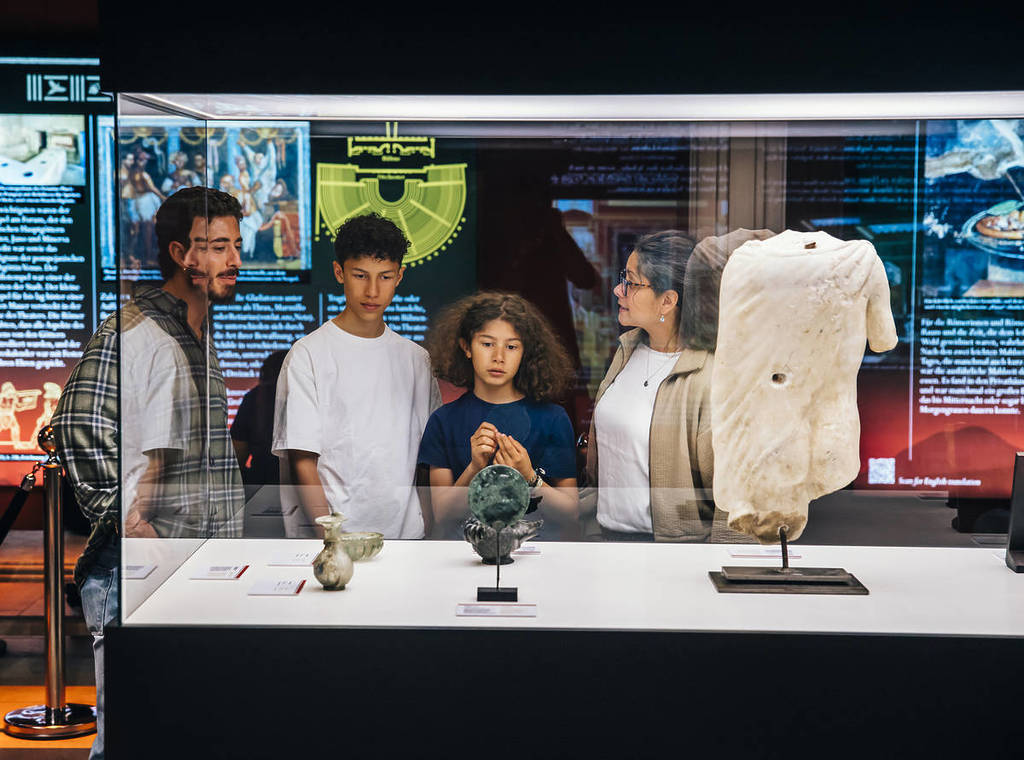
Pompeii and Mount Vesuvius are undeniably interwoven by fate. So, it’s only natural that there would be a focus on the role that the volcano played in the city’s final chapters, and I’m glad it did, as we tend to be more familiar with it after the eruption than the time before. While Mother Nature is likely remembered as the villain of the tale, the exhibition shines a light on a more positive relationship between the people of Pompeii and Vesuvius, one where they saw it as a source of protection and sustenance. That is, before things took that terrible turn.
There is also a spotlight on the man who directed the excavation of Pompeii and pioneered the technique of recovering the bodies. Yes, contrary to popular belief, the stone-like figures are not the petrified bodies, but rather the hollows left in the ash. This immortalised piece of history is thanks to archaeologist Giuseppe Fiorelli. You’ll just have to visit the exhibition to find out the full, meticulous process. Turns out history can still surprise you – or at least it can with me. Also, fair warning, if you are a dog lover, there’s a pretty heart-rending image in this room.
The Technology
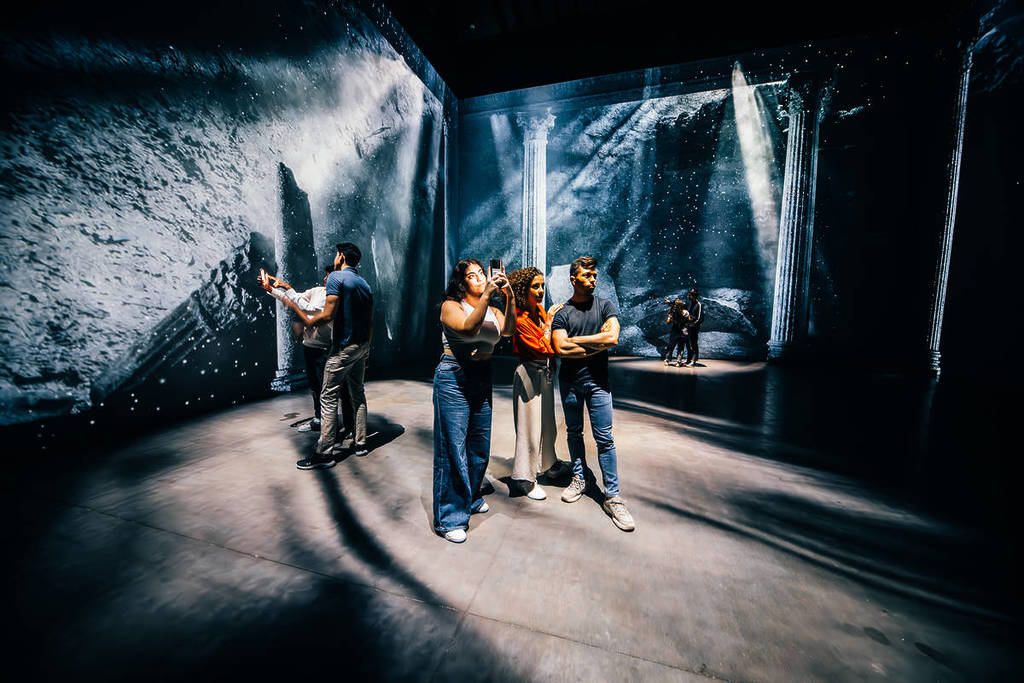
As always, a personal highlight was the immersive room. Now I’ve seen my fair share of 360-degree projections, but I can never deny the spectacle of being cocooned in giant visuals. I had a moment of trepidation when we first stepped inside and saw some retro Windows screensaver-reminiscent graphics floating across the walls, but things soon picked up.
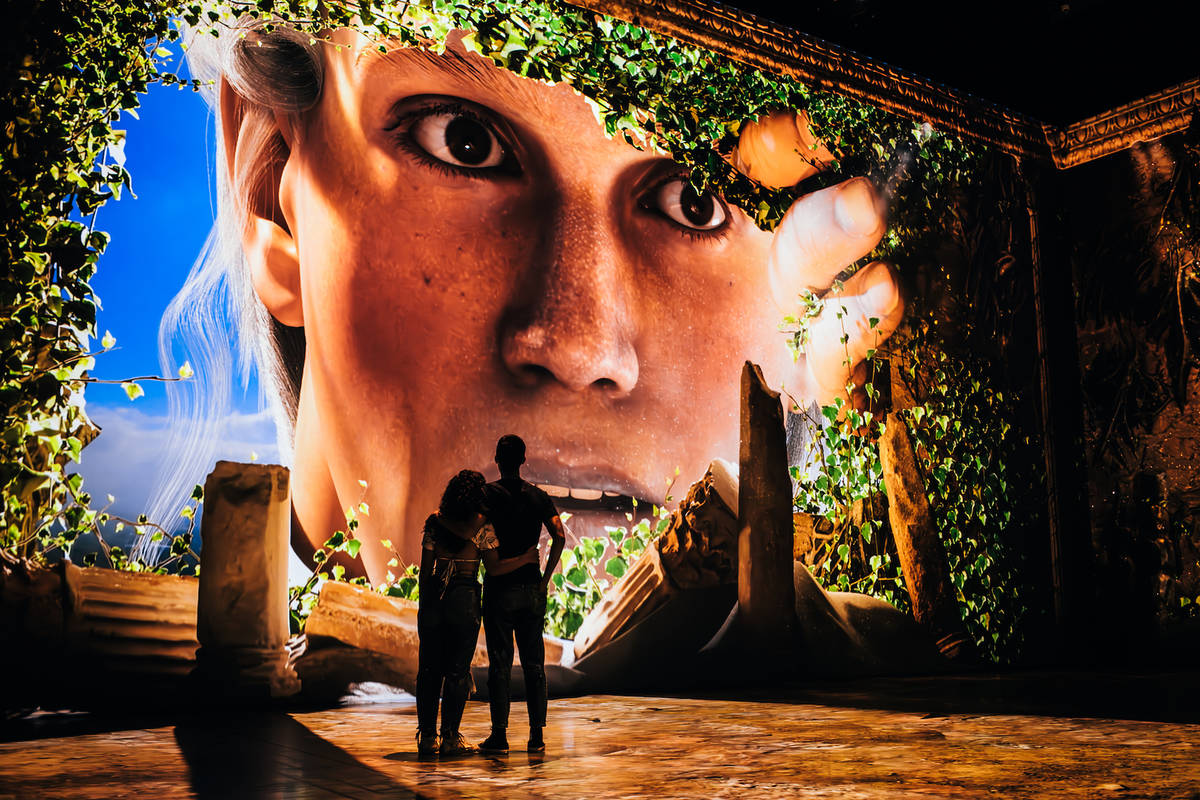
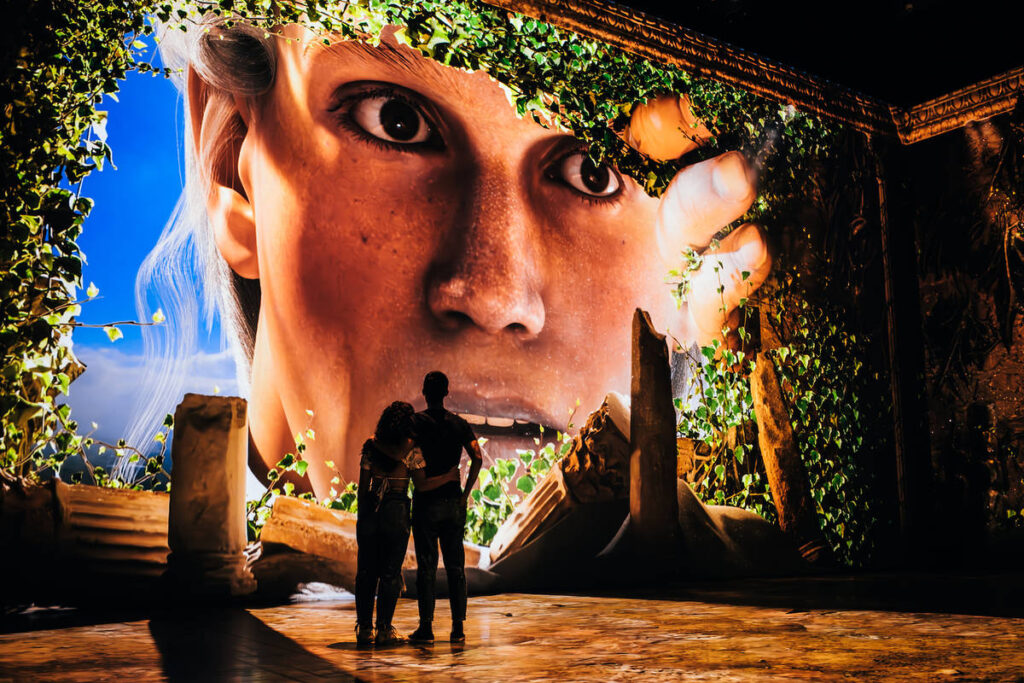
I’m talking scurrying lizards beneath your feet, transforming into a rainbow of colourful fish swimming in a mosaic pond, ancient ruins twisted with vines blurring into a grand Roman villa adorned with frescoes and a curious giant (who I later realised was Spanish explorer Roque Joaquin, who discovered the once forgotten city) peering through a curtain of ivy.
In true cinematic style, a hush fell over the space when Vesuvius claimed the screen. Soon, you are encased in a mesmerising vortex of embers and ash, lightening splinters across the walls, and volcanic bombs shower down on the once bustling streets. It pretty much vanquished the cobwebs that lingered from an early morning.
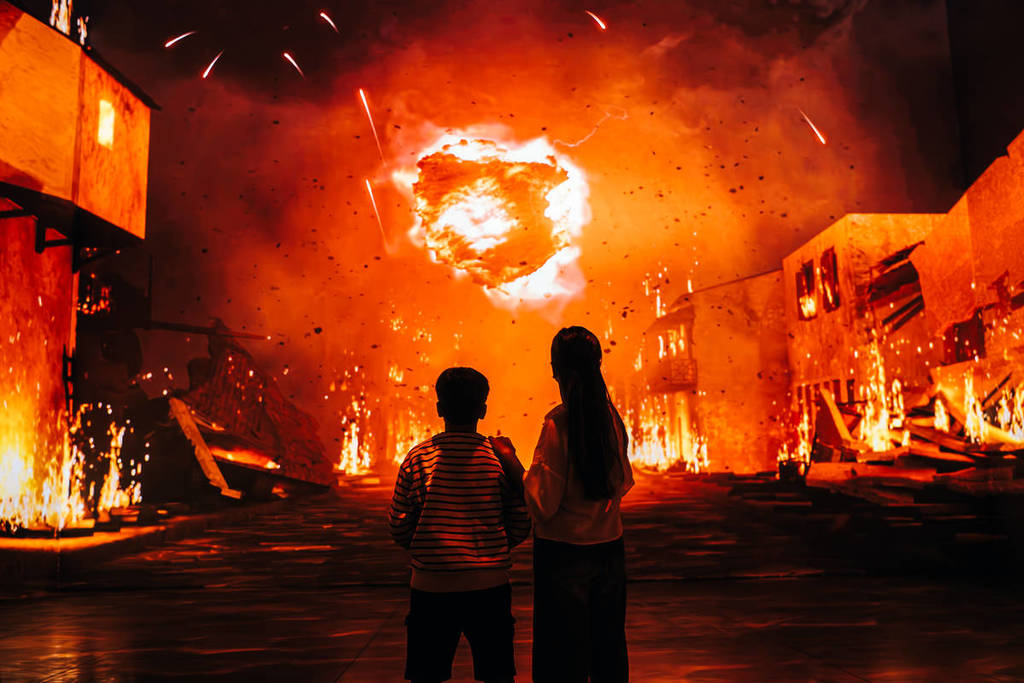
It felt as if we were virtual time travellers who had stumbled into Pompeii at the worst possible time and could only watch as it crumbled and burned before our eyes. Thankfully, there were no harrowing scenes of the victims meeting their untimely ends, just an opportunity to put yourself in their shoes for a fleeting, adrenaline-spiking moment.
I am no stranger to a virtual reality or Metaverse experience. The magic of donning a headset and being plunged into an alternate world can lose its sparkle a bit, so I normally keep my fingers crossed that something will surprise me in some sense. The VR experience in this exhibition did manage to keep me hooked. It’s not often you’ll get to watch a gladiator battle from mere steps away, or get submerged underwater as looming warships fire cannons above you – or even narrowly dodge a leaping tiger.
I confess, the Metaverse experience didn’t capture my imagination quite as much, leaning more towards a Grand Designs-style exploration of a striking house, but those with an interest in the Villa of Mysteries will probably be more in their element. Though if you’re feeling inspired by the stunning frescoes, you can always unleash your creative side on the graffiti wall – a canvas which invites you to leave a note or, like my colleague did, draw a volcanic masterpiece. Graffiti was very common in the ancient city, and as an art form that has spanned the ages, it is a fun way to pay tribute.

In Conclusion
The Last Days of Pompeii: The Immersive Exhibition offers a different way to explore the tales and treasures of the once-forgotten city. It’s an educational adventure, multi-sensory museum and virtual reality experience rolled into one, promising to capture the attention of all ages – whether it’s indulging your boyfriend’s regular daydreams about the Roman Empire, inspiring a love of history in your child or brushing up on some long-lost knowledge.
Ultimately, this exhibition effectively uses cutting-edge technology to resurrect a once-forgotten city, providing a fascinating window into the world that existed before it succumbed to the mercy of nature and became cloaked in ash.