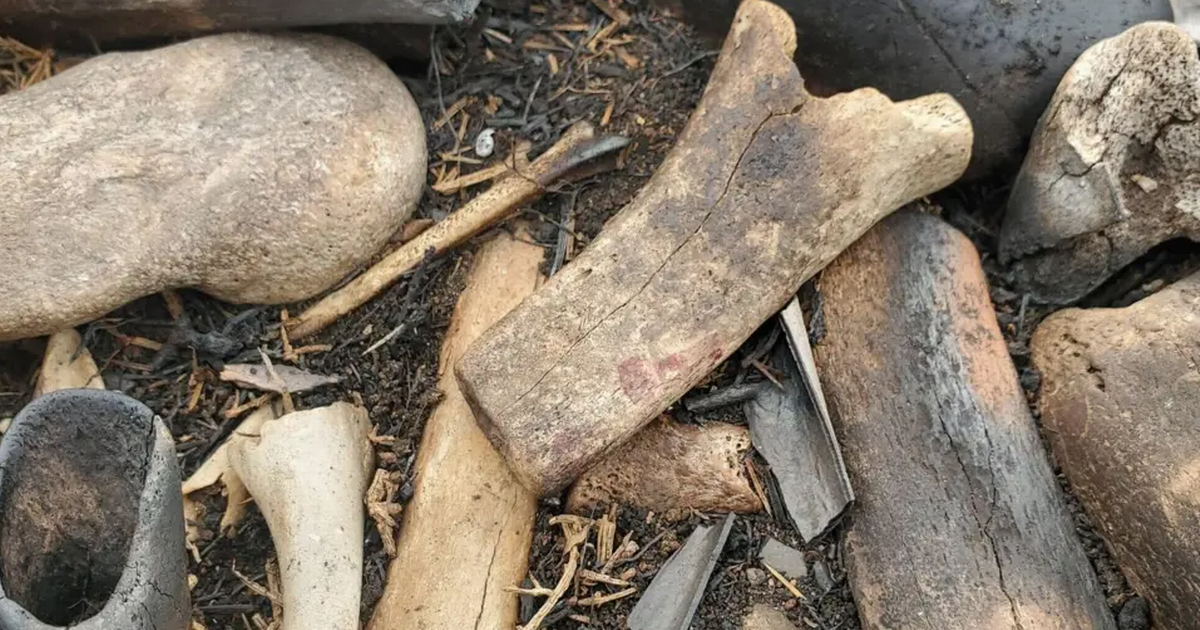
The bones were found near a prehistoric hillfort.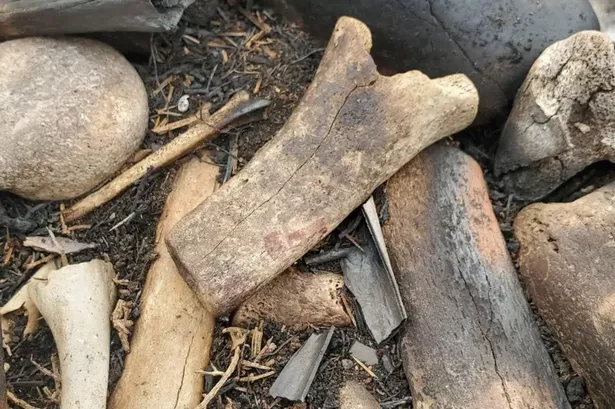 The bones were found following a blaze at the beauty spot(Image: HES)
An “unusual” collection of animal bones has been found dumped near Arthur’s Seat after a wildfire in the summer.
Holyrood Park rangers discovered the large collection on Edinburgh’s Crow Hill during a routine patrol after the blaze on August 10. It is said that the remains, which have come from cattle, horses, sheep, goats and possibly even cats, could be as old as the 16th century.
They were removed from the area and archaeologists are analysing them to learn more about how old they are and why they were left in the park. The wildfire rapidly spread across the beauty spot in the centre of Edinburgh in August.
While the cause of fire hasn’t been established, it’s understood to have been caused by human activity.
The bones were found near a prehistoric hillfort, which once enclosed the summit of both Crow Hill and Arthur’s Seat.
 The pile of bones found near Arthur’s Seat(Image: HES)
A Historic Environment Scotland spokesperson said: “The remains do not seem to have been part of a wider feature and are thought to be post-medieval or modern in date, however the number and variety of bones make it an unusual – and potentially significant – discovery.
“AOC Archaeology, HES’s archaeological call-off contractor, carefully removed the remains and they are now being analysed by specialists.
“Samples will be submitted for radiocarbon dating which will tell us more about the age of the bones and why they may have been deposited there.”
Join the Daily Record WhatsApp community!
Get the latest news sent straight to your messages by joining our WhatsApp community today.
You’ll receive daily updates on breaking news as well as the top headlines across Scotland.
No one will be able to see who is signed up and no one can send messages except the Daily Record team.
All you have to do is click here, select ‘Join Community’ and you’re in!
We also treat our community members to special offers, promotions, and adverts from us and our partners. If you don’t like our community, you can check out any time you like.
To leave our community click on the name at the top of your screen and choose ‘exit group’.
If you’re curious, you can read our Privacy Notice.
Humans have frequented Holyrood Park for at least 7,000 years.
Evidence of farming, hunting, worship, army encampments and royal pageantry has previously been found in the park.
They added: “Holyrood Park is a hugely rich archaeological landscape and we are continually learning about its past and the nature of what survives here.
“The whole site is designated as a scheduled monument, recognising its high archaeological potential and national importance.”