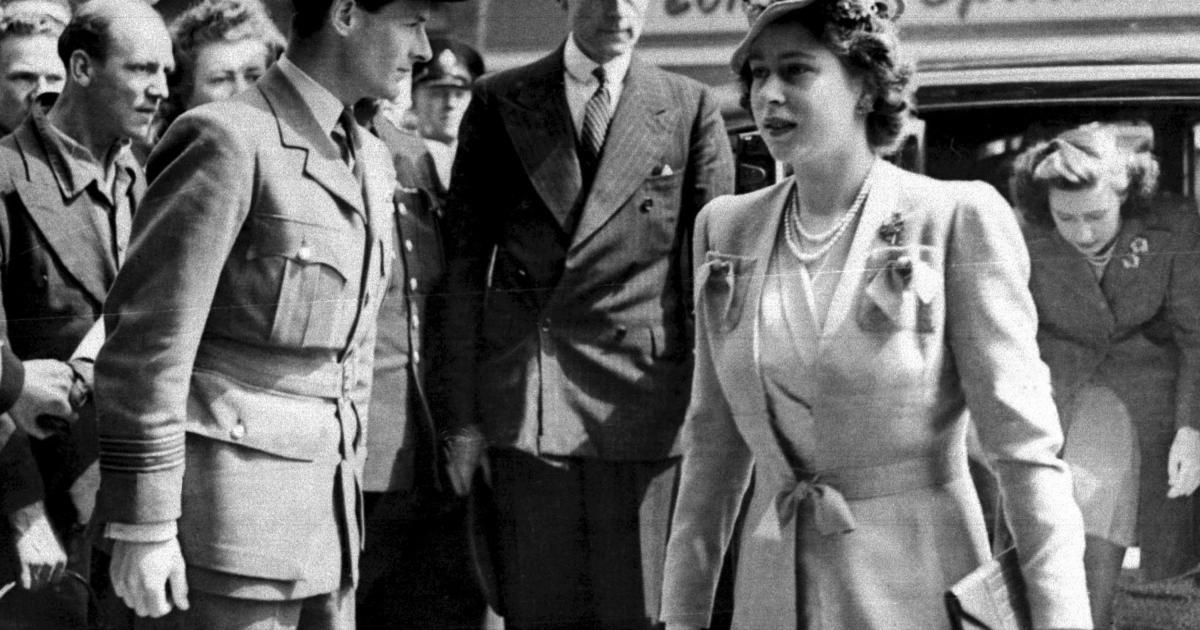
The entire nation became utterly transfixed by the ill-fated, star-crossed romance of the Queen’s younger sister, Princess Margaret, and the dashing Group Captain Peter Townsend.
This was not just a passing headline; it was a national obsession, a real-life fairy tale tinged with the grit of impossibility.
He was the very picture of a hero: a distinguished pilot, a decorated war hero, and a trusted equerry who had faithfully served her late father, King George VI.
She was the glamorous, witty, and modern princess, the “nation’s darling” in many respects.
Princess Margaret at Southampton Central Train Station. 11th June 1969. (Image: Echo)
Their love story, however, was doomed from the start by the unbending social mores of the era.
Townsend, despite his impeccable service, carried what was then considered an indelible social stain: he was a divorced man.
In the rigid atmosphere of 1950s Britain, divorcees were met with severe disapproval.
More critically, the Church of England — of which Margaret’s own sister, the Queen, was the head — forbade remarriage.
The scandal of the abdication, where their uncle had chosen a divorced woman over the throne, still cast a long and heavy shadow.
It was against this backdrop that the couple’s every move was intensely and relentlessly scrutinised.
The press, sensing a story that sold millions of papers, descended with a fervour that was shocking for its time.
Their romance became a public spectacle, their private moments hunted.
The scrutiny became so suffocating that the former Press Council was forced to intervene, delivering an extraordinary ruling that some sections of the media had “gone too far.”
Newspapers were issued a stern, almost cinematic, warning: their reporters were told they must stop “chasing the princess in their cars and on their motor bikes.”
Princess Margaret May 11, 1970 (Image: Echo)
It was a frantic, high-speed pursuit that revealed the desperation for a photograph, a quote, or any sign of the couple’s intentions.
The nation held its collective breath. Would the princess choose love or duty?
The climax, when it came, was heartbreaking. It was front-page news in the Daily Echo and every other paper in the land: the Queen’s sister would not marry her war-hero lover.
The princess, after what can only be imagined as agonising pressure and personal torment, eventually decided against the marriage.
She chose her position, her family, and her duty to the Crown over the man she loved.
For the Group Captain, who had met the princess while in service to her father, there had never been a realistic chance, and the curtain fell on one of the most poignant royal dramas of the 20th century.
On Monday, October 31, the Echo reported: “Britain had one topic for talk on their way to work.
“Was Princess Margaret right in her historic decision not to marry Captain Townsend?
“The official statement from the princess read: “I would like it to be known that I have decided not to marry Group Captain Peter Towsend.
“I have been made aware that, subject to renouncing my rights of succession, it might have been possible for me to contract a civil marriage.
Group Captain Peter Townsend in Sopley. (Image: Echo)
“But, mindful of the Church’s teaching that Christian marriage is indissoluble, and conscious of my duty to the Commonwealth, I have resolved to put these considerations before any others.
“I have reached this decision entirely alone, and in doing so I have been strengthened by the unfailing support and devotion of Group Captain Townsend.
“I am deeply grateful for the concern of all those who have constantly prayed for my happiness. Signed Margaret”.