Writer: Andrew Gallimore and John Kelleher
Director: Andrew Gallimore and Lydia Monin
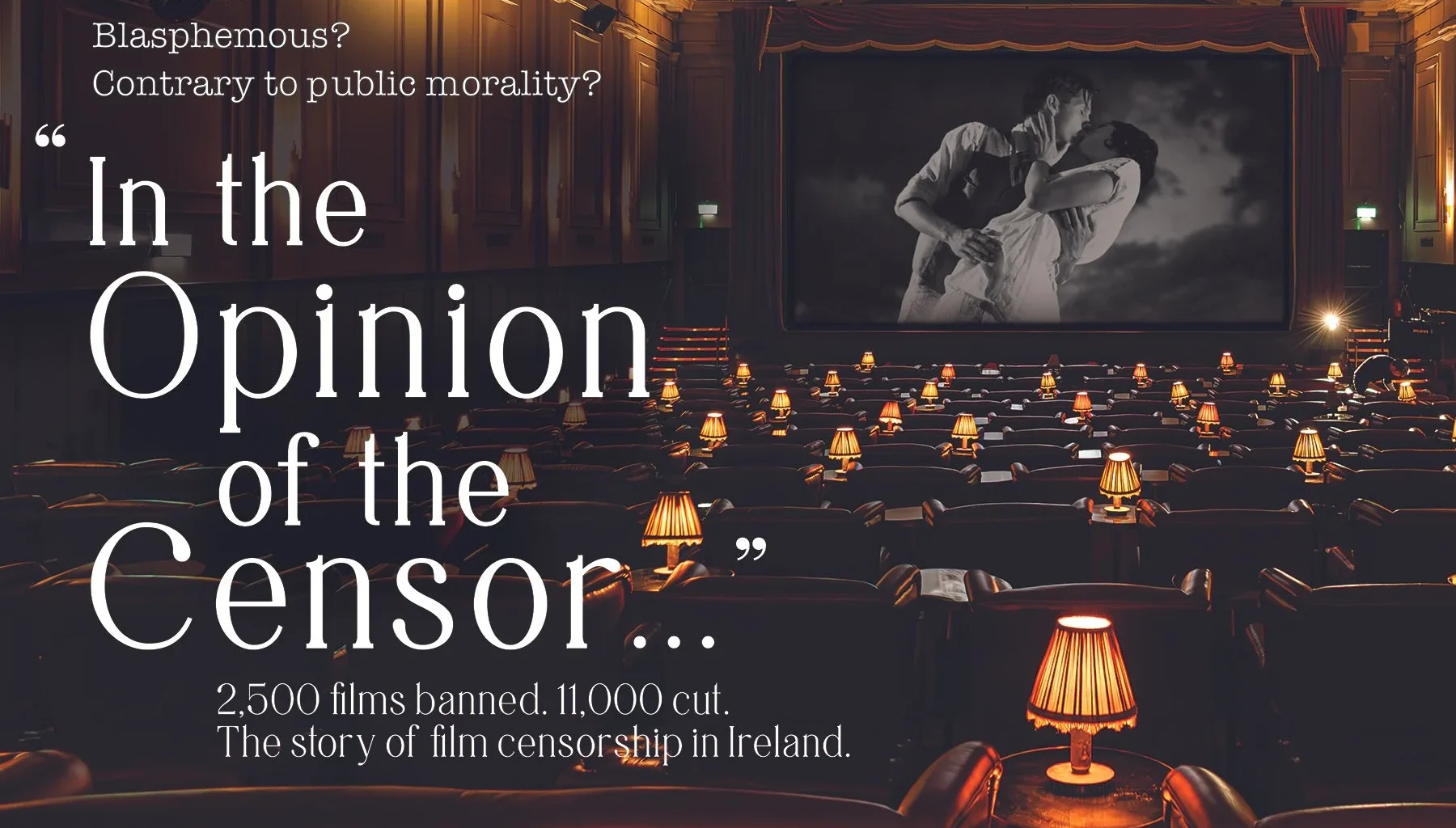
Ireland is a close neighbour to, and shares a language with, England so comparisons of differences between the two countries are always interesting. Whereas classification and censorship of films in England is the responsibility of a neutral organisation- The British Board of Film Classification- in Ireland the process was, for years, subjective, the role of a single individual, as is apparent in the title of Andrew Gallimore and Lydia Lydia Monin’s documentary In The Opinion of The Censor.
The last person to hold the post of censor, John Kelleher, narrates (and co-wrote with director Andrew Gallimore) the documentary. A simple timeline is adopted taking the documentary from the introduction of censorship in 1923 (made farcical by the fact, at that time, the censor viewed the films after they been released to the public) to the present day.
The documentary touches on the potentially repressive uses of censorship- promoting the views of the authorities and shielding an innocent public from uncomfortable truths or opinions which might be offensive. Films are censored to ensure childbirth is portrayed as painless and, indeed, efforts made to suggest men have no part in the conception of children. War movies are trimmed to avoid showing casualties.
The documentary examines also the approaches taken by, and opinions of, each of the individual censors some of which are, to put it mildly, eccentric. Extensive extracts from the notes taken by censors during screenings show Monty Python’s Life of Brian was banned on the grounds it depicted Christians and Jews as a bunch of gobshites.
Censorship may be argued to reflect, rather than shape, public opinion. Whilst the documentary acknowledges the wide appeal of cinema it does not address the extent to which the general public are influenced by, or object to, censorship. In fact, the film takes a somewhat jaded view of the general public and features examples of people objecting vociferously to films they have never seen. As Ireland is ambiguous during World War II, with many hoping England would lose the conflict, the film Casablanca is banned for showing a lack of neutrality. When the film is re-assessed years later it is censored to remove any suggestion of an extra-marital affair which necessitates the cutting of iconic dialogue like ‘’We’ll always have Paris’’.
It goes without saying that the film of the Irish literary masterpiece Ulysses is banned but even a movie like Brief Encounter, where the characters are tormented by behaving with restraint, is considered to show sympathy for potential adultery. The censors take the opportunity to promote their idealised, puritan, view of how women should behave by censoring scenes such as Scarlett O’Hara adjusting her dress to appear more attractive.
A point is made that, until relatively recently, none of the censors had any grounding in film or the arts; most being, for some reason, from a medical background. It is inevitable the arts suffer under such unsympathetic assessment and, in some cases; the cuts are so extreme as to make plots of films confusing. The Graduate is censored to the extent it is not clear seduction and an extra-marital affair take place. The documentary benefits from being able to make ‘before and after’ comparisons to show how censorship has the effect of making the character of Maggie in Cat on a Hot Tin Roof, unsympathetic. Some of the censorious actions are so arbitrary as to be silly- On the Waterfront is trimmed to remove a scene of a priest drinking in a bar.
The documentary shows the gradual challenging of censorship. In the 1960s film critic Ciaran Carty demonstrates the extent of censorship by simply pointing out the movies shown in Ireland are shorter than the advertised running time due to all the cuts. The documentary concludes in a low-key manner. Eventually changes in society – increasing permissiveness- cannot be ignored and there is a growing awareness that censorship has run its course. It is recognised providing greater information on film content and guiding viewers by way of classification is more effective than outright censorship leading to the replacement of censor by a classification board.
Using the specific context of the situation in Ireland draws out the extremes and absurdities arising from censorship making In The Opinion of The Censor entertaining yet disturbing.
In the Opinion of the Censor is screening at the Irish Film Festival London 2025.
The Reviews Hub Star Rating
80%
Entertaining yet disturbing