Don’t miss out on our latest stories. Add PCMag as a preferred source on Google.
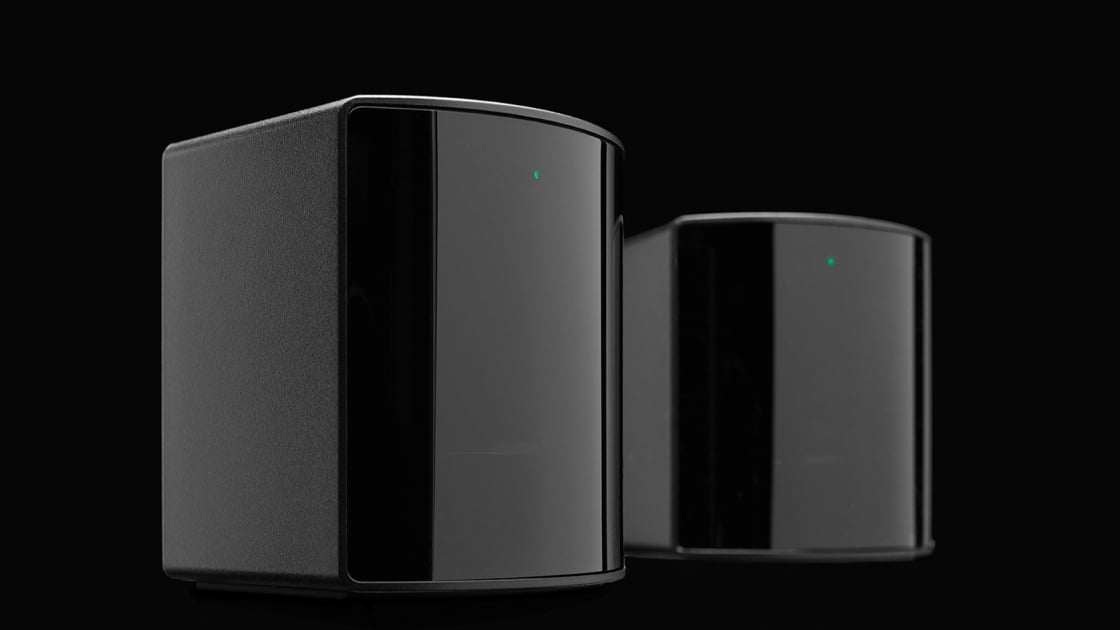
If, like me, you were hoping to repurpose your first- or second-generation Valve Lighthouse trackers for a future virtual reality headset, the Steam Frame may come as a disappointment.
With its next-generation VR design, Valve is cutting the cord on its VR roots, negating support for outside-in trackers entirely, TechCrunch reports.
Valve played a key role in the design of the original HTC Vive headset. It leapfrogged Oculus’ flagship Rift design with full motion controls and room-scale tracking via the Lighthouse laser base stations, offering accuracy and physical space bounds far beyond anything the competition could manage. Valve was also part of the Vive Pro redesign, launching a second-generation Lighthouse tracker that expanded the range and number of tracked devices to enable warehouse-scale VR and local multiplayer.
However, Meta’s success with inside-out tracking on the Quest line of headsets showcased the importance of accessibility, so with Valve’s next-generation Frame headset, the Lighthouse trackers are no longer used.
“With Steam Frame, we’re not working on lighthouse support for it,” says Valve UX designer Lawrence Yang. The Steam Frame will instead use four monochrome cameras and infrared illuminators to determine the wearer’s position in the physical and virtual world.
Although there are instances where outside-in tracking with Lighthouse sensors can still offer better redundancy against occlusion (leaning in close, or putting controllers behind your back has historically been problematic for inside-out cameras), Valve clearly decided it wasn’t worth maintaining support with Steam Frame, even as an added extra.
A major component of the Steam Frame is its sheer convenience. Borrowing from the style of accessibility pioneered by Meta’s Quest line, Valve makes it clear with the Frame that it wants you to be able to put the headset on and immediately jump into a game. No setting up external sensors, no turning them on and waiting for them to connect. Just headset on, and play.
Recommended by Our Editors
The loss of Lighthouse will have a knock-on effect for companies that still use that tracking standard, namely Pimax and Big Screen. It may mean their future versions will ditch the legacy tracking style, although that’s not guaranteed. According to VR developer SkarredGhost, Valve has suggested it’s open to working with companies who want to continue developing SteamVR tracking using Lighthouse sensors, but the extent of that is unknown.
If Valve has nailed wireless game streaming to the Frame, as it claims and early impressions suggest, tethered headsets are likely to follow suit in due course.
RIP Lighthouse. I’m not sad about the tethers, though. They can get lost.

Get Our Best Stories!
Your Daily Dose of Our Top Tech News

Sign up for our What’s New Now newsletter to receive the latest news, best new products, and expert advice from the editors of PCMag.
Sign up for our What’s New Now newsletter to receive the latest news, best new products, and expert advice from the editors of PCMag.
By clicking Sign Me Up, you confirm you are 16+ and agree to our Terms of Use and Privacy Policy.
Thanks for signing up!
Your subscription has been confirmed. Keep an eye on your inbox!
About Our Expert

Jon Martindale
Contributor
Experience
Jon Martindale is a tech journalist from the UK, with 20 years of experience covering all manner of PC components and associated gadgets. He’s written for a range of publications, including ExtremeTech, Digital Trends, Forbes, U.S. News & World Report, and Lifewire, among others. When not writing, he’s a big board gamer and reader, with a particular habit of speed-reading through long manga sagas.
Jon covers the latest PC components, as well as how-to guides on everything from how to take a screenshot to how to set up your cryptocurrency wallet. He particularly enjoys the battles between the top tech giants in CPUs and GPUs, and tries his best not to take sides.
Jon’s gaming PC is built around the iconic 7950X3D CPU, with a 7900XTX backing it up. That’s all the power he needs to play lightweight indie and casual games, as well as more demanding sim titles like Kerbal Space Program. He uses a pair of Jabra Active 8 earbuds and a SteelSeries Arctis Pro wireless headset, and types all day on a Logitech G915 mechanical keyboard.