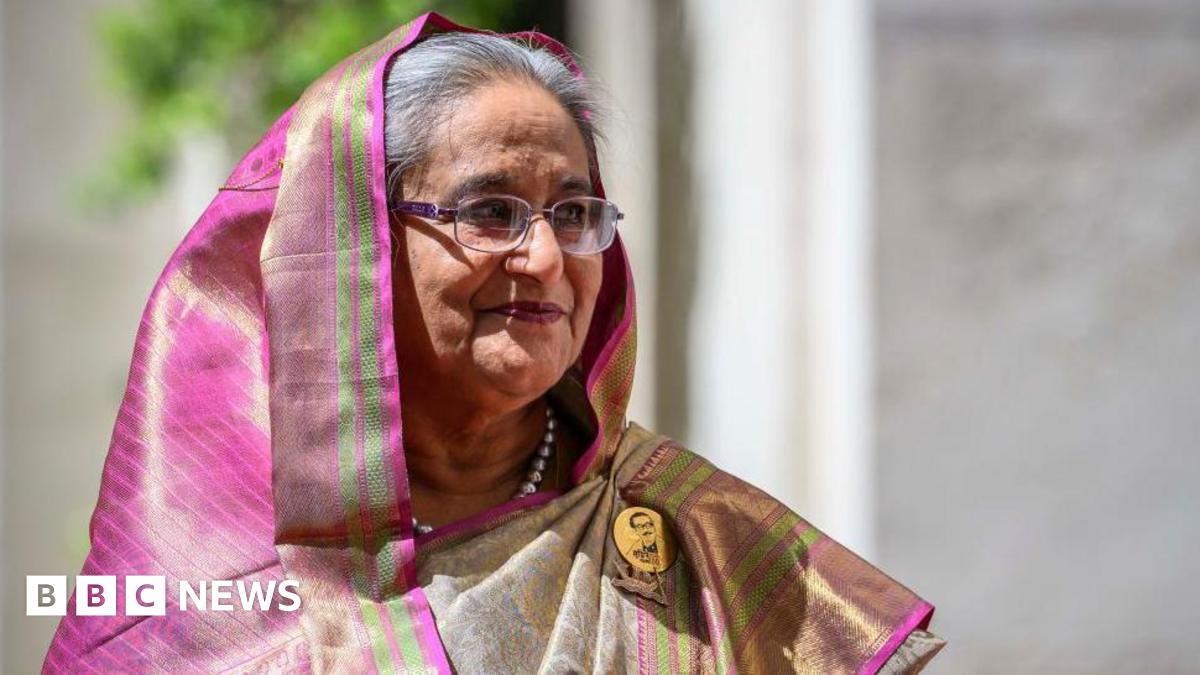
The verdict marks a pivotal moment for Bangladesh, as the protests unleashed anger over years of repression. Families of those killed and injured had called for tough penalties.
Reacting to the verdict in a five-page statement, Hasina said the death penalty was the interim government’s way of “nullifying [her party] the Awami League as a political force” and that she was proud of her government’s record on human rights.
“I am not afraid to face my accusers in a proper tribunal where the evidence can be weighed and tested fairly.”
The capital, Dhaka, where the tribunal took place, was under tightened security ahead of the verdict on Monday, with many of Hasina’s critics staging a rally and cheering as the verdict was read.
The city has seen a recent spike in unrest, with dozens of bombs exploded and buses set on fire in the days leading up to the verdict.
At least one bomb explosion was reported in Dhaka on Monday morning, with no casualties reported, local police official Jisanul Haque told the BBC.
The student-led uprising last year started with demands to abolish government job quotas but morphed into a wider anti-government movement.
UN human rights investigators said in a report in February that the approximately 1,400 deaths could amount to “crimes against humanity”.
The report documented the shooting at point-blank range of some protesters, the deliberate maiming of others, arbitrary arrests and torture.
Leaked audio of one of Hasina’s phone calls verified by BBC Eye earlier this year suggested she had authorised the use of “lethal weapons” in July 2024. The audio was played in court during the trial.
Ahead of the verdict, family members of those killed during the protests told the BBC they wanted Hasina to be punished severely.
Ramjan Ali, whose brother was shot dead in July 2024, said he wanted “exemplary punishment” for Hasina and others who have “committed acts of vengeance and abused their power”.
Lucky Akther, whose husband was killed near Dhaka in August 2024, said she wanted Hasina’s sentence to be “carried out before the election”.
“Only then the families of those killed [in the protests] will find peace in their hearts.”
Since Hasina’s ousting, an interim government led by economist Muhammad Yunus has taken charge. A parliamentary election is scheduled for February 2026.
However, the Awami League, Hasina’s political party, was banned by Bangladesh’s interim government in May.
Hasina warned last month that if the party’s candidates were banned from standing in the upcoming election, millions would boycott the vote.
The verdict now poses a diplomatic challenge for India and Bangladesh. Dhaka has formally requested her extradition but so far India has shown no willingness to comply.
Hasina’s state-appointed lawyer Mohammad Amir Hossain said he was “sad [and wishes] the verdict had been different”.
“I even cannot appeal because my clients are absent; that’s why I am sad,” he added.
Last week, Hasina’s lawyers said they had filed an urgent appeal to the UN raising serious fair trial and due process issues at the ICT.