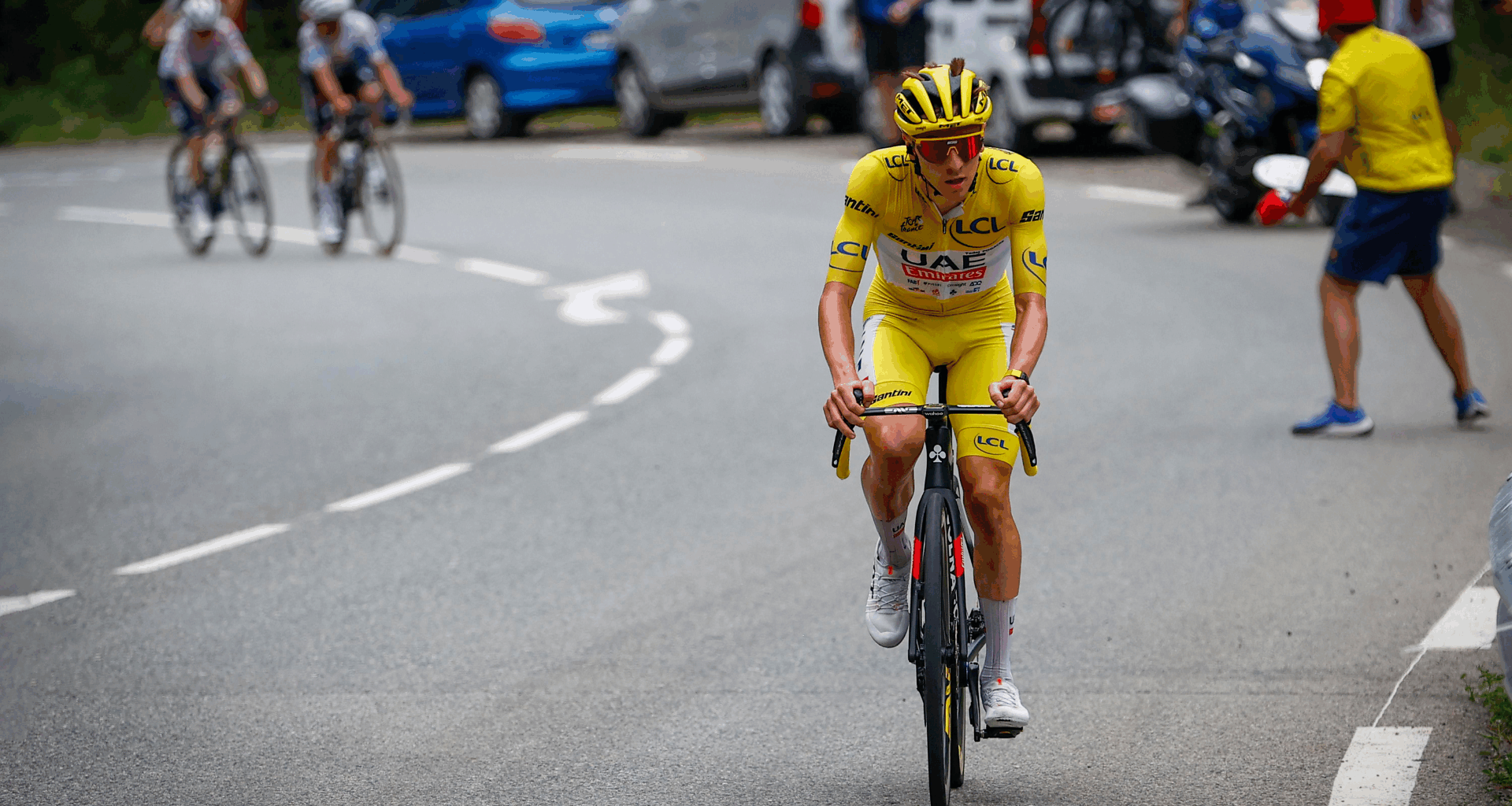
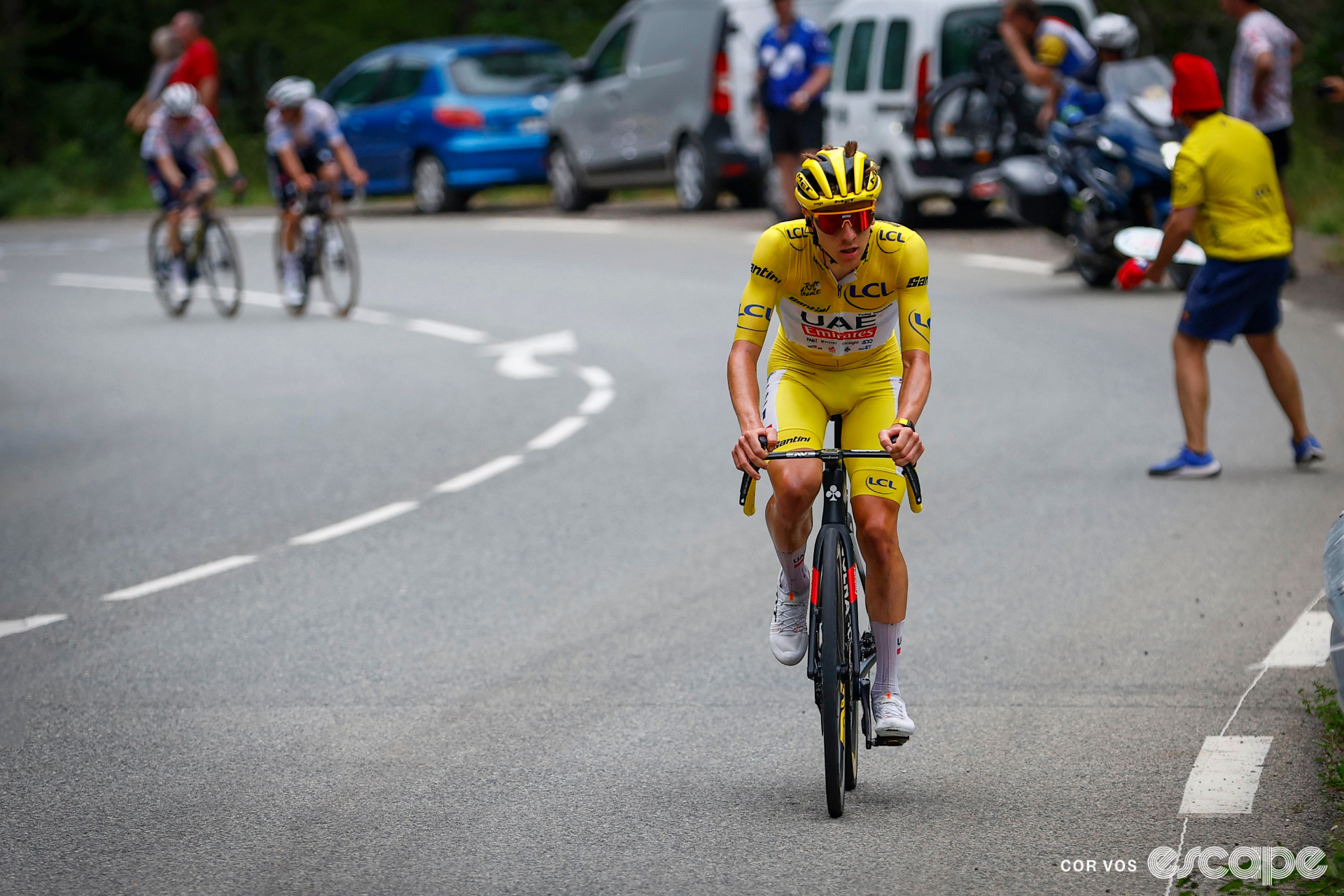
A new report claims to unpack the physiology required to match Pogačar on the biggest climbs at the Tour de France.

Cor Vos
Cycling is getting faster. That’s not just the background hum of modern race coverage – it’s the ever-present reality. Speeds on the flats have been on the rise for years, with races won at higher averages at almost every edition. Driving this trend has been the sport’s aero revolution, but when the road points up, these trends have been slower to emerge. After the “enhanced” 1990s and early 2000s, climbing times dipped, then plateaued. But now they’re surging upward again.
There are many reasons riders are heading to the clouds faster than ever. Equipment is better, pacing is smarter, and nutrition has become so precise that today’s riders arrive at the final climb fuelled, with carbohydrate saturation that wasn’t dreamed of in the past. And training is now built around modelling, simulation, and an intimate understanding of the physiology required to win the biggest races in the world.
The result? Climbing records that have stood unwavering for decades are being toppled. Tadej Pogačar is the face of this new era, but he’s not alone. At the 2024 Tour de France, Pogačar, Jonas Vingegaard, and Remco Evenepoel all ascended Plateau de Beille faster than Marco Pantani’s 1998 record.
 The record on Plateau de Beille had stood since Pantani’s ascent in 1998.
A new analysis in the Journal of Science and Cycling by Ole Kristian Berg, professor of health and social sciences at Molde University in Norway, tries to do more than estimate Pogačar’s watts; it attempts to mathematically unpack the physiology required to produce his fastest Tour de France ascents. Using climb data, rider and bike weight estimates, and validated mechanical models, the paper reverse-engineers the power and physiological demands behind six of Pogačar’s fastest ascents in the 2024 and 2025 Tours. But how much can this kind of modelling really tell us?
How much power does it take?
To quantify just how fast Pogačar is climbing, the report examined six of his most decisive ascents from the 2024 and 2025 Tours.
This post is for paying subscribers only
Subscribe now
Already have an account? Sign in
Did we do a good job with this story?
👍Yep
👎Nope