Your support helps us to tell the story
From reproductive rights to climate change to Big Tech, The Independent is on the ground when the story is developing. Whether it’s investigating the financials of Elon Musk’s pro-Trump PAC or producing our latest documentary, ‘The A Word’, which shines a light on the American women fighting for reproductive rights, we know how important it is to parse out the facts from the messaging.
At such a critical moment in US history, we need reporters on the ground. Your donation allows us to keep sending journalists to speak to both sides of the story.
The Independent is trusted by Americans across the entire political spectrum. And unlike many other quality news outlets, we choose not to lock Americans out of our reporting and analysis with paywalls. We believe quality journalism should be available to everyone, paid for by those who can afford it.
Your support makes all the difference.Read more
A historic ocean liner, the SS United States, is set to become the world’s largest artificial reef, destined for the depths off Florida’s Gulf Coast early next year.
Okaloosa County officials confirmed on Tuesday that the vessel is expected to be scuttled in early 2026, approximately 22 nautical miles (41 kilometres) southwest of Destin and 32 nautical miles (59 kilometres) southeast of Pensacola.
The nearly 1,000-foot (305-metre) ship, which famously broke the trans-Atlantic speed record on its maiden voyage in 1952, has spent much of this year at the Port of Mobile in Alabama, undergoing extensive cleaning to remove chemicals, wiring, plastic, and glass. Its final resting place was chosen following an agreement with Pensacola tourism officials, who are contributing contributing $1.5 million to the project, and Coastal Conservation Association Florida, which is kicking in another $500,000.
Officials had been considering two other locations, including one that would have placed the ship further east and closer to Panama City Beach.
open image in gallery
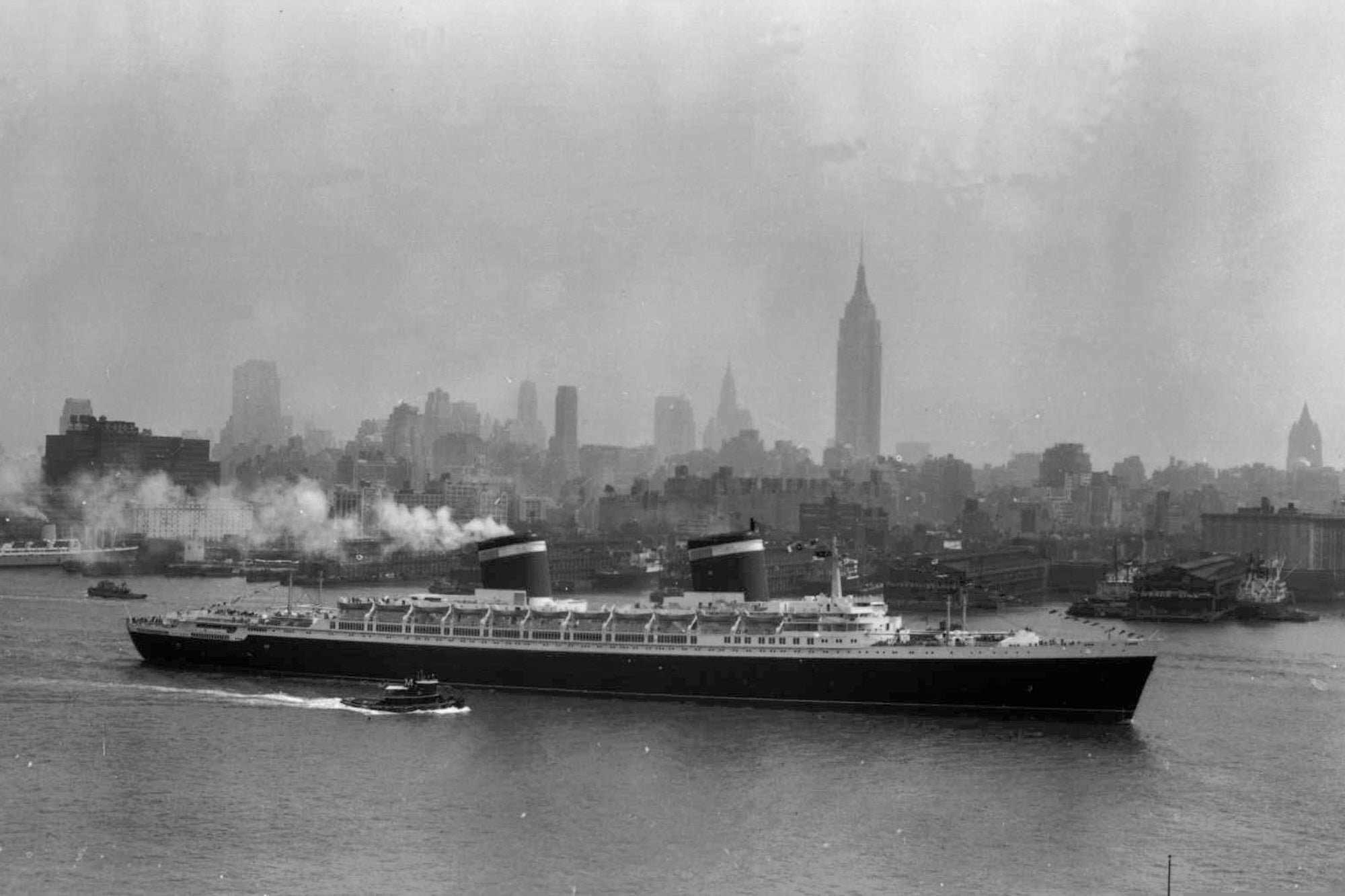
The SS United States travels along the Hudson River as it begins its first voyage to Europe from New York, July 3, 1952, with the view of the Midtown Manhattan skyline including the Empire State Building at center right. (AP Photo/Jack Harris, File) (Copyright 2025 The Associated Press. All rights reserved.)
“This collaboration will foster amazing adventures for generations of visitors and create a tourism economy that will benefit the state and the entire Northwest Florida region,” Okaloosa County Board Chairman Paul Mixon said in a statement.
The contributions will be used to transform the SS United States into an artificial reef and finance a multi-year marketing campaign. The deal is part of Okaloosa County’s $10.1 million plan to purchase, move, clean and sink the ship, which includes $1 million toward a onshore museum to promote the ship’s history.
Once in place, the SS United States will sit at a depth of about 180 feet (55 meters), but the vessel is so tall that the top decks will be about 60 feet (18 meters) from the surface, making it attractive to both novice and experienced divers. The artificial reef will also be about 12 nautical miles (22 kilometers) away from to the USS Oriskany, another popular dive destination that was sunk in 2006.
The SS United States is set to join Okaloosa County’s more than 500 artificial reefs, which include a dozen smaller ship wrecks.
“The transformation of the SS United States into the world’s largest artificial reef creates a rare opportunity to elevate our entire region on the global stage,” said Darien Schaefer, president and CEO of Visit Pensacola.
The new artificial reef will provide essential marine life habitat, which prompted Coastal Conservation Association Florida to make its largest donation in the organization’s 40-year history.
“It is truly a once-in-a-lifetime opportunity to contribute to the creation of the world’s largest artificial reef,” CCA Florida Executive Director Brian Gorski said in a statement.
open image in gallery
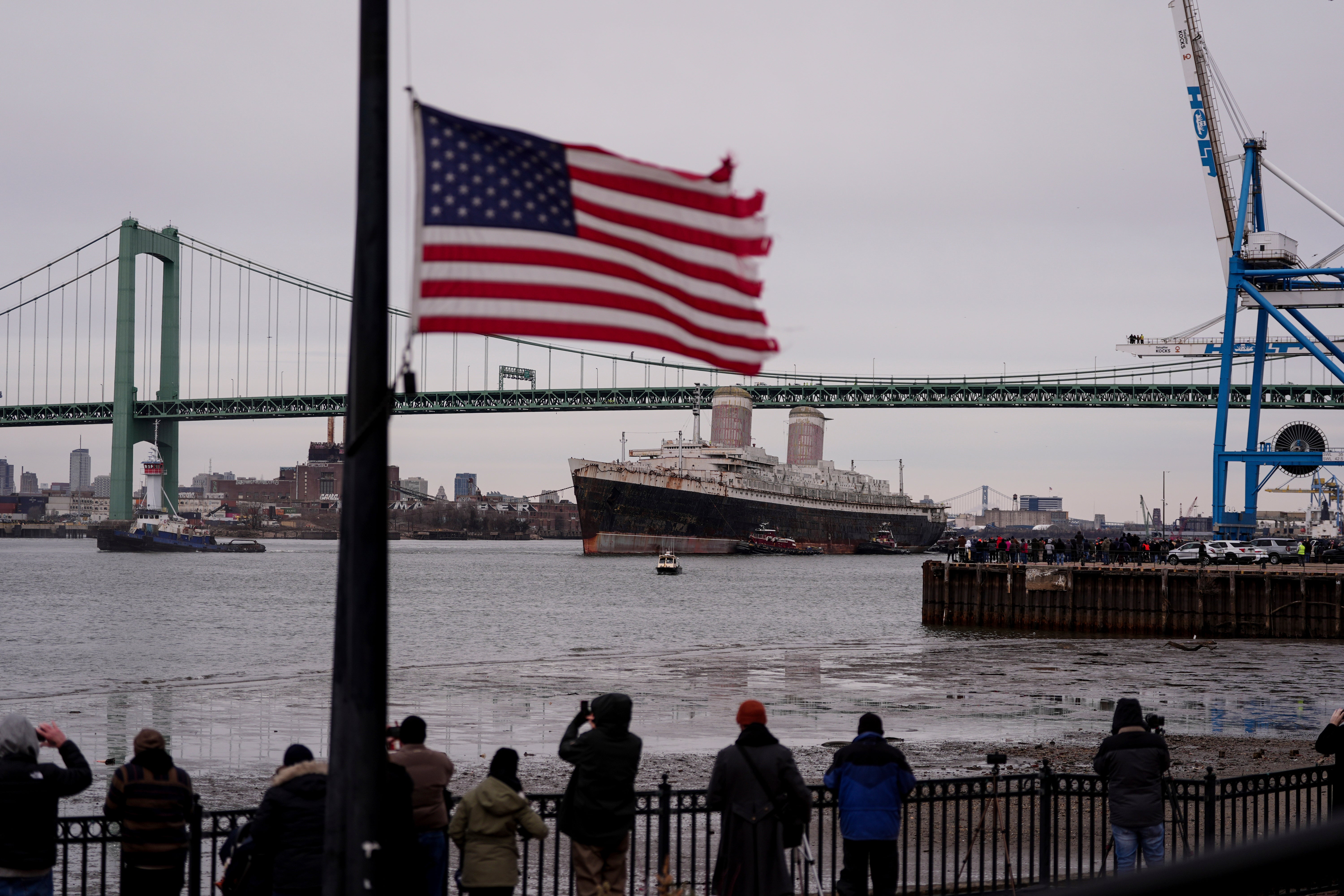
The SS United States is towed down the Delaware River between Pennsylvania and New Jersey, from Philadelphia, Wednesday, Feb. 19, 2025. (AP Photo/Matt Rourke) (Copyright 2025 The Associated Press. All rights reserved.)
The SS United States arrived in Alabama at the beginning of March following a 12-day tow from Philadelphia’s Delaware River, where it has spent nearly three decades. Okaloosa County took ownership after a years-old rent dispute was resolved last October between the conservancy that oversees the ship and its landlord.
Various groups have attempted to restore the SS United States over the years, but all plans were eventually abandoned because of the steep cost. Recently, increased media attention has generated more calls to preserve the ship, and a group called the New York Coalition sued in Pensacola federal court asking a judge to halt sinking such a historically significant vessel.
But Okaloosa County officials have said that preventing the SS United States from becoming a reef would only send it to the scrapyard.
The vessel, which is more than 100 feet (30 meters) longer than the RMS Titanic, was once considered a beacon of American thousands of troops. On its maiden voyage, the ship reached an average speed of 36 knots, or just over 41 mph (66 kph), The Associated Press reported from aboard.
The ship crossed the Atlantic Ocean in three days, 10 hours and 40 minutes, besting the RMS Queen Mary’s time by 10 hours. To this day, the SS United States holds the trans-Atlantic speed record for an ocean liner.