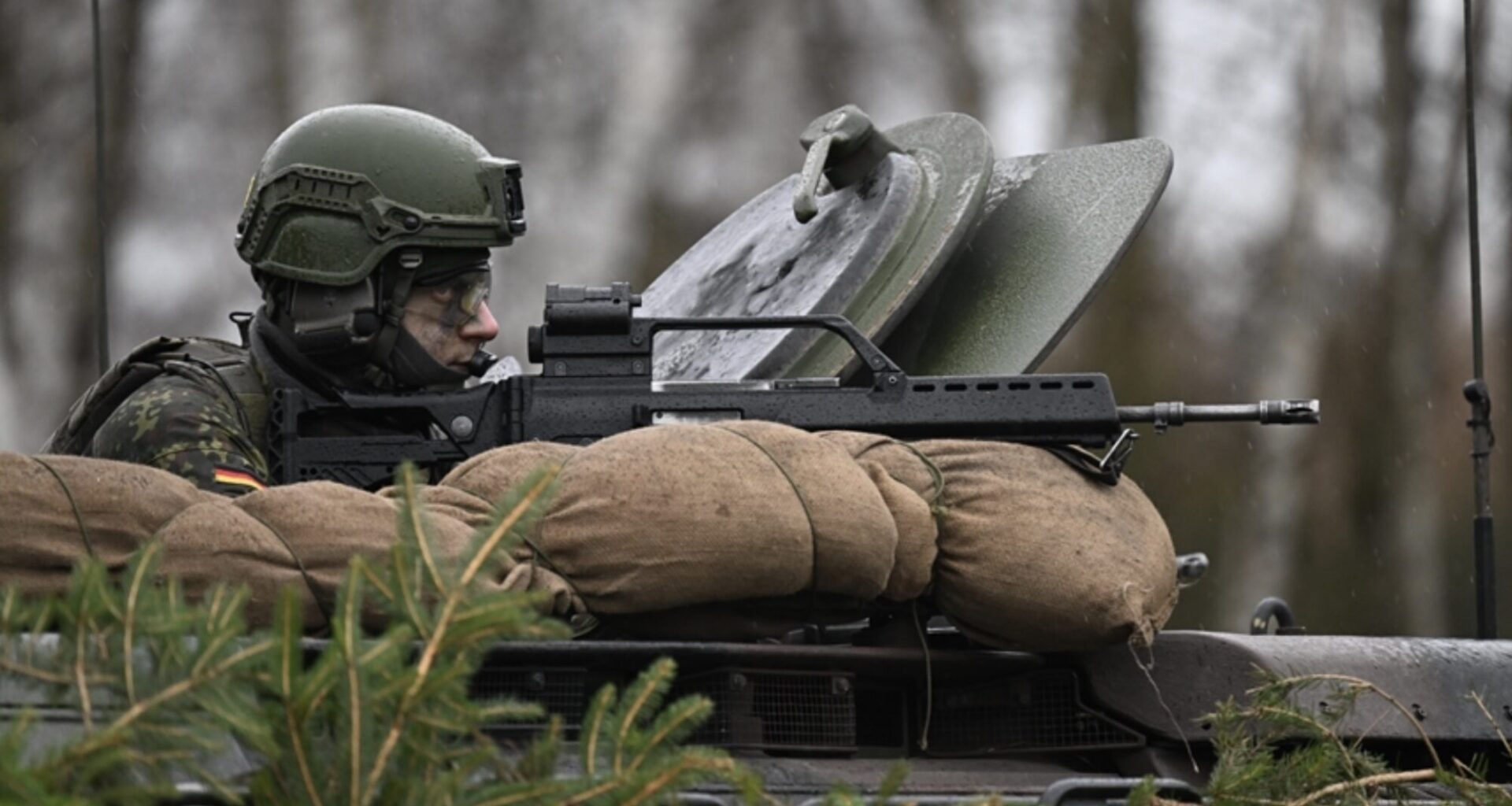
Germany is breaking a decades-long taboo by empowering its military to shoot down unidentified drones over domestic soil.
Chancellor Friedrich Merz’s cabinet approved the landmark legislation Wednesday, authorizing the Bundeswehr to deploy weapons and advanced jammers inside Germany’s borders to protect critical infrastructure. The move was reported by Bloomberg, citing the need to counter a “hybrid threat” of sabotage.
The decision follows months of “almost daily” drone sightings over nuclear plants, chemical parks, and military bases—many of which have proven immune to standard police jamming technology.
From Jamming to “Hard Kill”
The amendment to the Aviation Security Act fundamentally shifts Germany’s defense posture. Previously, domestic security was strictly a police matter, with the military Constitutionally barred from operating within borders except during natural disasters.
Under the new rules:
- The Trigger: Local police must request military assistance when their own capabilities are exceeded.
- The Authority: The Defense Minister will make the final decision to shoot, shortening the chain of command for rapid response.
- The Target: Unidentified UAS suspected of spying on or attacking energy, telecom, and transport hubs.
Chancellor Merz defended the escalation on X, stating: “The principle is: we must be able to defend ourselves so that we don’t have to defend ourselves.”
Why Police Jammers Failed
The legislation addresses a glaring technological gap exposed during recent security breaches, where high-speed drones repeatedly buzzed industrial facilities.
Police electronic countermeasures failed to stop those aircraft. Officials now believe these drones—likely operated by Russian or Chinese state actors—utilize autonomous waypoint navigation or frequency-hopping datalinks that render standard “soft kill” jammers useless.
Interior Minister Alexander Dobrindt noted that “certain recent models appear to be resistant to such technology,” necessitating the option for kinetic destruction.
Joining the “Drone Wall”
This decision effectively aligns Germany with the broader European defense initiative.
In early 2025, Poland, Finland, and the Baltic states began constructing a coordinated drone defense barrier along NATO’s eastern flank. Germany had previously been hesitant to fully commit to the militarization of its airspace, but the relentless pace of incursions has forced Berlin’s hand.
Authorities suspect the drones are being deployed for sabotage and potential terrorism, with Russia and China identified as the main culprits.
DroneXL’s Take
This legislation is a tacit admission that the era of “soft kill” drone defense is ending.
For years, we’ve warned that relying on RF jamming is a losing strategy. As we covered in our analysis of Ukraine’s FPV dominance, modern drones are rapidly moving toward visual navigation and AI terminal guidance. You cannot jam a drone that isn’t listening to a radio signal.
The recent incidents were the wake-up call. When police pointed their expensive jammers at those suspected Russian Orlan-10s and nothing happened, the reality of autonomous flight hit home.
Germany is now playing catch-up to Poland and the Baltics. The question isn’t whether they can shoot them down—it’s whether firing kinetic rounds over populated industrial zones creates more risk than the drones themselves. This is exactly why we’ve advocated for low-collateral interceptors rather than missiles or bullets.
What do you think? Is shooting down drones over cities a necessary evil or a safety nightmare? Share your thoughts in the comments below.
Discover more from DroneXL.co
Subscribe to get the latest posts sent to your email.