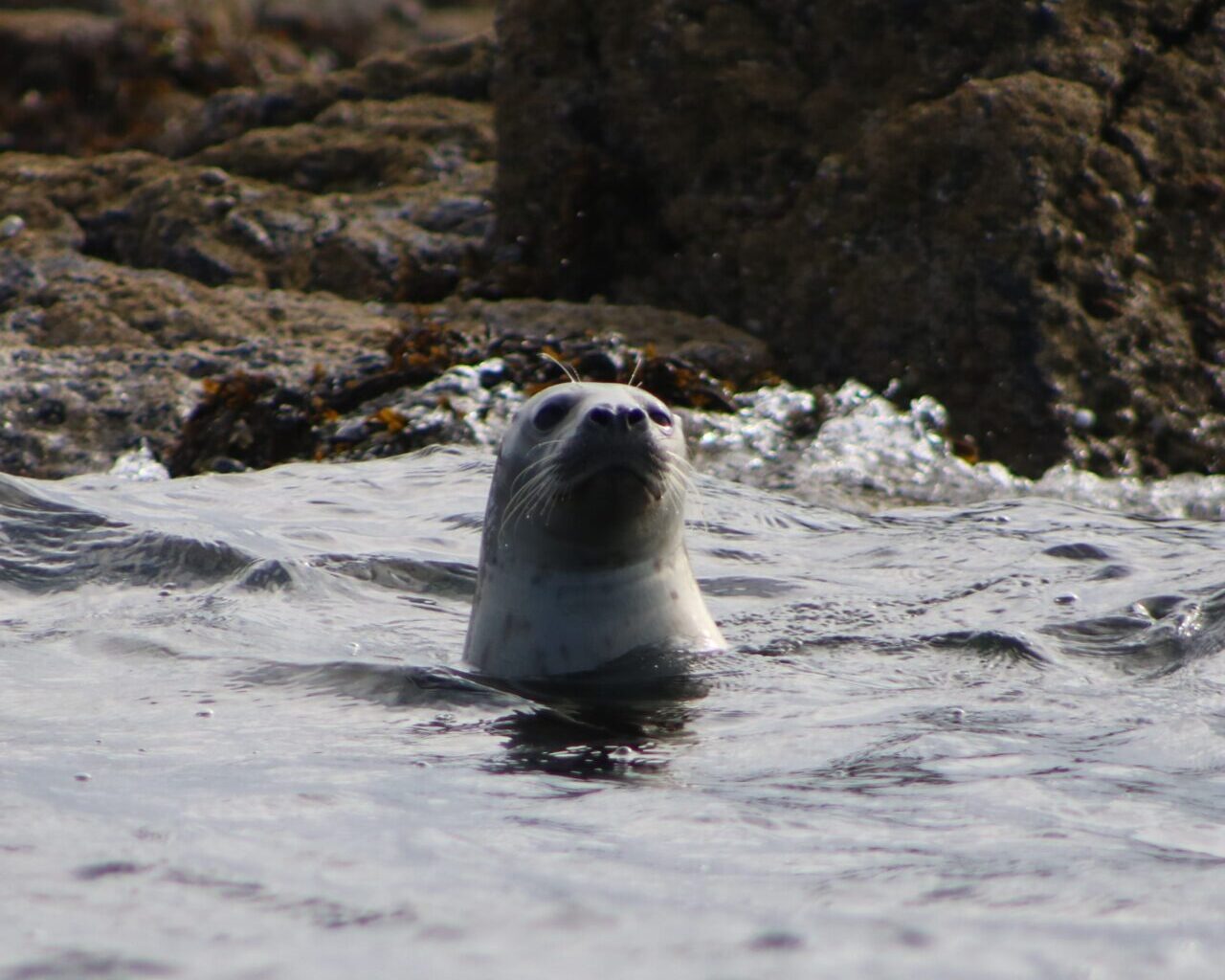
The origins of selkies were equally varied. Some believed them as fallen angels punished for minor sins. Others said they were humans cursed to live at sea but allowed brief returns to land.
Selkies were said to shed their skins to take human form but kept the skins close and slipped them back on at any sign of danger. Male selkies were notorious for their charm and illicit affairs with human women. The females captivated men. Their skin, often shed on rocks, is considered a symbol of otherworldly beauty and feminine power by literary scholars.
In an interview, Orcadian storyteller Tom Muir explained how these tales adapt:
“When I started telling stories, few seemed interested. Versions vary across places, and thus authenticity is tricky. But every telling adds a personal touch. Folktales passed down orally shape a community’s identity. And yes, they shift with the audience—dialect, names, and meaning evolve, needing careful explanation.”
I was struck by how selkie stories often centered female autonomy. Female selkies choose their partners, return to the sea leaving families behind, and resist the constraints of human society. By giving voice to women’s agency, these narratives shape reality, empowering human women in Orkney society.
Some local anecdotes suggest the figure of the selkie woman may reflect ancestral memories of encounters between Orcadian men and Indigenous Arctic women, who may have been Cree, Inuit, or Sámi. On sea voyages in sealskin-covered boats, or umiaks, these Arctic people wore sealskin clothing and carried items carved from seal bone. Such encounters may have helped inspire the selkie myths.
These layered histories of how seals were used, imagined, and storied in Orkney continue to shape arguments over how they are treated today.
IS THE FUTURE OF SEALS SEALED?
Orkney has stepped up seal conservation in recent decades, but divisions among islanders remain sharp. Seals face pressures from declining fish stocks, accidental entanglement, and conflicts with salmon farms, where they are sometimes killed under licensed “lethal control.” That tension boiled over in October 2022 when a seal who entered a fish farm was fatally shot, triggering outrage among conservationists and renewed debates about how human-seal conflict ought to be handled.
Who should decide how seals are managed: local fishers, storytellers, national agencies, or international conservation groups? The killing highlighted a long-standing dilemma over whether seals are competitors or kin.
For fishers and businessowners, seals remain a double-edged presence: culturally significant yet a threat to livelihood, blamed for damaged nets and lost catch. As one fisherman told me bluntly, “We don’t want the seal, they’re just creating ruckus, they always have. We don’t mind shooting one or two down.”