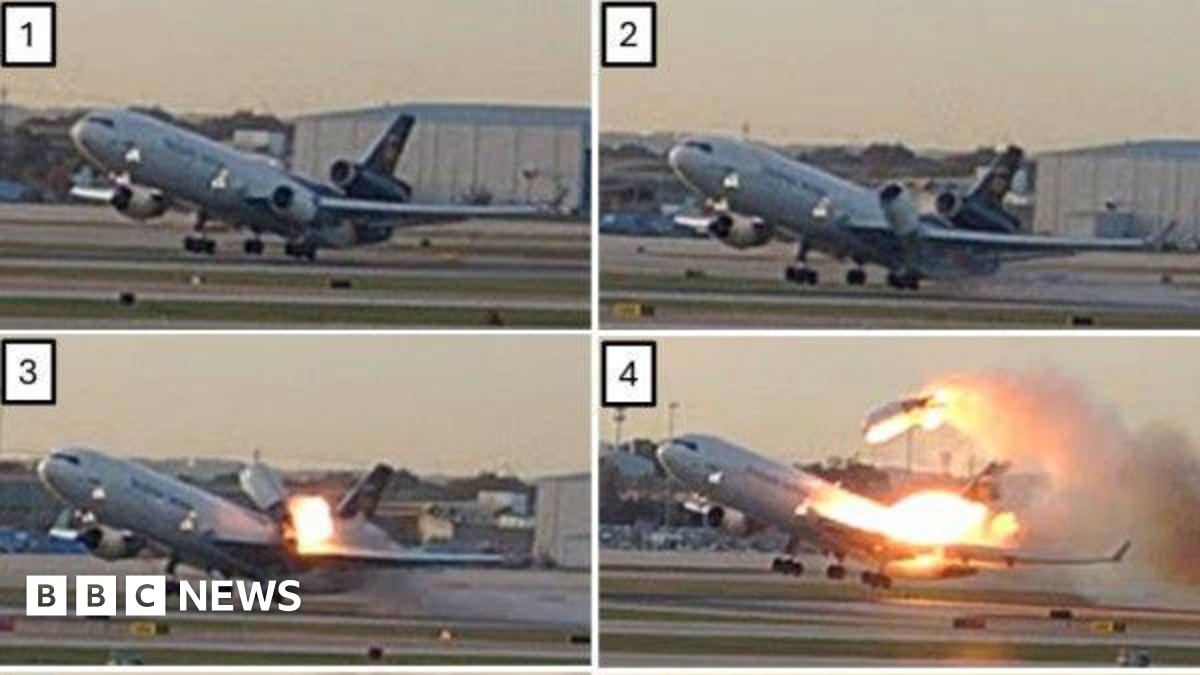
The NTSB’s preliminary report noted “fatigue cracks in addition to areas of overstress failure” around one of the plane’s engine mounts on the left wing.
The bearing that helps secure the connection was also found to have suffered a fracture, the report added.
At the time of the accident, the plane had accumulated a total time of about 92,992 hours and 21,043 cycles, the report said.
A special detailed inspection of the plane’s mounts and other parts would have been due at 29,200 cycles, but airplane records showed the “tasks had not been accomplished”.
The plane was carrying tens-of-thousands of gallons of fuel when it crashed, making it appear as if it was “raining oil”, one local official said.
As a result, an initial shelter-in-place order was issued for within five miles of the airport over concerns of further explosions and air pollution.
Among the 14 dead, three were crew members aboard the airplane and 11 were people on the ground.
Kentucky Governor Andy Beshear declared a state of emergency at the time, calling on the help of the Kentucky National Guard.
An investigation remains ongoing, officials said, including examinations of the recovered cockpit flight recorder and the flight data recorder, known as the black box, which has been removed to a secure facility.