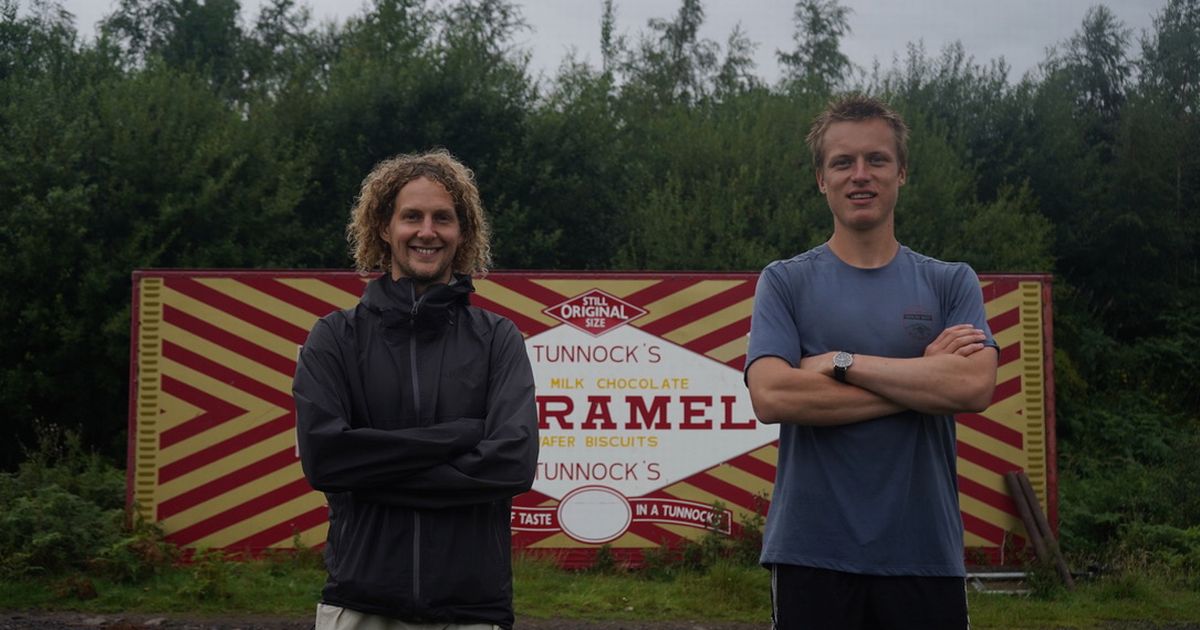
Freddie Armstrong, 25, and Joe de Ferranti, 24, walked the length of Britain to discover Kilt makers, pot makers and dry stone wallers. Freddie and Joe.(Image: Collect/PA Real Life)
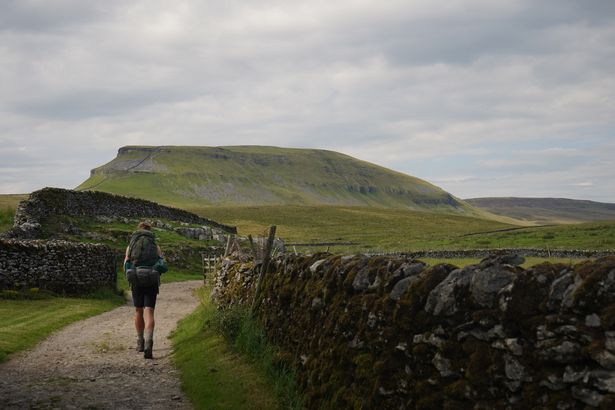
A pair of university friends embarked on a four-month challenge, walking from Land’s End to John O’Groats to discover the art of traditional British crafts.
Edinburgh University graduates Freddie Armstrong, 25, and Joe de Ferranti, 24, covered more than 1,000 miles on their challenge as they crisscrossed their way the countryside from Cornwall to Caithness.
They sought out artisans, craft and tradespeople throughout the country, raising money and awareness for the charities Heritage Crafts and the Queen Elizabeth Scholarship Trust (QEST).
Meeting all kinds of people on the way, including withy pot makers in Cornwall, swill basket makers in Yorkshire, dry stone wallers in Derbyshire, and kilt makers in Scotland, they hope their journey can help shine a light on the rich and unique legacy of British crafts, and inspire young people to undertake the lifelong journey to mastering one.
As well as being immensely welcoming to the duo, people were happy to share the secrets of their trades as well as explain the mounting challenges that face them in the 21st century.
Freddie said: “The perception in the media today is that people in Britain are unwelcoming.
“But the hospitality and generosity we received were amazing and showed that this is a beautiful country.
“We should be so proud of the crafts that we still have here. There’s a whole artistic and creative world that is flourishing.”
 (Image: Collect/PA Real Life)
Joe said: “I feel inspired by the people we met to pursue something in life that gives me the same satisfaction and soul-giving.”
The motivations for beginning the journey were different for the two friends from university.
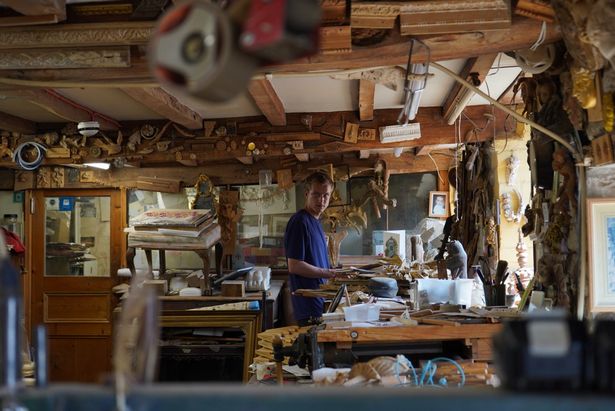
Freddie had long been interested in craft and had begun a picture framing and restoration apprenticeship in Florence, but he was keen to explore more of Britain’s heritage.
He was also keen to undertake a physical challenge. Suffering from long Covid and an irregular heartbeat, he had lost confidence in his own physical capabilities.
“Last Christmas, I was struggling to run, and didn’t want to do anything physically,” he said.
“I thought that a challenge like this would help change my mindset. I knew that if I was capable of doing it, then the confidence would return.”
Having graduated with a product design degree Joe, meanwhile, was working for an engineering company but he was eager to work with his hands more and connect with ancient crafts.
 (Image: Collect/PA Real Life)
The idea to walk the length of the country was partly inspired by their favourite author Robert McFarlane and his book about walking, The Old Ways.
“I had a craving to go on a big journey,” Joe said.
“I was doing short walks but looking at the horizon, I wanted to continue heading for it.
“Reading The Old Ways and other books like it turned walking for me from something mundane into something that can be beautiful.
“We wondered what we could learn about on the journey that is also connected to the land we would be passing through. Crafts were the perfect answer.”
The two set off from Land’s End, Cornwall, in May this year. Considering Freddie’s physical struggles, they kept a steady pace to begin with as they built up fitness.
Initially, they organised meetings with craftspeople through Heritage Live and QEST, but as the journey progressed, they heard about others through word of mouth.
One of their favourite experiences was meeting the withy pot makers in Gorran Haven, Cornwall, where they stayed for several days.
“Withy pots are crab pots made from willow trees,” Freddie explained.
“Historically, people would grow the willows nearby. It was amazing to see that connection between land and sea.”
 (Image: Collect/PA Real Life)
They were even taken out to sea by a local fisherman. When they hauled in the lobster pots, they were amazed to discover three large octopuses, highlighting how the changing natural environment is becoming apparent throughout the UK.
“For the rest of our time there, everyone referred to us as the two fellas that caught the octopuses!” Freddie said.
As they continued their journey through Britain, Freddie grew confident in his physical abilities until they could comfortably walk 20 miles in a day.
However, it soon became apparent that his biggest physical challenge was, in fact, his feet.
Despite being a size too small, he stubbornly wore his boots for more than 600 miles until at last, in the Peak District, he relented and bought a pair that fitted.
“There was a day when I went full Frodo Baggins and walked barefoot because the pain was so bad,” he said.
“It was a great day’s walking until the following morning when I realised the bracken had slashed the skin between my toes. That was the closest I came to giving up.”
When Freddie’s feet were not hurting him, their favourite period to walk was the evening stretch, between 6pm and 10.30pm.
“They felt like free miles. The wind would drop, there was no one around, and it was cooler. We wouldn’t want to stop,” Joe said.
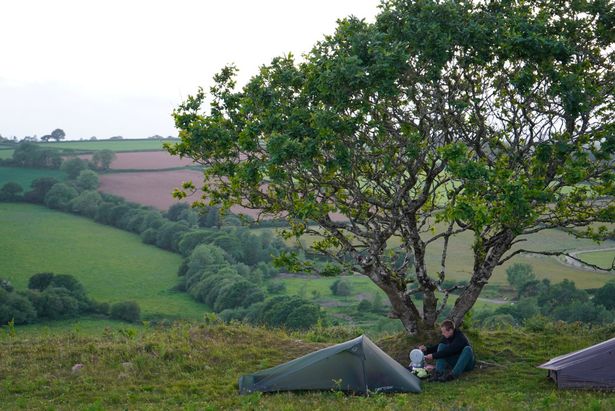
As daylight disappeared, they would pitch their tent near the path and sleep.
“We’d go from walking to fast asleep in five minutes. Walk, sleep, walk,” Joe recalled.
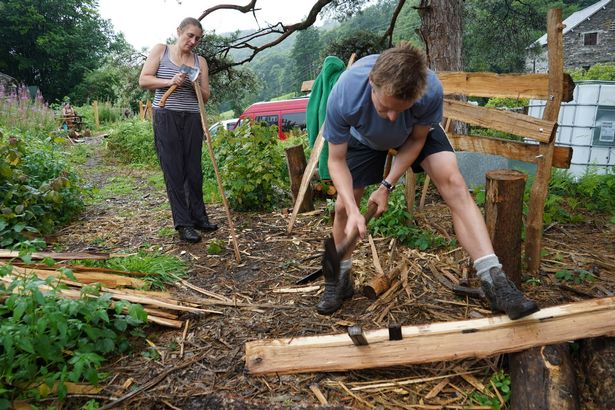
As they continued, they met many other craftspeople, including Bonfield Block Printers in Dorset, a leather tanner in Yorkshire and a gold and silk engraver in Scotland.
“What was fascinating was seeing how closely related the surrounding environment was to all their work,” Freddie said.
“Many would show us the surrounding landscape before talking about their craft because it is such an important part of it.”
 (Image: Collect/PA Real Life)
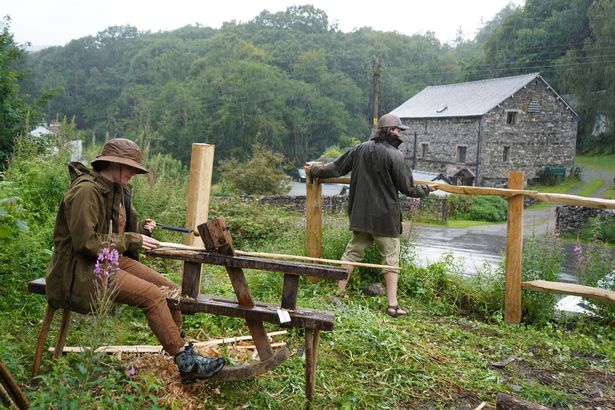
“It was also inspiring to see just how difficult these crafts were to master,” Joe adds.
“We met a wood turner in Bristol who had a job as a software engineer at a car manufacturer, but he wasn’t happy or nourished, so he chose this path.
“He said it would take a year to learn how to be a software engineer; he’d be in his 70s before he learned how to turn a bowl properly.”
According to Heritage Craft, there are 285 crafts still alive in Britain, a majority of which are in danger. Some 70 are in critical danger.
“Many of these skills need a lifetime to hone,” Freddie said.
“It’s amazing to see so many young people interested in taking them up, but the people who still practise them are often getting very old, meaning decades of skill will be lost when they die.”
 (Image: Collect/PA Real Life)
The friends reached John O’Groats in August, at which point they reflected on their journey and the hospitality, kindness and generosity they received from everyone they met, craftspeople or not.
Freddie hopes to complete his apprenticeship in Florence next year and continue working with his hands.
“It’s very hard for anyone our age to get into craft but I’m hoping to make it work financially,” he said.
“That’s why Heritage Craft and QEST do such important work for anyone who wants to do this kind of thing.”
Joe is still unsure which path to take. Though he is keen to find a job that connects him to the land and his hands, he is keeping his options open and exploring different avenues.
Having begun an Instagram account called Slow Ways, they hope to continue building a following and bringing the work of craftspeople throughout the country to new audiences.
You can donate to their GoFundMe here.
Join the Daily Record WhatsApp community!
Get the latest news sent straight to your messages by joining our WhatsApp community today.
You’ll receive daily updates on breaking news as well as the top headlines across Scotland.
No one will be able to see who is signed up and no one can send messages except the Daily Record team.
All you have to do is click here, select ‘Join Community’ and you’re in!
We also treat our community members to special offers, promotions, and adverts from us and our partners. If you don’t like our community, you can check out any time you like.
To leave our community click on the name at the top of your screen and choose ‘exit group’.
If you’re curious, you can read our Privacy Notice.