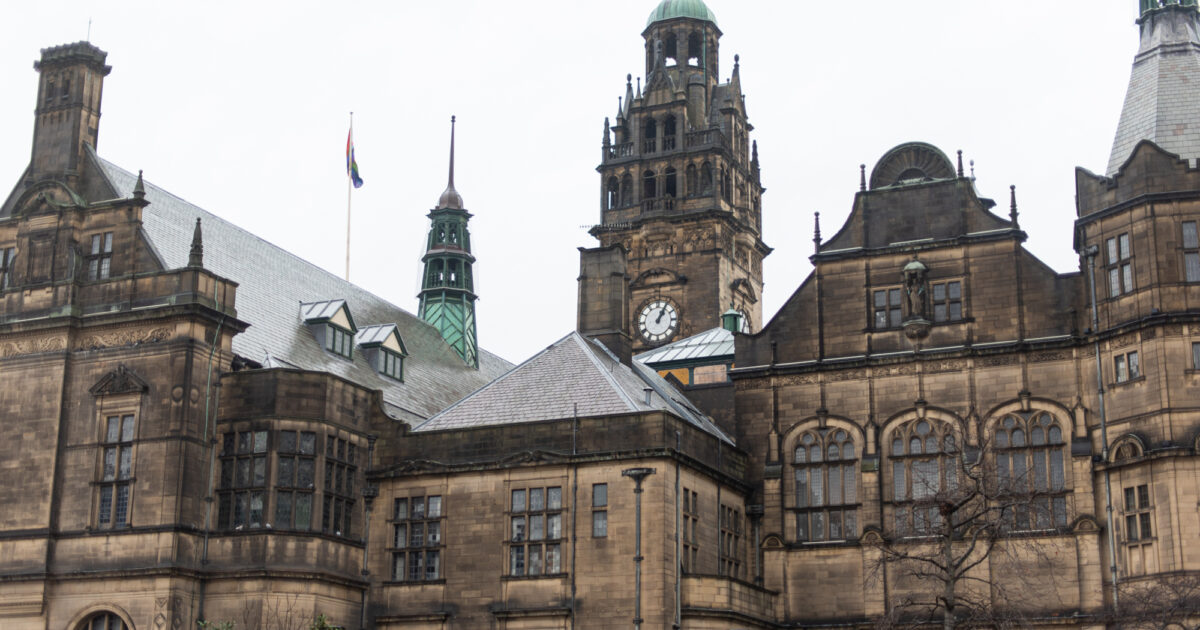
Sheffield will be allowed to keep its hard fought-for modern committee system of local governance, after the government U-turned on plans to force all councils across the country to adopt more centralised leadership models.
In a 2021 referendum, 65% of Sheffield voters backed a move away from the council’s previous ‘Strong Leader’ model towards a modern committee system where decision-making power is more equally shared among the city’s 84 councillors and 3 main political parties.
The vote, which took advantage of legislation introduced by the coalition government in 2011, was triggered by the It’s Our City! campaign, set up to reform governance in Sheffield in the wake of the street tree scandal and perceived wrongdoing resulting from overly-centralised power.

Hallam MP Olivia Blake said it was “vital that progress is protected”.
Olivia Blake MP.
But despite promising to “deepen democracy” by “devolving power to communities” in their 2024 manifesto, earlier this year the Labour government announced plans to force councils to scrap the committee system nationwide, calling it “unclear, duplicative, and wasteful”.
This would have forced every council to adopt the so-called ‘Strong Leader’ model, where all decisions are made by a small cabinet appointed by the Council Leader, which Sheffield had chosen to reject four years ago and which was widely blamed for the “bunker mentality” that took hold during the street tree scandal.
Sheffield MPs and councillors reacted with concern about the scrapping of the Committee System, with Labour Council Leader Tom Hunt saying in a statement that “this news comes as a surprise and we were not consulted.”
U-turn if you want to
But yesterday, local government minister Steve Reed partially backtracked on the move, putting forward amendments to an upcoming bill that will allow local councils that have moved to a committee system following a referendum to keep their setup for up to ten years.
The move also follows criticism from councillors and democracy campaigners in Bristol, which followed Sheffield in switching to a modem committee system via a referendum in 2022 amid concerns over poor governance in the city.
In Sheffield, we know how damaging it would be to force us back to the old system
Sheffield Hallam MP Olivia Blake, and Sheffield Central MP Abtisam Mohamed, welcomed the U-turn, with the latter saying that the city’s committee system “has helped foster more inclusive decision-making, and it’s vital that this progress is protected.”
Blake described the announcement as a “great win for the people of Sheffield,” adding: “I’m very pleased that the government has heard our representations and amended the draft legislation accordingly. These changes will only strengthen our local democracy.”
Sheffield’s switch in 2021 was triggered by a petition signed by more than 26,000 people, with the legislation guaranteeing a vote if more than 5% of city residents signed within a year.
Democratic backsliding
The local Greens, who campaigned in favour of a committee system during the referendum and who have benefitted politically from a more even distribution of power within the council, called the news “good for the council and good for democracy in Sheffield.”

Cllr Marieanne Elliot said the original plan showed “a complete distrust in democracy”.
Sheffield Green Party.
“Sheffielders voted two-to-one to change the system of governance to the committee system,” said their deputy leader, Cllr Marieanne Elliot. “The government plans for all councils to have a [Strong] Leader and Cabinet shows a complete distrust in democracy.”
“In Sheffield, we know how damaging it would be to force us back to the old system. The council has worked so much better since the committee system came in. I am pleased to see the government has now proposed amendments to the bill that will allow Sheffield to continue working in the more progressive, democratic way that it has established.”
Despite the exemption, which allows councils that have switched in the past ten years (such as Bristol and Sheffield) to keep their committee systems for now, the new legislation still removes the right for citizens in other areas to trigger a vote for change.
“I believe the government should allow other populations to learn from Sheffield’s example in the future,” said Cllr Elliot. “Sadly, they still intend to entirely remove those rights from other communities and councils. There is still no reference to improving democracy or any real devolution.”
Our committee system has helped foster more inclusive decision-making, and it’s vital that this progress is protected. I’m pleased Ministers have responded to the case we put forward, and I’ll continue working to ensure Sheffield’s governance reflects the needs and voices of our… pic.twitter.com/qQF8gyFTWg
— Abtisam Mohamed (@Abtisam_Mohamed) November 20, 2025
All three main political parties on Sheffield Council – the Liberal Democrats, Greens and Labour – made representations to the government to keep the current setup, which were backed by MPs Mohamed and Blake, who were both local cabinet members under the old ‘Strong Leader’ model.
Although the carve-out for Bristol and Sheffield has been welcomed, the decision to force almost all other councils to adopt a less accountable ‘Strong Leader’ model is the latest example of democratic backsliding by the current Labour government.
Other efforts to roll back democracy include draconian new restrictions on repeat protest marches, the disproportionate targeting of climate and anti-apartheid activists, and the proscription of Palestine Action on disingenuous and misleading grounds (both Blake and Mohamed abstained on the vote).
Since coming to office, the Labour government have also virtually abandoned plans to reform the wildly undemocratic House of Lords, and have refused to switch to a more democratic and proportional voting system for general elections, despite this being backed by an overwhelming majority of party members.