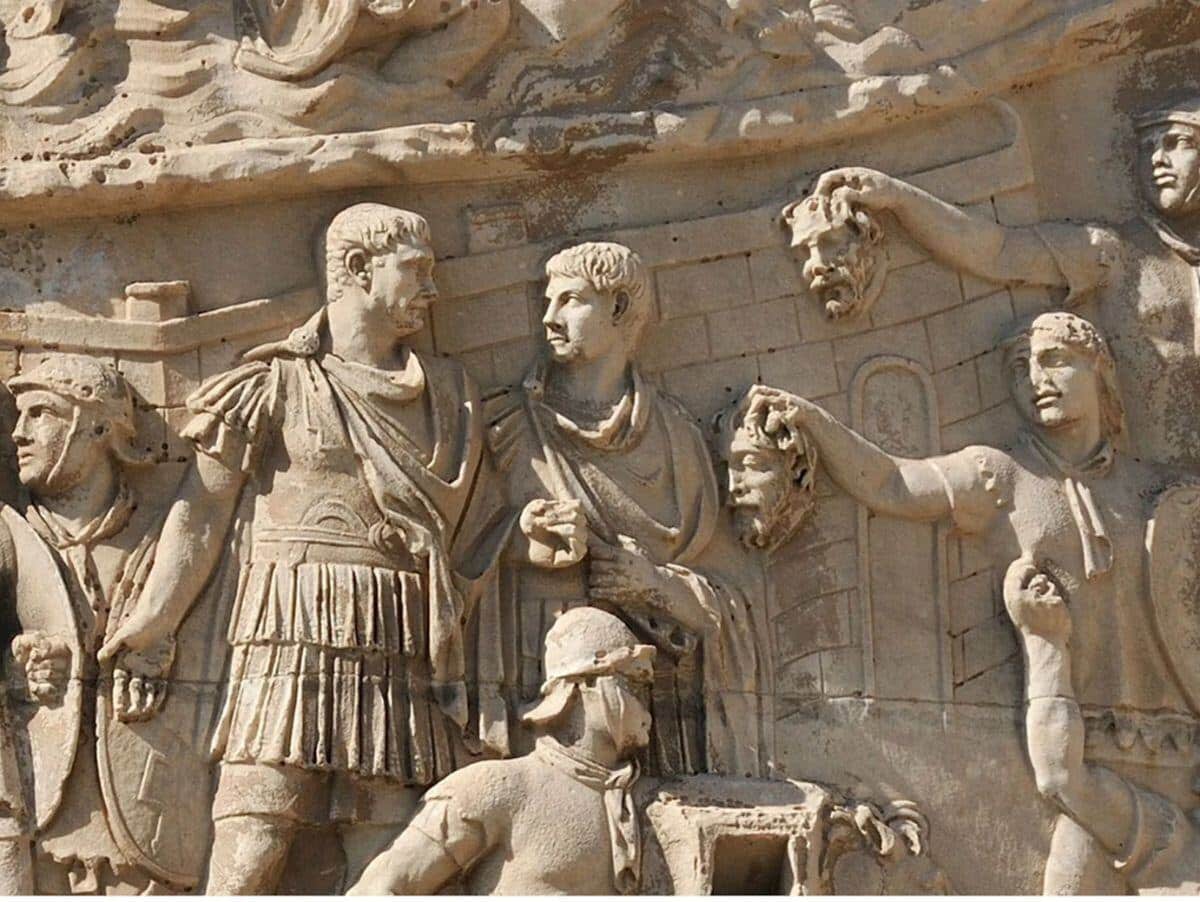
Roman soldiers offering the emperor the decapitated heads of Dacian enemies. Credit: Santiago David Domínguez-Solera / Open Access
Archaeologists working at a 2,000-year-old fort in northern Spain have uncovered evidence that the Romans displayed decapitated heads as a brutal warning to the Celts during their conquest of the Iberian Peninsula.
The discovery includes a single human skull, believed to have belonged to a local man who died during the violent Roman siege of the fortified settlement known as La Loma.
The skull, found buried beneath the collapsed walls of the fort, was analyzed and determined to have come from a man around 45 years old, likely native to the region. Researchers believe he was killed in combat, beheaded by Roman forces, and his head placed atop the fort’s wall during the occupation.
The act fits a known Roman strategy of using the bodies or body parts of fallen enemies, particularly heads and hands, to intimidate opponents and assert dominance. This specific case appears to serve as a war trophy and a message to any remaining Celtic resistance.
Grim symbolism at La Loma Fort reveals Roman war practices
The finding, detailed in the Journal of Roman Archaeology on November 11, is part of a larger investigation into the Cantabrian Wars, which took place between 29 and 19 BC.
These conflicts involved fierce resistance from the Cantabri, a group of Celtic tribes, and were partially led by Rome’s first emperor, Octavian, later known as Augustus. In 25 BC, Roman troops captured La Loma, located in today’s Palencia province, after a forceful siege.
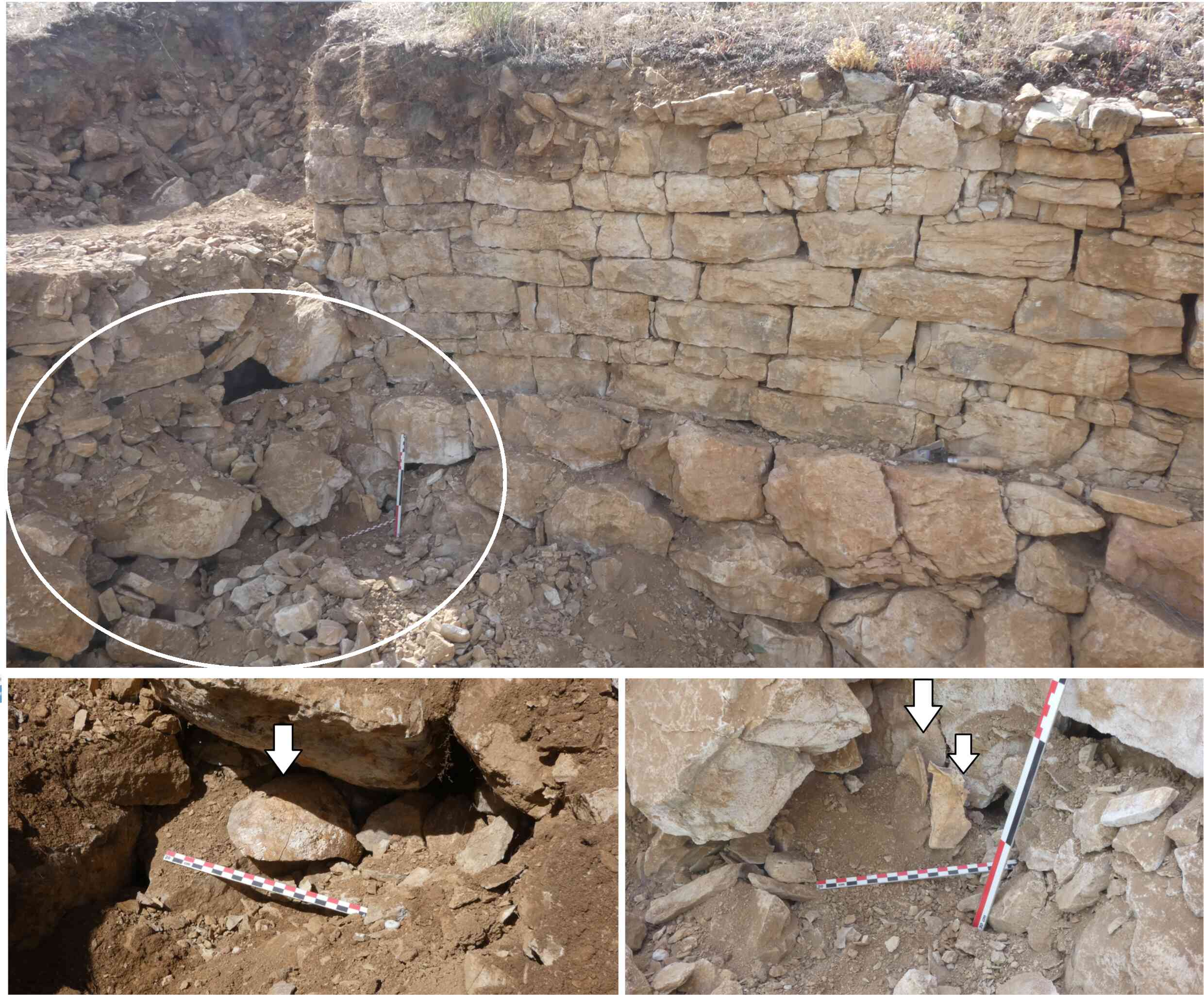 The circle and arrows indicate the locations of several fragments of the human skull. Credit: Santiago David Domínguez-Solera / Open Access
Excavations at the site revealed hundreds of Roman projectiles near the fort’s entrance, suggesting a heavy and sustained attack.
Researchers also found damaged weapons and pieces of armor, indicating close-quarters combat between Roman soldiers and Celtic defenders. After securing the area, the Romans demolished the fort’s walls, likely burying the skull and other remnants in the resulting debris.
Romans used decapitated heads to intimidate the Celts
The condition of the skull further supports the theory that it had been displayed. Santiago Domínguez-Solera, director of Heroica Archaeology and lead author of the study, explained that the bones showed signs of weather exposure.
He noted the skull was broken when the walls were torn down, indicating it had remained outside for several months before becoming buried.
Although no other bones were found with the skull, recent digs uncovered additional human skull fragments near the fort’s entrance.
Domínguez-Solera said these remains are being studied to learn more about possible Roman punishments and how widespread the practice of displaying decapitated heads may have been during their campaign against the Celts.