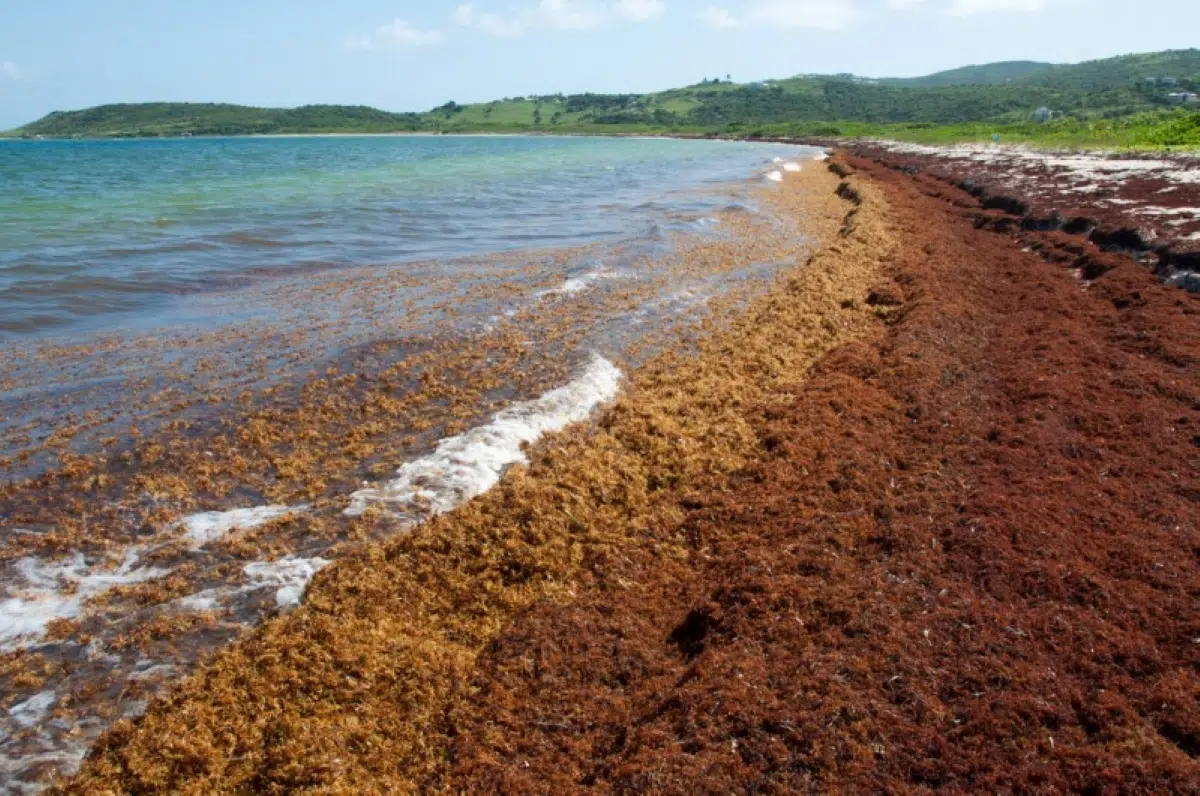
The beaches of Granada, Spain, were covered by thick carpets of sargassum that advanced unchecked over the last decade. This phenomenon, almost unknown 15 years ago, has turned into a threat to the local economy and coastal ecosystems.
The mountains of algae forced the closure of resorts, drove away tourism, and affected health due to the toxic gases released by its decomposition. The situation became urgent as the volume of sargassum increased each year.
Satellite images estimated that more than 38 million tons reached the Caribbean this year, a figure that reflects the direct impact of global warming and pollution.
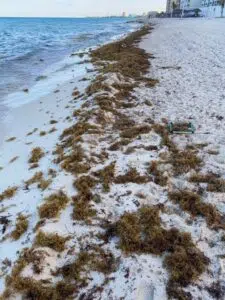 Spain promotes ecological solutions for the sargassum invasion.
The origin of a phenomenon that overflows borders
The increase in ocean temperature and nutrients from human activities explain much of this proliferation. Agricultural fertilizers and untreated wastewater are key factors behind the imbalance.
Smaller Caribbean countries, like Granada, are not among the culprits of these emissions, but they do suffer the consequences. Their limited infrastructure makes it difficult to collect and manage a constant flow of algae.
Prolonged accumulation alters ecological cycles and exacerbates coastal erosion, increasing vulnerability to storms and the rising sea level.
From environmental emergency to productive potential
Faced with the magnitude of the problem, the authorities in Granada are seeking to transform this challenge into opportunities for employment and innovation. For the past five years, the country has been promoting projects that utilize sargassum as raw material.
The goal is to move away from harmful practices such as sinking the algae in the sea or piling it on the sand. Instead, the development of products that generate economic value and reduce environmental impact is encouraged.
There are already prototypes of cosmetics, fertilizers, biofuels, and construction materials made from these algae.
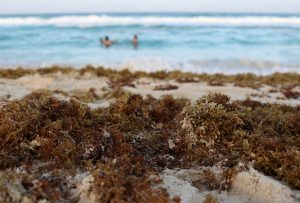 Spain promotes ecological solutions for the sargassum invasion.
International cooperation to drive solutions
The Global Gateway initiative of the European Union brings together governments, companies, and specialists to finance technologies that allow for the collection and processing of sargassum. This alliance provides support to states lacking the infrastructure to tackle the phenomenon.
Granada, Mexico, and the Dominican Republic committed to collecting more than 660,000 tons between 2026 and 2027. Proposals are being evaluated that integrate ocean collection, transportation, storage, and processing.
Sargassum must be removed before it reaches the beaches, as its decomposition affects coastal communities, pregnant women, people with asthma, and marine fauna.
Towards a Caribbean sargassum value chain
International entrepreneurs and researchers are working on new biorefineries capable of converting sargassum into high-value chemical compounds. These inputs can be used in textiles, household products, and personal care items.
The main focus is to ensure that Caribbean communities manage these technologies and receive the economic benefits. The idea is to prevent local populations from being limited to collecting the algae without participating in the added value.
This model seeks to strengthen the autonomy of small island states and reduce their dependence on tourism, one of the sectors most affected by the environmental crisis.
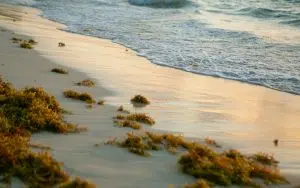 Spain promotes ecological solutions for the sargassum invasion. Photo: Unsplash.
Uses of sargassum and environmental benefits
Processed sargassum is emerging as a versatile resource for green industries. Its transformation into fertilizers and biostimulants improves degraded soils and reduces dependence on conventional chemical products.
Pyrolysis allows for the generation of renewable energy from these algae, while reducing the burning of fossil fuels. In parallel, new compounds extracted from sargassum are used to create cosmetics and biodegradable materials.
Utilizing this biomass prevents it from reaching the beaches in large volumes, contributing to the protection of coastal ecosystems, reducing toxic emissions, and mitigating health risks.
A future where threat becomes opportunity
Granada is moving towards a circular economy model based on an abundant and harmful waste. Community participation and international cooperation are setting the course towards sustainable solutions.
Innovative drive and the creation of new industries could change the country’s relationship with its marine environment. Meanwhile, authorities continue to evaluate projects to consolidate a value chain that benefits the entire population.
The challenge is enormous, but so is the potential to transform an environmental crisis into a regional opportunity.